
Should I Open a Gold IRA in 2026? Honest Assessment
If you’ve been asking yourself whether a Gold IRA makes sense for your retirement plan, you’re in good company. Interest in self-directed precious metals accounts has grown steadily among Americans approaching or already in retirement, and 2026 brings a set of economic conditions and updated IRS rules that make the question worth revisiting carefully.
This article won’t tell you what to do. What it will do is give you a clear, honest look at what a Gold IRA actually is, how it works, what it costs, who it tends to suit, and what the legitimate drawbacks are — so you can ask better questions when you speak with a qualified financial advisor.
What Is a Gold IRA, and How Does It Work?
Before evaluating whether a Gold IRA is right for you, it helps to understand the mechanics. A Gold IRA is a self-directed individual retirement account that holds physical gold — and in some cases other IRS-approved precious metals — instead of, or alongside, conventional paper-based assets. You can read a thorough breakdown in our Gold IRAs Explained in Detail guide, but the short version is this: the account follows the same IRS rules that govern a traditional or Roth IRA, with a few important additions.
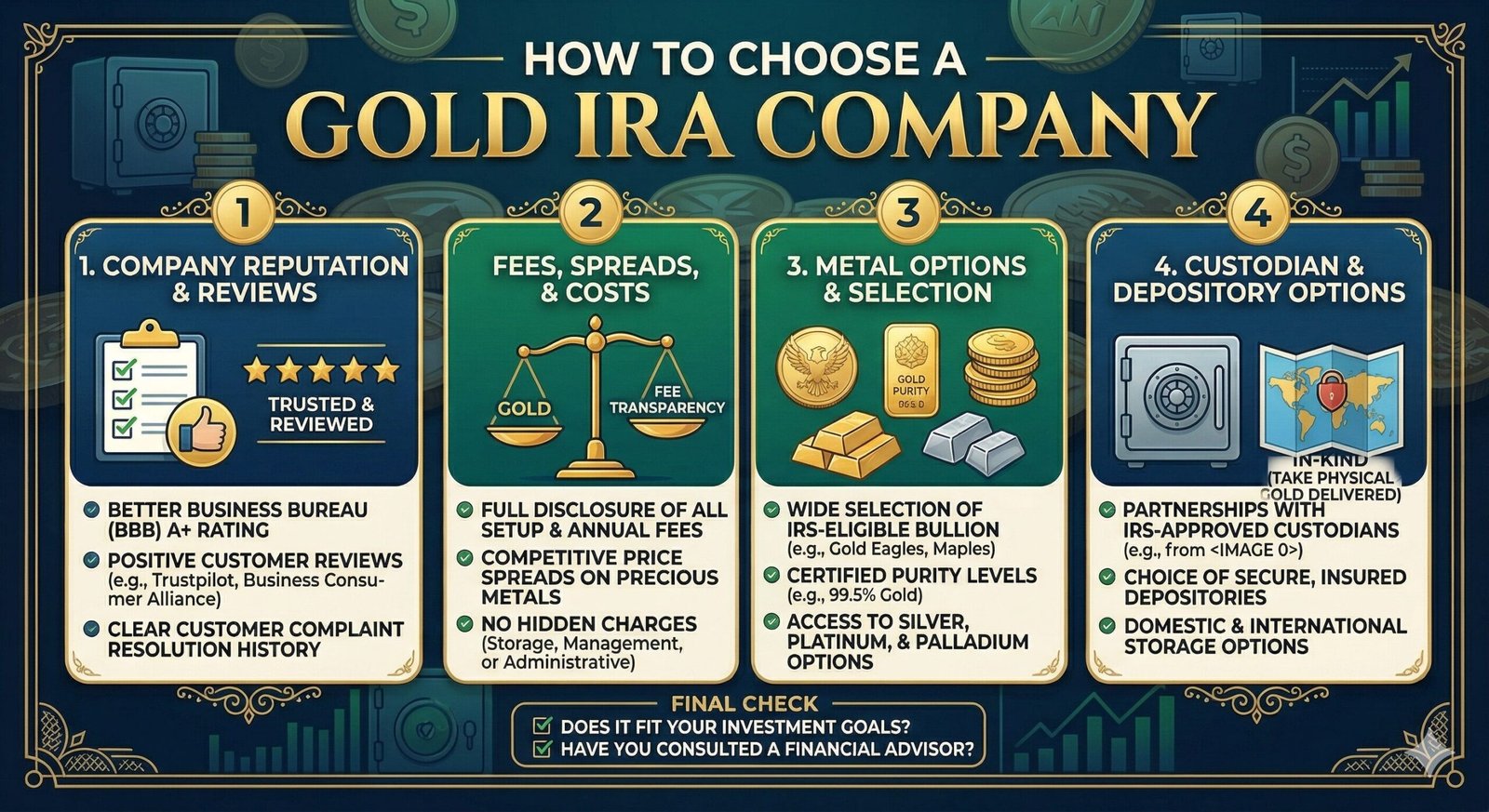
Because the IRS does not allow retirement account holders to personally store physical precious metals they own through an IRA, a Gold IRA requires three separate parties: a custodian (an IRS-approved financial institution that administers the account), a dealer (who sources and sells the qualifying metals), and a depository (an approved, insured storage facility where the metals are held). This structure is more involved than a standard brokerage IRA, which is one of the first things to understand before proceeding.
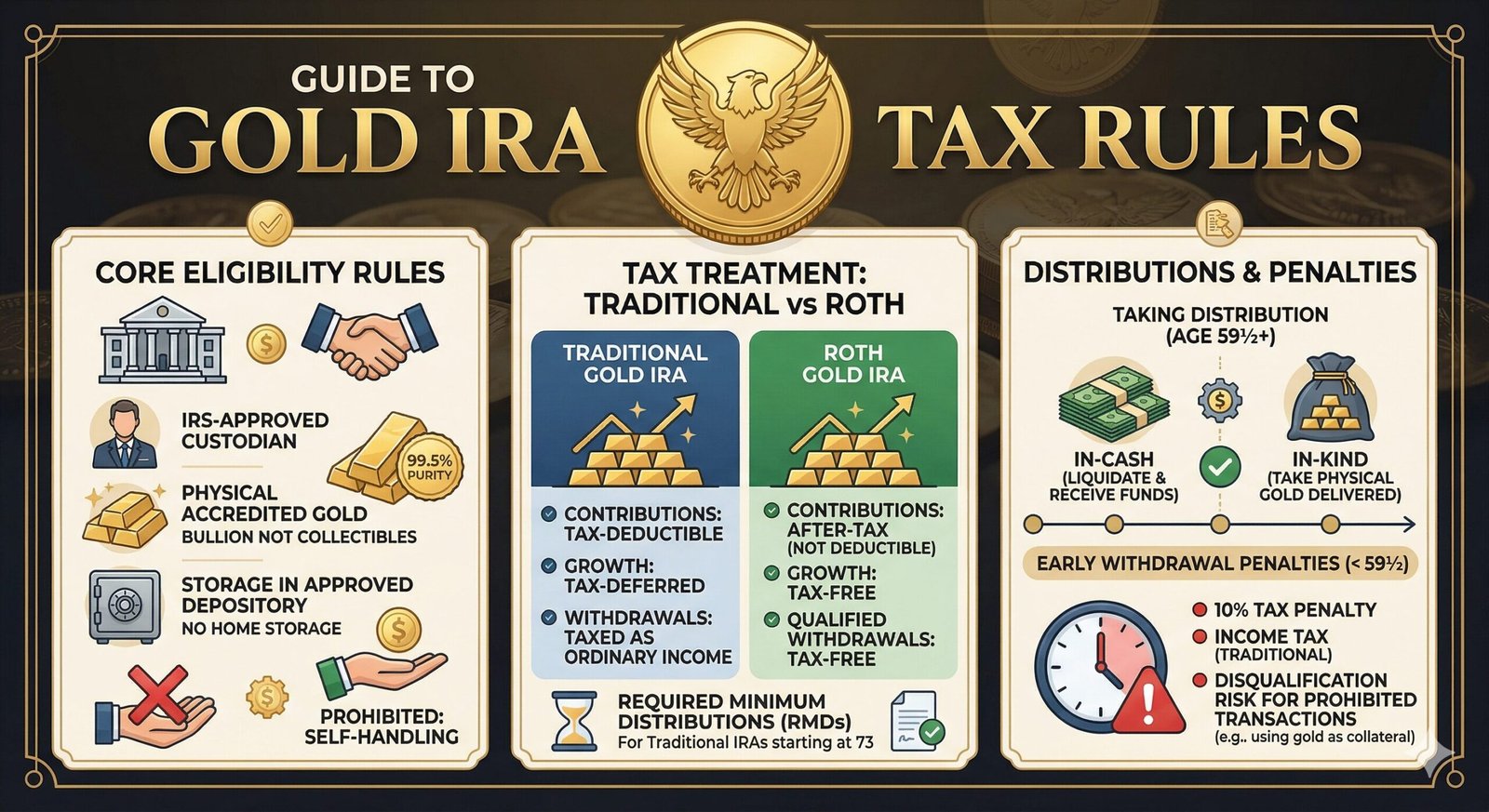
The IRS IRA investment FAQ confirms that collectibles are generally prohibited in IRAs, but that certain coins and bullion meeting fineness standards are permitted. For gold, that standard is a minimum purity of 99.5%. Our guide to IRA-eligible gold coins covers exactly which products qualify.
For a broader foundation, our Gold IRA hub is a good starting point if you’re coming to this topic fresh.
What Has Changed Heading Into 2026?
Each year, the IRS adjusts contribution limits for inflation. For 2026, the standard IRA contribution limit remains on the same trajectory that has been climbing gradually in recent years — you can confirm the latest figures directly from the IRS contribution limits page. If you’re 50 or older, you remain eligible for the additional catch-up contribution.
Beyond the contribution numbers, FINRA has continued to sharpen its guidance around self-directed IRAs. FINRA’s guidance on self-directed IRAs highlights both the expanded flexibility these accounts offer and the heightened responsibility that comes with that flexibility — including the need for investors to conduct their own due diligence on custodians and dealers.
The broader economic backdrop in 2026 — elevated interest rate uncertainty, ongoing fiscal debates, and the memory of recent inflationary periods — has understandably led more retirement investors to think seriously about physical assets. Whether that context changes what makes sense for your individual situation is a personal decision, but it does explain why this question is appearing in so many retirement planning conversations right now.
The Genuine Advantages of a Gold IRA
Let’s look at what a Gold IRA genuinely offers — stated plainly, without overselling.
Physical Asset Ownership Within a Tax-Advantaged Account
One of the more compelling aspects of a Gold IRA is that it allows you to hold a physical, tangible asset within a structure that carries the same tax advantages as a conventional IRA. With a traditional Gold IRA, contributions may be tax-deductible, and growth is tax-deferred until withdrawal. With a Roth Gold IRA, qualified withdrawals in retirement can be tax-free, provided IRS conditions are met.
The Gold IRA vs Traditional IRA comparison on this site explores these tax structures in more detail. It’s worth reading carefully — the difference in account type can have meaningful implications for your overall tax picture in retirement, and that’s a conversation best had with a CPA or tax advisor.
A Different Kind of Asset
Gold has a long history as a store of value. It is a finite, physical commodity that behaves differently from equities or fixed-income instruments — not better or worse, just differently. For investors who feel they want exposure to a non-paper asset within their retirement account, a Gold IRA is one of the few legitimate, IRS-sanctioned ways to achieve that. Past performance is not a guarantee of future results, but gold’s record as a long-held asset over decades is well documented in financial literature.
Rollover Eligibility
If you have an existing 401(k), traditional IRA, or other eligible retirement account, you may be able to roll those funds into a Gold IRA without triggering a taxable event — provided the rollover is handled correctly. Our 401(k) to Gold IRA rollover guide and Gold IRA rollover rules page both walk through this process in detail.
The Honest Drawbacks You Should Know
A responsible assessment of any financial product includes a clear-eyed look at its limitations. Gold IRAs have several that are frequently downplayed by less scrupulous operators in this space.
Fees Are Higher Than a Conventional IRA
This is perhaps the most important practical consideration. A Gold IRA involves ongoing costs that a standard IRA does not: custodian fees, storage fees, and sometimes account setup or maintenance fees charged by the dealer. These can range from modest to significant depending on the provider, and they apply regardless of what the gold in your account does. Our Gold IRA fees guide breaks down the typical fee structures so you know what to expect before you commit.
Gold Pays No Income
Unlike dividend-paying stocks or interest-bearing bonds, physical gold generates no income while it sits in a depository. Your return, if any, comes entirely from price appreciation — which is uncertain and cannot be predicted. This is a meaningful consideration for investors who rely on income distributions from their retirement assets.
Liquidity Is More Complex
Liquidating physical gold held in an IRA is a multi-step process compared with selling a stock or ETF. It typically requires working with your custodian and dealer, which can take longer than investors expect. If you anticipate needing rapid access to funds, this is worth weighing carefully.
Required Minimum Distributions Apply
If you hold a traditional Gold IRA, the IRS requires you to begin taking required minimum distributions (RMDs) at age 73. Because your assets are physical metal rather than cash, satisfying an RMD may require selling some of your gold or taking an in-kind distribution — both of which have procedural and potentially tax implications. The IRS RMD FAQ explains the distribution rules in full.
How to Evaluate Whether a Gold IRA Fits Your Situation
Asking “should I open a Gold IRA in 2026?” is really asking several smaller questions simultaneously. Here’s a structured way to think through them.
Our article is a Gold IRA a good idea examines these questions through a similar lens and is worth reading alongside this one.
If you do move forward with research, the SEC investor resources page is a reliable, unbiased starting point for understanding your rights and protections as an IRA holder.
One more important note: the Gold IRA space unfortunately attracts a minority of bad actors. Before engaging any company, review our Gold IRA scams guide to understand the warning signs.
Understanding Minimum Investment Requirements
One practical factor that sometimes catches investors off guard is that many Gold IRA providers require a minimum initial investment — often ranging from $10,000 to $50,000 or more, depending on the custodian and dealer. Our Gold IRA minimum investment page outlines what to expect across the market, which can help you quickly identify which providers are realistic options based on your current account balances or rollover amounts.
Frequently Asked Questions
Can I open a Gold IRA if I already have a traditional IRA or 401(k)?
Yes, in most cases. You can open a Gold IRA as an additional account, or you may be eligible to roll over funds from an existing traditional IRA or 401(k) into a Gold IRA. The rollover must follow IRS rules carefully to avoid triggering taxes or penalties. See our Gold IRA rollover rules guide for a full explanation.
Is a Gold IRA the same as buying gold ETFs in a regular brokerage account?
No, and the difference is significant. A Gold IRA holds physical gold — actual bullion bars or coins stored in an approved depository in your name. A gold ETF is a paper-based financial instrument that tracks the price of gold but does not give you ownership of physical metal. Each structure has different costs, liquidity, and tax implications.
How do I know if a Gold IRA custodian is legitimate?
Custodians must be approved by the IRS and are typically banks, credit unions, or trust companies. You can verify a company’s credentials through FINRA BrokerCheck and check their complaint history at bbb.org. Be cautious of any company that pressures you to act quickly, makes performance guarantees, or is reluctant to provide clear fee disclosures in writing.
Does a Gold IRA have the same contribution limits as a regular IRA?
Yes. A Gold IRA is subject to the same annual IRS contribution limits as any other IRA. For the most current figures, consult the IRS contribution limits page directly, as these are adjusted periodically.
What happens to my Gold IRA when I reach retirement age?
When you’re ready to take distributions, you have two main options: sell the metals and receive a cash distribution, or take an in-kind distribution of the physical metal itself. Both approaches have tax implications, and if you hold a traditional Gold IRA, RMDs will apply beginning at age 73. Consulting a tax professional before making distribution decisions is strongly advisable. See the IRS RMD FAQ for the governing rules.
Ready to Research Your Options?
If you’ve worked through this article and want to take the next step, the most useful thing you can do is compare providers carefully — looking at fees, custodian reputation, minimum investment requirements, and customer service track records. We’ve done much of that groundwork for you. Visit our Best Gold IRA Companies of 2026 page for a comprehensive, independently researched comparison of the leading providers in the market today.
This article is for informational purposes only and does not constitute financial or tax advice. Investing in precious metals involves risk including possible loss of principal.
Related guides
- Gold IRA Consumer Affairs Reviews: What to Look For
- Gold IRA Trustpilot Reviews: What Real Customers Say
- Gold IRA BBB Complaints: What Consumer Reports Reveal
- Is a Gold IRA Worth the Fees? A Cost-Benefit Analysis
- Are Gold IRA Fees Too High? Breaking Down the Real Costs
- Gold IRA Mistakes to Avoid: 10 Common Errors Investors Make