
Gold IRA vs Savings Account: Very Different Tools Explained
When you’re thinking seriously about retirement planning, you’re likely comparing a lot of different options. Two that sometimes come up in the same conversation — though they operate in very different ways — are Gold IRAs and savings accounts. On the surface, both hold value. Both are accounts you can open at a financial institution. But the similarities end there pretty quickly.
This article isn’t going to tell you which one is right for you. That’s a decision for a qualified financial advisor who knows your full picture. What it will do is clearly explain how each works, what the rules are, and where the meaningful differences lie — so that you’re walking into any conversation about your retirement with a solid understanding of the basics.
What Is a Savings Account?
A savings account is one of the most familiar financial tools in existence. You open one at a bank or credit union, deposit money, and earn interest on that balance over time. The interest rate — often called the APY (Annual Percentage Yield) — is set by the institution and fluctuates with broader monetary conditions.
Savings accounts are extremely liquid, meaning you can generally access your money whenever you need it, either by transferring funds or withdrawing at a branch or ATM. They’re also typically insured by the Federal Deposit Insurance Corporation (FDIC) for up to $250,000 per depositor, per institution. That insurance coverage is a meaningful feature for peace of mind, though it doesn’t guarantee growth or protect against inflation eroding your purchasing power over time.
There are no age-related restrictions on deposits or withdrawals, no required minimum distributions, and no special tax treatment beyond how standard interest income is treated — which is generally taxed as ordinary income.
High-Yield Savings Accounts: A Modern Variant
It’s worth noting that “savings account” today spans a range of products. High-yield savings accounts, often offered by online banks, carry higher APYs than traditional brick-and-mortar savings accounts. They operate under the same general rules — FDIC-insured, liquid, interest-bearing — but may offer significantly better rates. Even so, the structural mechanics remain the same as any standard savings account.
What Is a Gold IRA?
A Gold IRA is a self-directed Individual Retirement Account that holds physical precious metals — most commonly gold — rather than traditional paper assets. It operates under the same overarching IRS framework as a conventional IRA, but with additional rules governing what types of assets can be held and how they must be stored.
For a thorough breakdown of the structure, see our Gold IRA hub, which covers the key features in depth. You can also read Gold IRAs Explained in Detail for a more comprehensive walk-through.
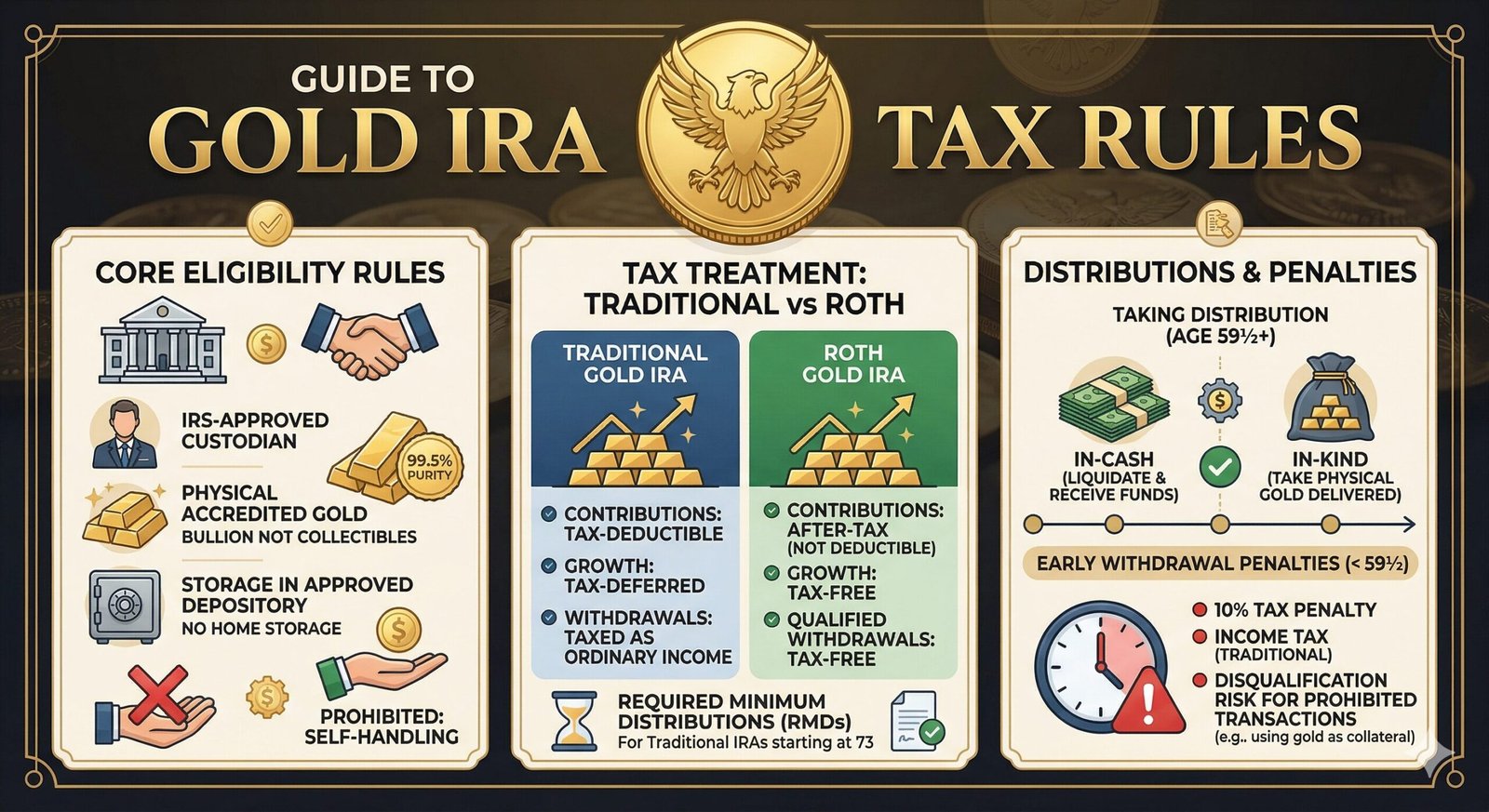
The IRS requires that any physical gold held in a Gold IRA meet specific purity standards — at least 99.5% for gold bullion — and that it be stored by an approved IRS custodian in an insured, secure depository. You cannot, for example, keep your IRA gold at home or in a personal safe. The IRS IRA investment FAQ covers collectibles and asset eligibility rules in useful detail.
Gold IRAs can be structured as Traditional IRAs (pre-tax contributions, taxed on withdrawal) or Roth IRAs (after-tax contributions, potentially tax-free qualified withdrawals). The tax structure mirrors conventional IRAs — it’s the asset class held inside them that’s different. For a comparison of how the underlying IRA types stack up, see our Gold IRA vs Traditional IRA article.
Because a Gold IRA is a self-directed IRA, you’ll want to review FINRA’s guidance on self-directed IRAs before proceeding — it outlines important consumer considerations around this account type.
Key Differences: Gold IRA vs Savings Account
Rather than listing a series of abstract contrasts, it’s helpful to work through the structural differences systematically. The table below summarises the most important distinctions.
Contribution Limits and Access Rules
One of the most practical differences between these two tools is the presence — or absence — of IRS contribution rules.
With a savings account, there are no limits on how much you can deposit. You can move money in and out freely, though some accounts limit the number of monthly withdrawals. There’s no age floor or ceiling that governs access.
With a Gold IRA, you’re subject to the same annual contribution limits as any IRA. For 2024, that limit is $7,000 per year for individuals under 50, and $8,000 for those 50 and older (the “catch-up” contribution). The IRS contribution limits page is updated annually and is worth bookmarking. Contributions must come from earned income, and there are income thresholds that affect Roth IRA eligibility.
Withdrawals from a Traditional Gold IRA before age 59½ generally trigger a 10% early withdrawal penalty plus applicable income tax. After 59½, distributions are taxed as ordinary income. At age 73, Required Minimum Distributions (RMDs) kick in — meaning the IRS requires you to begin taking distributions whether you want to or not. The IRS RMD FAQ walks through this in detail.
Fees: An Important Consideration for Gold IRAs
Savings accounts typically carry no fees, or very minimal ones. Gold IRAs are a different matter. Because they involve a custodian, a depository, and ongoing storage and administration, there are real costs to consider. These typically include an account setup fee, an annual administration fee, and annual storage fees for the physical metal. Transaction fees may also apply when buying or selling metal within the account.
Our Gold IRA fees guide explains these cost layers clearly, so you know what to look for and what questions to ask before opening an account.
Funding a Gold IRA: Rollovers and Transfers
Unlike a savings account, a Gold IRA can often be funded through a rollover from an existing retirement account — such as a 401(k), 403(b), or traditional IRA. This is a common route for people approaching retirement who want to reallocate existing retirement assets rather than making fresh cash contributions.
If you’re considering this path, our 401(k) to Gold IRA rollover guide covers the mechanics in full. It’s also worth understanding the Gold IRA rollover rules before initiating any transfer, as timing and handling errors can have tax consequences. IRS Publication 590-A — IRS Publication 590-A — is the definitive source for contribution and rollover rules.
Liquidity: Understanding the Trade-Off
One area where savings accounts hold a clear structural advantage is liquidity. When you need cash from a savings account, it’s generally available within a business day or less. There’s no process, no middleman, and no waiting on metal prices or processing timelines.
Gold IRAs are not designed for quick access. Selling physical gold within an IRA requires instructing your custodian, executing a sale, and waiting for settlement. This can take days or longer depending on the institution. For that reason, Gold IRAs are generally considered long-term retirement vehicles — not accessible reserves for short-term needs or emergencies.
This distinction matters enormously when thinking about how these two tools fit into your broader financial life. A savings account and a Gold IRA are solving different problems for different time horizons.
Doing Your Due Diligence
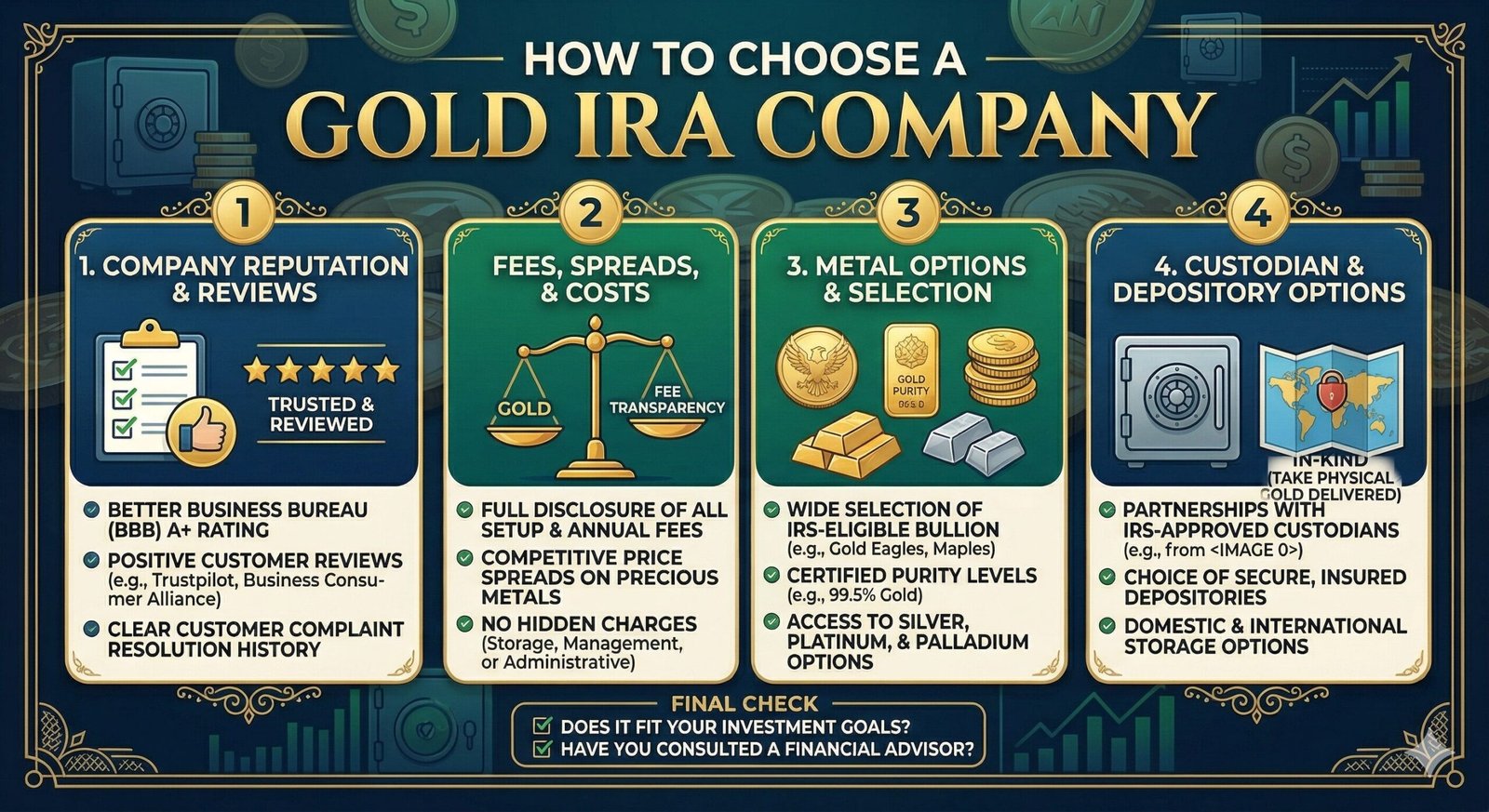
If a Gold IRA is something you’re actively considering, taking the time to research providers thoroughly is essential. The SEC investor resources page is a useful starting point for understanding retirement account basics, while FINRA BrokerCheck lets you verify the background of any financial professional you work with.
Given that the Gold IRA space attracts some bad actors, you may also want to read our Gold IRA scams guide before engaging with any provider. Checking a company’s rating on bbb.org is a simple but worthwhile step.
For those still weighing the broader question of whether this account type fits their situation, our article on is a Gold IRA a good idea explores the key considerations in plain language.
FAQ: Gold IRA vs Savings Account
Q: Can I use a savings account to fund a Gold IRA?
A: Not directly through a contribution if you’re over the annual IRS limit. However, you can withdraw savings and use the proceeds as a cash contribution to your Gold IRA, up to the annual limit. Alternatively, if you have an existing retirement account, a rollover may be a more practical funding mechanism. See our Gold IRA minimum investment article for more on typical account minimums.
Q: Is a Gold IRA insured like a savings account?
A: No. Gold IRAs are not FDIC-insured because they do not hold cash deposits. The physical metal in a Gold IRA is typically held in an insured depository, but that insurance structure is different from FDIC coverage and protects against theft or loss at the facility — not fluctuations in the value of the metal itself.
Q: Are there tax advantages to a Gold IRA that a savings account doesn’t have?
A: Gold IRAs carry the same tax-advantaged structure as conventional IRAs — either pre-tax contributions with taxed withdrawals (Traditional) or post-tax contributions with potentially tax-free qualified withdrawals (Roth). Savings accounts don’t offer these structures; interest earned is generally taxable in the year it’s received. However, this article does not constitute tax advice — speak with a qualified tax professional about your specific situation.
Q: Can I withdraw from a Gold IRA at any time like a savings account?
A: Technically, yes — but early withdrawals from a Traditional Gold IRA before age 59½ typically incur a 10% penalty plus income tax. There are limited exceptions. A savings account carries no such restriction. This is one reason Gold IRAs are designed as long-term vehicles, not short-term cash reserves.
Q: What types of gold can be held in a Gold IRA?
A: The IRS sets purity and eligibility standards. Gold must generally be at least 99.5% pure, and eligible products include certain bullion coins and bars from approved mints. Our article on IRA-eligible gold coins outlines the most commonly approved options.
Ready to Explore Further?
Understanding the structural differences between a Gold IRA and a savings account is an important first step — but there’s much more to learn before making any decisions. Explore our independently researched Best Gold IRA Companies of 2026 to compare leading providers across key criteria including fees, minimums, customer service, and storage options.
This article is for informational purposes only and does not constitute financial or tax advice. Investing in precious metals involves risk including possible loss of principal.
Related guides
- Gold IRA Consumer Affairs Reviews: What to Look For
- Gold IRA Trustpilot Reviews: What Real Customers Say
- Gold IRA BBB Complaints: What Consumer Reports Reveal
- Is a Gold IRA Worth the Fees? A Cost-Benefit Analysis
- Are Gold IRA Fees Too High? Breaking Down the Real Costs
- Gold IRA Mistakes to Avoid: 10 Common Errors Investors Make