
Gold IRA in South Dakota: Rules and Top Providers
If you live in South Dakota and you’ve been thinking about adding physical gold to your retirement savings, you’re not alone. Across the country, Americans in the 45–70 age bracket are taking a closer look at Gold IRAs as part of their broader retirement planning. Whether you’re a longtime resident of Sioux Falls, a retiree on the Missouri River, or somewhere in between, the fundamentals of how a Gold IRA works are the same for you as they are for anyone else in the United States — but there are a few South Dakota-specific details worth understanding before you get started.
This guide walks through the key rules, storage considerations, provider selection tips, and common questions South Dakota residents have about Gold IRAs.
What Is a Gold IRA, and How Does It Work?
Before getting into South Dakota specifics, it helps to have a clear picture of what a Gold IRA actually is. A Gold IRA is a type of self-directed Individual Retirement Account that holds physical precious metals — such as gold coins and gold bars — rather than conventional paper assets like stocks or mutual funds.
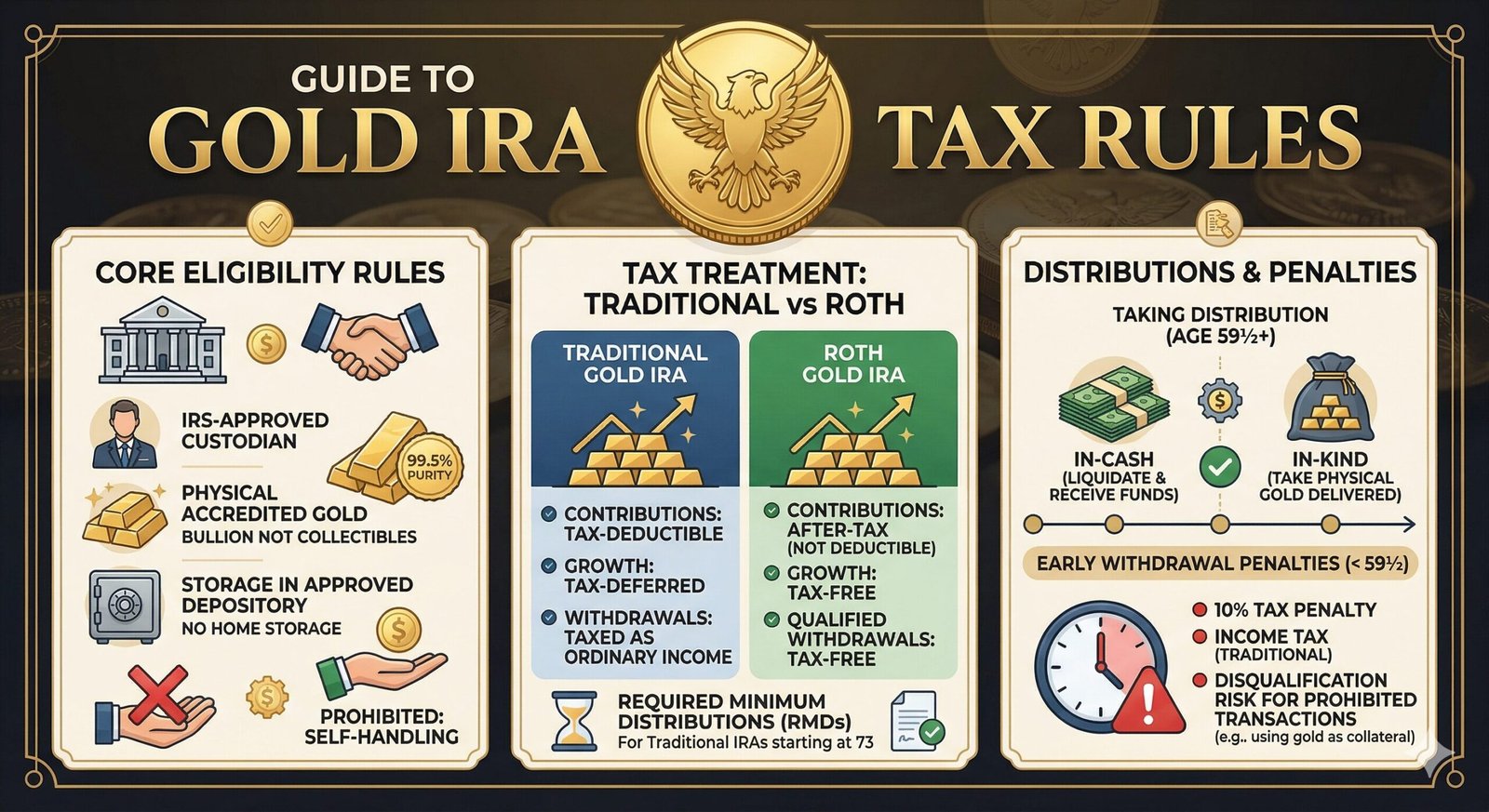
Like a traditional IRA, a Gold IRA can be structured as either a Traditional account (pre-tax contributions, taxed on withdrawal) or a Roth account (post-tax contributions, tax-free qualified withdrawals). The core tax structure follows the same rules outlined in IRS Publication 590-A. What makes it “self-directed” is that the account owner has the authority to choose alternative assets — in this case, IRS-approved physical metals.
For a fuller breakdown of how these accounts work, visit our Gold IRA hub, or read Gold IRAs Explained in Detail for a more thorough walkthrough.
Is a Gold IRA Available to South Dakota Residents?
Yes, absolutely. Gold IRAs are federally regulated accounts, governed by IRS rules rather than state law. That means a resident of Rapid City, Aberdeen, or any other city in South Dakota has access to exactly the same Gold IRA options as someone in California or New York.
South Dakota does not impose a state income tax, which has no direct bearing on a Gold IRA’s tax-deferred or tax-free structure — but it does mean South Dakota residents generally enjoy a favorable overall tax environment in retirement. That said, we don’t offer tax advice here, and you should always consult a qualified tax professional about your individual situation.
What does matter at the federal level is following IRS rules precisely. The IRS IRA investment FAQ is a useful resource for understanding what the agency permits inside a self-directed IRA.
The Core IRS Rules That Apply to Every Gold IRA
Whether you’re opening a Gold IRA in South Dakota or any other state, you’re working within the same federal framework. Here are the rules every account holder needs to understand.
Contribution Limits
For 2025, the IRS allows annual IRA contributions of up to $7,000, or $8,000 if you’re aged 50 or older (the “catch-up” contribution). These limits apply across all your IRAs combined, not per account. You can check the current figures on the IRS contribution limits page.
IRS-Approved Metals Only
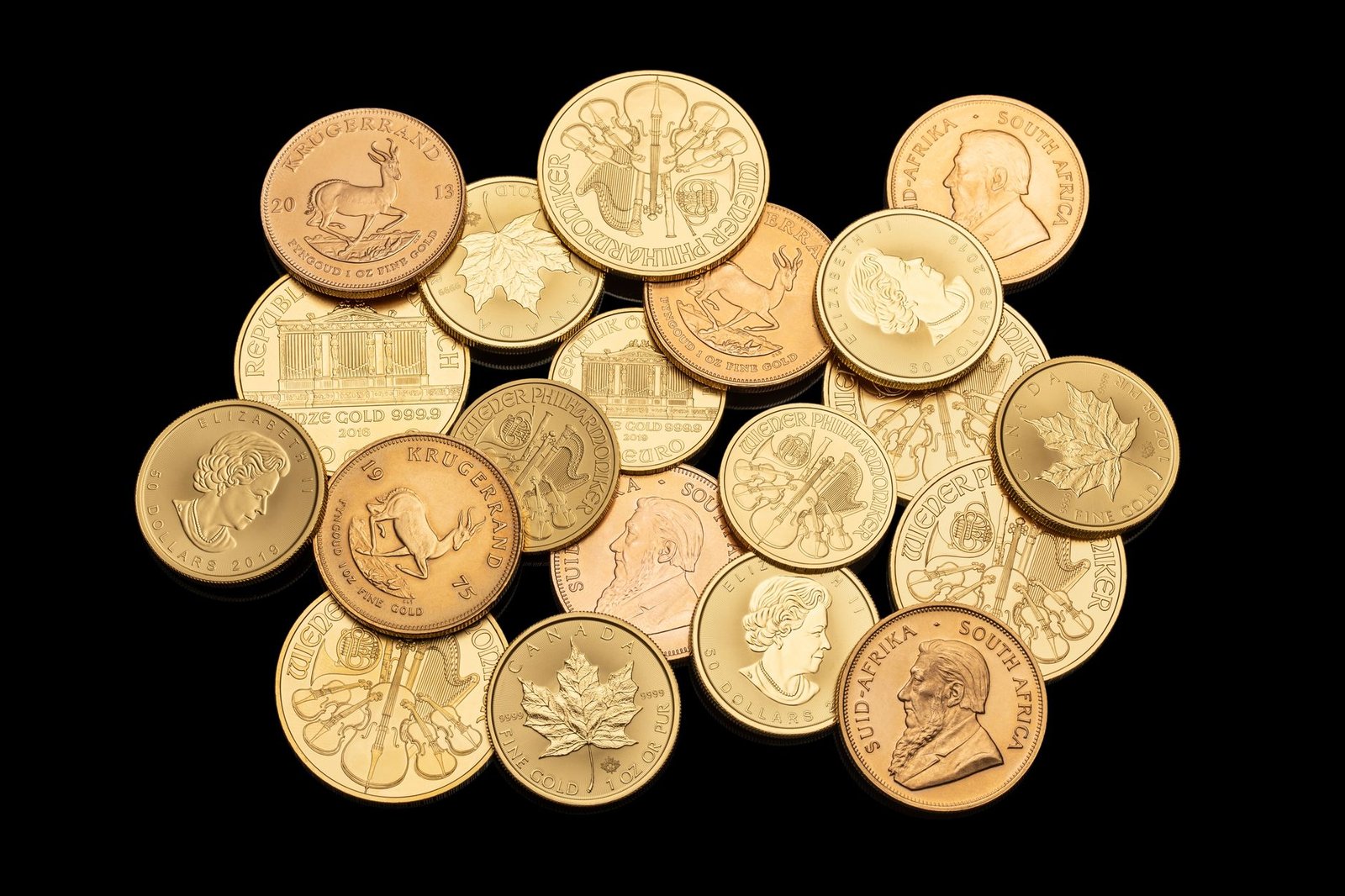
Not all gold is eligible for an IRA. The IRS specifies that gold must meet a minimum fineness of 0.995 (99.5% pure) to qualify. Common examples include American Gold Eagle coins, American Gold Buffalo coins, and certain gold bars from approved refiners. Our guide to IRA-eligible gold coins covers the most widely held options in detail.
Mandatory Third-Party Custodian
The IRS requires that a Gold IRA be administered by an approved custodian — typically a bank, trust company, or other IRS-qualified institution. You cannot personally hold the metals in your IRA; they must be stored in an IRS-approved depository. Attempting to take physical possession of IRA gold before a qualified distribution is treated as a taxable distribution and may trigger penalties.
Required Minimum Distributions
Once you reach age 73, the IRS requires you to begin taking Required Minimum Distributions (RMDs) from a Traditional Gold IRA. With a physical metal account, this means either selling a portion of your holdings or taking an in-kind distribution of the metal itself. The IRS RMD FAQ explains the mechanics in straightforward terms.
Rolling Over an Existing Retirement Account Into a Gold IRA
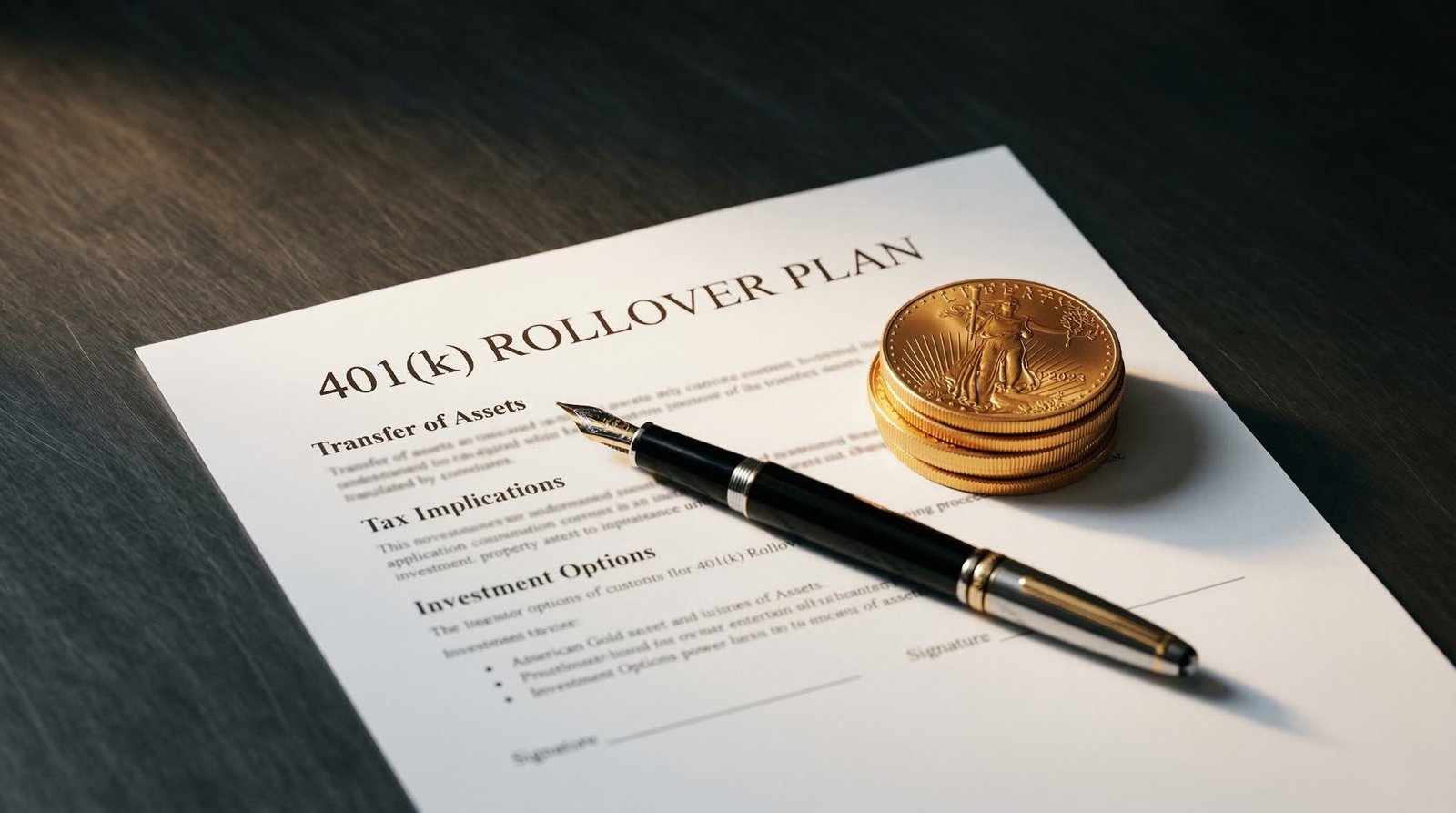
Many South Dakota residents who open a Gold IRA do so by rolling over funds from an existing 401(k) or traditional IRA rather than making fresh annual contributions. A rollover can be a straightforward process when done correctly — but the rules are specific and the consequences of errors can be costly.
The IRS allows a 60-day indirect rollover, where funds are distributed to you and you redeposit them into the new account within 60 days. Miss that window and the distribution may be treated as taxable income. A direct rollover (also called a trustee-to-trustee transfer) avoids this risk entirely by moving the funds directly between institutions without passing through your hands.
Our 401(k) to Gold IRA rollover guide walks through both methods step by step. For a complete overview of the applicable regulations, see our Gold IRA rollover rules page.
Gold IRA Storage: What South Dakota Residents Need to Know
This is where geography does come into play — at least at the practical level. IRS rules require that your physical gold be stored in an approved depository. There is no IRS-approved depository currently operating within South Dakota itself, which means your metals will be stored out of state regardless of where you live.
That is perfectly normal. The vast majority of Gold IRA holders across the U.S. store their metals in depositories located in Delaware, Texas, or other states with established precious metals storage infrastructure. The two most widely used facilities are the Delaware Depository and Brinks Global Services, though your chosen custodian will offer a list of approved options.
Your metals are typically insured, segregated (held separately from other clients’ assets) or co-mingled depending on your storage arrangement, and audited regularly. You won’t have physical access to the metals day-to-day — that’s by design under IRS rules — but you will receive regular statements confirming your holdings.
Choosing a Gold IRA Provider as a South Dakota Resident
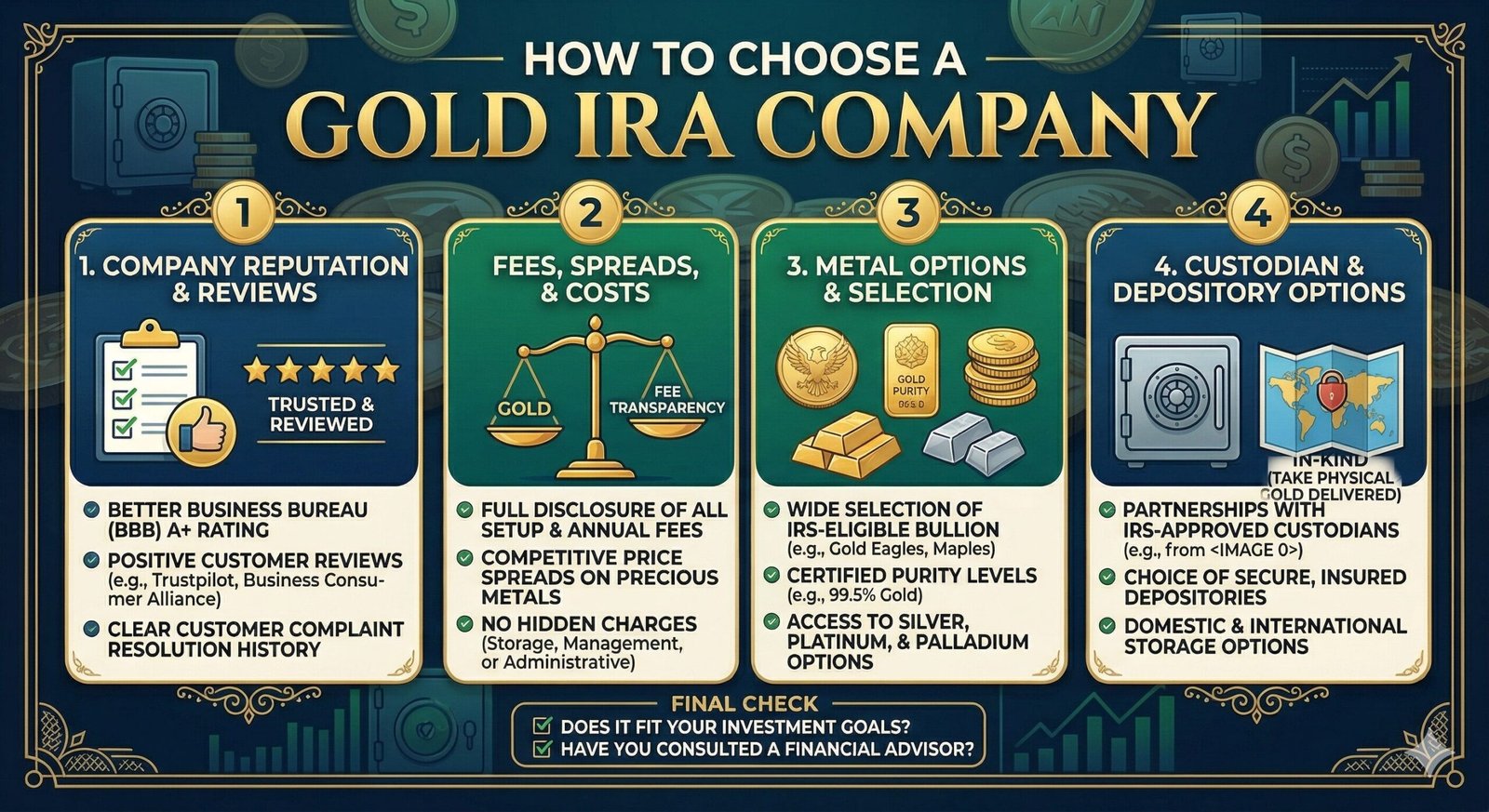
Because Gold IRAs are federally structured, South Dakota residents have access to the full national market of Gold IRA custodians and dealers. Here are the key factors to evaluate.
Fees and Transparency
Gold IRA accounts typically involve several layers of fees: account setup fees, annual custodian fees, storage fees, and sometimes transaction fees when you buy or sell metals. Our Gold IRA fees guide explains what each charge covers and what to watch out for. Always ask for a full written fee schedule before opening an account.
Minimum Investment Requirements
Different providers set different minimums, ranging from a few thousand dollars to $50,000 or more. Before you compare providers, it helps to understand the landscape — visit our Gold IRA minimum investment page for a current overview.
Reputation and Accreditation
Look for custodians and dealers with strong ratings from the Better Business Bureau at bbb.org and clean records on FINRA BrokerCheck. FINRA’s guidance on self-directed IRAs also includes helpful advice on vetting providers before you commit.
Scams and high-pressure sales tactics are unfortunately common in this industry. Our Gold IRA scams guide details the red flags to watch for and how to verify a company’s legitimacy before moving your retirement savings.
Gold IRA vs. Other Retirement Accounts: A Quick Comparison
*Catch-up contribution for age 50+
For more on how these account types compare, read our Gold IRA vs Traditional IRA and Gold IRA vs 401(k) articles.
Is a Gold IRA Right for You?
That’s a question only you — ideally working alongside a qualified financial advisor — can answer. A Gold IRA comes with genuine costs, specific rules, and long-term commitments that aren’t right for every investor. If you’re still evaluating whether this type of account fits your retirement picture, our article on is a Gold IRA a good idea offers a balanced look at both the potential advantages and the practical limitations.
Frequently Asked Questions
Can I store Gold IRA metals at home in South Dakota?
No. The IRS prohibits personal possession of metals held inside a Gold IRA, regardless of what state you live in. All IRA-held metals must remain in an IRS-approved third-party depository. Taking possession of the metals before a qualified distribution is treated as a taxable event and may trigger early withdrawal penalties.
Does South Dakota’s lack of state income tax affect my Gold IRA?
Not directly. The tax treatment of a Gold IRA — deferred growth in a Traditional account, tax-free qualified withdrawals in a Roth account — is governed by federal IRS rules, not state law. That said, South Dakota’s absence of state income tax may affect how your overall retirement income is taxed at the state level. Consult a qualified tax professional for guidance specific to your situation.
Can I roll over my South Dakota public employee pension into a Gold IRA?
This depends on the specific plan. Some defined contribution plans (like 401(k)-style plans) are eligible for rollovers; defined benefit pensions generally are not while you’re still accruing benefits. Check with your plan administrator and review the plan documents before initiating any rollover.
How do I verify that a Gold IRA company is legitimate?
Start with the Better Business Bureau, FINRA BrokerCheck, and the SEC investor resources page. Look for companies with established operating histories, transparent fee structures, and positive independent reviews. Avoid any company that pressures you to act quickly or makes promises about returns.
What happens to my Gold IRA when I turn 73?
At age 73, federal rules require you to begin taking Required Minimum Distributions from a Traditional Gold IRA. Because your assets are physical metals rather than cash, you have two options: sell enough metal to satisfy the RMD amount, or take an in-kind distribution of the physical metal itself. Either approach has specific documentation and timing requirements — your custodian should walk you through the process well in advance.
Ready to explore your options? Our independently researched roundup of the Best Gold IRA Companies of 2026 reviews the leading providers based on fees, minimums, storage options, and customer service reputation — giving you a reliable starting point for your research.
This article is for informational purposes only and does not constitute financial or tax advice. Investing in precious metals involves risk including possible loss of principal.
Related guides
- Gold IRA Consumer Affairs Reviews: What to Look For
- Gold IRA Trustpilot Reviews: What Real Customers Say
- Gold IRA BBB Complaints: What Consumer Reports Reveal
- Is a Gold IRA Worth the Fees? A Cost-Benefit Analysis
- Are Gold IRA Fees Too High? Breaking Down the Real Costs
- Gold IRA Mistakes to Avoid: 10 Common Errors Investors Make