
Gold IRA in Pennsylvania: Rules and Top Providers
If you live in Pennsylvania and you’re thinking about adding physical gold to your retirement savings, you’re not alone. Across the Keystone State — from Philadelphia’s suburbs to Pittsburgh’s neighborhoods to the smaller communities in between — retirement investors are asking the same question: what exactly does a gold IRA involve, and how does it work for Pennsylvania residents specifically?
This guide walks through the federal rules that govern gold IRAs, the Pennsylvania-specific tax landscape you should be aware of, and what to look for when comparing providers. As always, nothing here constitutes financial or tax advice. For decisions specific to your situation, consulting a licensed financial advisor or CPA is the right move.
What Is a Gold IRA?
Before getting into Pennsylvania specifics, it’s worth establishing the basics. A gold IRA is a type of self-directed Individual Retirement Account that holds physical precious metals — gold, silver, platinum, or palladium — rather than the stocks, bonds, and mutual funds you’d find in a conventional IRA.
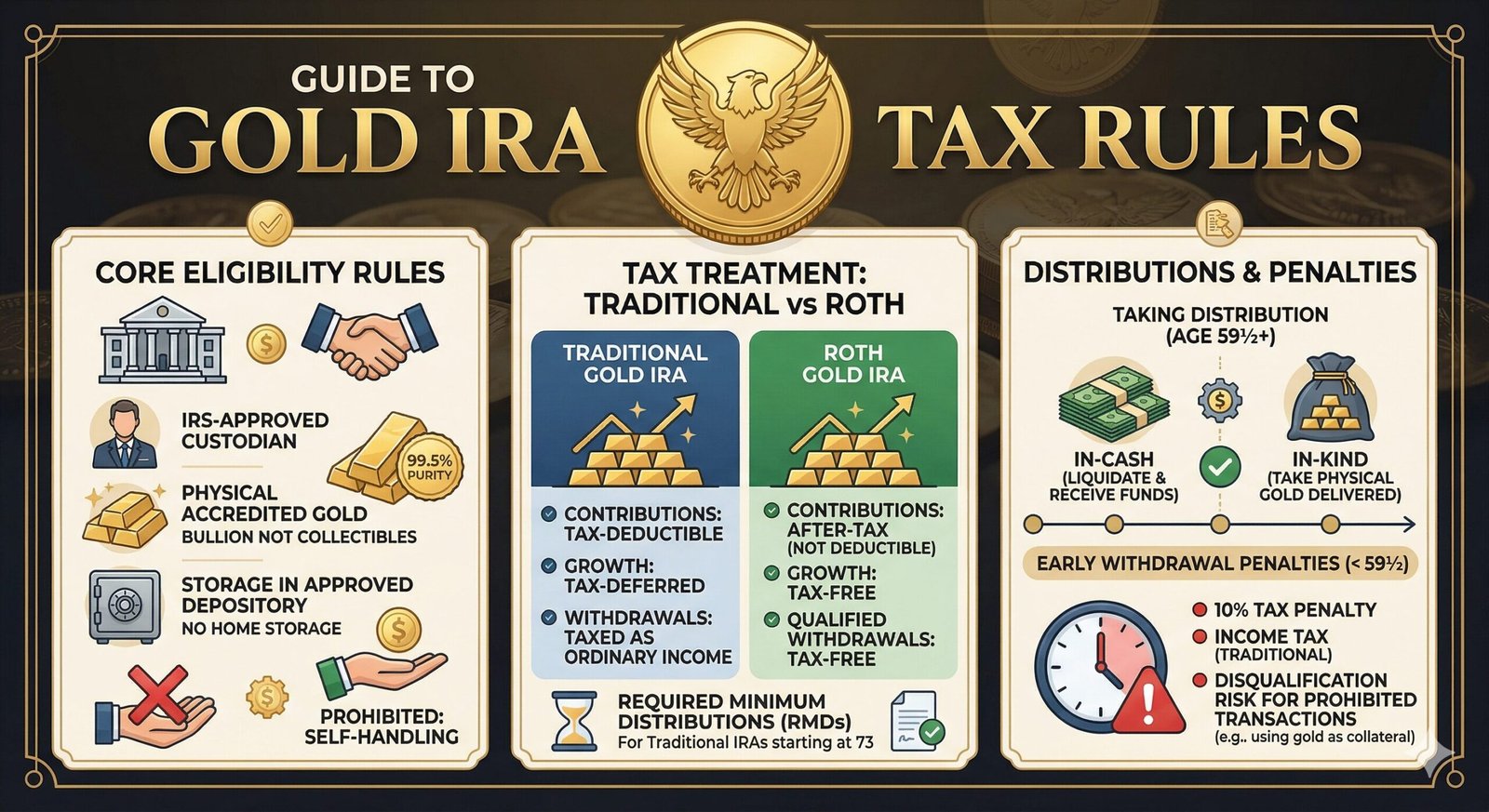
The IRS permits this structure under specific conditions. The metals must meet purity standards, they must be held by an IRS-approved custodian (not by you personally), and they must be stored in an approved depository. For a fuller breakdown of the mechanics, see our Gold IRAs Explained in Detail guide, or visit our Gold IRA hub for an overview of how everything fits together.
Like a traditional IRA, a gold IRA comes in two main flavors: traditional (pre-tax contributions, taxed on withdrawal) and Roth (post-tax contributions, tax-free qualified withdrawals). The tax structure is determined by federal law and applies uniformly to residents across all 50 states — Pennsylvania included.
Federal Rules That Apply to All Gold IRA Holders
Regardless of where you live, the IRS rules governing gold IRAs are consistent. Understanding these rules is essential before you begin the process.
Contribution Limits
For 2024 and 2025, the IRS sets the annual contribution limit for IRAs at $7,000 for individuals under 50, and $8,000 for those 50 and older (the additional $1,000 is known as the catch-up contribution). These limits apply across all IRA types — so if you also hold a traditional or Roth IRA, your total contributions to all accounts combined cannot exceed these figures. You can review the current figures directly at the IRS contribution limits page.
Eligible Metals and Purity Standards
Not every gold coin or bar qualifies for an IRA. The IRS requires gold to be at least 99.5% pure. Common eligible products include American Gold Eagle coins (which receive a special exemption despite being 91.67% gold), American Gold Buffalo coins, and most gold bars from approved refiners. For a detailed look at what passes muster, our guide to IRA-eligible gold coins covers the most commonly held options.
Custodian and Storage Requirements
You cannot personally hold the gold in your IRA — that would be treated as a distribution and trigger taxes and potential penalties. The IRS requires that a qualified custodian manage the account and that the physical metal be stored in an approved depository. The IRS IRA investment FAQ addresses this requirement directly.
This is also a key reason why FINRA urges caution with self-directed IRAs. FINRA’s guidance on self-directed IRAs notes that these accounts require the account holder to perform thorough due diligence, since the custodian does not evaluate the suitability of investments.
Required Minimum Distributions
Once you reach age 73 (under current SECURE 2.0 Act rules), the IRS requires you to begin taking Required Minimum Distributions from your traditional gold IRA each year. With physical metals, this can mean either liquidating a portion of your holdings or taking an in-kind distribution of metal — both of which have tax implications. The IRS RMD FAQ explains the calculation methodology in plain terms.
Pennsylvania State Tax Considerations
Here’s where Pennsylvania residents have some genuinely useful context to understand — though again, nothing here should be taken as personal tax advice.
Pennsylvania’s Treatment of Retirement Income
Pennsylvania has a relatively favorable framework when it comes to retirement income taxation at the state level. The state generally does not tax distributions from IRAs, 401(k)s, and other qualified retirement plans once the account holder reaches retirement age, provided certain conditions are met. This applies broadly to distributions taken after the investor reaches age 59½.
This is a meaningful distinction from many other states that do tax IRA distributions. However, “generally does not tax” is not the same as “never taxes,” and the specifics depend on how contributions were classified, how distributions are structured, and other factors unique to your situation. The Pennsylvania Department of Revenue publishes detailed guidance on this, and a Pennsylvania-licensed CPA can help you understand how your gold IRA distributions would be treated in your specific circumstances.
Capital Gains and Precious Metals
Pennsylvania’s treatment of capital gains differs from the federal approach. At the federal level, physical gold is classified as a collectible and subject to a maximum long-term capital gains rate of 28% — higher than the standard long-term capital gains rate that applies to most stocks. However, inside a gold IRA, gains are not realized until you take a distribution. At that point, the account is taxed according to IRA rules (ordinary income for traditional IRAs, tax-free for qualified Roth distributions), not collectibles rules. Pennsylvania’s own income tax treatment of distributions from qualifying retirement accounts is a separate matter, and one worth discussing with a tax professional familiar with Pennsylvania law.
Rolling Over an Existing Account Into a Gold IRA
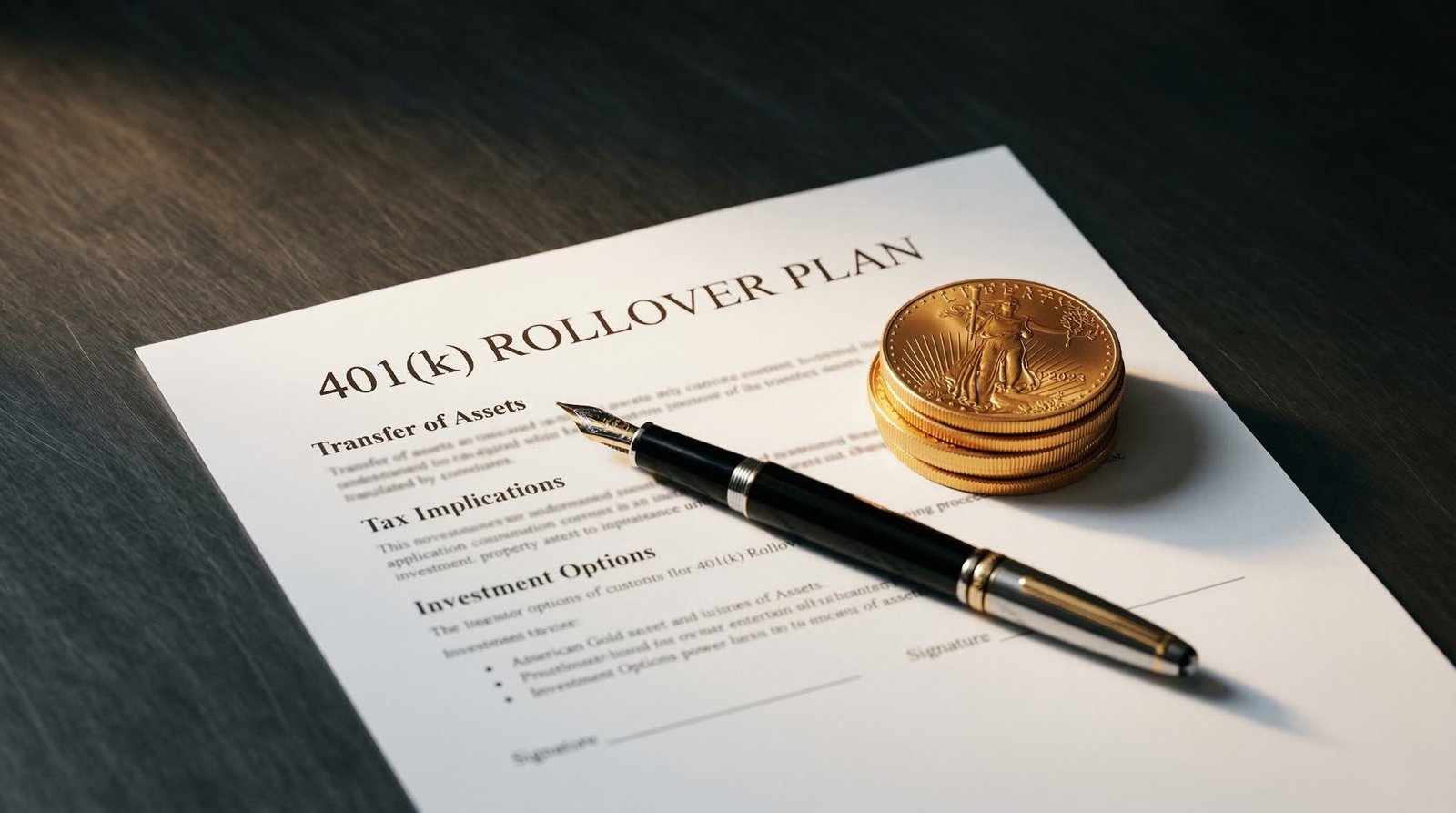
Many Pennsylvania investors fund a gold IRA not through new contributions, but through a rollover from an existing 401(k), 403(b), or traditional IRA. The rollover process is governed by federal rules, but a few points deserve attention.
A direct rollover — where funds move from your existing plan administrator directly to the new gold IRA custodian — is generally the cleanest approach. It avoids the 60-day deadline that applies to indirect rollovers and eliminates the mandatory 20% withholding that applies when you receive funds personally.
If you’re rolling over a 401(k) from a former employer, our 401(k) to Gold IRA rollover guide walks through the process step by step. For a summary of the rules that govern this process, see our Gold IRA rollover rules page.
Understanding Gold IRA Fees
One area that catches many investors off guard is the fee structure associated with gold IRAs. Unlike a conventional brokerage IRA — where costs are often low and largely invisible — a gold IRA involves several layers of fees that are worth understanding before you commit.
Some companies bundle fees; others charge them separately. Our dedicated Gold IRA fees guide breaks down what’s typical, what’s negotiable, and what fees can quietly erode returns over time if left unexamined. Past performance is not a guarantee of future results, and fee structures can have a significant cumulative effect on any account’s long-term value.
What to Look for in a Pennsylvania-Friendly Gold IRA Provider
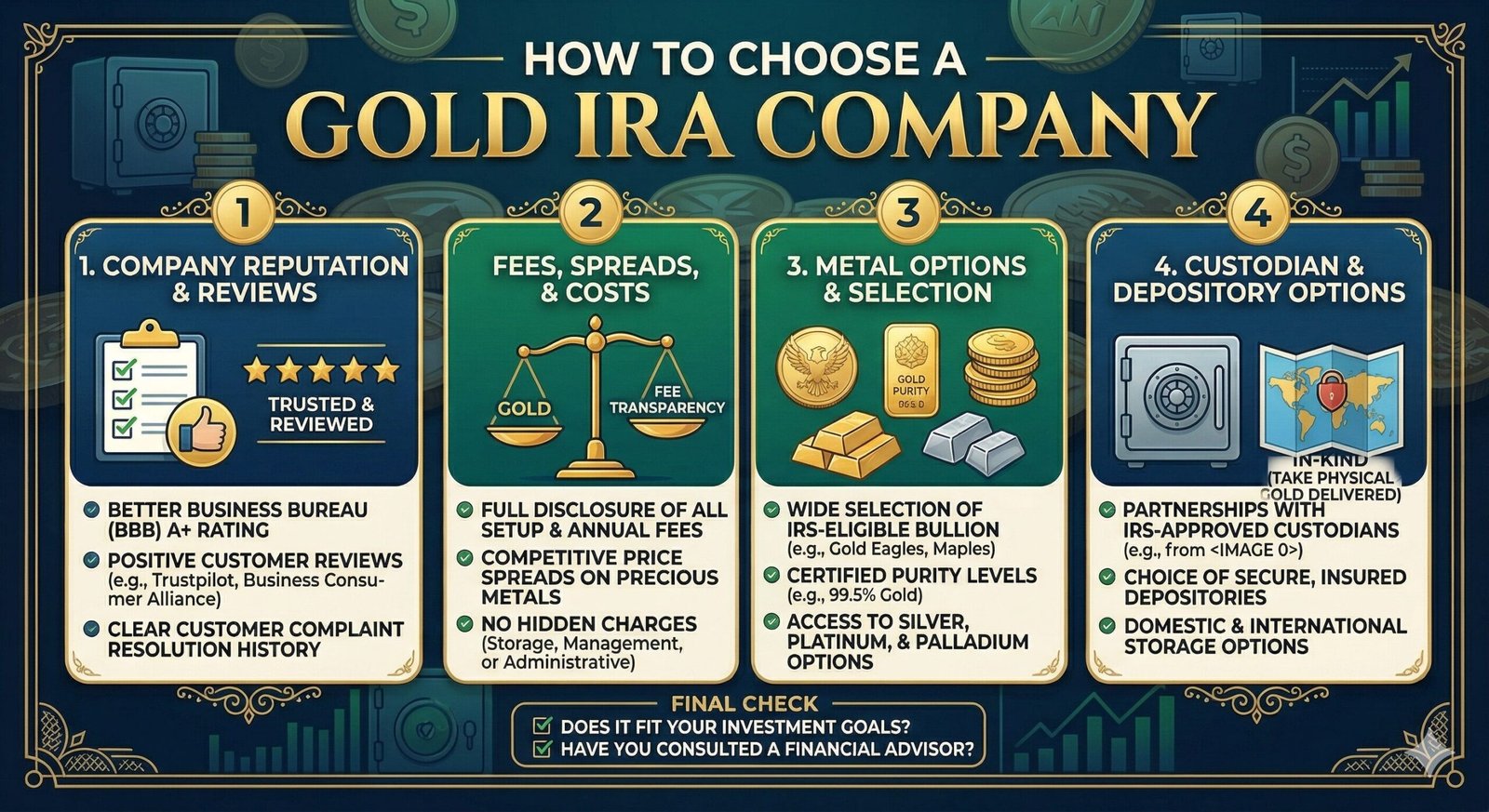
Gold IRA companies are not bank branches — you won’t find one on your local Pennsylvania Main Street. These are typically national companies that operate remotely, serving clients in every state including Pennsylvania. What matters isn’t a local address; it’s credentials, transparency, and reputation.
Custodian Credentials and Regulatory Standing
Every legitimate gold IRA custodian must be approved by the IRS and is typically subject to oversight by banking regulators. Check for registration with relevant state and federal regulators. You can use FINRA BrokerCheck to research affiliated broker-dealers, and bbb.org to look up company ratings and complaint histories.
Transparency on Fees and Minimums
Reputable companies will clearly disclose their fee schedules and minimum investment requirements before you open an account. Our Gold IRA minimum investment guide outlines what typical minimums look like across the industry. Be cautious of any company that is evasive about fees or applies pressure to commit quickly.
Educational Support
The best gold IRA providers invest in helping their clients understand the product. Look for companies that offer webinars, written educational materials, and access to specialists who can answer questions without pushing you toward a decision. For investors weighing different account types, our Gold IRA vs Traditional IRA comparison and Gold IRA vs 401(k) guide can help frame the decision.
Red Flags to Watch
The SEC investor resources and consumer protection agencies have flagged several warning signs in the gold IRA space. Unrealistic promises, vague fee disclosures, and pressure tactics are among the most common. Our Gold IRA scams guide covers the tactics used by bad actors and how to recognize them before they cost you.
If you’re still working through whether this type of account fits your retirement picture at all, our article on is a Gold IRA a good idea offers a balanced look at the considerations involved.
FAQ
Q: Is a gold IRA legal in Pennsylvania?
A: Yes. Gold IRAs are governed by federal law and are legal for residents of all 50 states, including Pennsylvania. There are no Pennsylvania-specific laws that restrict or limit your ability to open and fund a gold IRA.
Q: Will Pennsylvania tax my gold IRA distributions?
A: Pennsylvania generally does not tax distributions from qualified retirement accounts received after age 59½, which can include gold IRA distributions. However, the exact treatment depends on your individual circumstances, the structure of your account, and how contributions were made. A Pennsylvania-licensed CPA or tax advisor can give you a definitive answer for your situation.
Q: Can I store my gold IRA metals in Pennsylvania?
A: Possibly, but only at an IRS-approved depository. You cannot store IRA-held gold at home or in a personal safe deposit box — doing so is treated as a taxable distribution. Some depositories are located in the mid-Atlantic region, though many investors store metals at national facilities regardless of their home state.
Q: How long does it take to open a gold IRA in Pennsylvania?
A: Most accounts can be opened within a few business days once paperwork is complete. A rollover from an existing account typically takes two to four weeks, depending on how quickly the sending institution processes the transfer.
Q: What is the minimum amount needed to open a gold IRA?
A: Minimums vary by company. Some providers set minimums as low as $5,000, while others require $25,000 or more. See our Gold IRA minimum investment guide for a detailed breakdown by provider type.
Ready to compare your options? Our independently researched list of the Best Gold IRA Companies of 2026 evaluates providers across transparency, fees, customer service, and educational resources — giving Pennsylvania investors a solid starting point for their research.
This article is for informational purposes only and does not constitute financial or tax advice. Investing in precious metals involves risk including possible loss of principal.
Related guides
- Gold IRA Consumer Affairs Reviews: What to Look For
- Gold IRA Trustpilot Reviews: What Real Customers Say
- Gold IRA BBB Complaints: What Consumer Reports Reveal
- Is a Gold IRA Worth the Fees? A Cost-Benefit Analysis
- Are Gold IRA Fees Too High? Breaking Down the Real Costs
- Gold IRA Mistakes to Avoid: 10 Common Errors Investors Make