
Gold IRA in North Carolina: Complete Guide 2026
Retirement planning looks a little different for everyone, and if you live in North Carolina, you may be wondering whether a Gold IRA fits into your long-term financial picture. Whether you’re approaching retirement age in Charlotte, Raleigh, Asheville, or anywhere else across the Tar Heel State, the fundamental rules governing Gold IRAs are federal — set by the IRS — and apply equally to every American regardless of where they live. That said, there are some state-level considerations worth understanding before you take the next step.
This guide walks you through what a Gold IRA is, how it works, what the IRS requires, and what North Carolina residents should keep in mind as they evaluate their options. For a broader introduction to the account type, visit our Gold IRA guide.
What Is a Gold IRA?
A Gold IRA is a self-directed Individual Retirement Account that holds physical precious metals — most commonly gold, though silver, platinum, and palladium are also permitted — instead of, or in addition to, conventional assets like stocks and mutual funds. The account is structured the same way as a Traditional or Roth IRA for tax purposes, but it requires a different type of custodian and a separate storage arrangement for the physical metals.
Because a Gold IRA is a form of self-directed IRA, the IRS applies strict rules about what can be held inside it, who can manage it, and where the assets must be stored. If you want a deeper look at how the mechanics work, Gold IRAs Explained in Detail covers the full picture.
Traditional vs. Roth Gold IRA
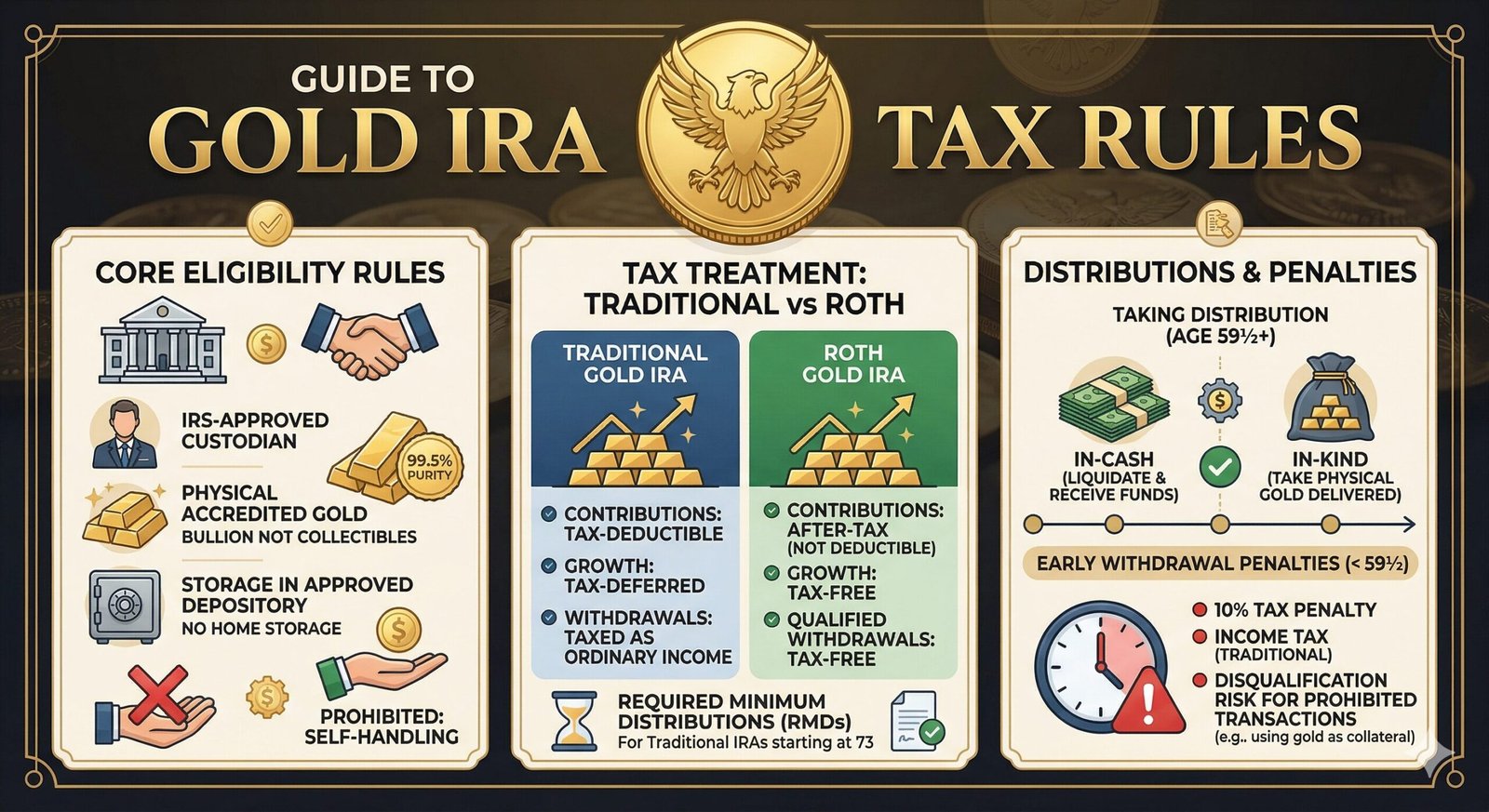
Just like conventional IRAs, Gold IRAs come in two main flavors. A Traditional Gold IRA is funded with pre-tax dollars, and you pay income tax when you take distributions in retirement. A Roth Gold IRA is funded with after-tax dollars, and qualified distributions in retirement are generally tax-free. The choice between the two depends on your current tax situation and your expectations for future tax rates — a conversation best had with a qualified tax professional. For a side-by-side breakdown of the structural differences, see our Gold IRA vs Traditional IRA comparison.
How Gold IRAs Work: The Key Components
Understanding a Gold IRA means understanding three distinct roles that must work together: the custodian, the dealer, and the depository.
The Custodian
Every IRA — including a Gold IRA — must be held by an IRS-approved custodian. For Gold IRAs, this is typically a trust company or bank that specializes in self-directed accounts. The custodian handles the administrative side: maintaining records, filing required IRS reports, processing contributions and distributions, and facilitating purchases of metals on your behalf. You can find useful background on how self-directed IRAs are structured in FINRA’s guidance on self-directed IRAs.
The Precious Metals Dealer
Once your account is established and funded, you’ll work with a precious metals dealer to select which metals to purchase. Importantly, the IRS has specific purity standards that must be met. Gold, for example, must be at least 99.5% pure. Certain coins are explicitly approved — including American Gold Eagles, Canadian Gold Maple Leafs, and Australian Gold Kangaroos, among others. For a rundown of what’s approved for retirement accounts, our guide to IRA-eligible gold coins is a helpful starting point.
The Depository
Here is a rule that surprises many first-time Gold IRA investors: you cannot store your IRA-owned gold at home or in a personal safe. The IRS requires that physical metals held in an IRA be stored at an approved, insured depository facility. These are purpose-built, highly secured vaults operated by companies that specialize in precious metals storage. The custodian will typically arrange storage on your behalf, though you may have some choice in which depository is used.
IRS Rules That Apply to Every Gold IRA Owner
Because Gold IRAs are federally regulated, the rules are the same whether you’re in North Carolina, Nevada, or New Hampshire. Here are the most important ones to understand.
Contribution Limits
For 2025 and 2026, the IRS allows annual IRA contributions of up to $7,000 if you are under age 50, and up to $8,000 if you are 50 or older (the $1,000 catch-up contribution). These limits apply across all of your IRAs combined — not per account. Full details are available directly from the IRS contribution limits page. You can also review IRS Publication 590-A for comprehensive guidance on IRA contributions.
Required Minimum Distributions
If you hold a Traditional Gold IRA, you are required to begin taking Required Minimum Distributions (RMDs) starting at age 73 under current law. RMDs from a Gold IRA work the same way as from any Traditional IRA, but taking one may require you to liquidate a portion of your metals or take an in-kind distribution — something worth planning for in advance. The IRS RMD FAQ provides official guidance on the rules.
Prohibited Transactions
The IRS is strict about what you can and cannot do with a self-directed IRA. You cannot use IRA assets to purchase metals for personal use, store IRA-owned metals yourself, or transact with certain “disqualified persons,” which includes yourself and close family members. Violating these rules can result in your entire IRA being treated as a taxable distribution. The IRS IRA investment FAQ covers prohibited transaction rules in plain language.
Rollover Options for North Carolina Residents
Many North Carolina residents considering a Gold IRA already have retirement savings in an existing 401(k), 403(b), or Traditional IRA. Moving those funds into a Gold IRA is possible through a rollover process, and it’s one of the most common ways people initially fund these accounts.
If you have a 401(k) from a former employer, a direct rollover to a Gold IRA is typically a straightforward process. Our 401(k) to Gold IRA rollover guide explains the steps involved, and our Gold IRA rollover rules page covers the timing and tax rules you need to follow carefully to avoid unintended tax consequences.
The key distinction is between a direct rollover — where funds move institution to institution without passing through your hands — and an indirect rollover, where you receive the funds and must redeposit them within 60 days. Missing that window or completing multiple indirect rollovers in a 12-month period can trigger taxes and penalties. Always confirm the mechanics with your custodian before initiating any transfer.
Gold IRA Fees: What North Carolina Investors Should Expect
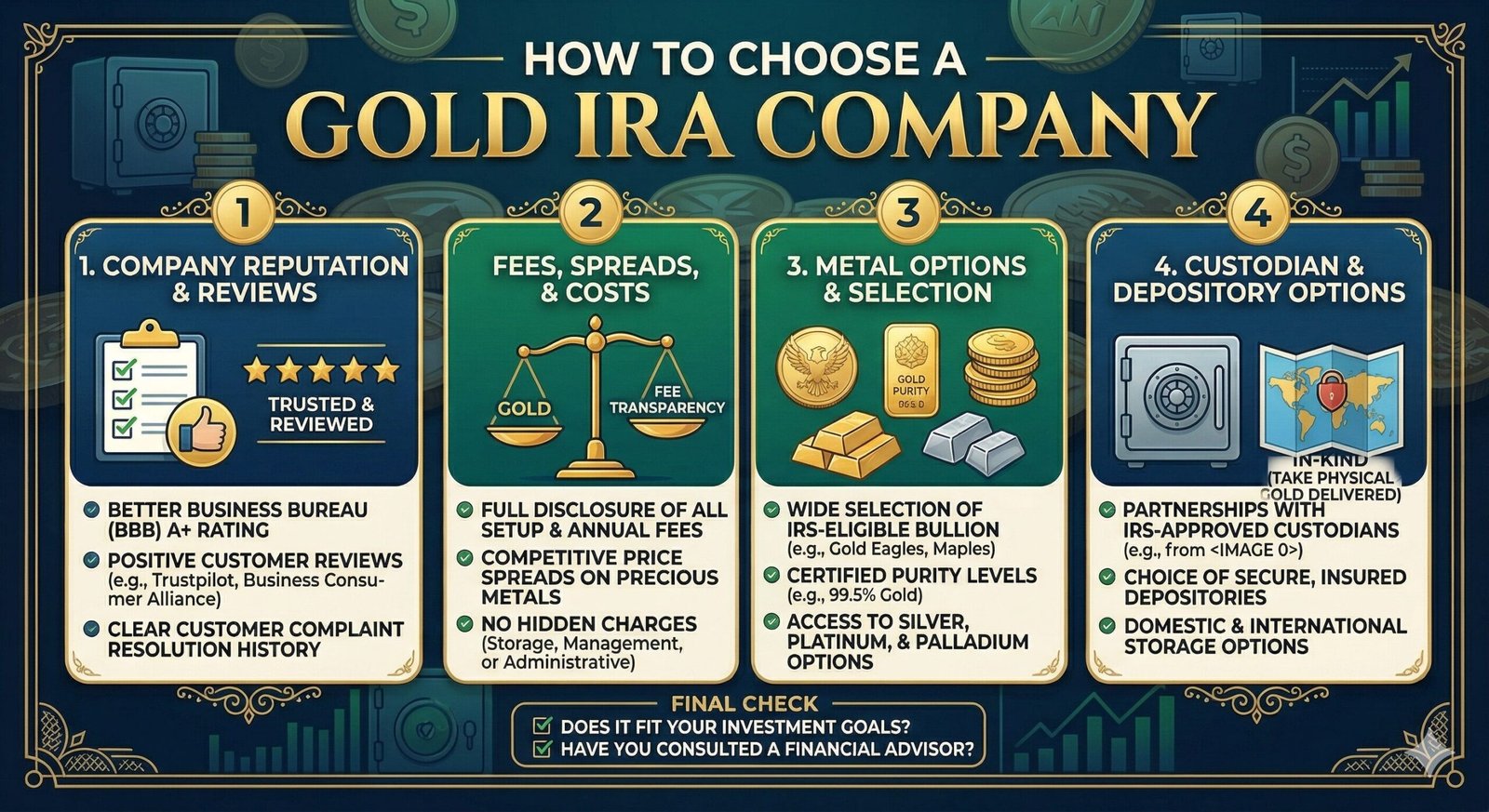
One area where Gold IRAs differ noticeably from conventional IRAs is the fee structure. Because physical metals require specialized custody and storage, you’ll typically encounter a range of charges that don’t exist with a standard brokerage IRA. Our Gold IRA fees guide breaks down all the common charges in detail, but here’s a summary of what to expect.
When comparing providers, it’s worth requesting a complete fee schedule upfront and reading the fine print on minimum investment requirements. Our guide to Gold IRA minimum investment thresholds can help you understand what different companies typically require.
North Carolina-Specific Considerations
While Gold IRA rules are set at the federal level, there are a few things North Carolina residents may want to be aware of.
State Income Tax on Distributions
North Carolina levies a flat state income tax rate on most retirement income, including Traditional IRA distributions. As of recent tax years, the state has been phasing in a flat income tax rate, and distributions from a Traditional Gold IRA are generally treated as ordinary income at both the federal and state level. This is not tax advice — the specifics of your situation depend on many variables — but it’s worth discussing with a licensed CPA or tax advisor familiar with North Carolina’s tax code.
No State-Specific Gold IRA Regulations
North Carolina does not impose additional regulations on Gold IRAs beyond what federal law requires. There is no state licensing requirement specific to precious metals dealers operating within the state, though dealers should still be evaluated against standard due diligence criteria. The SEC investor resources page offers useful background on evaluating retirement account providers generally.
Protecting Yourself from Scams
The Gold IRA space, like many financial services industries, has attracted its share of bad actors. North Carolina residents should approach any company making extraordinary promises with caution. Our Gold IRA scams guide details the most common tactics used by disreputable operators. When evaluating any company, check their standing at bbb.org and verify any financial professionals through FINRA BrokerCheck.
Is a Gold IRA Right for You?
That depends on your individual circumstances, goals, and how you understand the role of physical metals in your overall retirement planning. A Gold IRA is not a one-size-fits-all solution, and it comes with real costs, rules, and logistical requirements that differ from a conventional IRA. Before deciding, it’s worth reading our balanced discussion of is a Gold IRA a good idea for a thorough review of the trade-offs involved.
As with any significant financial decision, speaking with a licensed financial advisor or a qualified tax professional before proceeding is strongly recommended. Past performance of any asset — including gold — is not a guarantee of future results.
Frequently Asked Questions
Can I open a Gold IRA if I live in North Carolina?
Yes. Gold IRAs are available to any eligible U.S. resident, regardless of state. North Carolina residents are subject to the same federal IRS rules as everyone else, and there are no state-level barriers to opening or maintaining a Gold IRA.
Can I store my Gold IRA metals at home in North Carolina?
No. IRS rules require that all physical metals held in an IRA be stored at an approved, third-party depository. Storing IRA-owned metals at home — even in a secure safe — constitutes a prohibited transaction that could result in significant tax consequences.
How do I roll over my existing 401(k) to a Gold IRA in North Carolina?
The rollover process is the same regardless of your state. You’ll need to open a self-directed IRA with an approved custodian, request a direct rollover from your 401(k) plan administrator, and then use the transferred funds to purchase IRS-approved precious metals. Our 401(k) to Gold IRA rollover guide walks through each step.
Will North Carolina tax my Gold IRA distributions?
Generally, Traditional IRA distributions — including those from a Gold IRA — are treated as ordinary income in North Carolina and are subject to state income tax. Roth IRA qualified distributions may be treated differently. This is a question best answered by a licensed tax professional familiar with North Carolina’s current tax laws.
How do I know if a Gold IRA company is reputable?
Look for companies with a strong track record, transparent fee disclosures, and positive third-party reviews. Check their rating and complaint history at bbb.org, verify any affiliated financial professionals at FINRA BrokerCheck, and be cautious of any company that pressures you to act quickly or promises unrealistic outcomes.
Ready to Compare Your Options?
If you’re a North Carolina resident considering a Gold IRA, the next step is reviewing the companies that offer these accounts. Not all custodians, dealers, and storage arrangements are created equal, and comparing your options carefully is time well spent. Visit our comprehensive guide to the Best Gold IRA Companies of 2026 for a detailed, side-by-side look at the leading providers in the market today.
This article is for informational purposes only and does not constitute financial or tax advice. Investing in precious metals involves risk including possible loss of principal.
Related guides
- Gold IRA Consumer Affairs Reviews: What to Look For
- Gold IRA Trustpilot Reviews: What Real Customers Say
- Gold IRA BBB Complaints: What Consumer Reports Reveal
- Is a Gold IRA Worth the Fees? A Cost-Benefit Analysis
- Are Gold IRA Fees Too High? Breaking Down the Real Costs
- Gold IRA Mistakes to Avoid: 10 Common Errors Investors Make