
Can I Roll Over My SEP IRA to a Gold IRA?
If you’ve built up retirement savings in a Simplified Employee Pension (SEP) IRA and you’re wondering whether you can move those funds into gold, the short answer is yes — it is generally possible. The longer answer involves understanding how SEP IRAs work, what the IRS permits when rolling those funds over, and what the practical steps look like when precious metals are the destination.
This article walks through the mechanics of a SEP IRA to Gold IRA rollover in plain English, covering IRS rules, eligible metals, costs, timing, and the questions most retirement investors ask before they get started.
What Is a SEP IRA, and How Is It Different From a Traditional IRA?
A SEP IRA — short for Simplified Employee Pension Individual Retirement Account — is a type of retirement account primarily used by self-employed individuals and small business owners. Employers can make tax-deductible contributions on behalf of eligible employees, including themselves if they are sole proprietors. Contributions are generally much higher than those allowed in a standard Traditional IRA.
For 2024, the IRS allows SEP IRA contributions up to 25% of compensation or $69,000, whichever is lower. You can verify current figures directly through the IRS contribution limits page.
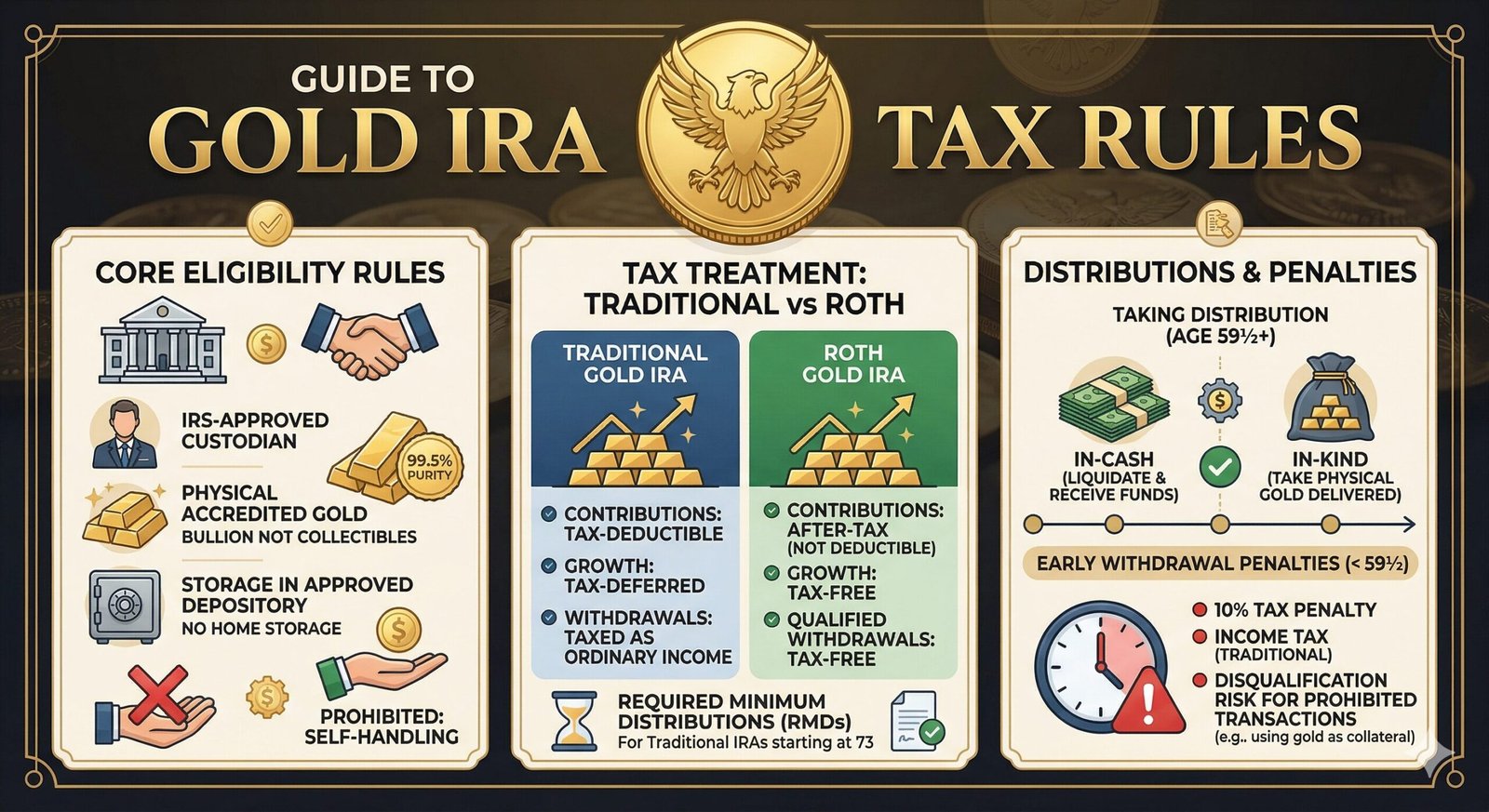
From a tax treatment standpoint, SEP IRAs function very similarly to Traditional IRAs. Contributions are made pre-tax, the account grows on a tax-deferred basis, and withdrawals in retirement are taxed as ordinary income. This tax structure is important context when considering a rollover, because it means a SEP IRA can generally roll over into another traditional-tax-treatment account — including a self-directed Gold IRA — without triggering an immediate taxable event.
For a deeper look at how these accounts compare, our Gold IRA vs Traditional IRA guide covers the key structural differences worth understanding before you proceed.
Can a SEP IRA Actually Be Rolled Over to a Gold IRA?
Yes. The IRS permits rollovers from SEP IRAs to self-directed IRAs that hold physical precious metals, provided the rollover is handled correctly and the Gold IRA meets the necessary requirements. This is not a loophole or a grey area — the IRS explicitly allows SEP IRA funds to move into self-directed IRAs, which are the vehicle used to hold physical gold and other approved metals.
What makes a Gold IRA different from a standard IRA is not the tax treatment — it’s the asset class. A standard IRA typically holds stocks, bonds, and mutual funds. A self-directed IRA allows a broader range of assets, including IRS-approved physical precious metals. FINRA’s guidance on self-directed IRAs at FINRA’s guidance on self-directed IRAs is worth reading if you want a regulatory-level overview of how these accounts operate.
The key requirement is that the Gold IRA must be structured as a traditional (pre-tax) account — not a Roth — to maintain the same tax treatment as your SEP IRA. If you attempt to roll a SEP IRA into a Roth Gold IRA, it would be treated as a conversion rather than a rollover, and the converted amount would be subject to income tax in that year. For most retirement investors, keeping it like-for-like is the straightforward path.
Our Gold IRA hub provides a solid foundation if you’re new to how these accounts are set up and administered.
How the Rollover Process Works
Step 1: Open a Self-Directed Gold IRA
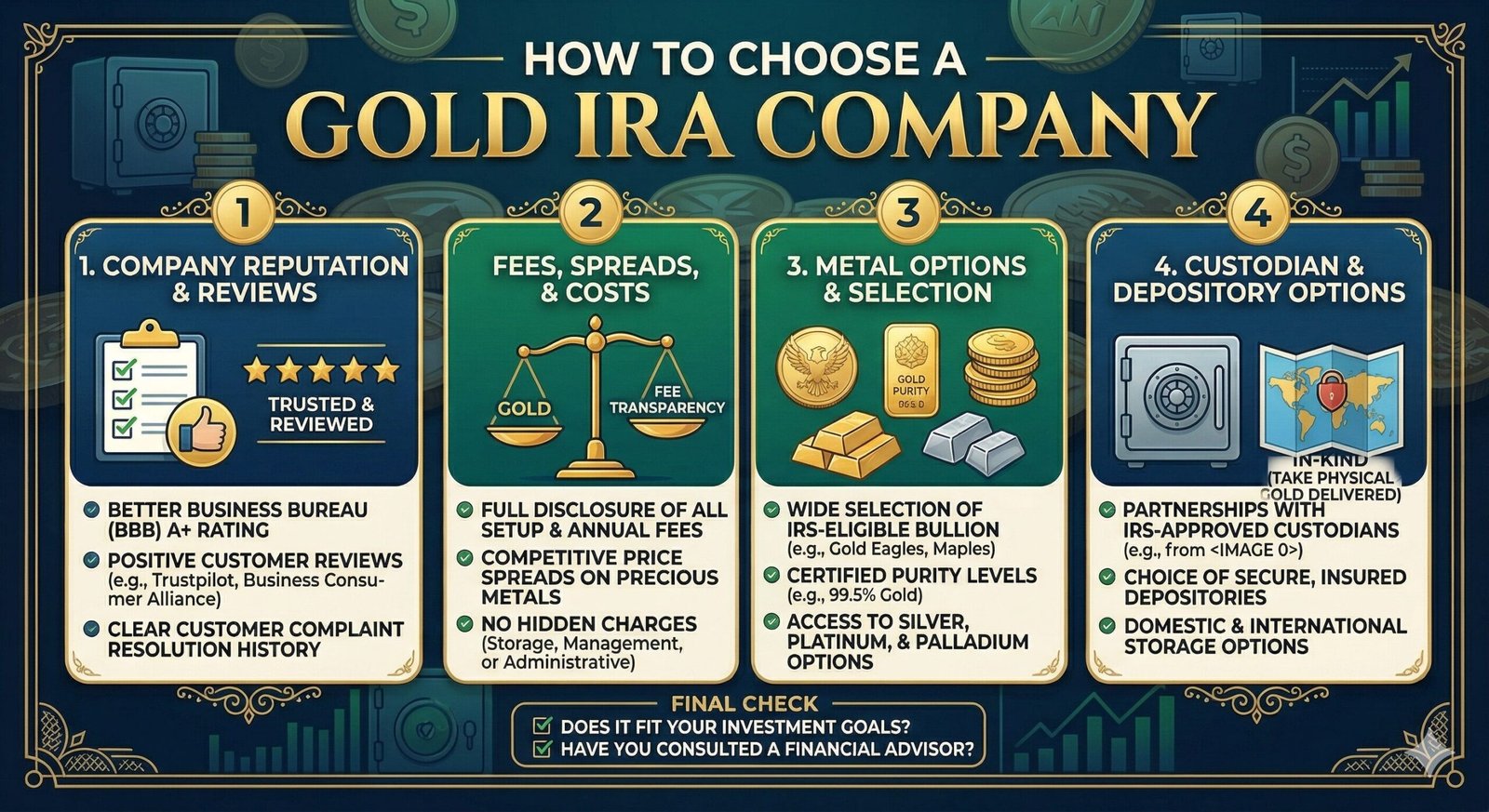
Before any funds move, you’ll need to open a self-directed IRA with a custodian that is approved to hold physical precious metals. Not all IRA custodians offer this — most large financial institutions and brokerage firms do not. You’ll need a specialist custodian.
The custodian holds the account administratively, while the physical metals are stored in an IRS-approved depository on your behalf.
Step 2: Choose Your Rollover Method
There are two ways to move funds from your SEP IRA to your new Gold IRA:
Direct rollover (trustee-to-trustee transfer): The funds move directly from your existing SEP IRA custodian to the new Gold IRA custodian. You never personally receive the funds. This is generally the cleaner option — there is no mandatory withholding, no 60-day deadline pressure, and no risk of the distribution being treated as taxable income.
Indirect rollover: The SEP IRA custodian distributes the funds to you, and you then deposit them into the Gold IRA within 60 days. The IRS allows this, but the 60-day rule is strict. Miss the deadline and the distribution is generally treated as a taxable withdrawal, and if you’re under 59½, a 10% early withdrawal penalty may also apply. There’s also a one-rollover-per-12-months rule for indirect rollovers to keep in mind.
The rules around these methods are detailed in IRS Publication 590-A, which is the primary IRS reference document for IRA contributions and rollovers.
Our Gold IRA rollover rules page breaks down both methods in greater detail. If your retirement savings are currently in a 401(k) alongside or instead of a SEP IRA, our 401(k) to Gold IRA rollover guide covers that specific path.
Step 3: Select IRS-Eligible Precious Metals
Once the funds are in your Gold IRA, they can be used to purchase physical metals — but not just any gold coin or bar will qualify. The IRS sets strict fineness standards that metals must meet to be held inside an IRA.
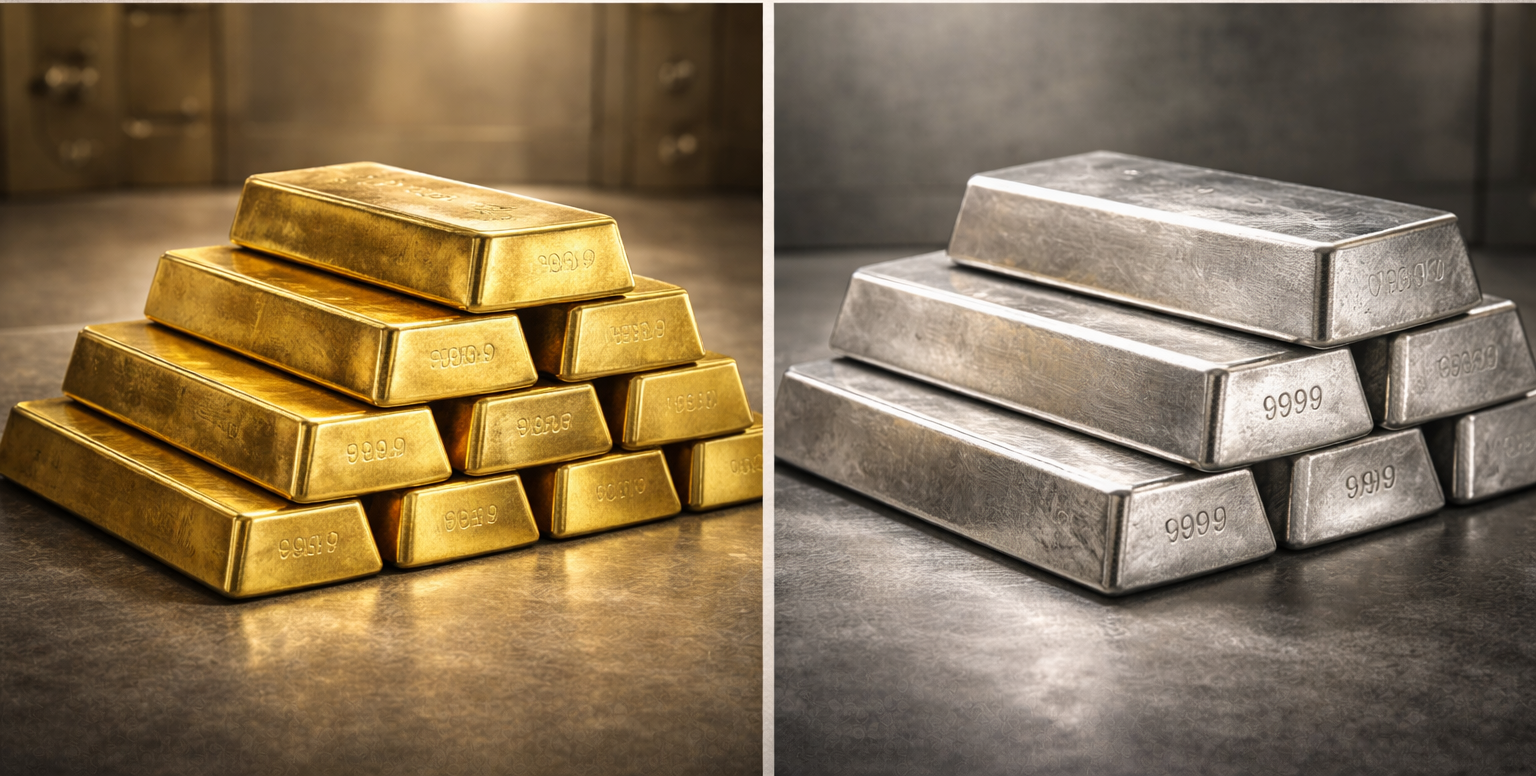
For gold, coins and bars must generally meet a minimum purity of .995 fine gold. Approved examples include American Gold Eagle coins, American Gold Buffalo coins, Canadian Gold Maple Leafs, and certain gold bars from approved refiners. You can find a more thorough breakdown in our guide to IRA-eligible gold coins.
Collectibles, rare coins, and gold jewelry are not permitted in an IRA. The IRS IRA investment FAQ at IRS IRA investment FAQ outlines the categories of investments that are and aren’t permitted in retirement accounts.
Step 4: Confirm Storage Arrangements
Physical metals held in a Gold IRA must be stored in an IRS-approved depository — a regulated, insured, third-party facility. You cannot take personal possession of the metals while they remain inside the IRA without it being treated as a distribution. The depository charges an annual storage fee, which is separate from the custodian’s administrative fees.
What Does a SEP IRA to Gold IRA Rollover Cost?
Cost is a practical consideration that many investors overlook until they’re deep into the process. Gold IRAs carry fees that standard IRAs typically don’t, including:
These fees can add up meaningfully over time, so it’s worth understanding them in full before committing. Our Gold IRA fees guide gives a comprehensive breakdown of what to expect and how to compare fee structures across custodians.
Required Minimum Distributions and SEP IRA Rollovers
One thing to keep in mind if you are approaching or past age 73 is the required minimum distribution (RMD) rules. SEP IRAs are subject to RMDs, and so are traditional-tax-treatment Gold IRAs. Rolling over your SEP IRA into a Gold IRA does not eliminate this obligation.
If you are already taking RMDs from your SEP IRA, you must continue taking them from your Gold IRA according to the same schedule. The IRS provides detailed guidance on how RMDs are calculated and when they must begin at the IRS RMD FAQ.
This is worth discussing with a qualified tax professional before you initiate a rollover, particularly if you are in the RMD phase of your retirement planning.
Evaluating Gold IRA Companies Before You Commit
Not all Gold IRA companies operate with the same level of transparency or integrity. The industry has attracted some providers who use high-pressure sales tactics, unclear fee structures, or misleading claims. Before opening an account, it’s worth doing careful due diligence.
Look for companies with strong ratings on bbb.org and check whether any representatives appear on FINRA BrokerCheck. Our Gold IRA scams guide outlines the red flags to watch for when evaluating providers.
Key Considerations Before You Roll Over
For investors asking is a Gold IRA a good idea, there’s no universal answer — it depends on your broader financial picture, your timeline, and your personal goals. What’s clear is that understanding the mechanics and costs upfront puts you in a far better position to make an informed decision.
Some practical considerations worth working through before initiating a rollover:
The minimum investment required by many Gold IRA custodians can be meaningful. Our Gold IRA minimum investment page outlines what most providers typically require to open and fund an account.
Also consider the liquidity profile of physical metals compared to conventional IRA assets. Selling physical gold out of an IRA is a different process than liquidating a stock position, and the timeline and mechanics vary between custodians.
Finally, for anyone comparing different retirement account types when thinking about their long-term strategy, our Gold IRA vs 401(k) guide explores the structural differences worth knowing.
Frequently Asked Questions
Is rolling over a SEP IRA to a Gold IRA a taxable event?
Not if it’s done correctly. A direct rollover from a SEP IRA to a traditional self-directed Gold IRA is generally not a taxable event, because both accounts share the same pre-tax structure. The funds continue to grow on a tax-deferred basis. An indirect rollover can become taxable if the 60-day deposit deadline is missed.
Can I roll over only a portion of my SEP IRA into a Gold IRA?
Yes. There is no requirement to roll over the full balance. You can initiate a partial rollover, moving only a portion of your SEP IRA funds into a Gold IRA while leaving the remainder in its current account. This is a straightforward option worth discussing with your custodians.
How long does a SEP IRA to Gold IRA rollover take?
A direct rollover typically takes between one and three weeks from initiation to completion, though timelines can vary depending on how quickly your existing custodian processes the transfer and how efficiently the new Gold IRA custodian handles account setup. Budget for up to 30 days.
Do I need to sell my existing SEP IRA holdings before rolling over?
Often, yes. Most SEP IRA custodians hold conventional assets like mutual funds or stocks, and those need to be liquidated to cash before the funds can be transferred to a Gold IRA custodian and used to purchase physical metals. Some custodians handle this automatically as part of the rollover process.
What happens to my Gold IRA metals when I reach retirement age?
When you are ready to take distributions, you can generally choose to receive the metals in kind (physical delivery) or have them sold and receive the cash value. Either option will be treated as a taxable distribution. The specifics depend on your custodian’s policies and current IRS rules for the year of distribution.
Ready to Learn More?
If you’re researching which companies offer Gold IRAs and want a side-by-side look at the leading providers — including fee structures, minimums, and customer service ratings — visit our Best Gold IRA Companies of 2026 page for a regularly updated comparison. For a deeper dive into how these accounts work from the ground up, our Gold IRAs Explained in Detail guide is a useful next step.
This article is for informational purposes only and does not constitute financial or tax advice. Investing in precious metals involves risk including possible loss of principal.
Related guides
- Gold IRA Consumer Affairs Reviews: What to Look For
- Gold IRA Trustpilot Reviews: What Real Customers Say
- Gold IRA BBB Complaints: What Consumer Reports Reveal
- Is a Gold IRA Worth the Fees? A Cost-Benefit Analysis
- Are Gold IRA Fees Too High? Breaking Down the Real Costs
- Gold IRA Mistakes to Avoid: 10 Common Errors Investors Make