
Can I Roll Over My 457(b) to a Gold IRA? Complete Answer
If you’ve spent years working in government or for a non-profit organization, there’s a good chance your primary retirement vehicle is a 457(b) plan. These deferred compensation plans are powerful savings tools — but they work differently from 401(k)s and IRAs in several important ways. So when retirement approaches and you start thinking about how to structure your savings, a natural question arises: can you actually roll a 457(b) over to a Gold IRA?
The short answer is yes — in most cases. But the full answer depends on which type of 457(b) you have, your current employment status, and how carefully you follow IRS rules during the transfer. This article walks you through everything you need to know, clearly and without jargon.
What Is a 457(b) Plan, and Who Has One?
A 457(b) is a tax-advantaged deferred compensation plan available to employees of state and local governments, as well as certain non-profit organizations that meet IRS requirements. It functions similarly to a 401(k) — contributions are made pre-tax, your money grows tax-deferred, and withdrawals in retirement are taxed as ordinary income.
There are two distinct types:
Governmental 457(b) plans are offered by state and local government employers — think public school teachers, city employees, police officers, and municipal workers. These plans are the most straightforward when it comes to rollovers, and they receive treatment that is closely aligned with 401(k) plans under IRS rules.
Non-governmental 457(b) plans are offered by tax-exempt private organizations such as hospitals, charities, and certain non-profits. These plans carry significantly more restrictions and, critically, are generally not eligible for rollover to an IRA of any kind.
Understanding which type you have is the essential first step. If you’re unsure, check your plan documents or ask your HR department.
Can a 457(b) Be Rolled Over to a Gold IRA?
For holders of a governmental 457(b), the answer is yes. The IRS permits rollovers from governmental 457(b) plans to traditional IRAs, and since a Gold IRA is simply a type of self-directed traditional IRA, it falls within scope. You can find the governing rules in IRS Publication 590-A, which covers contributions to individual retirement arrangements and rollover eligibility.
For holders of a non-governmental 457(b), the news is less favorable. The IRS does not allow these plans to roll over to an IRA. Funds held in non-governmental 457(b) plans can only be transferred to another 457(b) plan of the same type. If you attempt an unauthorized rollover, the entire distribution would be treated as taxable income in the year received — a significant and avoidable tax event.
The table below summarizes how rollover eligibility differs between the two plan types:
When Are You Eligible to Roll Over?
Even if you have a governmental 457(b), you can’t simply request a rollover at any time. Certain triggering events generally need to occur first:
Separation from service is the most common trigger. If you’ve left your government employer — through retirement, resignation, or termination — you are typically eligible to initiate a rollover. You do not need to have reached a specific age to do this with a 457(b), which is a notable advantage over 401(k) plans.
Plan termination is another trigger. If your employer closes or terminates the 457(b) plan itself, participants generally become eligible to roll those funds to an IRA.
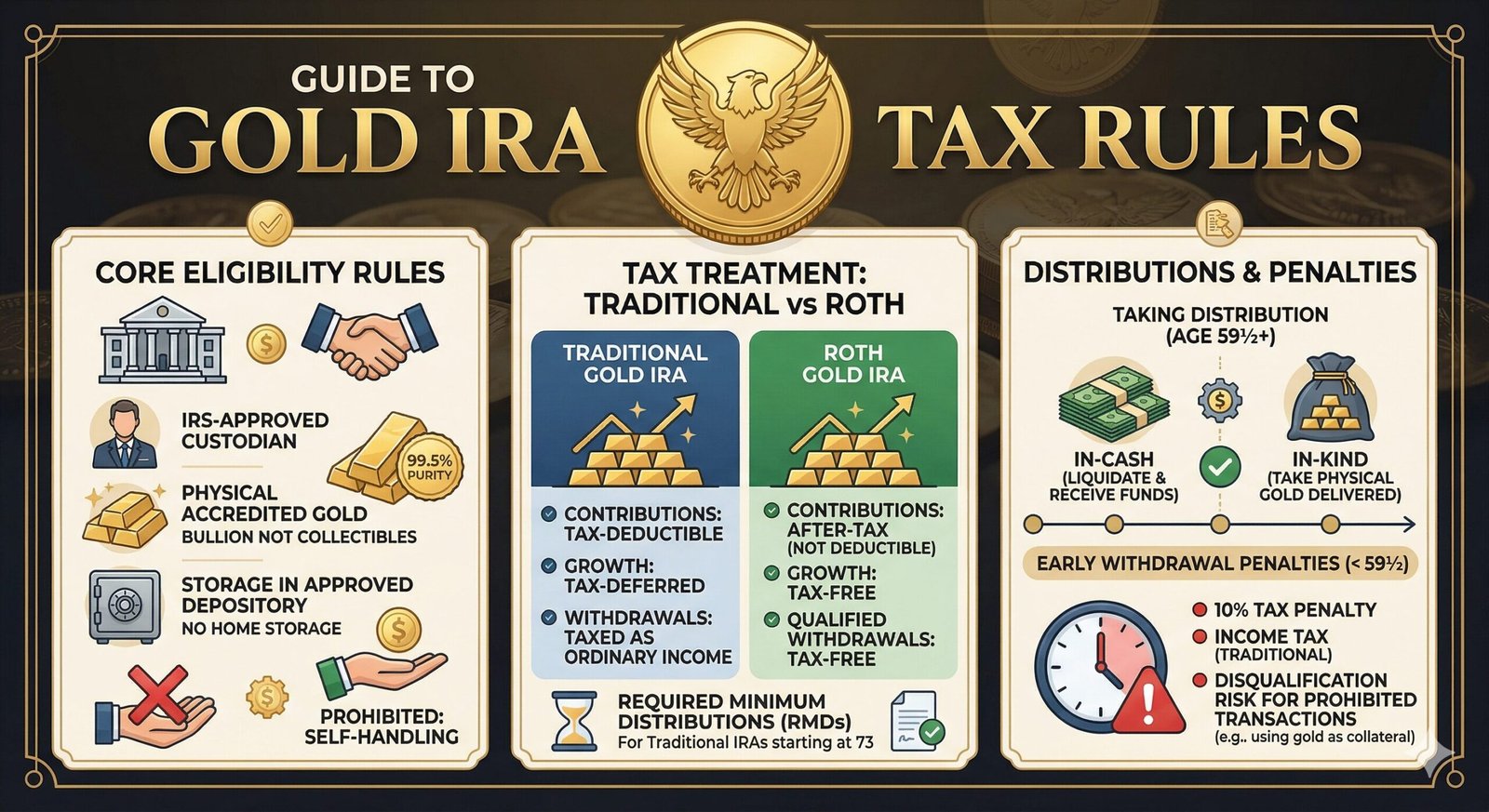
It’s worth noting that while 457(b) plans don’t impose the 10% early withdrawal penalty that applies to 401(k) and traditional IRA distributions before age 59½, rolling funds over to a Gold IRA resets that clock. Once your money is inside a traditional IRA (including a Gold IRA), the standard IRA rules apply — including the 10% penalty for early distributions before age 59½. Keep this in mind if you are still some years away from retirement.
What Is a Gold IRA, and How Does It Work?
A Gold IRA is a self-directed individual retirement account that holds physical precious metals — primarily gold, but also silver, platinum, and palladium — rather than paper-based assets like stocks and mutual funds. To get a full grounding in how these accounts function, visit our Gold IRA hub.
For gold to be held inside an IRA, it must meet IRS fineness standards. Gold must be at least 99.5% pure, silver must be 99.9% pure, and platinum and palladium must each be 99.95% pure. Coins and bars that meet these standards from approved mints and refiners are considered IRA-eligible. For more detail on which coins qualify, see our guide to IRA-eligible gold coins.
The IRS also requires that the physical metals be stored with an approved third-party custodian — you cannot personally hold or store IRA-owned metals at home. The IRS IRA investment FAQ outlines what IRA assets are permissible and what constitutes a prohibited transaction. FINRA also offers useful background on self-directed accounts through FINRA’s guidance on self-directed IRAs, which is worth reviewing before you proceed.
How to Roll Over a 457(b) to a Gold IRA: Step by Step
If you’ve confirmed that you have a governmental 457(b) and that a triggering event has occurred, here is a straightforward overview of the process.
Step 1: Choose a Gold IRA Custodian
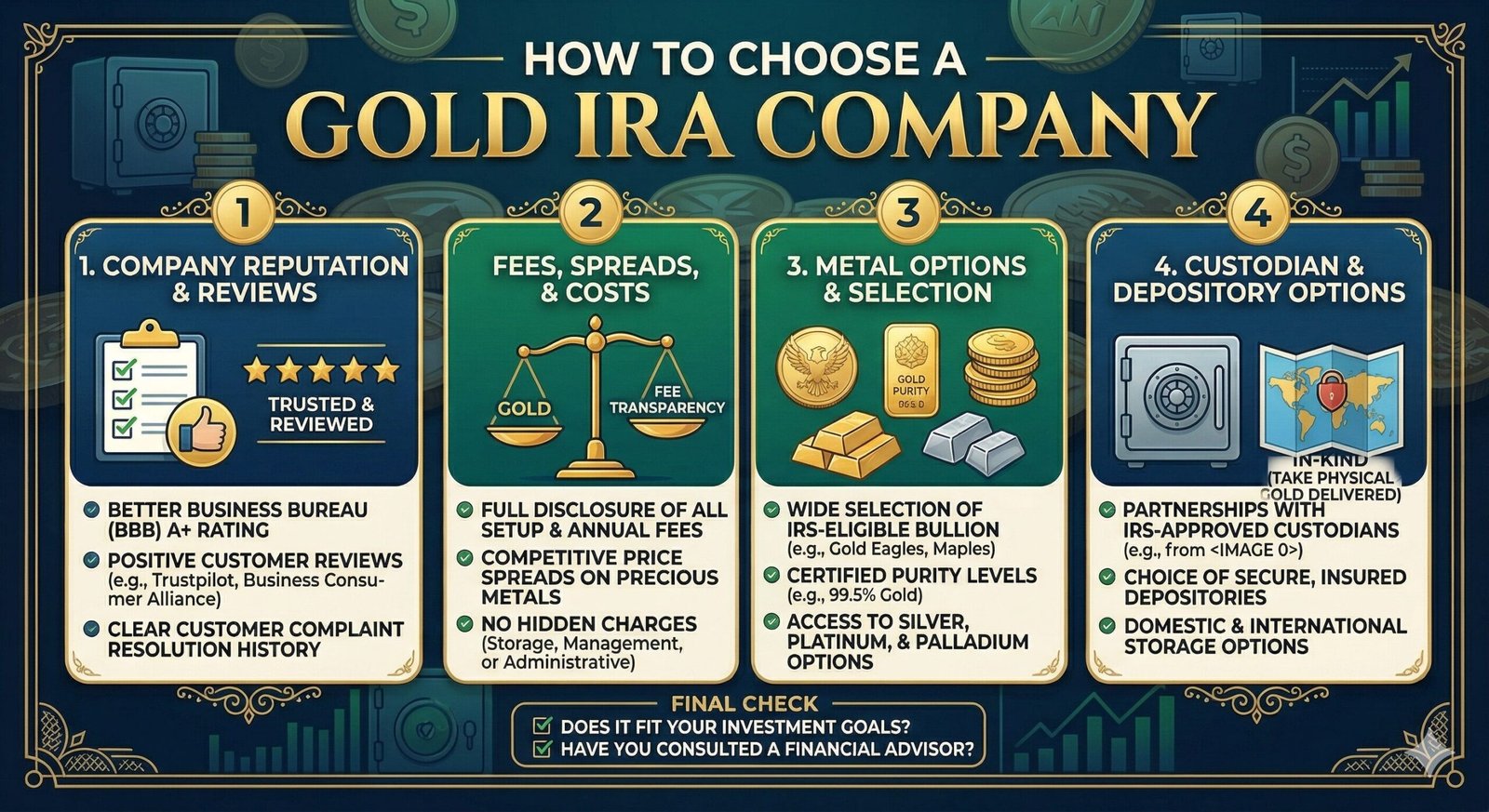
Not all IRA custodians handle physical precious metals. You’ll need to find a company that specializes in self-directed Gold IRAs. Take time to research your options carefully — compare fee structures, storage arrangements, and customer service track records. Our Best Gold IRA Companies of 2026 page is a useful starting point for your research. Also review our Gold IRA scams guide before you engage with any provider. You may also want to verify credentials through FINRA BrokerCheck and bbb.org.
Step 2: Open Your Self-Directed IRA
Once you’ve selected a custodian, you’ll complete an account application and formally open your self-directed Gold IRA. This is a straightforward administrative process that the custodian will guide you through.
Step 3: Initiate the Rollover
There are two methods for completing a rollover:
A direct rollover (also called a trustee-to-trustee transfer) moves funds directly from your 457(b) plan to your new Gold IRA custodian without the money passing through your hands. This is generally the preferred method because it avoids mandatory withholding and eliminates the risk of an accidental taxable event.
An indirect rollover involves your 457(b) plan distributing funds directly to you. You then have 60 days to deposit the full amount into your new IRA. Your plan will withhold 20% for taxes — meaning you’d need to replace that withheld amount out of pocket to avoid the withheld portion being treated as a taxable distribution. Missing the 60-day deadline triggers taxes and potentially penalties. Our detailed Gold IRA rollover rules guide covers these mechanics thoroughly.
For a broader understanding of how rollovers from employer plans work, our 401(k) to Gold IRA rollover guide covers similar territory and is a helpful companion read.
Step 4: Select Your Metals
After the funds arrive in your Gold IRA, you’ll work with your custodian to select the specific IRA-approved gold (or other metals) you want to purchase.
Step 5: Arrange Secure Storage
Your custodian will coordinate storage of your metals with an IRS-approved depository. Segregated storage (where your metals are held separately from other clients’ holdings) typically costs more than commingled storage. Our Gold IRA fees guide breaks down what to expect on the cost side.
Key Rules to Keep in Mind
Before initiating a rollover, it’s worth reviewing a few additional considerations.
Contribution limits do not apply to rollovers. The annual IRA contribution limit — $7,000 in 2026, or $8,000 if you’re 50 or older, per IRS contribution limits — applies only to new cash contributions, not to rollover funds. You can roll an entire 457(b) balance over in a single transaction without violating contribution limits.
Required Minimum Distributions apply. Once you reach age 73, the IRS requires you to take annual distributions from your traditional IRA, including a Gold IRA. Missing an RMD carries substantial penalties. The IRS RMD FAQ provides authoritative guidance on how RMDs are calculated and when they must be taken.
Roth conversion is possible but taxable. You could roll your 457(b) into a Roth IRA instead of a traditional IRA, but the rolled amount would be treated as taxable income in the year of the conversion. This is a significant decision that deserves careful consideration and, given the tax implications, consultation with a qualified tax professional.
For more context on how Gold IRAs differ from standard retirement accounts, our Gold IRA vs Traditional IRA comparison and Gold IRA vs 401(k) article provide useful background.
Frequently Asked Questions
Can I roll over a non-governmental 457(b) to a Gold IRA?
No. The IRS does not permit non-governmental 457(b) plans to roll over to any type of IRA, including a Gold IRA. Funds in these plans are generally limited to transfers within the same plan type or withdrawal upon qualifying events. Attempting an unauthorized rollover would result in the funds being treated as a taxable distribution.
Do I need to leave my job before rolling over my governmental 457(b)?
In most cases, yes. Separation from service — whether through retirement, resignation, or termination — is the most common triggering event that makes a rollover eligible. Some plans may permit in-service distributions under specific circumstances, but this varies by plan. Review your plan documents or speak with your plan administrator.
Will I owe taxes on my 457(b) rollover to a Gold IRA?
If you complete a direct rollover from a governmental 457(b) to a traditional Gold IRA, no taxes are owed at the time of the transfer. Taxes on those funds are deferred until you take qualified distributions in retirement, just as they would be with any traditional IRA.
Is there a minimum amount required to open a Gold IRA?
Most Gold IRA custodians do set a minimum initial investment, which can range from a few thousand dollars to $25,000 or more depending on the company. Our Gold IRA minimum investment guide outlines what to expect across different providers.
How long does the rollover process typically take?
The timeline varies by plan and custodian, but most direct rollovers are completed within two to four weeks. Delays can occur if paperwork is incomplete or if your 457(b) plan administrator requires additional verification steps. If you’re doing an indirect rollover, remember that the 60-day clock starts the moment you receive the funds.
Ready to Take the Next Step?
If you’ve confirmed your eligibility and you’re ready to explore your options, start by reviewing our Best Gold IRA Companies of 2026 — a carefully researched comparison of leading providers to help you find a custodian that suits your needs. You can also visit our Gold IRAs Explained in Detail page for a deeper look at how these accounts are structured and what to consider before opening one.
This article is for informational purposes only and does not constitute financial or tax advice. Investing in precious metals involves risk including possible loss of principal.
Related guides
- Gold IRA Consumer Affairs Reviews: What to Look For
- Gold IRA Trustpilot Reviews: What Real Customers Say
- Gold IRA BBB Complaints: What Consumer Reports Reveal
- Is a Gold IRA Worth the Fees? A Cost-Benefit Analysis
- Are Gold IRA Fees Too High? Breaking Down the Real Costs
- Gold IRA Mistakes to Avoid: 10 Common Errors Investors Make