Will Gold Hit $5,000? What Analysts Are Saying
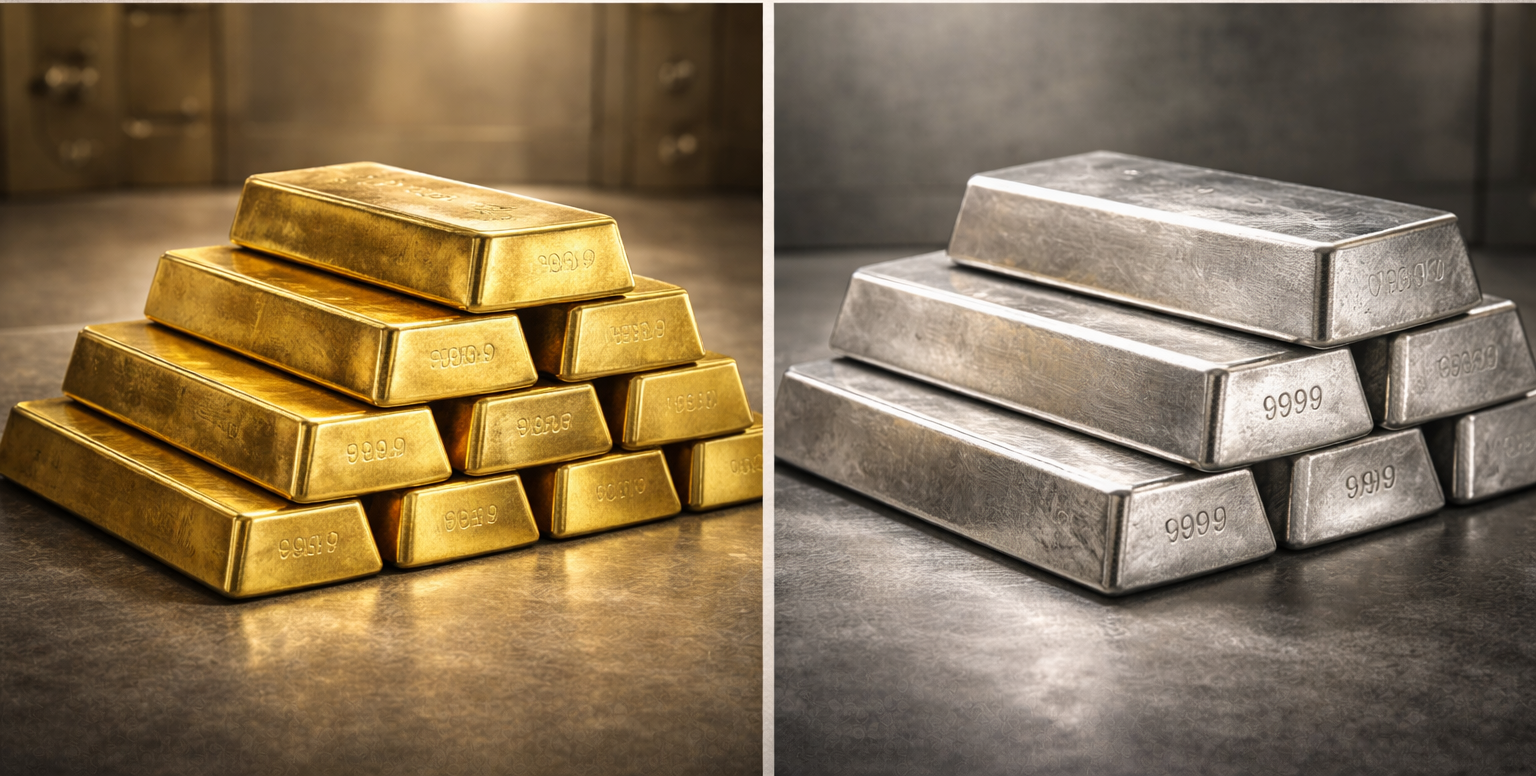
Few questions generate more discussion in financial circles right now than this one: will gold hit $5,000 per ounce? It is a number that would have seemed implausible not long ago, yet today it appears regularly in analyst reports, mainstream financial media, and conversations among retirement investors trying to make sense of an uncertain economic landscape.
This article does not predict where gold prices are headed. No one can do that with certainty, and anyone who claims otherwise deserves healthy skepticism. What we can do is walk through what serious analysts and institutions are currently saying, explain the key factors that tend to influence gold prices, and help you understand what any of this means if you are considering precious metals as part of your retirement planning.
What Analysts Are Currently Saying About Gold at $5,000
The $5,000 figure is not fringe speculation. A growing number of well-regarded financial institutions and independent analysts have begun publishing research suggesting that a move to that level, while not assured, is within the realm of possibility over a multi-year timeframe.
Bank of America, J.P. Morgan, Goldman Sachs, and various independent commodity research desks have all published bullish long-term outlooks on gold in recent years. Some have set price targets in the $3,000–$4,000 range, while others have floated scenarios that would take gold meaningfully higher. The reasoning varies, but several themes appear consistently across these research notes.
It is worth being clear: analysts get price targets wrong, sometimes significantly. Their forecasts reflect assumptions that may not play out. That said, understanding why informed professionals are watching gold closely is genuinely useful for retirement investors thinking about asset allocation decisions.
Key Factors Analysts Are Watching
Central Bank Buying Activity
One of the most frequently cited drivers in analyst commentary is the sustained and substantial buying of gold by central banks around the world. According to data from the World Gold Council, central banks have been net buyers of gold at historically elevated levels in recent years. Countries in Asia, the Middle East, and Eastern Europe have been adding meaningfully to their official gold reserves.
When central banks — institutions with enormous purchasing power and long investment horizons — are consistently buying an asset, it creates sustained demand that can support prices over time. Analysts who lean toward higher gold price scenarios often point to this as a structural shift in global demand that is unlikely to reverse quickly.
The U.S. Dollar and Global Reserve Currency Dynamics
Gold and the U.S. dollar have historically had an inverse relationship — when the dollar weakens, gold tends to become more attractive to international buyers. Analysts watching the $5,000 scenario often include assumptions about long-term dollar weakness, driven by factors like large U.S. deficits, growing national debt, and questions about the dollar’s long-term role in global trade.
This does not mean the dollar is about to collapse, and responsible analysis avoids that kind of alarmism. But the structural arguments around dollar purchasing power are a genuine part of the analytical picture. As noted in IRS Publication 590-A and related guidance, retirement account holders have options to hold certain physical assets within tax-advantaged structures — which is why many investors interested in this outlook eventually explore what a Gold IRA actually involves.
Real Interest Rates
Gold does not pay interest or dividends. That means its opportunity cost — what you give up by holding it instead of a yield-bearing asset — is closely tied to real interest rates (that is, nominal rates adjusted for inflation). When real rates are low or negative, the opportunity cost of holding gold falls, and demand typically rises. When real rates rise sharply, gold faces headwinds.
Many of the analyst scenarios that envision gold reaching $5,000 include assumptions about real rates remaining relatively low or falling over time, either because inflation remains elevated or because central banks keep nominal rates below the inflation rate. If those assumptions do not hold, the calculus changes significantly.
Geopolitical and Macroeconomic Uncertainty
Analysts frequently describe gold as a store of value that tends to attract attention during periods of geopolitical tension and macroeconomic instability. It is important to note that this is an observation about historical patterns, not a claim that gold is immune to downturns — it is not, and past performance is not a guarantee of future results.
That said, the current global environment — marked by conflicts, shifting trade relationships, debt levels not seen in decades, and questions about institutional stability — has led many analysts to include scenarios in which demand for tangible assets remains elevated.
What Could Prevent Gold From Reaching $5,000
Balanced analysis requires looking at both sides. There are several scenarios in which the $5,000 target does not materialise, at least not in the timeframes analysts suggest.
A sustained rise in real interest rates — driven by a decisive victory over inflation or stronger-than-expected economic growth — could dampen gold’s appeal. A significant strengthening of the U.S. dollar would reduce demand from international buyers. Technological breakthroughs or policy shifts that dramatically improve fiscal outlooks could reduce the macroeconomic anxiety that tends to drive interest in gold.
There is also the simple reality that market forecasts at multi-year horizons carry enormous uncertainty. Gold has had extended periods of flat or declining prices in its history, even when long-term fundamentals seemed constructive. Investors who entered gold at the peak of 2011 waited years before returning to breakeven. That is not a reason to dismiss gold as a consideration, but it is an important part of the picture.
What This Means for Retirement Investors
Understanding the analyst debate around gold prices is useful context, but it should not be the primary driver of any retirement planning decision. The more useful question is: how does gold fit within a broader approach to retirement planning, and what are the practical mechanics if you decide to explore it?
For many retirement investors, the most relevant vehicle is the Gold IRA — a self-directed individual retirement account that holds physical gold and other precious metals instead of, or alongside, traditional paper assets. You can get a thorough grounding in how these accounts work in our Gold IRAs Explained in Detail guide, or visit our Gold IRA hub for a full overview.
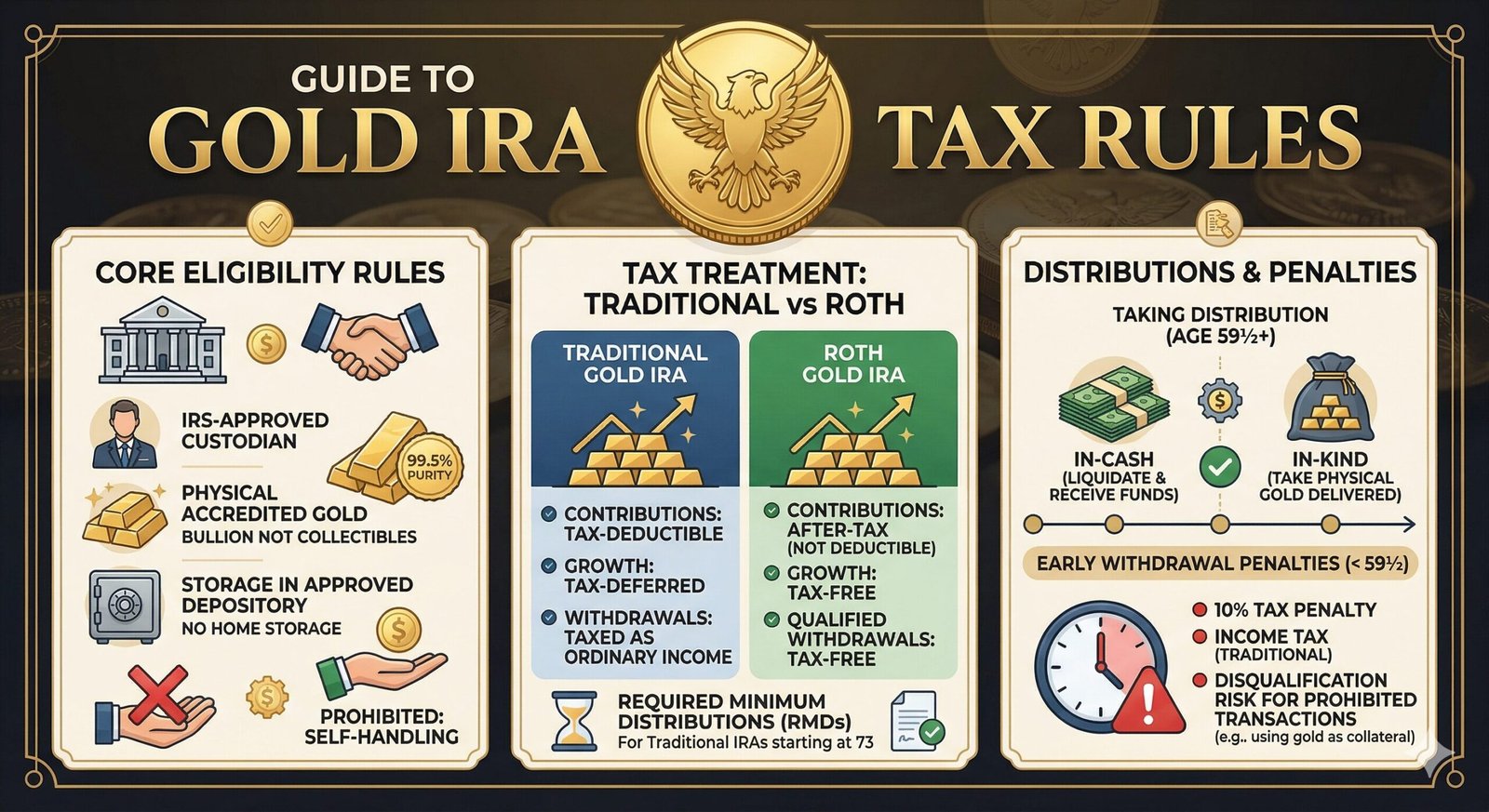
The IRS IRA investment FAQ provides official guidance on what assets are permissible within an IRA structure. Gold held in an IRA must meet specific purity standards and be stored with an IRS-approved custodian — it cannot simply be kept at home. The eligible metals are more specific than many people realise; our guide to IRA-eligible gold coins covers this in detail.
FINRA’s guidance on self-directed IRAs — available through FINRA’s guidance on self-directed IRAs — is also worth reading before opening any account. These accounts carry administrative requirements and fee structures that are different from standard brokerage IRAs. Understanding those differences upfront helps avoid surprises.
Key Gold IRA Rules and Mechanics at a Glance
If you are exploring a Gold IRA for the first time, the table below summarises some of the core structural rules:
For a deeper look at the fee landscape, our Gold IRA fees guide breaks down what to expect from setup costs, annual storage, and custodian charges — costs that vary considerably between providers. If you have an existing 401(k) you are considering moving, our 401(k) to Gold IRA rollover guide walks through the process step by step.
Doing Your Due Diligence
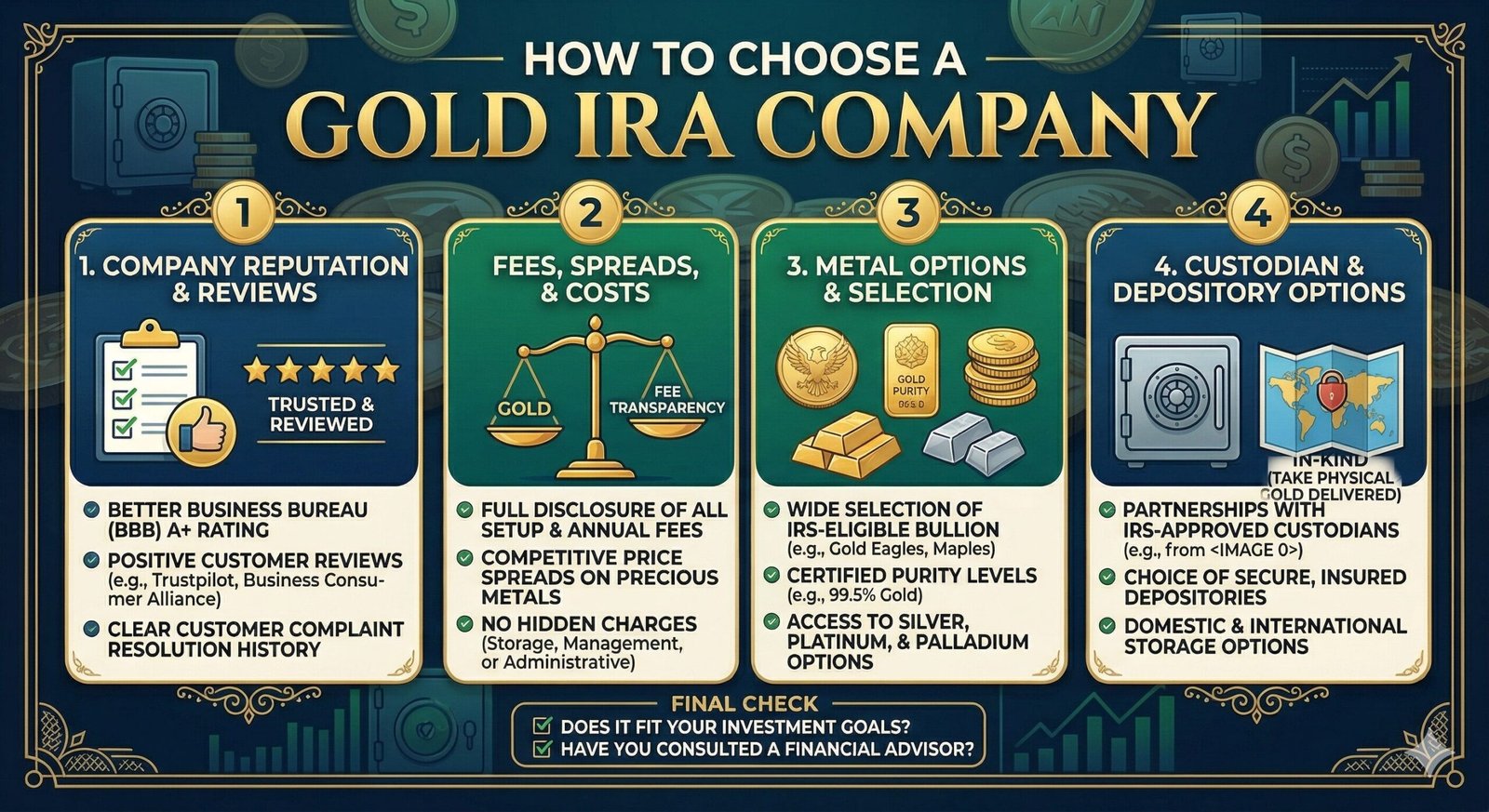
Whatever the gold price outlook, the quality of the company you work with matters enormously. The precious metals space, like any financial sector, has its share of operators whose practices deserve scrutiny. Before committing to any provider, check their ratings and complaint history at bbb.org and verify any representatives through FINRA BrokerCheck. Our Gold IRA scams guide covers the most common red flags to watch for.
For independent analysis on whether this type of account aligns with your situation, our article on is a Gold IRA a good idea provides a balanced look at the considerations involved.
Frequently Asked Questions
Will gold actually reach $5,000 per ounce?
No one can say with certainty. Analysts who have modelled this scenario base their projections on specific assumptions about interest rates, dollar strength, central bank behaviour, and macroeconomic conditions. Those assumptions may or may not prove correct. Past performance is not a guarantee of future results, and gold prices can decline as well as rise.
What would need to happen for gold to reach $5,000?
Most analyst models that include $5,000 as a possibility involve some combination of sustained central bank buying, prolonged low or negative real interest rates, continued dollar weakness, and elevated global uncertainty. If these factors materialise simultaneously over a multi-year period, the scenario becomes more plausible — but none of these are certainties.
Should I buy gold because analysts think it could hit $5,000?
This site does not provide investment advice, and analyst forecasts alone are not a sound basis for any financial decision. Decisions about your retirement assets should reflect your personal financial situation, timeline, and goals — ideally with guidance from a qualified, independent financial advisor.
How do I hold gold within a retirement account?
The primary vehicle is a Gold IRA — a self-directed IRA structured to hold physical precious metals. The gold must meet IRS purity standards, be held by an approved custodian, and stored in an approved depository. Our Gold IRA rollover rules guide covers the regulatory framework in detail.
What are the risks of investing in gold?
Gold prices are volatile and can fall significantly. Holding physical gold in an IRA also involves ongoing costs — custodian fees, storage fees, and potentially dealer markups when buying or selling. These costs exist regardless of price performance and should be factored into any decision. See our Gold IRA minimum investment page for context on the capital typically required to get started.
Ready to Learn More?
Whether the $5,000 figure ever becomes a reality, understanding how gold fits into retirement planning is worth your time. If you are ready to compare the leading providers, our independently researched guide to the Best Gold IRA Companies of 2026 is a useful starting point.
This article is for informational purposes only and does not constitute financial or tax advice. Investing in precious metals involves risk including possible loss of principal.
Related guides
- Why Is Gold So Expensive? Understanding Gold's Value
- Why Is the Gold Price Rising? Key Factors Driving 2026 Gains
- Gold Price Record 2025: Understanding the All-Time High
- Highest Gold Price Ever: All-Time Highs and What Caused Them
- Gold Price in 2025: Year in Review and Key Events
- Gold Price in 2024: Record Highs and What Drove Them