Gold Price Record 2025: Understanding the All-Time High
Gold reached a historic milestone in 2025, crossing price thresholds that few analysts had predicted just a year or two earlier. For retirement investors — particularly those already holding or considering a Gold IRA — this moment raises a range of important questions. What actually drove prices to this level? What does history suggest about what happens after a record high? And what should a long-term investor make of all of this?
This article won’t tell you what gold will do next. No one can say that with confidence, and any source claiming otherwise should be treated with caution. What we can do is walk through the factors that contributed to the 2025 gold price record, offer some historical context, and help you think more clearly about the role physical gold plays in a retirement account.
What Happened to the Gold Price in 2025?
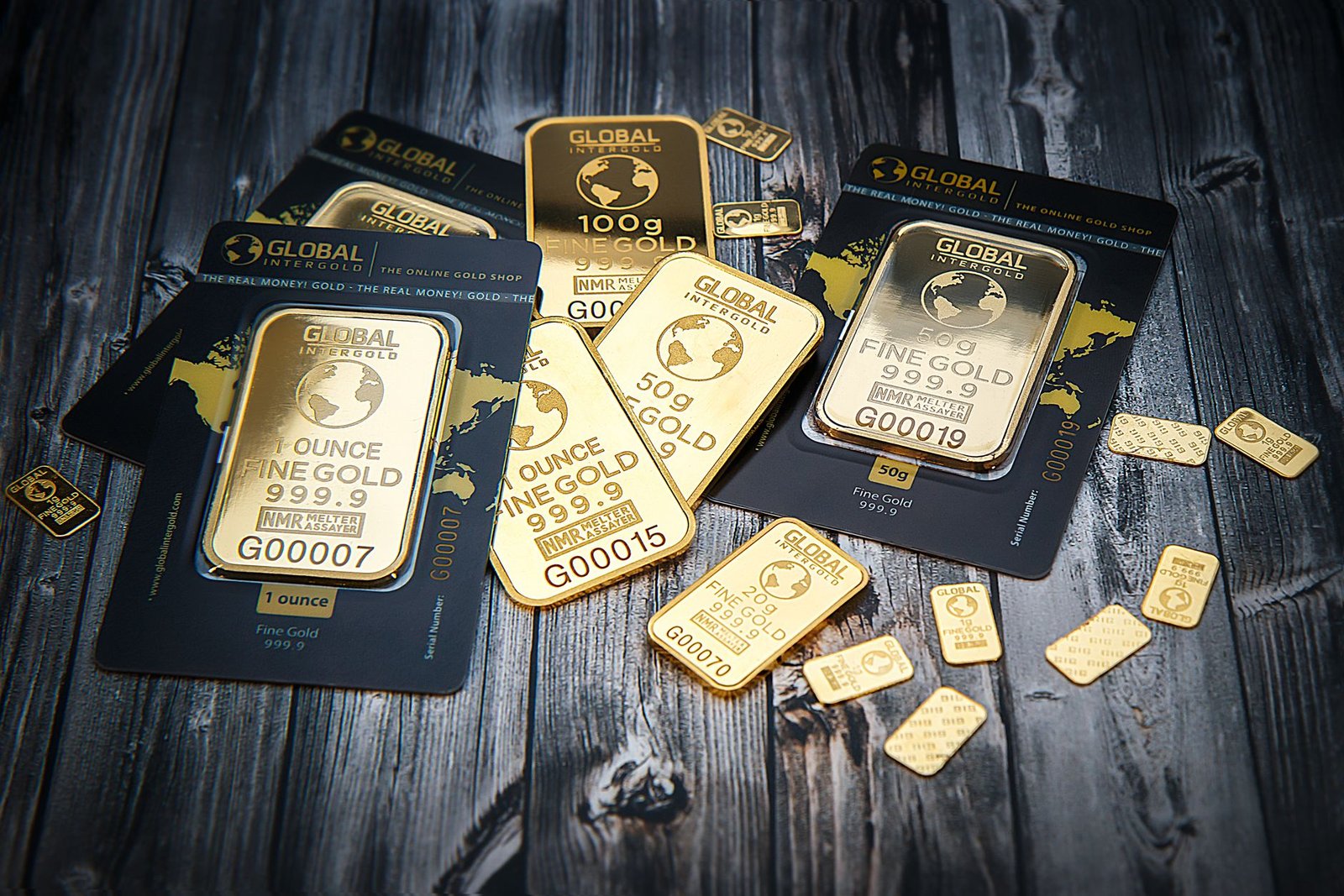
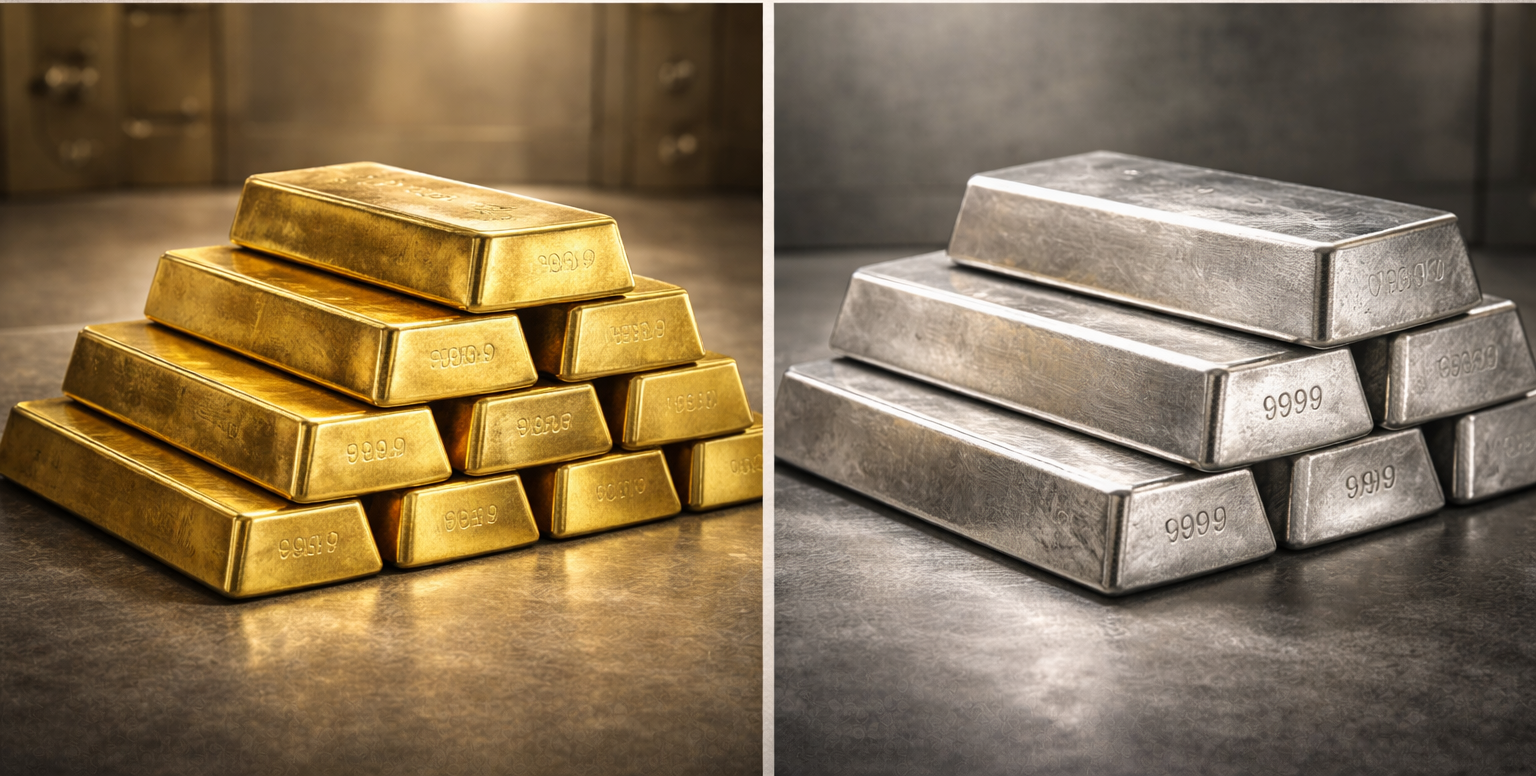
Gold’s climb to record territory in 2025 was not a sudden event. It was the result of a sustained upward trend that accelerated through multiple phases over several months. At its peak, the spot price of gold surpassed previous all-time highs in a meaningful way — a development that made headlines far beyond the usual precious metals coverage.
To be clear: past performance is not a guarantee of future results. What happened in 2025 tells us something about the conditions that were present at the time. It does not tell us where the gold price will go from here.
The Key Drivers Behind the 2025 Record
Several overlapping forces contributed to gold’s run to record levels.
Central bank demand played a particularly significant role. Central banks across Asia, the Middle East, and Eastern Europe continued accumulating gold at historically elevated rates — a trend that had been building since 2022. When large institutional buyers absorb physical supply consistently over time, that steady demand creates persistent upward pressure on price.
Monetary policy uncertainty was another contributing factor. The U.S. Federal Reserve’s path on interest rates remained a subject of debate throughout 2024 and into 2025. Gold has historically shown sensitivity to the real rate environment — that is, interest rates adjusted for inflation. When real rates are low or falling, the opportunity cost of holding gold (which pays no interest or dividend) is reduced, which tends to support demand. Again, this is historical context, not a prediction.
Geopolitical tension across multiple regions kept risk sentiment elevated in global markets. When uncertainty about the international order rises, gold often attracts increased attention from investors who want exposure to an asset that isn’t a liability of any government or corporation. This dynamic was visible throughout 2025.
Dollar dynamics also played a role. Gold is priced globally in U.S. dollars, so a weaker dollar environment tends to make gold more accessible to buyers using other currencies, which can increase global demand. Exchange rate movements and gold pricing have a complex, non-linear relationship, but the dollar’s trajectory was a widely cited factor in analyst commentary throughout 2025.
Historical Context: What Record Highs Have Meant in the Past
Gold has reached record highs before — most notably in the early 1980s (relative to the era’s prices), again in 2011-2012, and then in 2020 during the height of pandemic-related uncertainty. Each of those episodes was followed by periods of price volatility in both directions.
That historical record is important for retirement investors to hold onto. A new all-time high is not, by itself, a signal to buy or sell. Markets don’t move in straight lines, and gold is no exception. There have been multi-year periods following gold price peaks where the price declined substantially before recovering. There have also been periods where a new record high was followed by further gains. The pattern has never been consistent enough to rely on as a timing signal.
What the history of gold prices does suggest is that gold has functioned over the very long term as a store of value — though even that comes with important qualifications, and past performance is not a guarantee of future results.
If you’d like to understand more about how gold has behaved across different economic periods, our Gold IRAs Explained in Detail page covers the broader context in plain language.
Gold IRAs and the 2025 Record: What Investors Are Asking
The 2025 gold price record has prompted a surge in interest in Gold IRAs — self-directed retirement accounts that allow investors to hold physical gold and other precious metals. The IRS IRA investment FAQ sets out the general framework for what’s permissible inside an IRA, and IRS Publication 590-A covers contribution rules in detail.
If you’re new to this topic, understanding what a Gold IRA is is a good starting point before going further.
Does a Record Price Change the Case for a Gold IRA?
This is perhaps the most common question retirement investors are asking right now. The honest answer is that a new all-time high doesn’t fundamentally change the structural considerations around a Gold IRA — it just makes those considerations feel more urgent.
The case for holding physical gold inside a tax-advantaged retirement account rests on factors that exist regardless of what the spot price happened to be last week. Those factors include: the desire to hold a tangible asset, the structure of self-directed IRAs, IRS rules around eligible metals, and your own long-term financial situation.
What a record price does change is the emotional context in which people make decisions. Investors who ignored gold at $1,200 per ounce may suddenly find themselves paying close attention at $3,000+. That’s a natural human response — but it’s worth examining carefully before making any decisions. FINRA’s guidance on self-directed IRAs, available at their FINRA’s guidance on self-directed IRAs page, is a useful resource for anyone considering this structure.
What Are the Rules for Gold Inside an IRA?
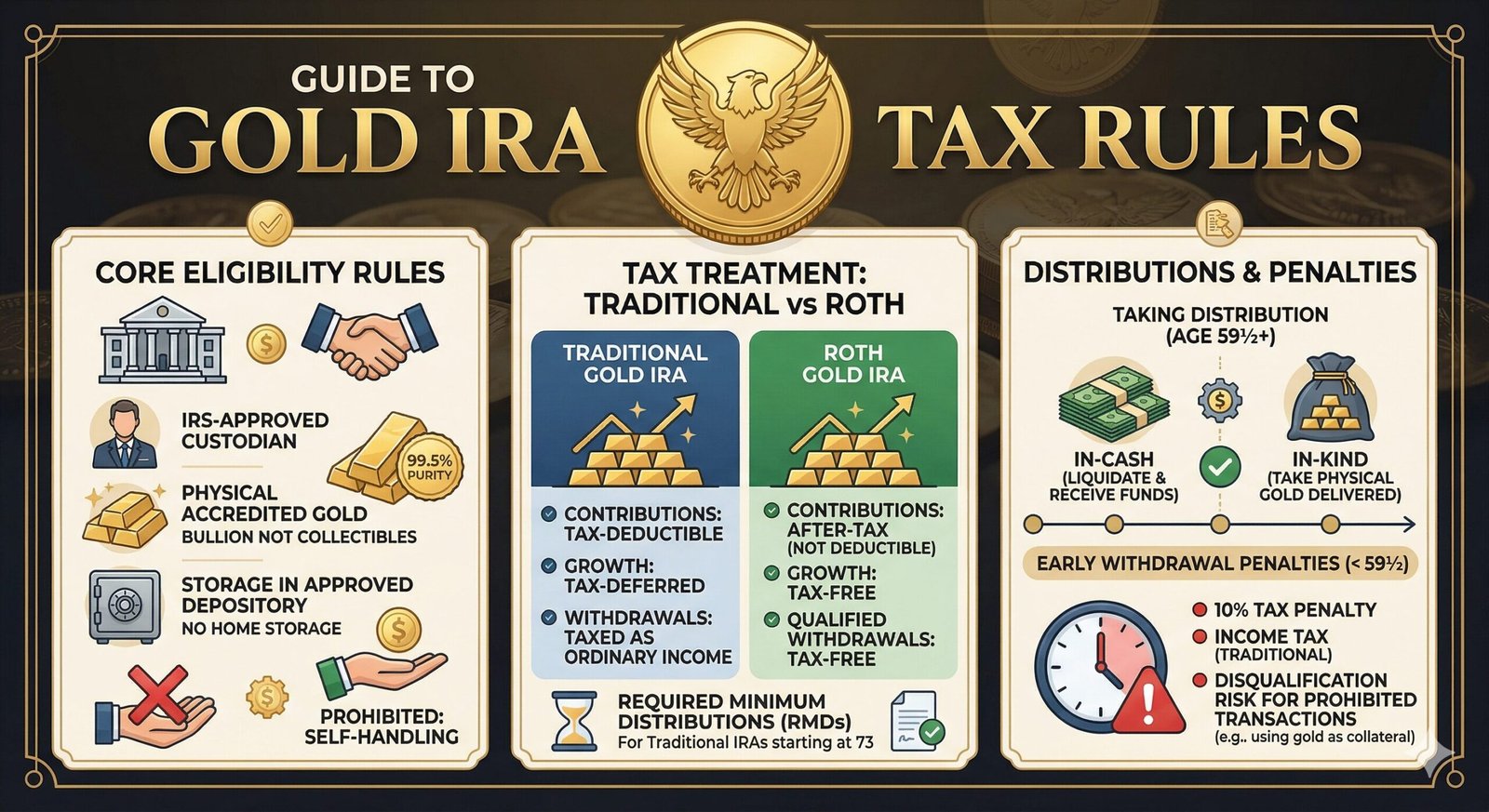
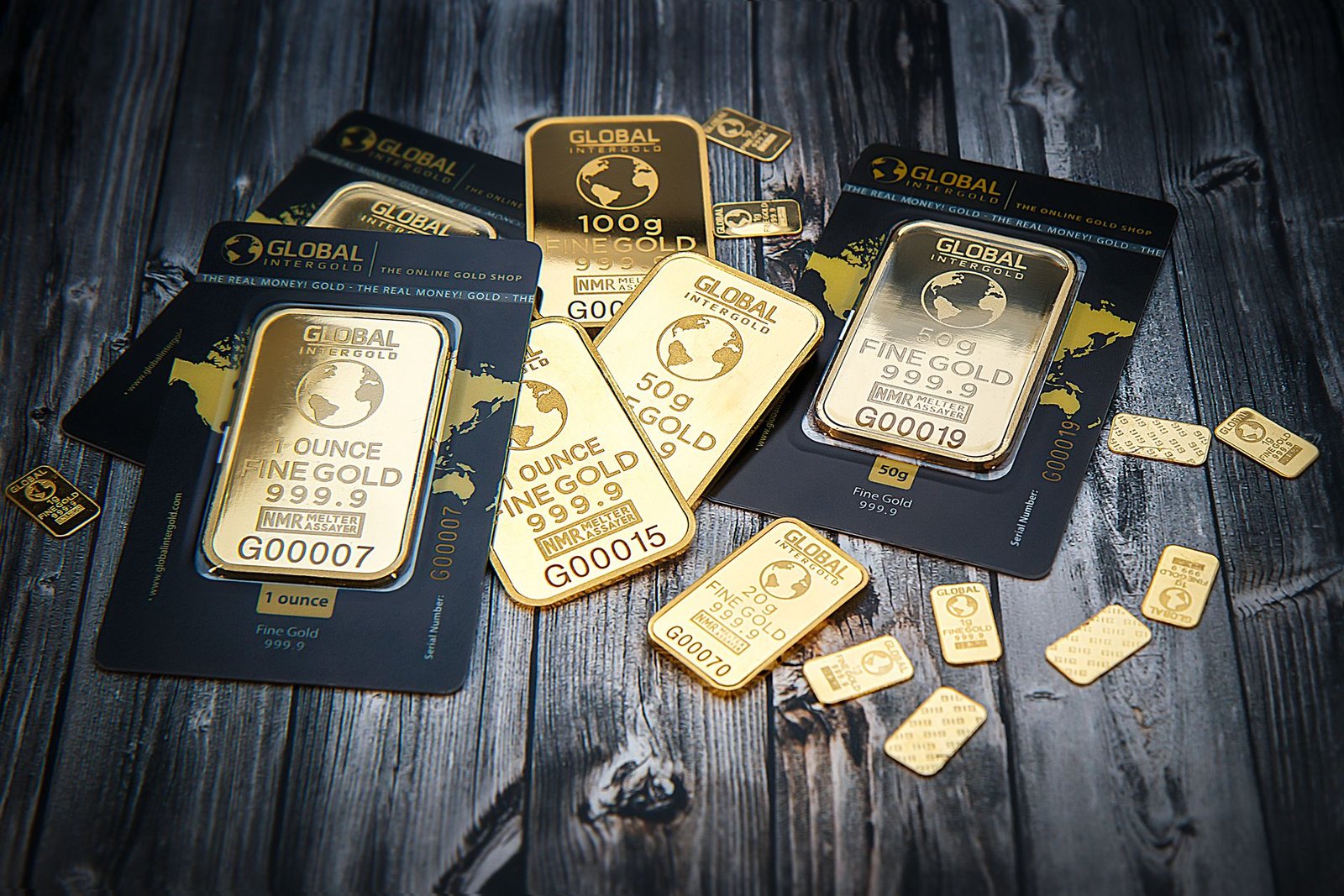
The IRS has specific requirements about what types of gold are eligible for inclusion in an IRA. Not all gold qualifies. For example, most gold coins must meet a minimum fineness standard of .995, and the gold must be held by an approved custodian in an IRS-sanctioned depository — not at home or in a personal safe.
For a full breakdown of which coins and bars meet IRS standards, see our guide to IRA-eligible gold coins.
Rollovers from existing retirement accounts — including 401(k)s — are a common way investors fund a Gold IRA. The rules governing these transfers are specific and carry real tax consequences if done incorrectly. Our 401(k) to Gold IRA rollover guide and Gold IRA rollover rules pages cover this in detail.
Fees, Minimums, and What to Expect
One aspect of Gold IRAs that investors sometimes overlook when they’re focused on the price of gold itself is the cost structure involved in holding physical metal inside a retirement account. Unlike a traditional IRA holding stocks or mutual funds, a Gold IRA involves custodian fees, storage fees, and potentially dealer markups on the metal itself.
These costs vary significantly between providers and can affect your long-term outcomes meaningfully. Our Gold IRA fees guide provides a transparent breakdown of what to expect.
These figures are illustrative ranges, not quotes from any specific provider. Actual costs vary by company. For minimum investment thresholds, our Gold IRA minimum investment guide explains what most reputable companies require.
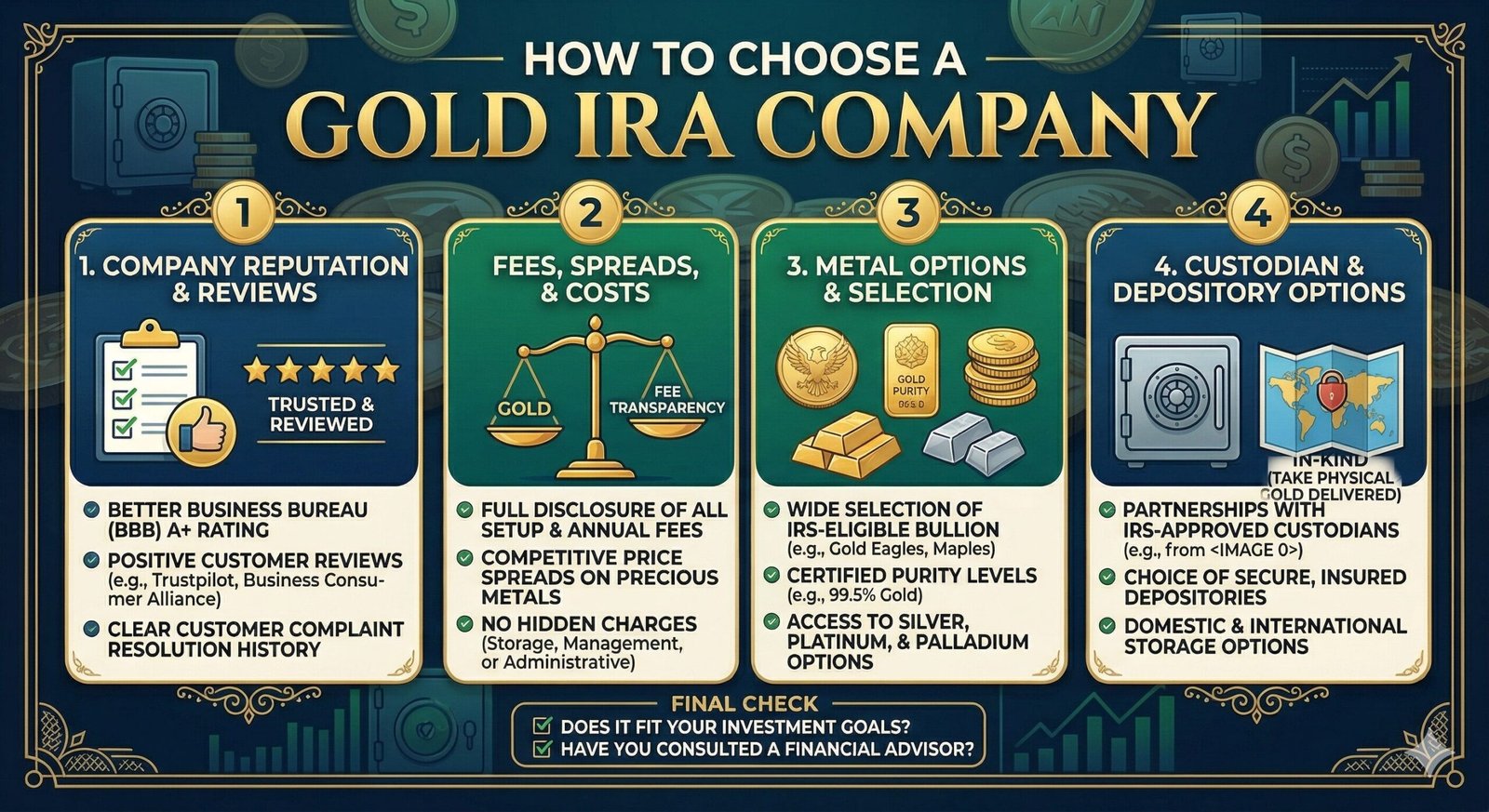
Before working with any company, it’s worth running a quick check on their reputation. The SEC’s SEC investor resources page is a useful starting point, and you can look up companies at bbb.org or verify credentials through FINRA BrokerCheck. Our Gold IRA scams guide covers the red flags to watch for.
Should You Be Thinking About a Gold IRA Right Now?
Whether a Gold IRA is appropriate for your situation depends on your individual financial picture, your timeline to retirement, and your own priorities — not on what the gold price did this month. Our article is a Gold IRA a good idea takes an honest look at both sides of that question.
It’s also worth comparing the structure of a Gold IRA to other account types before making any decisions. The Gold IRA vs Traditional IRA and Gold IRA vs 401(k) comparisons on this site can help clarify the structural differences without pushing you in any particular direction.
The IRS contribution limits for IRAs apply to Gold IRAs just as they do to traditional and Roth IRAs — something to factor in if you’re planning contributions rather than a rollover.
Frequently Asked Questions
Q: Did gold really hit an all-time high in 2025?
Yes. Gold reached record spot prices in 2025, surpassing previous highs set in prior years. The price was driven by a combination of central bank demand, monetary policy conditions, geopolitical factors, and currency dynamics.
Q: Does the record high mean gold will continue to rise?
No one can say. Markets move in ways that analysts consistently fail to predict with precision. Past performance — including record highs — is not a guarantee of future results. Any source claiming to know where gold is headed should be viewed with healthy skepticism.
Q: Is now a good time to open a Gold IRA?
That depends entirely on your personal financial situation, goals, and timeline — not on the current price of gold. We’d encourage you to read through our Gold IRA hub and speak with a qualified financial advisor before making any decisions.
Q: What types of gold can I hold in an IRA?
The IRS requires that gold held in an IRA meet specific purity standards (generally .995 fineness or higher for bars) and be stored with an IRS-approved custodian. Many popular gold coins, such as the American Gold Eagle, are specifically permitted under IRS rules. See our IRS RMD FAQ for information on required distributions, which also apply to Gold IRAs at the appropriate age.
Q: How do I find a reputable Gold IRA company?
Look for companies with transparent fee structures, strong third-party ratings, and clear communication. Avoid any company that pressures you to act immediately, makes performance guarantees, or discourages you from doing your own research. Our comparison of the Best Gold IRA Companies of 2026 is a good place to start your evaluation.
Ready to Learn More?
If the 2025 gold price record has prompted you to look more closely at your retirement account options, the most useful next step is education — not action. Take the time to understand how Gold IRAs work, what they cost, and whether they fit your broader financial picture.
Our independently researched list of the Best Gold IRA Companies of 2026 breaks down the leading providers by fees, minimums, reputation, and customer experience — giving you a clear starting point for your research.
This article is for informational purposes only and does not constitute financial or tax advice. Investing in precious metals involves risk including possible loss of principal.
Related guides
- Highest Gold Price Ever: All-Time Highs and What Caused Them
- Gold Price in 2025: Year in Review and Key Events
- Gold Price in 2024: Record Highs and What Drove Them
- Gold Price in 2023: Year in Review
- Gold Price in 2022: How War and Inflation Moved Markets
- Gold Price in 2021: Year in Review and Key Drivers