
Gold IRA Disadvantages: The Honest Downsides You Should Know
Anyone researching a Gold IRA will find no shortage of enthusiastic material explaining the benefits. What’s harder to find is an equally honest look at the drawbacks — the costs, rules, restrictions, and practical inconveniences that come with holding physical gold inside a retirement account.
This article is that honest look. It’s not designed to talk you out of anything. It’s designed to give you the complete picture so that if you do decide to explore a Gold IRA further, you’re going in with clear eyes. For foundational context on how these accounts work, our Gold IRA guide is a good place to start. But for now, let’s focus on what the brochures don’t always tell you.
What Is a Gold IRA, and Why Do the Disadvantages Matter?
A Gold IRA is a self-directed individual retirement account that holds physical precious metals — typically gold bullion or coins — rather than paper-based assets like stocks or mutual funds. The IRS permits this structure, but it comes with a specific set of rules and requirements that standard IRAs don’t impose.
Understanding those rules isn’t just a formality. Because Gold IRAs are more complex than conventional retirement accounts, the disadvantages are also more consequential. Fees are higher, liquidity is lower, and the margin for error — especially on rollovers and distributions — is narrower. FINRA’s guidance on self-directed IRAs flags self-directed accounts specifically as carrying elevated risk of fraud and administrative error, which makes due diligence all the more important.
If you’re considering whether this type of account suits your situation, reading Gold IRAs Explained in Detail alongside this article will give you a balanced foundation.
The Cost Structure Is Significantly Higher Than a Standard IRA
This is the most immediate and unavoidable disadvantage of a Gold IRA: the fees are substantially higher than a conventional IRA, and they can compound meaningfully over time.
Setup and Account Fees
Most Gold IRA custodians charge an initial account setup fee, typically ranging from $50 to $300, though some providers waive this as a promotional incentive. Beyond setup, you’ll encounter annual administrative fees charged by the custodian for maintaining the account and handling required IRS reporting.
Storage Fees
Because the IRS requires that physical gold in an IRA be stored at an approved depository — not at home or in a personal safe — you’ll pay annual storage fees regardless of how your account performs. These typically run between $100 and $300 per year, though some custodians charge a percentage of assets under custody, which scales upward as your account grows.
Dealer Markups and Spreads
When you purchase gold through a Gold IRA, you’re buying from a dealer who marks up the price above the live spot price. When you eventually sell, you’ll likely receive less than spot, or close to it. This buy-sell spread is a real cost that erodes returns, particularly for shorter holding periods.
Over a decade or more, these layered costs — setup, administration, storage, and spreads — can represent a meaningful drag on your account’s value. Our Gold IRA fees guide breaks down these costs in much more detail and is worth reviewing carefully.
Liquidity Is Limited Compared to Paper Assets
Gold held in an IRA is not liquid in the way that stock or bond holdings are. You cannot log into an account and sell with a single click. The process of liquidating Gold IRA holdings typically requires contacting your custodian, arranging a sale through a dealer, and waiting for settlement — a process that can take days or even weeks.
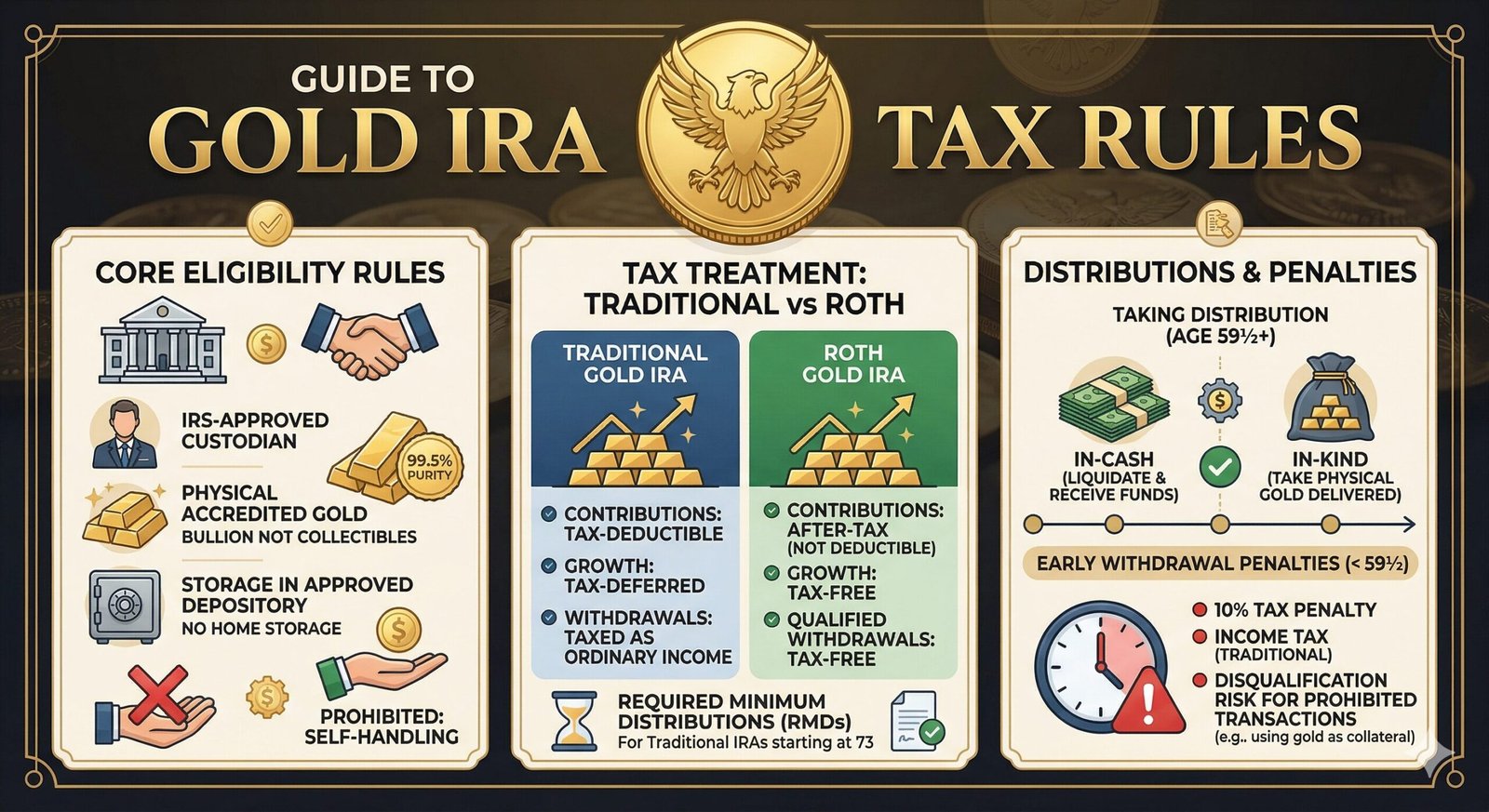
This matters particularly in retirement, when you may need to take Required Minimum Distributions (RMDs). Under IRS rules, once you reach age 73, you must begin withdrawing a calculated minimum amount from your traditional retirement accounts each year. If your account is heavily concentrated in physical gold, you may face a timing problem: gold cannot always be sold and settled quickly enough to meet RMD deadlines without incurring penalties. For specifics on RMD requirements, the IRS RMD FAQ is the authoritative source.
Some account holders address this by taking distributions in-kind — receiving physical gold rather than cash — but this introduces its own complications around valuation and storage.
The Rules Are Strict, and Mistakes Are Costly
The IRS does not treat Gold IRA violations leniently. There are several areas where an administrative error or a misunderstanding of the rules can result in significant tax consequences.
Purity and Eligibility Requirements
Not all gold qualifies for an IRA. The IRS mandates a minimum fineness of .995 for gold bullion. Certain coins are eligible — such as American Gold Eagles and Canadian Gold Maple Leafs — while others, like collectible coins or jewellery, are not. Purchasing ineligible metal can result in the IRS treating the transaction as a prohibited distribution. Our guide to IRA-eligible gold coins outlines which products meet these requirements.
Rollover Rules and Deadlines
If you’re moving funds from a 401(k) or existing IRA into a Gold IRA, the rollover process must be handled correctly. An indirect rollover — where you receive the funds before depositing them — must be completed within 60 days, or the full amount may be treated as a taxable distribution. Withholding rules add another layer of complexity. The Gold IRA rollover rules page covers this in full, and if you’re working from a 401(k), our 401(k) to Gold IRA rollover guide is directly relevant.
Home Storage Is Not Permitted
One of the more persistent myths around Gold IRAs is that you can store the gold at home. You cannot. The IRS requires that metals held in a self-directed IRA be stored with an approved third-party depository. Attempting to take personal custody of IRA-held gold — even temporarily — is treated as a distribution and may trigger taxes and early withdrawal penalties. The IRS IRA investment FAQ addresses this directly.
No Income or Yield
Physical gold does not pay dividends, interest, or any form of passive income. Stocks pay dividends. Bonds pay interest. Real estate generates rent. Gold simply sits in a vault.
This is not necessarily a flaw in gold as an asset — it simply has a different character. But it is a meaningful disadvantage for retirement investors who depend on their portfolio generating income during their retirement years. If income generation is a priority, a Gold IRA may not align well with that goal on its own, and it’s worth understanding the trade-offs in context. Comparing the Gold IRA vs Traditional IRA can help frame this difference clearly.
Minimum Investment Requirements Can Be High
Many Gold IRA custodians impose minimum investment thresholds, sometimes starting at $10,000 and in some cases reaching $25,000 or more. This creates a barrier for investors who want to start small and build gradually. Our Gold IRA minimum investment page documents the minimums across different providers so you can compare your options accurately.
The Industry Has Attracted Bad Actors
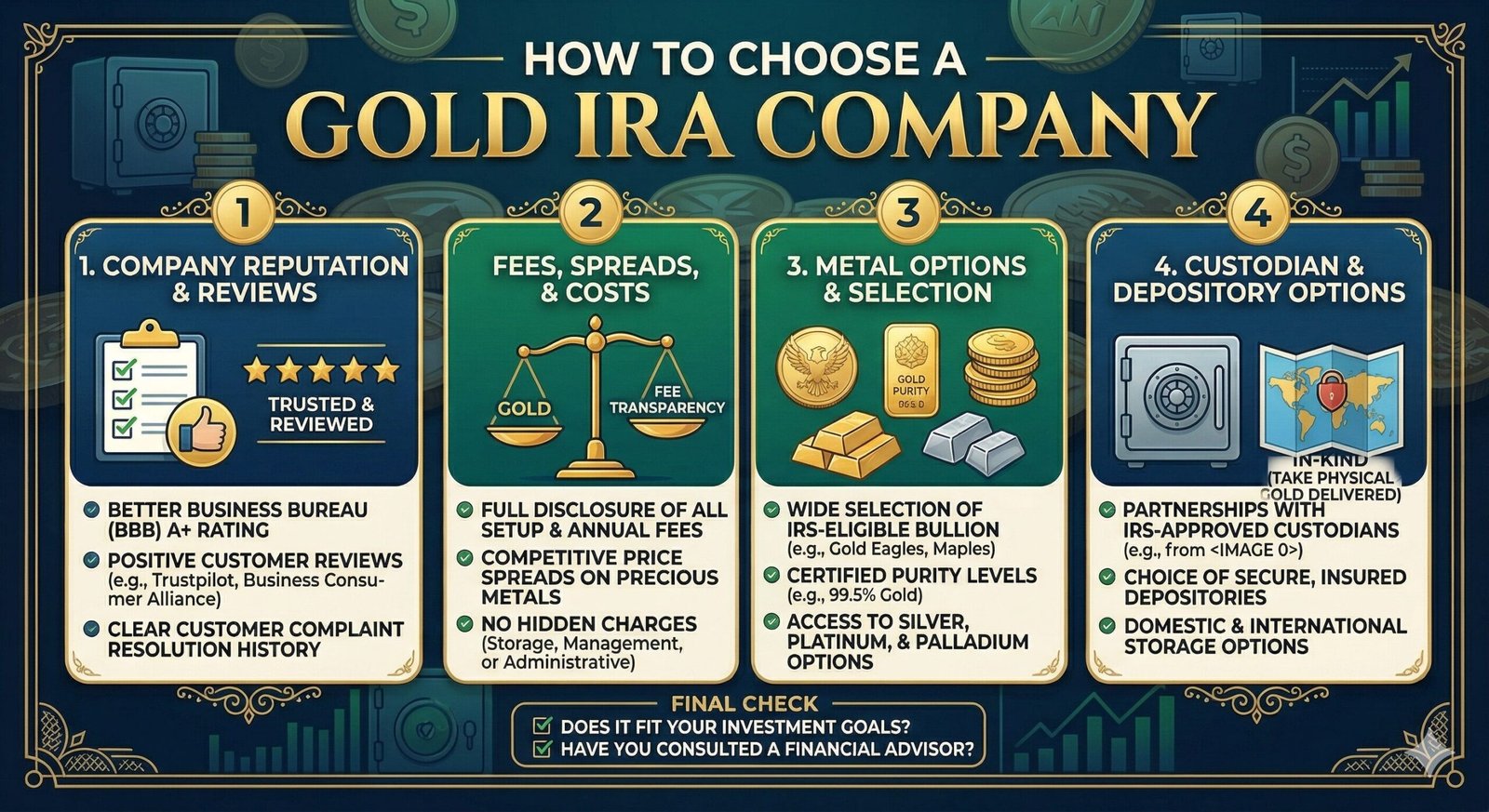
The Gold IRA space, like any specialised financial product market, has seen its share of aggressive sales tactics, misleading marketing, and outright fraudulent operators. The SEC’s investor resources caution investors to verify the credentials of anyone managing retirement funds. Checking a company’s rating on bbb.org and using FINRA BrokerCheck to verify registered individuals are basic but important steps. If you want a structured approach to identifying reputable companies and avoiding problematic ones, our Gold IRA scams guide is an important read before you commit to any provider.
A Summary Comparison: Gold IRA vs. Standard IRA
Frequently Asked Questions
Is a Gold IRA worth the extra fees?
That depends on your individual financial situation, timeline, and goals. The fees are real and should be factored into any honest evaluation. Before making a decision, reviewing is a Gold IRA a good idea may help you think through the relevant considerations.
Can I avoid the storage fees by keeping gold at home?
No. IRS rules prohibit home storage of metals held within an IRA. Doing so would likely result in the account being treated as a distribution, triggering taxes and potential penalties.
What happens if I buy ineligible gold in my IRA?
The IRS may treat the purchase as a taxable distribution, and depending on your age, an early withdrawal penalty may also apply. It’s critical to verify the eligibility of any metals before purchase. Reviewing IRS Publication 590-A provides the relevant statutory framework.
Are Gold IRAs subject to Required Minimum Distributions?
Yes. Traditional Gold IRAs follow the same RMD rules as conventional traditional IRAs. Beginning at age 73, account holders must take annual distributions, which can be logistically complex when the underlying asset is physical metal.
How does a Gold IRA compare to a 401(k)?
The Gold IRA vs 401(k) comparison covers this in detail, but the short answer is that the two account types differ significantly in structure, contribution rules, employer involvement, and investment flexibility.
Ready to Explore Your Options?
Understanding the disadvantages of a Gold IRA is a necessary part of evaluating whether this type of account belongs in your retirement strategy. None of the drawbacks described here are hidden or unusual — they’re simply the factual trade-offs of a more complex account structure. The right next step is to compare providers carefully and assess which, if any, meet your needs. See our full evaluation of the Best Gold IRA Companies of 2026 for a structured, research-based comparison.
This article is for informational purposes only and does not constitute financial or tax advice. Investing in precious metals involves risk including possible loss of principal.
Related guides
- Gold IRA Consumer Affairs Reviews: What to Look For
- Gold IRA Trustpilot Reviews: What Real Customers Say
- Gold IRA BBB Complaints: What Consumer Reports Reveal
- Is a Gold IRA Worth the Fees? A Cost-Benefit Analysis
- Are Gold IRA Fees Too High? Breaking Down the Real Costs
- Gold IRA Mistakes to Avoid: 10 Common Errors Investors Make