
Gold IRA vs Real Estate: Comparing Physical Asset Retirement Options
When retirement investors start thinking beyond traditional stocks and bonds, two tangible asset options often come up in the same conversation: gold held inside a self-directed IRA, and real estate. Both involve owning something physical. Both sit outside the conventional paper-asset universe. And both come with their own rulebooks, costs, and considerations that are worth understanding before you make any decisions.
This article isn’t here to tell you which one is “better” — that’s a question only a qualified financial advisor can help you answer based on your specific situation. What it can do is walk you through how each option actually works, what the IRS has to say about them, and the key structural differences you should be aware of as an informed retirement investor.
What Is a Gold IRA?
A Gold IRA is a type of self-directed Individual Retirement Account that holds physical precious metals — most commonly gold — rather than paper assets like stocks or mutual funds. You can read a full breakdown of what a Gold IRA is on our dedicated hub, but the short version is this: a Gold IRA functions under the same IRS rules as a Traditional or Roth IRA in terms of contribution limits and tax treatment, with one key difference — the assets inside it are physical metals stored in an IRS-approved depository.
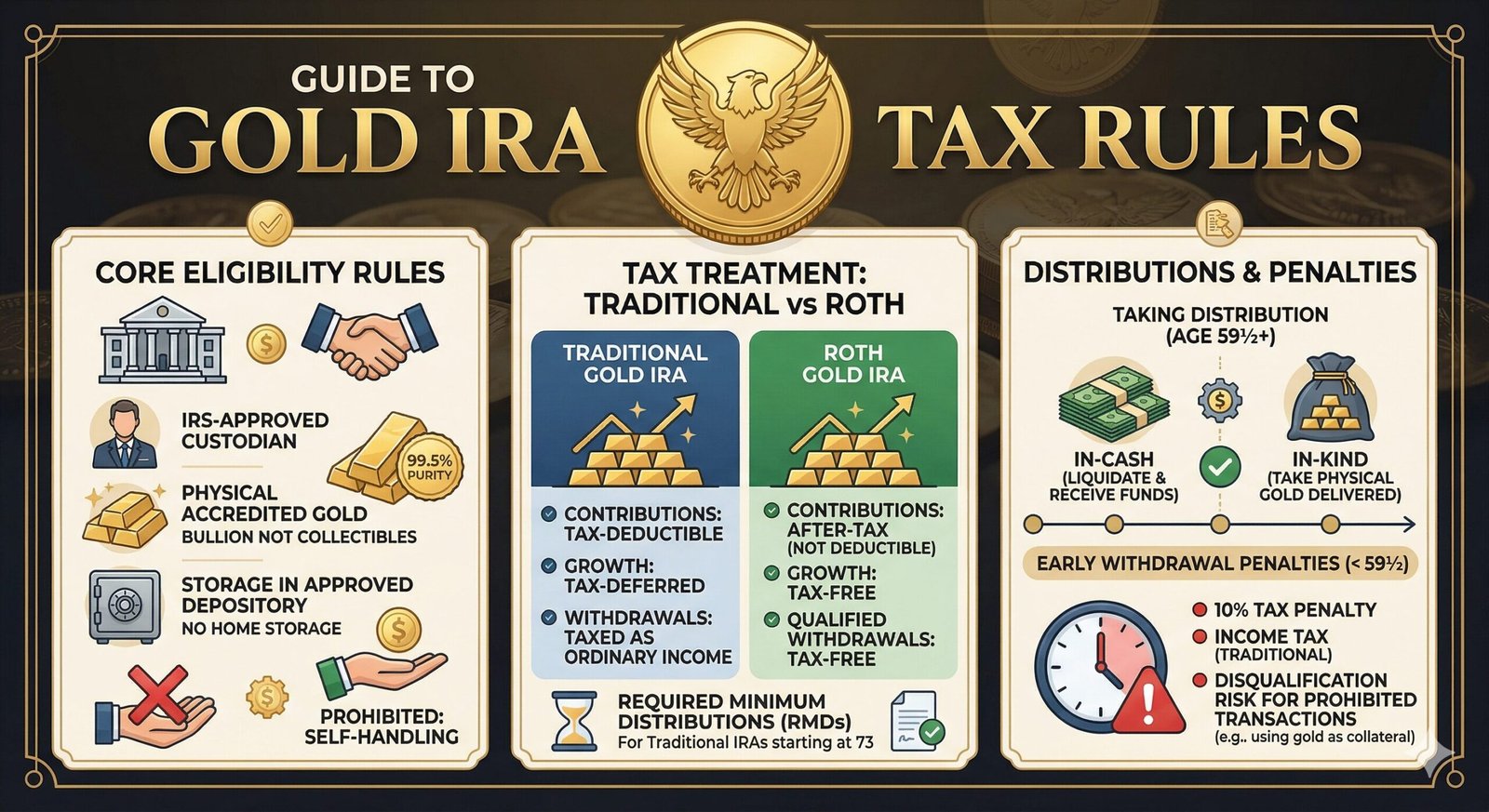
The IRS has strict rules about what types of gold qualify. Generally, gold must meet a minimum fineness of 0.995 (with some exceptions for American Eagle coins). You cannot store the metals yourself at home — they must be held by an approved custodian and stored at an approved facility. For a closer look at Gold IRAs Explained in Detail, our full guide covers everything from setup to distribution.
It’s worth reviewing IRS Publication 590-A and the IRS IRA investment FAQ for the official framework, since IRS rules govern what is and isn’t permissible inside any IRA structure.
What Is a Real Estate IRA?
Fewer people know that it’s also possible to hold real estate inside a self-directed IRA. Under IRS rules, a self-directed IRA can own rental properties, raw land, commercial buildings, tax liens, and even certain private real estate funds — provided the account is structured correctly and a qualified custodian administers it.
FINRA’s guidance on self-directed IRAs flags these accounts as carrying heightened complexity and risk, and the rules around real estate IRAs are particularly detailed. There are strict “prohibited transaction” rules, for instance — you cannot personally use a property held in your IRA, and neither can certain family members. The property must be managed entirely at arm’s length, which can be administratively demanding.
Key Structural Differences
Before getting into the comparison, it helps to understand that both options live within the same legal framework — the self-directed IRA — but operate very differently in practice.
Ownership and Custody
With a Gold IRA, the metals are held on your behalf by a custodian at a third-party depository. You don’t take physical possession during the accumulation phase. With a real estate IRA, the IRA itself is the legal owner of the property, and all income, expenses, and decisions must flow through the IRA — not through you personally.
Liquidity
Gold, as a globally traded commodity, can generally be liquidated more quickly than real property. Selling a rental property involves title searches, legal agreements, market timing, and often months of lead time. This distinction matters as you approach retirement age and begin planning for required minimum distributions (RMDs).
Management Demands
Real estate often requires active management — whether you hire a property manager or handle tenant relations yourself (though the latter is problematic inside an IRA due to prohibited transaction rules). A Gold IRA, by contrast, is relatively passive once established. You pay custodian and storage fees, but there’s no tenant to deal with, no roof to repair, and no property tax bill arriving each January.
Comparing the Numbers: Fees and Costs
Both options carry costs, and understanding them is essential. Our Gold IRA fees guide covers the typical cost structure for precious metals accounts in detail. Below is a general comparison of the types of costs involved in each structure.
These figures are general illustrations only. Actual fees vary by custodian, property type, and geographic location. Always request a full fee disclosure from any provider you’re considering.
IRS Rules You Need to Know
Both Gold IRAs and real estate IRAs are subject to the same foundational IRS framework. The IRS contribution limits apply equally — in 2025, that’s $7,000 per year ($8,000 if you’re 50 or older). Neither option changes your ability to contribute; both are simply different asset types held within the same account structure.
Required Minimum Distributions apply to Traditional IRAs holding either asset type once you reach age 73. This is where real estate IRAs can become particularly complicated — if the property hasn’t sold or can’t easily be liquidated, satisfying an RMD could require selling a partial interest in the property or taking an in-kind distribution, both of which come with significant administrative and legal complexity. The IRS RMD FAQ provides the official guidance on distribution requirements.
For Gold IRAs, RMDs can be satisfied in cash (by selling a portion of the metals) or potentially via in-kind distribution of the physical gold, subject to custodian procedures.
If you’re considering rolling an existing 401(k) or IRA into either type of account, our Gold IRA rollover rules page outlines the mechanics and deadlines involved in that process.
Due Diligence: What to Look for in a Provider
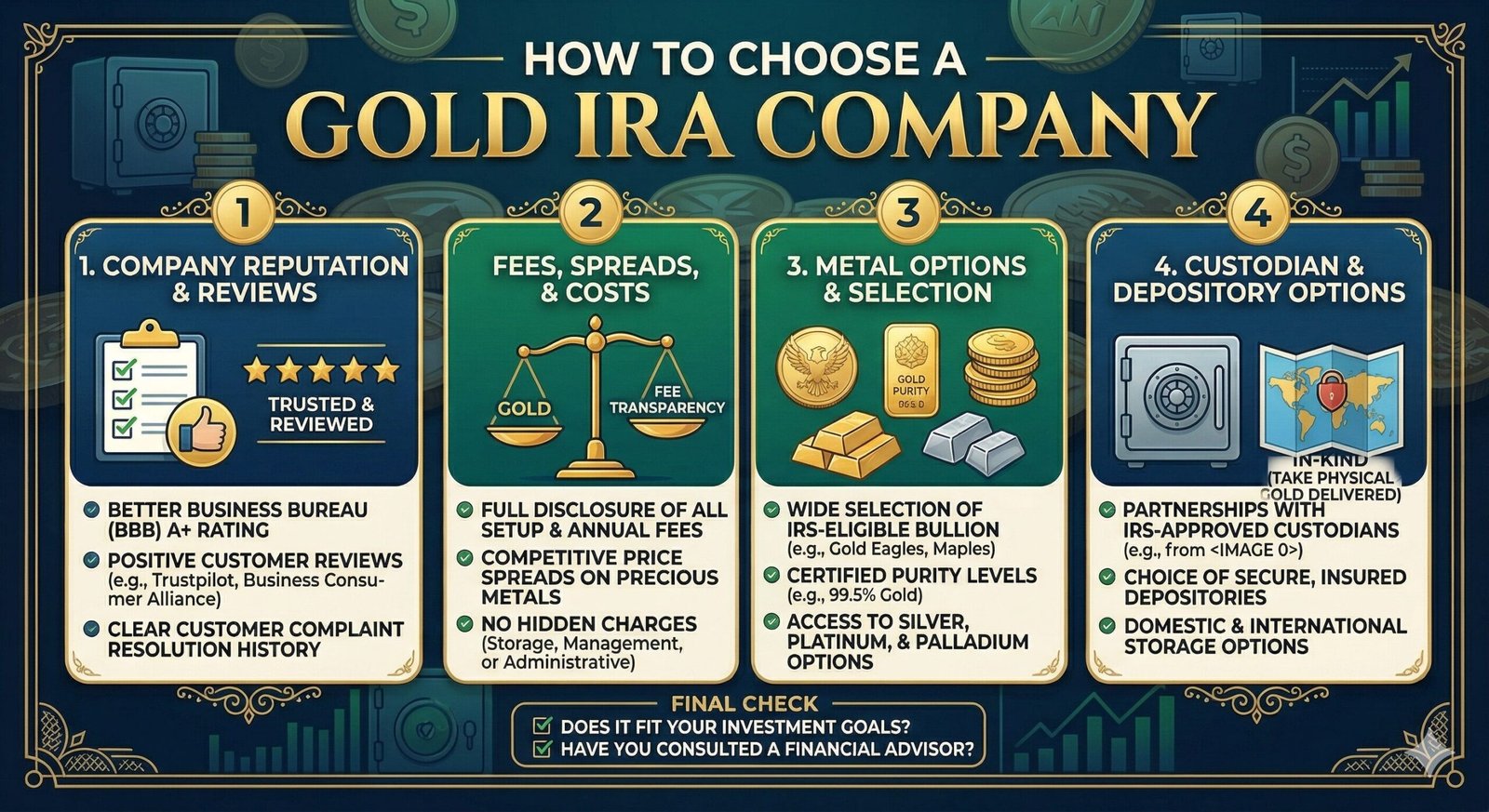
Whether you’re exploring a Gold IRA or a real estate IRA, choosing a reputable custodian is essential. Self-directed IRAs — which both options require — are not as heavily regulated at the product level as conventional brokerage IRAs. FINRA and the SEC have both issued warnings about the potential for fraud and misrepresentation in this space.
Before committing to any custodian, check their standing with the Better Business Bureau at bbb.org, and if they or their affiliates include broker-dealers, verify their credentials through FINRA BrokerCheck. The SEC investor resources page is also a useful starting point for understanding your rights as an account holder.
For Gold IRAs specifically, our Gold IRA scams guide covers the red flags to watch for when evaluating gold dealers and IRA custodians.
Questions Worth Asking Before You Decide
This article can’t tell you which option belongs in your retirement plan — and any source that claims otherwise should be treated with skepticism. What it can do is offer a framework of questions worth bringing to a qualified financial advisor or tax professional:
How hands-on do you want to be? Real estate IRAs require significantly more administrative involvement. If you prefer a more passive structure, that’s a practical consideration worth weighing.
What is your timeline to retirement? If you’re within five to ten years of taking distributions, liquidity becomes a more immediate concern. Real estate can be illiquid at inopportune times.
What is your minimum investment capacity? Real estate IRAs often require substantially higher initial capital. Our Gold IRA minimum investment guide covers what to expect on the metals side.
Have you considered how RMDs will work? As noted above, satisfying RMDs from an illiquid real estate IRA can be complicated. Getting clarity on this early is important.
Do you have existing retirement accounts to roll over? If you’re starting from an existing 401(k), our 401(k) to Gold IRA rollover guide walks through that specific process.
Understanding the Broader Context
Neither a Gold IRA nor a real estate IRA is inherently superior to the other — or to conventional retirement accounts. Each carries distinct risks, costs, and administrative requirements. It’s also worth noting that self-directed IRAs of any kind come with greater personal responsibility: the IRS doesn’t verify that your investments are appropriate or compliant. That burden falls on you and your chosen custodian.
For readers still weighing whether a precious metals account is right for them at all, our article on is a Gold IRA a good idea explores that question in a measured, balanced way. And for those interested in the mechanics of IRA-eligible gold coins, that resource covers what the IRS allows and what to watch for when sourcing eligible metals.
Past performance of any asset class — including gold and real estate — is not a guarantee of future results.
Frequently Asked Questions
Can I hold both gold and real estate in the same self-directed IRA?
Technically, a single self-directed IRA can hold multiple asset types — including both precious metals and real estate — provided your custodian supports both. However, managing this level of complexity increases administrative demands significantly, and not all custodians offer both options. Consult a qualified professional before attempting a multi-asset self-directed IRA structure.
Can I live in or use a property held in my real estate IRA?
No. The IRS strictly prohibits “self-dealing” in IRA-owned assets. You cannot live in, vacation in, or otherwise personally use a property held in your IRA. The same restriction applies to certain family members. Violating this rule can result in the IRA being treated as distributed in full, triggering immediate tax consequences.
What happens to Gold IRA assets when I take distributions?
You can take distributions in cash (by having the custodian sell the metals on your behalf) or in some cases as an in-kind distribution of the physical metal itself. In-kind distributions are treated as taxable income at the fair market value of the metals at the time of distribution for Traditional IRAs. Check with your custodian and a tax professional for the specifics.
Are real estate IRAs more complicated to set up than Gold IRAs?
Generally, yes. Real estate IRAs involve property title held in the name of the IRA, which requires specific legal documentation, and the purchase process mirrors a regular real estate transaction — complete with due diligence, title insurance, and closing procedures. Gold IRA setup is typically more straightforward, involving account opening, funding, and a metals purchase through an approved dealer.
Do contribution limits apply the same way to both types of accounts?
Yes. Whether you hold gold, real estate, or any other permissible asset inside a self-directed IRA, the same annual IRS contribution limits apply. The type of asset held doesn’t change how much you can contribute each year. See the current IRS contribution limits for the most up-to-date figures.
If you’re ready to explore which custodians and structures are worth considering for a precious metals retirement account, start with our independently researched list of Best Gold IRA Companies of 2026 for a side-by-side overview of the leading providers in this space.
This article is for informational purposes only and does not constitute financial or tax advice. Investing in precious metals involves risk including possible loss of principal.
Related guides
- Gold IRA Consumer Affairs Reviews: What to Look For
- Gold IRA Trustpilot Reviews: What Real Customers Say
- Gold IRA BBB Complaints: What Consumer Reports Reveal
- Is a Gold IRA Worth the Fees? A Cost-Benefit Analysis
- Are Gold IRA Fees Too High? Breaking Down the Real Costs
- Gold IRA Mistakes to Avoid: 10 Common Errors Investors Make