
Is a Gold IRA Worth It? Breaking Down the Real Costs and Benefits
For retirement investors who have spent decades building their savings, the question of whether a Gold IRA is worth the effort — and the expense — is a completely reasonable one to ask. The financial media tends to oscillate between breathless enthusiasm and outright dismissal when it comes to gold in retirement accounts, which makes it genuinely difficult to find a measured, factual answer.
This article is designed to give you exactly that. We’ll walk through what a Gold IRA actually is, what it costs to set one up and maintain it, what the IRS rules require, and what trade-offs you’re accepting when you choose this structure. No hype, no scare tactics — just the information you need to have a productive conversation with your financial advisor.
What Is a Gold IRA, and How Does It Work?
A Gold IRA is a type of self-directed Individual Retirement Account that holds physical precious metals — most commonly gold, but also silver, platinum, and palladium — rather than the paper-based assets found in conventional IRAs. If you want a thorough primer on the mechanics before diving into the cost-benefit analysis, our Gold IRA hub covers the fundamentals in depth.
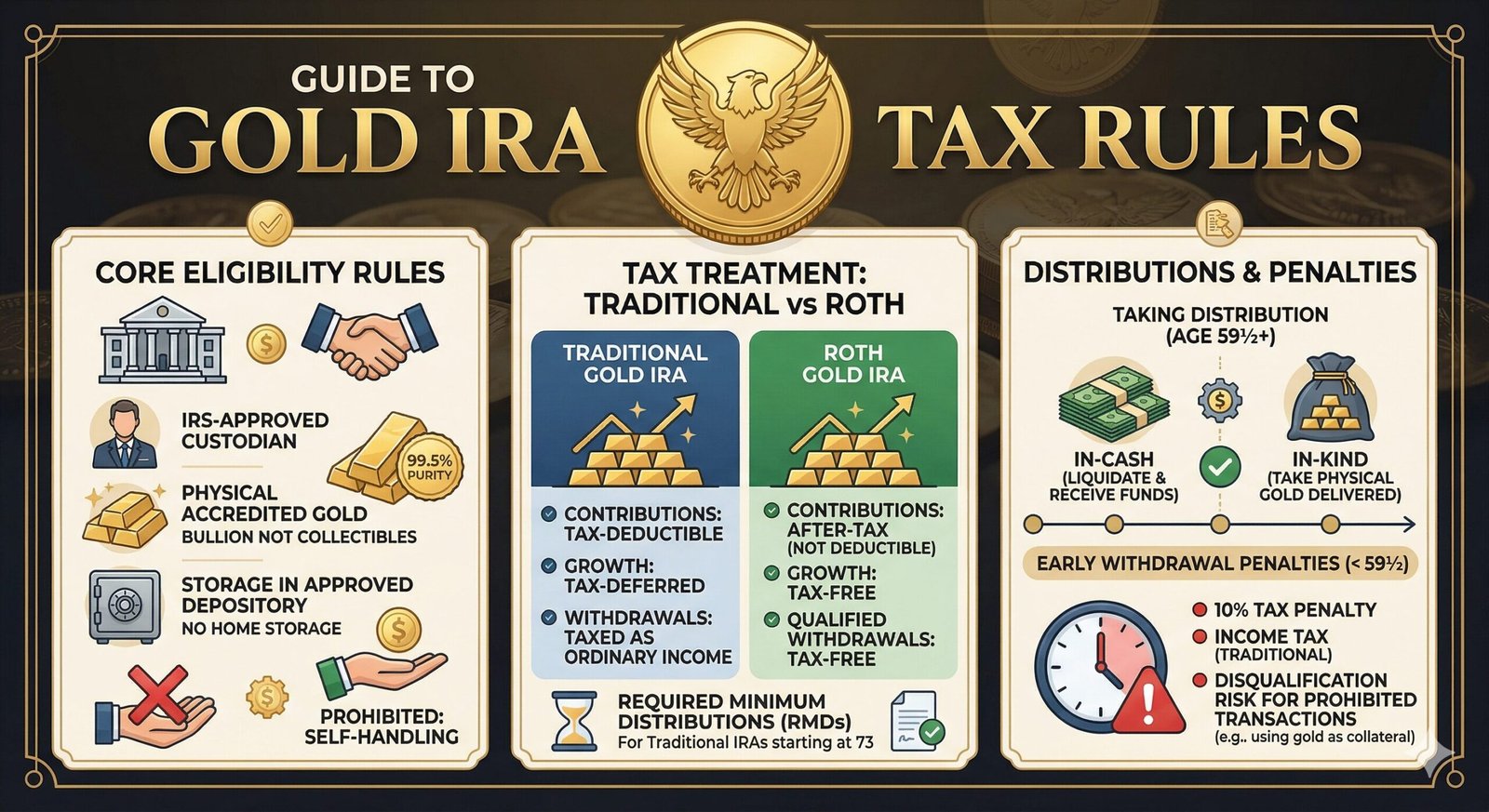
Unlike a standard IRA managed through a brokerage, a Gold IRA requires three separate parties: a custodian (an IRS-approved financial institution that holds the account), a precious metals dealer (who facilitates your purchases), and an approved depository (a secure, insured storage facility where your physical gold is held). You cannot store IRA-held gold at home or in a personal safe — the IRS is unambiguous on this point, and violating the rule triggers immediate distribution and potential penalties.
For a detailed walkthrough of the legal structure and account mechanics, Gold IRAs Explained in Detail is a good next stop. FINRA also publishes helpful guidance on self-directed IRAs that’s worth reading before you commit to any account type.
The Real Costs of a Gold IRA
This is where many people get a surprise. Gold IRAs carry a fee structure that is meaningfully different — and typically higher — than a conventional brokerage IRA. Understanding the full cost picture is essential to evaluating whether this account type makes sense for your situation.
Setup and Account Fees
Most Gold IRA custodians charge a one-time account setup fee, which typically ranges from $50 to $300 depending on the provider. Some companies waive this fee as a promotional incentive, particularly for larger opening deposits. Annual account maintenance fees — covering custodial administration — commonly run between $75 and $300 per year.
Storage Fees
Because IRS rules require your physical gold to be held in an approved third-party depository, you’ll pay an annual storage fee on top of your custodial fees. These typically range from $100 to $300 per year, though some facilities charge a percentage of the total asset value — usually 0.5% to 1% annually — rather than a flat fee. For larger accounts, percentage-based fees can become substantial.
Dealer Premiums and Spreads
When you purchase physical gold through a dealer, you pay a premium above the spot price of gold. This spread — the difference between what you pay and what the dealer paid — varies by product type, dealer, and market conditions. Coins generally carry higher premiums than bars. Understanding this spread matters because it affects your break-even point from the moment you buy. Our Gold IRA fees guide goes into granular detail on all of these cost categories.
A Summary of Typical Gold IRA Fees
These costs don’t automatically make a Gold IRA unworthy of consideration — but they do mean you need to go in with realistic expectations and compare providers carefully.
IRS Rules That Directly Affect Your Decision
Before you conclude whether a Gold IRA is worth it for your situation, it’s important to understand the regulatory framework that governs these accounts. The IRS has specific requirements that carry real financial consequences if ignored.
Eligible Metals and Purity Standards
Not all gold qualifies. The IRS requires that gold held in an IRA meet a minimum fineness of 99.5% (with a narrow exception for the American Gold Eagle coin). Common IRA-eligible gold coins include the American Gold Eagle, American Gold Buffalo, and certain sovereign coins from approved mints. Collectibles, jewelry, and most numismatic coins do not qualify. Full contribution and eligibility rules are outlined in IRS Publication 590-A.
Contribution Limits
A Gold IRA follows the same annual contribution limits as any other IRA. For 2025, that’s $7,000 per year, or $8,000 if you’re aged 50 or older (catch-up contributions). Most investors fund Gold IRAs through rollovers from existing 401(k)s or traditional IRAs rather than annual contributions, simply because the limits constrain how quickly a new account can be built. The IRS publishes current IRS contribution limits on its website.
Required Minimum Distributions
If you hold a traditional Gold IRA, you must begin taking Required Minimum Distributions (RMDs) at age 73, consistent with all traditional IRA rules. The complication with a Gold IRA is that RMDs must be taken in cash or in-kind. If your account holds only physical gold and you lack sufficient liquid assets to cover the RMD, you may need to sell a portion of your metals — potentially at an inconvenient time. The IRS RMD FAQ provides detailed guidance on how distributions are calculated.
Rollover Rules
Many investors come to Gold IRAs through a rollover from an employer plan. If you’re considering that path, our 401(k) to Gold IRA rollover guide and the Gold IRA rollover rules page both explain the process and the time limits you must observe to avoid tax consequences.
The Practical Trade-offs Worth Considering
Every account structure involves trade-offs, and a Gold IRA is no exception. Framing the question of “is it worth it” requires honestly weighing what you gain against what you give up.
What a Gold IRA Offers
Physical gold has a long history as a globally recognized store of value — though past performance is not a guarantee of future results, and no one can predict where gold prices are headed. Holding physical metal within a tax-advantaged account structure allows investors to gain exposure to precious metals while retaining IRA tax benefits: either tax-deferred growth in a traditional Gold IRA, or tax-free growth in a Roth Gold IRA. For investors who simply prefer holding a tangible asset as part of their retirement planning, the Gold IRA provides a legal, structured way to do that within the existing retirement account framework.
The SEC’s investor resources provide useful context on how various retirement account types compare in terms of rules and features.
What a Gold IRA Requires
In exchange for that exposure, you accept a higher ongoing fee burden than most conventional IRAs, a more complex administrative structure, illiquidity relative to stocks or bonds, and the need to work with multiple parties — custodian, dealer, and depository — rather than a single brokerage platform. Physical gold also generates no income; it pays no dividends or interest. Any return comes solely from price appreciation, which is never guaranteed.
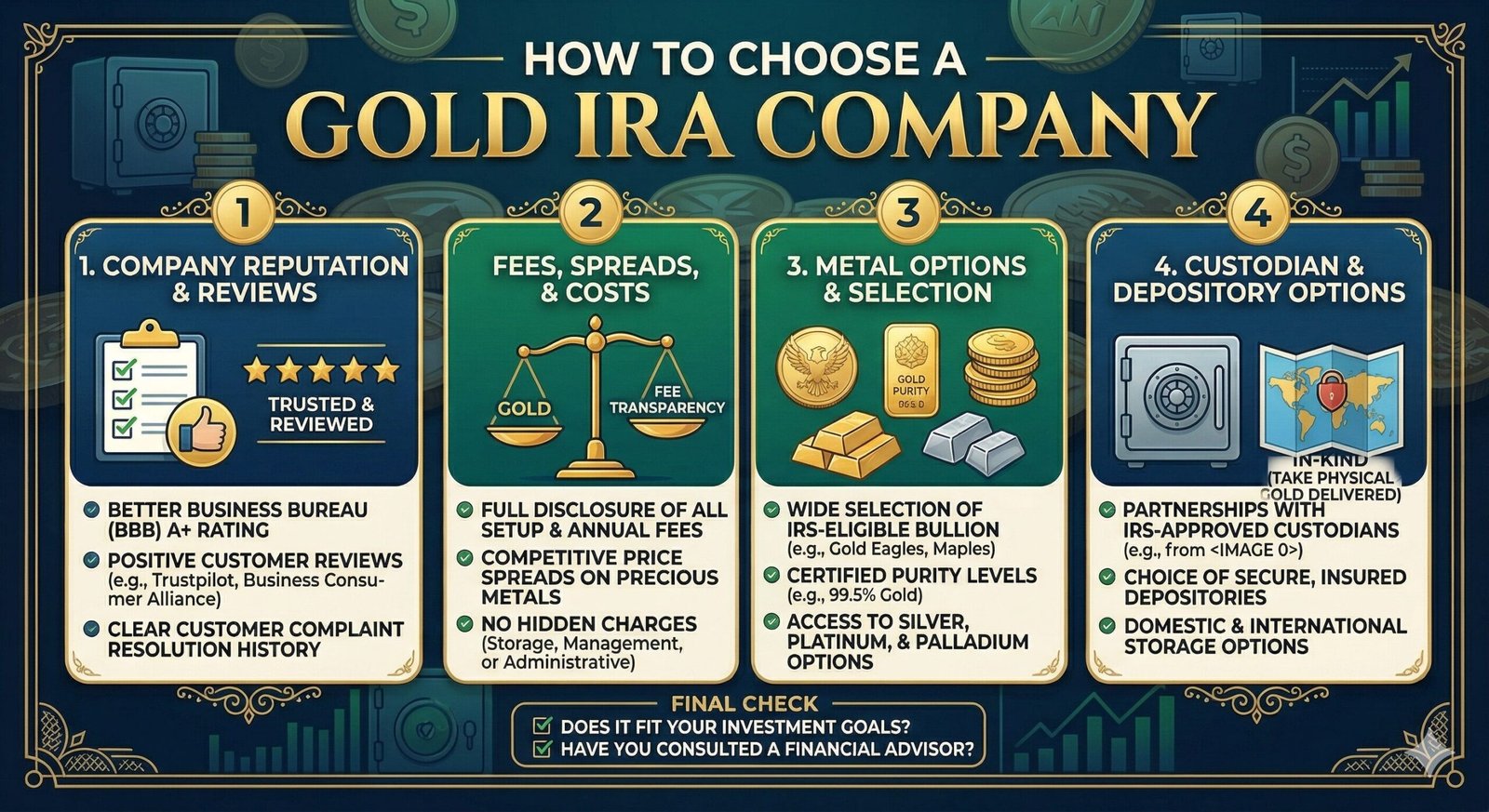
You’ll also want to be deliberate about provider selection. The Gold IRA space, like any niche financial industry, has attracted a small number of bad actors. Our Gold IRA scams guide outlines the red flags to watch for. Checking a company’s rating at bbb.org and reviewing any registered representatives through FINRA BrokerCheck are sensible steps before opening any account.
Comparing Gold IRAs With Other IRA Structures
If you’re weighing a Gold IRA against the account you already have, our Gold IRA vs Traditional IRA comparison is a useful reference. Many investors also find the Gold IRA vs 401(k) comparison helpful when deciding whether to roll over employer plan assets or leave them where they are. And if you’re still forming a view on the broader question, is a Gold IRA a good idea explores the topic from a different angle.
It’s also worth knowing that most Gold IRA providers require a meaningful minimum investment to open an account — often between $10,000 and $50,000. Our Gold IRA minimum investment guide breaks down what different providers require and what that means for investors who are just getting started.
Frequently Asked Questions
Is a Gold IRA taxed differently than a regular IRA?
The tax treatment of a Gold IRA mirrors the IRA type it’s structured as. A traditional Gold IRA offers tax-deferred growth; contributions may be tax-deductible depending on your income and whether you have a workplace plan. A Roth Gold IRA offers tax-free growth on qualified distributions. The physical nature of the underlying asset doesn’t change the tax structure of the account itself. For specifics relevant to your situation, consult a qualified tax professional.
Can I roll over my existing 401(k) into a Gold IRA without paying taxes?
A direct rollover from a 401(k) to a Gold IRA can generally be completed without triggering immediate taxes, provided the funds move directly between custodians within IRS timelines. An indirect rollover — where the funds pass through your hands — must be completed within 60 days to avoid tax and potential penalty. The IRS IRA investment FAQ and our rollover guides cover the rules in detail.
What happens to my Gold IRA when I retire and need to take distributions?
You have two main options when taking distributions from a traditional Gold IRA: you can sell the metal and receive cash, or you can take an in-kind distribution of the physical gold (subject to its fair market value being counted as taxable income). Either way, distributions are taxed as ordinary income for a traditional Gold IRA. Planning ahead for RMDs is particularly important given the illiquid nature of the underlying asset.
How do I know if a Gold IRA company is reputable?
Look for companies with a strong, multi-year track record, transparent fee disclosure, and positive reviews across multiple independent platforms. Check their rating with the Better Business Bureau at bbb.org, and verify any registered individuals through FINRA BrokerCheck. Be cautious of companies that pressure you to act quickly, make performance promises, or downplay the fee structure.
Is there a minimum amount needed to open a Gold IRA?
Yes — most Gold IRA providers set minimum investment requirements that are significantly higher than conventional IRAs. These minimums typically range from $10,000 to $50,000, though they vary widely between providers. Our Gold IRA minimum investment guide has a detailed breakdown by company.
Making a Fully Informed Decision
Whether a Gold IRA is worth it is ultimately a question that only you — ideally in consultation with a qualified financial advisor — can answer based on your goals, timeline, existing retirement assets, and comfort with the costs and complexity involved. What this article aims to provide is the factual foundation for that conversation: no exaggeration in either direction, just a clear picture of how these accounts work, what they cost, and what they require.
If you’re ready to explore which providers currently stand out for transparency, service quality, and fee structure, our independently researched guide to the Best Gold IRA Companies of 2026 is the logical next step.
This article is for informational purposes only and does not constitute financial or tax advice. Investing in precious metals involves risk including possible loss of principal.
Related guides
- Gold IRA Consumer Affairs Reviews: What to Look For
- Gold IRA Trustpilot Reviews: What Real Customers Say
- Gold IRA BBB Complaints: What Consumer Reports Reveal
- Is a Gold IRA Worth the Fees? A Cost-Benefit Analysis
- Are Gold IRA Fees Too High? Breaking Down the Real Costs
- Gold IRA Mistakes to Avoid: 10 Common Errors Investors Make