
Can I Roll Over My SIMPLE IRA to a Gold IRA?
If you have a SIMPLE IRA through a current or former employer and you’ve been wondering whether you can move those funds into a Gold IRA, the short answer is yes — but with some important conditions attached. The IRS has specific rules that govern when and how a SIMPLE IRA can be rolled over, and getting those details wrong can trigger taxes and penalties that eat into your retirement savings.
This guide walks through everything you need to know: what a SIMPLE IRA is, how the two-year rule works, what a Gold IRA actually involves, and the steps you’d take to make the move correctly.
What Is a SIMPLE IRA?
A SIMPLE IRA — Savings Incentive Match Plan for Employees Individual Retirement Account — is a retirement savings plan designed for small businesses with 100 or fewer employees. Employers are required to make contributions on behalf of employees, either through matching contributions or fixed non-elective contributions. Employees can also contribute a portion of their salary on a pre-tax basis.
For 2025, the employee contribution limit for SIMPLE IRAs is $16,500, with a catch-up contribution of an additional $3,500 available for participants aged 50 and over. You can verify current figures directly through the IRS contribution limits page.
SIMPLE IRAs are popular in small business settings because they’re straightforward to administer and offer meaningful tax advantages. Contributions reduce taxable income in the year they’re made, and the funds grow on a tax-deferred basis until withdrawal in retirement.
What Is a Gold IRA?
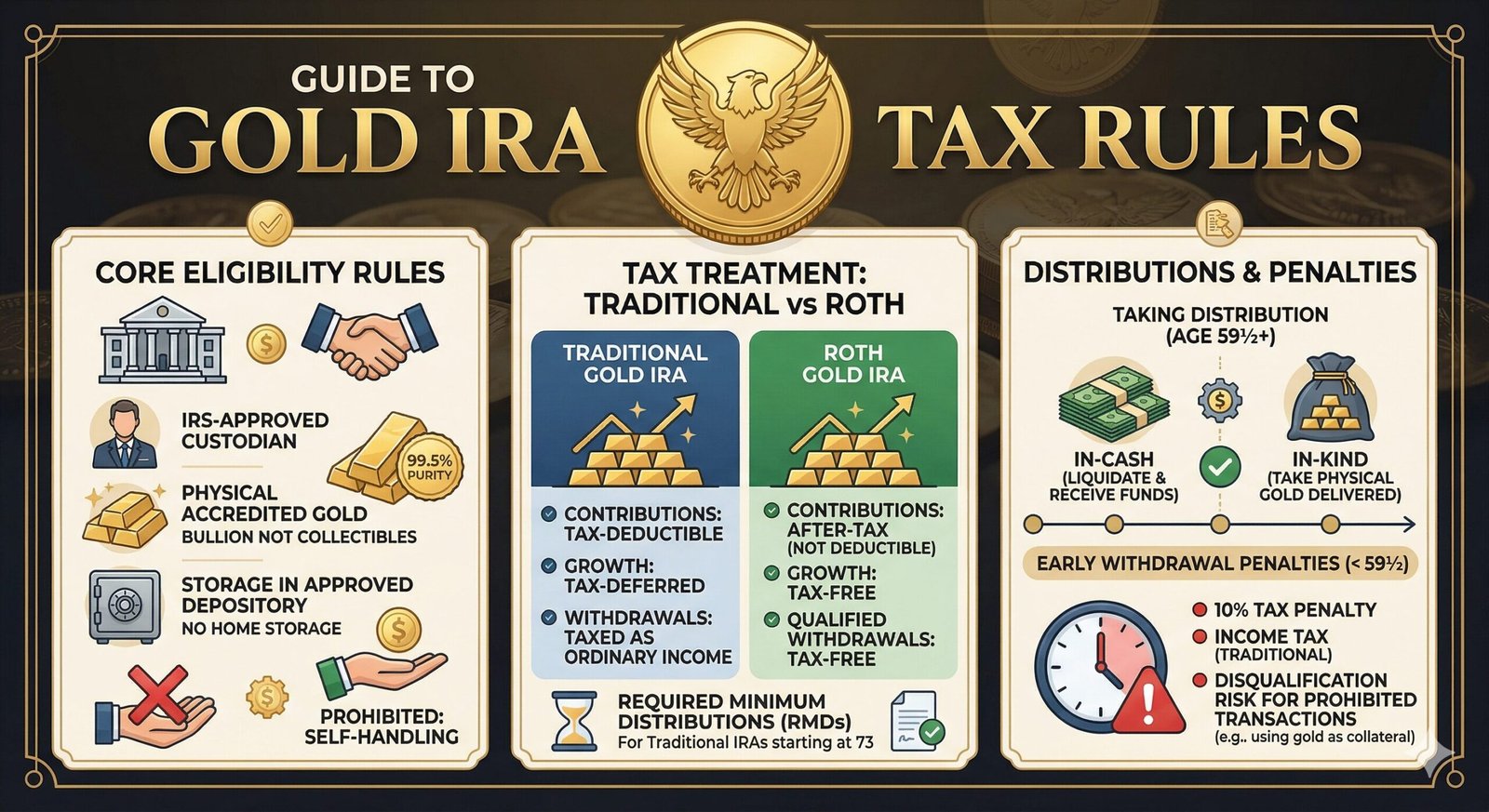
A Gold IRA is a self-directed individual retirement account that holds IRS-approved physical precious metals — typically gold, silver, platinum, or palladium — rather than conventional paper assets like mutual funds or stocks. The account functions under the same general IRS framework as a traditional IRA: contributions may be tax-deductible, growth is tax-deferred, and withdrawals in retirement are taxed as ordinary income.
The key distinction is the assets held inside. Because physical metals require specialized storage and handling, Gold IRAs must use an IRS-approved custodian and an approved depository. You cannot take personal possession of the metals while they remain inside the IRA without triggering a taxable distribution.
For a thorough overview of how these accounts work, our Gold IRA hub covers the fundamentals in plain language.
Can You Actually Roll Over a SIMPLE IRA to a Gold IRA?
Yes — a SIMPLE IRA can be rolled over into a Gold IRA, which is structured as a self-directed traditional IRA. However, there is one critical IRS rule you must be aware of before initiating any transfer.
The Two-Year Rule: The Most Important Factor
The IRS imposes a mandatory two-year waiting period on SIMPLE IRA rollovers. Specifically, you must wait at least two years from the date you first participated in a SIMPLE IRA plan before you can roll those funds into a different type of retirement account — including a traditional IRA or a Gold IRA.
During that two-year window, you can only transfer or roll over your SIMPLE IRA funds into another SIMPLE IRA. Attempting to move the money into a traditional IRA, Gold IRA, or 401(k) before the two-year period expires will result in the distribution being treated as a non-qualified withdrawal — subject to ordinary income tax plus a 25% early withdrawal penalty if you’re under age 59½. That’s significantly higher than the 10% penalty that applies to most other retirement accounts.
This rule is outlined in detail in IRS Publication 590-A, which governs contributions and rollovers for individual retirement arrangements.
Once the two-year period has passed, a SIMPLE IRA functions much like a traditional IRA for rollover purposes. You can roll the funds into a Gold IRA, a standard traditional IRA, a 401(k) — most plan types that accept IRA rollovers.
What If You’ve Already Passed the Two-Year Mark?
If you’ve been in your SIMPLE IRA plan for more than two years, the rollover process is straightforward. Your SIMPLE IRA can be transferred or rolled over to a Gold IRA (a self-directed traditional IRA) just like any other traditional IRA. Taxes are deferred, no penalties apply, and the funds retain their tax-advantaged status inside the new account.
Our dedicated Gold IRA rollover rules page goes into further detail on how rollovers work across different account types.
Direct Rollover vs. Indirect Rollover
When moving funds from a SIMPLE IRA to a Gold IRA, you’ll typically have two options: a direct rollover or an indirect rollover. Understanding the difference matters.
With a direct rollover, your SIMPLE IRA custodian sends the funds directly to your new Gold IRA custodian. You never take possession of the money, which eliminates the risk of triggering taxes or penalties. This is the approach most financial professionals recommend.
With an indirect rollover, the funds are paid out to you personally. You then have 60 days to deposit the full amount — including the 20% that was withheld for taxes — into your new account. If you don’t deposit the complete original balance within that 60-day window, the shortfall is treated as a taxable distribution. The IRS RMD FAQ and broader retirement account guidance are worth reading through — see the IRS IRA investment FAQ for additional context.
Steps to Roll Over a SIMPLE IRA to a Gold IRA
Step 1: Confirm Your Two-Year Eligibility
Before anything else, verify when you first participated in your SIMPLE IRA plan. If fewer than two years have passed, you’ll need to wait. If you’re past the two-year mark, you’re eligible to proceed.
Step 2: Choose an IRS-Approved Gold IRA Custodian
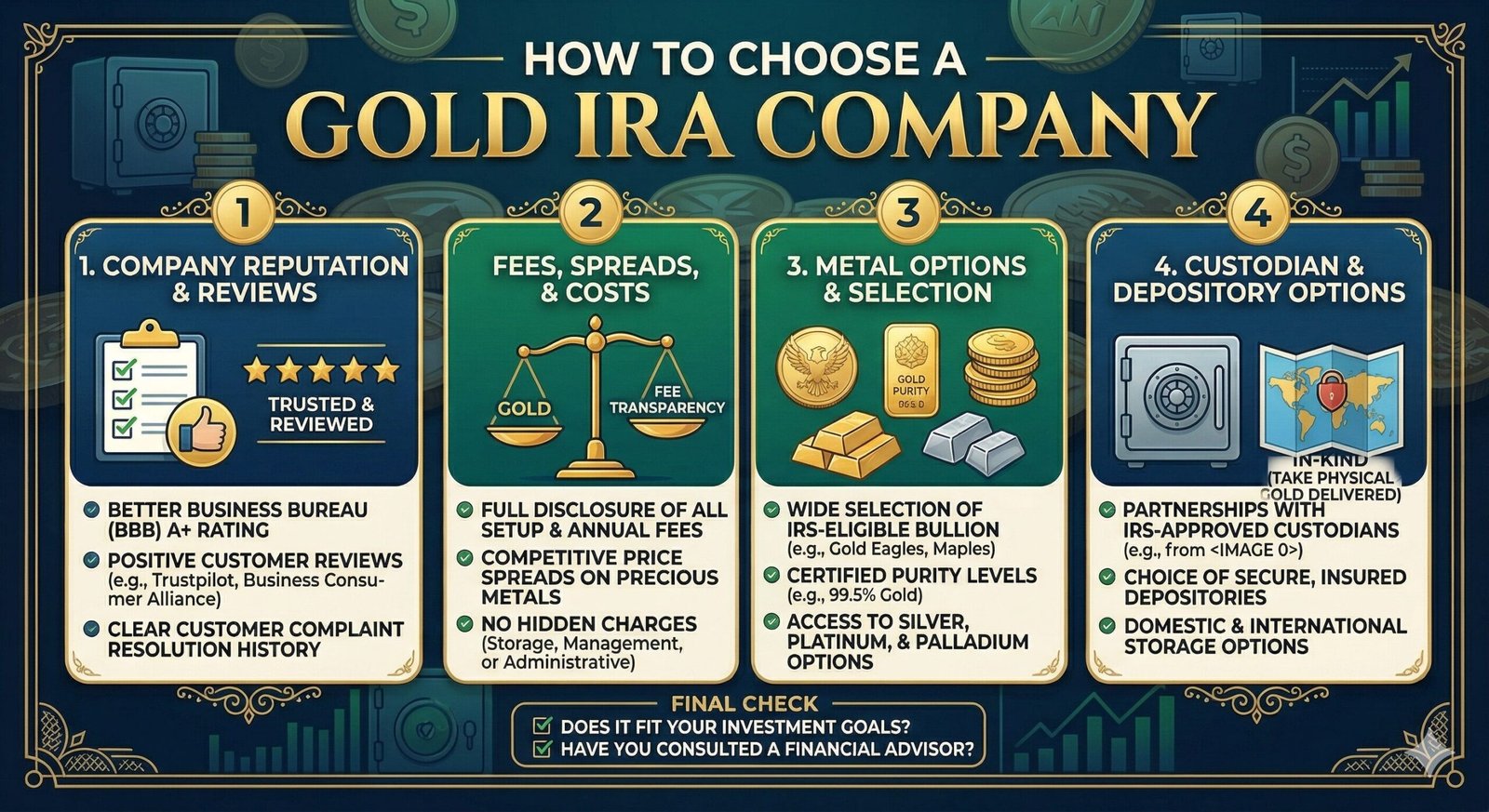
Gold IRAs require a specialized custodian — a financial institution approved by the IRS to hold self-directed retirement accounts. Not all custodians offer this service, so you’ll need to find one that specifically administers Gold IRAs and works with an IRS-approved precious metals depository.
When evaluating custodians, pay close attention to fee structures. Setup fees, annual maintenance fees, and storage fees can vary considerably between providers. Our Gold IRA fees guide breaks down what to expect and what questions to ask before you commit.
It’s also worth checking any prospective company’s standing with the Better Business Bureau at bbb.org and reviewing regulatory history through FINRA BrokerCheck. FINRA has also published useful guidance on self-directed IRAs that’s worth reading before you open an account.
Step 3: Open Your Gold IRA Account
Once you’ve selected a custodian, you’ll complete the account opening paperwork. This typically involves identity verification, beneficiary designations, and agreement to the custodian’s terms and fee schedule. Many custodians have minimum investment thresholds, so reviewing our Gold IRA minimum investment page before you start can save time.
Step 4: Initiate the Direct Rollover
Contact your SIMPLE IRA custodian and request a direct rollover to your new Gold IRA custodian. Your new custodian will typically provide paperwork to facilitate the transfer. The funds move from one custodian to the other without passing through your hands.
Step 5: Select IRS-Approved Precious Metals
Once the funds are in your Gold IRA, you’ll direct your custodian to purchase IRS-approved precious metals. Not all gold products qualify. The IRS requires that gold meet a minimum purity of 99.5%. Our guide to IRA-eligible gold coins outlines which products meet the standard.
Important Considerations Before You Proceed
A Gold IRA is not a simple set-and-forget account. There are ongoing fees — custodian fees, storage fees, and potentially transaction fees — that don’t exist with a standard IRA holding mutual funds. You should understand the full cost picture before proceeding.
You should also be aware that required minimum distributions (RMDs) apply to Gold IRAs, just as they do with traditional IRAs. Starting at age 73, you’ll be required to take annual distributions. With a Gold IRA, satisfying an RMD may require liquidating a portion of your metals, which involves additional coordination with your custodian.
If you’re comparing how a Gold IRA stacks up against other account structures from a rules perspective, our Gold IRA vs Traditional IRA comparison may be useful reading. And if you’re coming from an employer plan rather than an IRA, our 401(k) to Gold IRA rollover guide covers that process separately.
Be cautious of any company that pressures you to act quickly, makes guarantees about returns, or is vague about fees. Our Gold IRA scams guide covers the red flags to watch for.
Frequently Asked Questions
Q: What happens if I roll over my SIMPLE IRA to a Gold IRA before the two-year period is up?
A: The distribution will be treated as non-qualified by the IRS. You’ll owe ordinary income tax on the full amount, plus a 25% early withdrawal penalty if you’re under 59½. This is a higher penalty than the standard 10% that applies to most other early IRA withdrawals, so confirming your eligibility date is essential before initiating any rollover.
Q: Can I roll over a SIMPLE IRA from a previous employer to a Gold IRA?
A: Yes, as long as the two-year period has elapsed since you first began participating in that SIMPLE IRA. Once the two years are up, the fact that it was a former employer’s plan doesn’t affect your ability to roll it over.
Q: Does a SIMPLE IRA rollover to a Gold IRA trigger taxes?
A: Not if it’s done as a direct rollover after the two-year waiting period. The funds retain their tax-deferred status inside the new Gold IRA. Taxes are deferred until you take distributions in retirement. See IRS Publication 590-A for the authoritative guidance.
Q: Can I roll over only part of my SIMPLE IRA to a Gold IRA?
A: Yes. Partial rollovers are permitted. You could transfer a portion of your SIMPLE IRA balance to a Gold IRA while leaving the remainder in your existing account or rolling it to a different account. Just ensure the two-year rule has been satisfied before doing so.
Q: Are there contribution limits I need to worry about when rolling over?
A: No. Rollover amounts are not subject to annual contribution limits. Only new contributions to an IRA count against the annual limit. A rollover is treated as a transfer of existing retirement funds, not a new contribution.
Ready to Learn More?
Rolling over a SIMPLE IRA to a Gold IRA is entirely achievable once you’ve satisfied the IRS two-year rule and followed the correct process. The most important step is working with a reputable, IRS-approved custodian and taking the time to understand the fees, rules, and requirements before you commit.
For a broader look at the companies best equipped to help you open and manage a Gold IRA, visit our guide to the Best Gold IRA Companies of 2026 — a regularly updated resource that can help you compare your options with confidence.
This article is for informational purposes only and does not constitute financial or tax advice. Investing in precious metals involves risk including possible loss of principal.
Related guides
- Gold IRA Consumer Affairs Reviews: What to Look For
- Gold IRA Trustpilot Reviews: What Real Customers Say
- Gold IRA BBB Complaints: What Consumer Reports Reveal
- Is a Gold IRA Worth the Fees? A Cost-Benefit Analysis
- Are Gold IRA Fees Too High? Breaking Down the Real Costs
- Gold IRA Mistakes to Avoid: 10 Common Errors Investors Make