
Can I Roll Over My 403(b) to a Gold IRA? Complete Answer
If you work — or have worked — for a school, hospital, nonprofit, or government agency, there’s a good chance your retirement savings are sitting in a 403(b) plan. These tax-advantaged accounts are common among teachers, nurses, university employees, and public sector workers. And like millions of Americans approaching or entering retirement, you may be wondering whether you can move those funds into a Gold IRA.
The short answer is yes — in most cases, you can roll over a 403(b) into a Gold IRA. But the full answer involves understanding a few important IRS rules, your plan’s specific terms, and the steps required to do it correctly. This article walks you through everything you need to know.
What Is a 403(b) Plan?
A 403(b) plan is a tax-deferred retirement account offered by certain tax-exempt employers — most commonly public schools, universities, hospitals, and nonprofit organizations. It functions similarly to a 401(k) in many respects: contributions are made pre-tax, your money grows on a tax-deferred basis, and withdrawals in retirement are taxed as ordinary income.
The IRS governs both plan types under similar rules, and crucially for our purposes, 403(b) plans are generally eligible for rollover into an Individual Retirement Account — including a self-directed Gold IRA. You can find the relevant framework outlined in IRS Publication 590-A, which covers contributions to IRAs and the mechanics of rollovers.
What Is a Gold IRA?
A Gold IRA is a self-directed Individual Retirement Account that holds physical precious metals — typically gold, and sometimes silver, platinum, or palladium — rather than conventional assets like mutual funds or stocks. To understand the full structure of these accounts, our Gold IRA hub covers the fundamentals in depth.
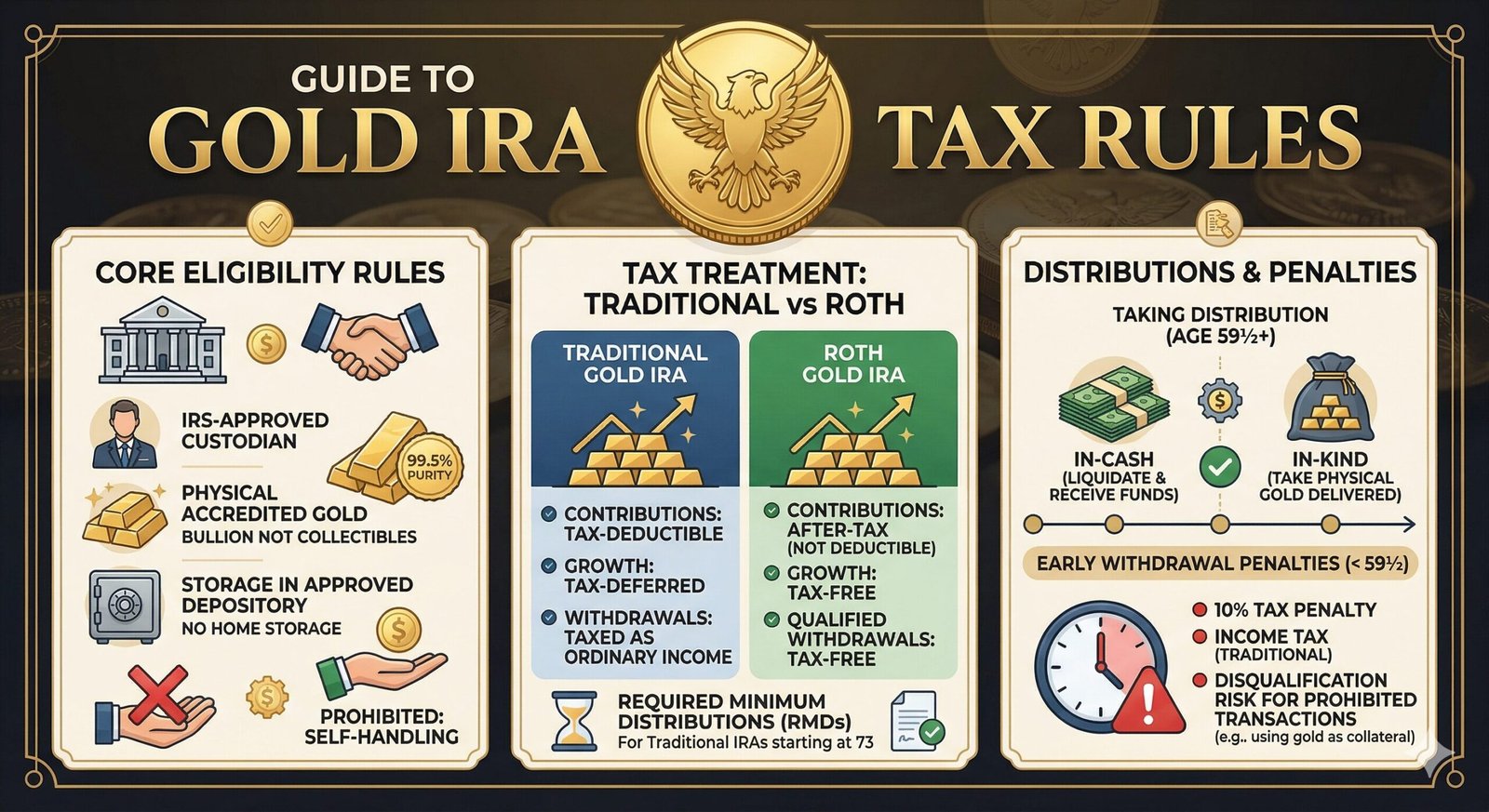
Unlike standard IRAs, a Gold IRA requires three key parties: a self-directed IRA custodian (who administers the account), a precious metals dealer (who sources the metals), and an IRS-approved depository (where the physical metals are stored). You cannot take personal possession of the metals while they remain in the IRA — that’s a strict IRS requirement, not a technicality.
For a thorough breakdown of how these accounts work from the ground up, see Gold IRAs Explained in Detail.
Is a 403(b) Eligible for Rollover to a Gold IRA?
Generally speaking, yes. The IRS treats 403(b) plans as eligible rollover distributions under the same rules that govern 401(k) and traditional IRA rollovers. This means the funds in your 403(b) can be moved — either directly or indirectly — into a self-directed IRA that holds precious metals.
However, eligibility hinges on a few key factors.
Are You Eligible to Roll Over?
Your ability to initiate a rollover from your 403(b) depends on your current employment status and the terms of your plan:
Separated from service: If you’ve left the employer who sponsored the 403(b) — whether through retirement, resignation, or termination — you are almost universally eligible to roll over the full account balance.
Still employed: This is where it gets more nuanced. Many 403(b) plans do not allow in-service distributions or rollovers while you’re still working for the sponsoring employer. Some plans do permit in-service withdrawals after age 59½, but you’ll need to check your specific plan documents or contact your plan administrator directly. There is no universal rule here — it depends entirely on how the plan is written.
Required Minimum Distributions (RMDs): If you are already subject to RMDs from your 403(b), those amounts cannot be rolled over. The IRS requires that RMDs be distributed to you directly in the year they are due. The IRS RMD FAQ has full details on when distributions become mandatory and how amounts are calculated.
Roth vs. Traditional 403(b)
If your 403(b) has a Roth component — meaning contributions were made after-tax — the rollover process is slightly different. Roth 403(b) funds should generally be rolled into a Roth IRA, not a traditional self-directed IRA. Pre-tax 403(b) funds roll into a traditional Gold IRA, maintaining their tax-deferred status. Rolling funds into the wrong account type can trigger a taxable event, so it’s worth understanding which type of funds you hold before proceeding.
Direct vs. Indirect Rollover: Understanding the Difference
When moving funds from a 403(b) to a Gold IRA, you have two options: a direct rollover or an indirect rollover. Understanding the difference matters — one carries significant financial risk if mishandled.
A direct rollover is almost always the cleaner option. With an indirect rollover, your plan is required to withhold 20% for federal income tax, even if you intend to roll the full amount over. To avoid a tax bill, you would need to make up that 20% out of pocket when depositing into the new IRA — and then wait for a refund when you file your taxes. Our Gold IRA rollover rules article explains both paths in more detail.
How to Roll Over a 403(b) to a Gold IRA: Step by Step
The process is more straightforward than many people expect, though it does require working with the right professionals.
Step 1: Choose a Self-Directed IRA Custodian
Not every IRA custodian allows physical precious metals. You’ll need a custodian that specialises in self-directed IRAs and is equipped to hold alternative assets. The IRS IRA investment FAQ confirms that IRAs can hold certain types of physical gold and silver, but only under specific conditions. Equally, FINRA’s guidance on self-directed IRAs is worth reading before you commit to any custodian.
Step 2: Open Your Gold IRA Account
Once you’ve selected a custodian, you’ll complete the paperwork to open a new self-directed IRA. This typically involves identity verification and signing a custodial agreement.
Step 3: Initiate the Rollover with Your 403(b) Plan
Contact your current 403(b) plan administrator and request a direct rollover to your new self-directed IRA. Provide them with the receiving account details from your new custodian. Depending on the plan, this can take anywhere from a few days to several weeks.
Step 4: Select IRS-Eligible Precious Metals
Once the funds arrive in your self-directed IRA, you can instruct your custodian to purchase IRS-approved precious metals. Not all gold qualifies — coins and bars must meet specific purity standards (generally .995 fine or higher for gold bars). Our guide to IRA-eligible gold coins walks through what qualifies and what doesn’t.
Step 5: Arrange Storage at an Approved Depository
Your custodian will coordinate storage with an IRS-approved depository. The metals must be stored there — they cannot be kept at home or in a personal safe while held inside an IRA.
Costs to Be Aware Of
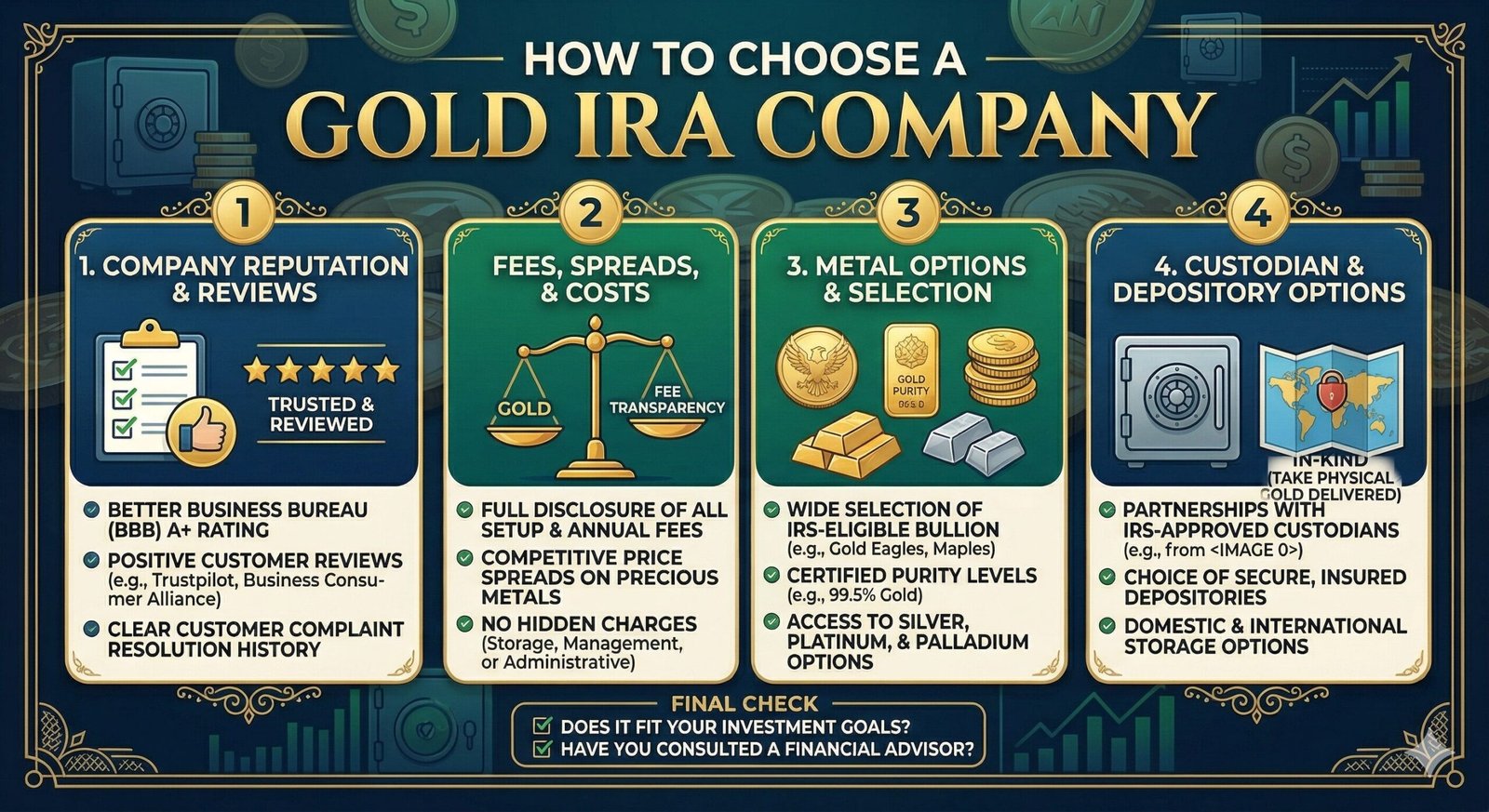
Gold IRAs carry fees that traditional IRAs typically do not. These include custodian setup fees, annual maintenance fees, storage fees, and transaction fees when buying or selling metals. Before committing, review our Gold IRA fees guide so you know exactly what to expect and how different providers compare.
Separately, before selecting any Gold IRA company to assist with this process, take the time to verify their credentials. Check ratings at bbb.org and look up any registered representatives through FINRA BrokerCheck. Our Gold IRA scams guide also outlines the warning signs to watch for — an important read for anyone new to this space.
Key Considerations Before You Proceed
A 403(b) to Gold IRA rollover is a significant financial decision. A few points worth reflecting on before you move forward:
Understand what you’re moving away from. Your 403(b) may offer low-cost institutional investment options, employer contributions, or loan provisions that a self-directed IRA does not replicate. Make sure you have a clear picture of what you’re leaving behind.
Contribution limits don’t change. Rolling over funds doesn’t affect your annual IRA contribution limits. The IRS contribution limits page has the current figures for traditional and Roth IRAs.
Minimum investment thresholds. Many Gold IRA providers set a minimum amount required to open an account. Our Gold IRA minimum investment article summarises what different providers typically require.
Consider getting independent guidance. This article is informational. Before making any changes to a retirement account, it’s wise to speak with a qualified financial advisor or tax professional who can review your specific situation.
Frequently Asked Questions
Can I roll over a 403(b) to a Gold IRA without paying taxes?
Yes — if you execute a direct rollover from your 403(b) to a traditional self-directed IRA, the transfer is not a taxable event. Taxes are only triggered if you take the funds as a distribution rather than rolling them over within IRS guidelines.
How long does a 403(b) to Gold IRA rollover take?
The timeline varies by plan. Some 403(b) administrators process rollover requests within a week; others may take three to four weeks. Once funds arrive at your new custodian, purchasing metals and arranging storage typically adds a few more business days.
Can I roll over just part of my 403(b)?
In many cases, yes. Partial rollovers are permitted under IRS rules, though your specific plan documents will govern whether the plan allows them. Check with your plan administrator before assuming you can split the balance.
What happens if I miss the 60-day window on an indirect rollover?
If you receive the funds directly and don’t deposit them into an IRA within 60 days, the IRS treats the distribution as ordinary income for that tax year. If you are under age 59½, a 10% early withdrawal penalty may also apply. This is one of the primary reasons direct rollovers are generally preferred.
Is a Gold IRA right for everyone?
Not necessarily. The decision depends on your individual financial situation, retirement timeline, and goals. Our article on is a Gold IRA a good idea explores the considerations in a balanced way to help you think it through.
Ready to Learn More?
If you’ve confirmed your 403(b) is eligible and you’re ready to explore which providers might suit your situation, our independently researched guide to the Best Gold IRA Companies of 2026 compares the leading custodians and dealers across key criteria including fees, minimums, storage options, and customer service track records.
This article is for informational purposes only and does not constitute financial or tax advice. Investing in precious metals involves risk including possible loss of principal.
Related guides
- Gold IRA Consumer Affairs Reviews: What to Look For
- Gold IRA Trustpilot Reviews: What Real Customers Say
- Gold IRA BBB Complaints: What Consumer Reports Reveal
- Is a Gold IRA Worth the Fees? A Cost-Benefit Analysis
- Are Gold IRA Fees Too High? Breaking Down the Real Costs
- Gold IRA Mistakes to Avoid: 10 Common Errors Investors Make