
Gold IRA in Wyoming: Complete Guide for 2026
Wyoming has a reputation for doing things its own way. The state that pioneered limited liability company laws in the 1970s and consistently ranks among the most business-friendly environments in the country has also become an increasingly popular destination for investors looking to hold physical assets outside of traditional financial systems. If you’re a Wyoming resident exploring your retirement options, you may be wondering how a Gold IRA fits into that picture.
This guide walks through everything you need to know about opening and maintaining a Gold IRA in Wyoming — from how these accounts work at the federal level, to what Wyoming’s own tax environment means for retirement savers, to the practical steps involved in getting started.
What Is a Gold IRA and How Does It Work?
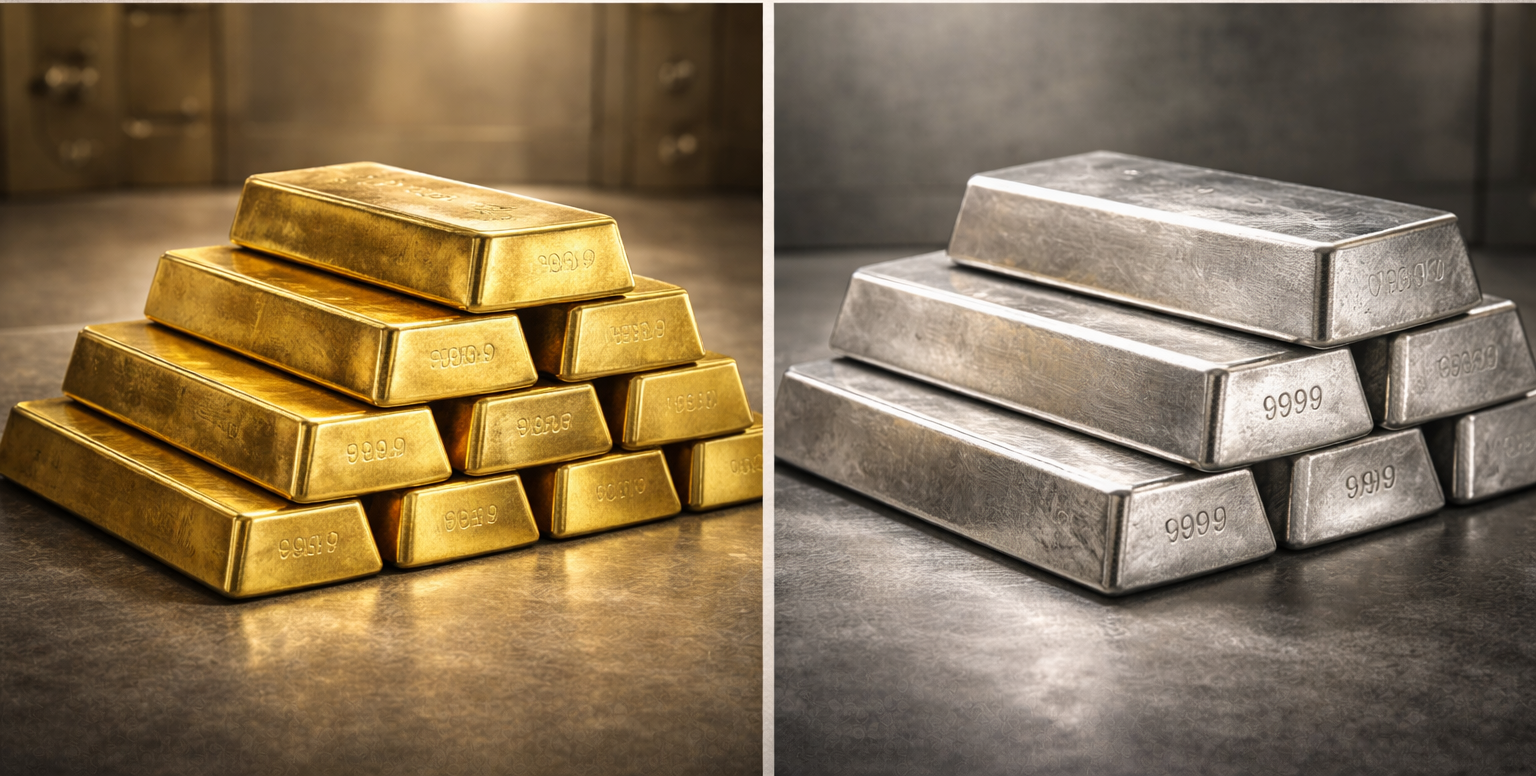
Before getting into Wyoming-specific considerations, it helps to understand the structure of a Gold IRA. In plain terms, a Gold IRA is a self-directed individual retirement account that holds physical precious metals — typically gold, but also silver, platinum, and palladium — rather than paper assets like stocks or mutual funds.
The IRS does not create a special “Gold IRA” category. Instead, these accounts operate under the same legal framework as traditional or Roth IRAs, with one important difference: they are structured as self-directed IRAs, which gives the account holder access to a broader range of allowable investments. You can read more about the full mechanics in our Gold IRAs Explained in Detail resource.
Because the IRS treats the gold inside a self-directed IRA as a retirement account asset, the metal cannot be stored at your home or in a personal safe. It must be held by an IRS-approved custodian at an approved depository. This is a firm requirement — not a technicality. FINRA’s guidance on self-directed IRAs outlines some of the key structural rules investors should understand before opening one of these accounts.
For a broader overview of the account type, our Gold IRA hub covers the fundamentals in full detail.
Wyoming’s Tax Environment and What It Means for Retirement Investors
One of the most compelling aspects of retiring in Wyoming is the state’s tax structure. Wyoming is one of only a handful of states that levies no individual income tax. This means that retirement distributions — including withdrawals from a traditional Gold IRA — are not taxed at the state level.
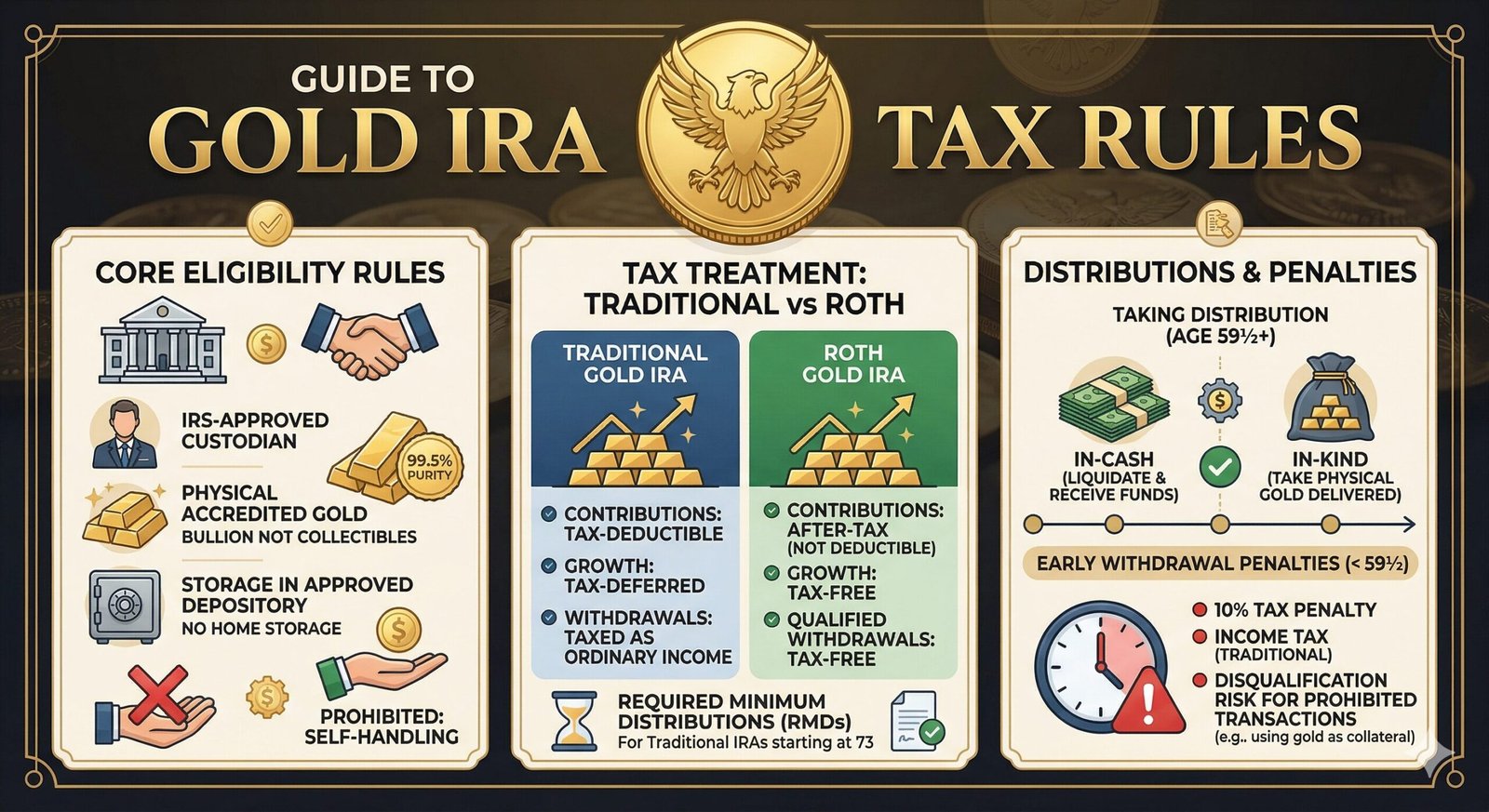
That distinction matters. When you take distributions from a traditional IRA, those withdrawals are treated as ordinary income by the federal government and taxed accordingly. In many states, that income is then taxed again at the state level. In Wyoming, it is not. Retirement income flows to Wyoming residents without the additional layer of state taxation that residents in higher-tax states must account for.
Wyoming also has no estate tax and no inheritance tax, which can be relevant for investors thinking about how their retirement assets will eventually transfer to heirs.
It’s important to note that this guide is describing the factual structure of Wyoming’s tax code as it applies to retirement income generally — it is not tax advice, and your individual situation may differ significantly. Please consult a qualified tax professional for guidance specific to your circumstances.
Federal Rules That Apply to All Gold IRAs — Including Wyoming
Regardless of what state you live in, the federal rules governing Gold IRAs are uniform. The IRS sets the standards, and those standards apply to every American investor. Here’s a summary of the most important ones.
Contribution Limits
For 2026, the IRS annual contribution limit for IRAs is $7,000 for individuals under age 50, and $8,000 for those aged 50 and older. These limits apply to self-directed Gold IRAs just as they do to conventional IRAs. You can find the current limits directly on the IRS contribution limits page.
Metal Purity Standards
Not all gold qualifies for IRA inclusion. The IRS requires that gold held inside an IRA meet a minimum purity standard of .995 (99.5% pure). Common examples of qualifying coins include American Gold Eagles, American Gold Buffalos, and Canadian Gold Maple Leafs. South African Krugerrands, by contrast, do not meet the purity threshold and are not eligible. For a curated breakdown, see our guide to IRA-eligible gold coins.
Custodian and Storage Requirements
The IRS requires that all IRA assets — including physical gold — be held by a qualified trustee or custodian. For Gold IRAs, this means working with a specialized self-directed IRA custodian who arranges for the metal to be stored at an IRS-approved, third-party depository. Storing gold yourself — even temporarily — could be treated as a distribution and trigger taxes and penalties. More detail is available in IRS Publication 590-A.
Required Minimum Distributions
Traditional Gold IRAs are subject to required minimum distributions (RMDs) beginning at age 73, consistent with the rules for all traditional IRAs. Because the account holds physical metal rather than cash, meeting an RMD may require liquidating a portion of the holdings or taking an in-kind distribution of physical gold. The IRS RMD FAQ covers the mechanics of this process in detail.
How to Open a Gold IRA as a Wyoming Resident
The process of opening a Gold IRA is the same whether you’re in Cheyenne, Casper, or anywhere else in the state. There are no Wyoming-specific licensing requirements or state-level registration processes that apply uniquely to these accounts.
Step 1: Choose a Custodian
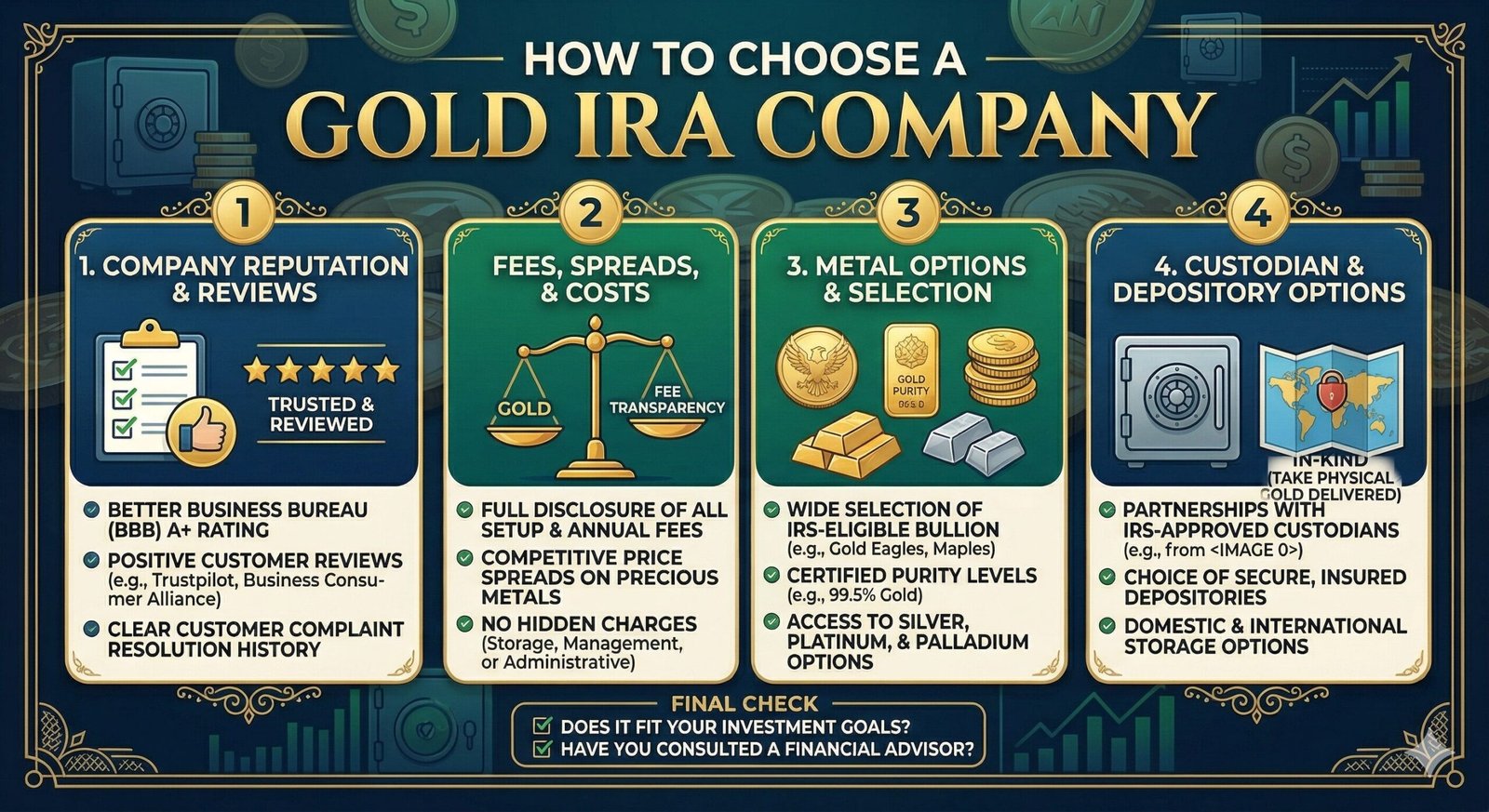
Your first decision is selecting a reputable self-directed IRA custodian. This is the company that holds the account on your behalf, executes your purchase orders, and maintains the required documentation. Not all custodians work with precious metals, so you’ll need one that specifically supports Gold IRAs. Look for custodians with established track records, transparent fee schedules, and strong ratings with organizations like the Better Business Bureau at bbb.org.
Step 2: Fund the Account
Once the account is established, you’ll need to fund it. Wyoming residents have three primary options: making a direct annual contribution (subject to IRS limits), transferring funds from an existing IRA at another institution, or completing a rollover from a former employer’s 401(k) or similar plan.
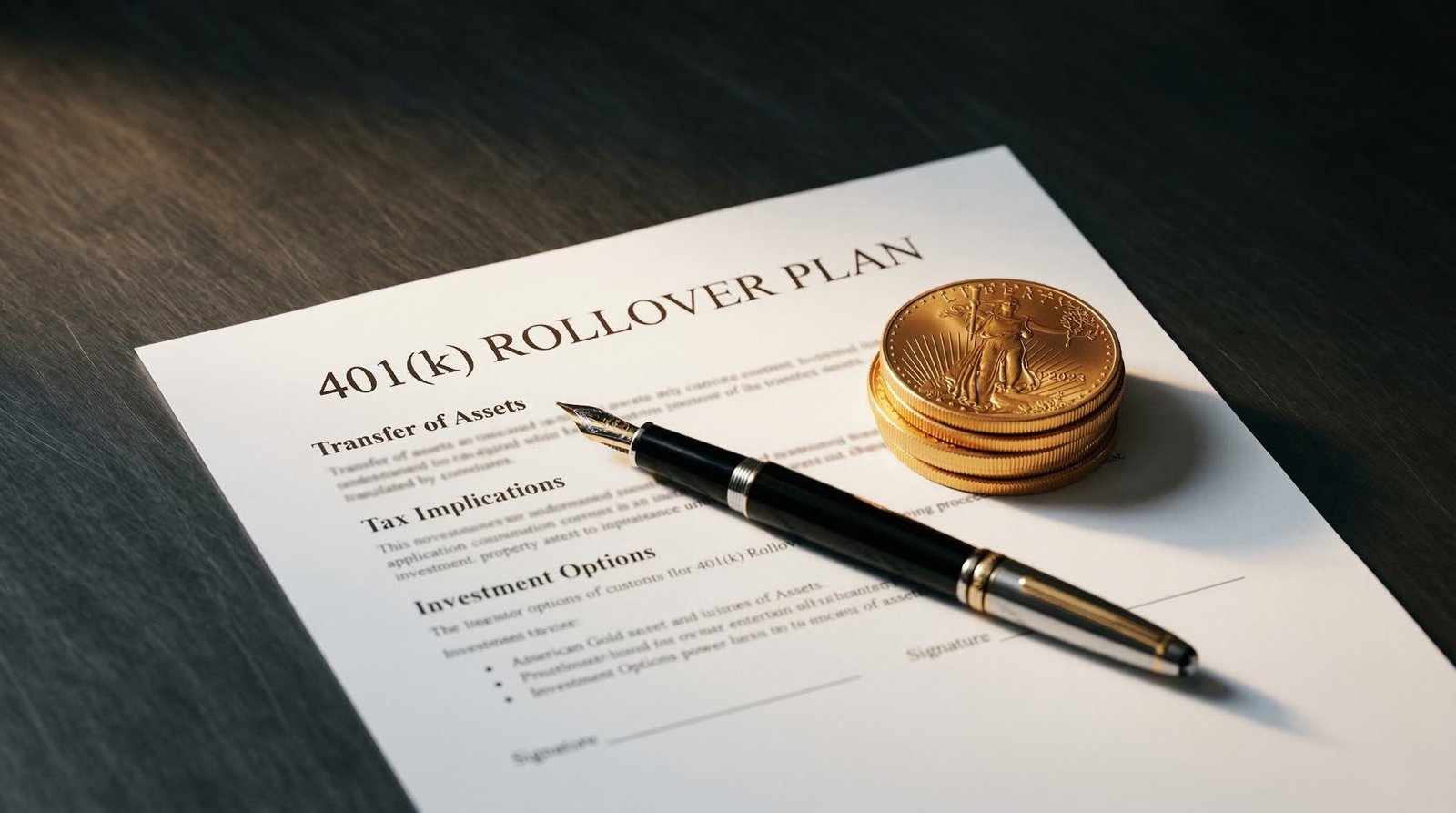
Rollovers from employer-sponsored retirement plans are a common funding method. If this path interests you, our 401(k) to Gold IRA rollover guide walks through each step of the process, and our Gold IRA rollover rules page explains the time limits and procedural requirements you’ll need to follow carefully.
Step 3: Select Your Metals
With the account funded, you’ll work with your custodian and their preferred dealer network to select the specific coins or bars you want to purchase. Remember that the metal must meet IRS purity standards, and your custodian should be able to confirm eligibility before any purchase is made.
Step 4: Arrange Secure Storage
Your custodian will coordinate the transfer of purchased metal to an approved depository. Wyoming does not currently have a major IRS-approved gold depository operating within the state, so most Wyoming investors will find their metal is stored at facilities in states like Delaware, Texas, or Utah — all of which are commonly used by leading custodians.
Understanding the Costs Involved
Gold IRAs come with a different fee structure than conventional IRAs. Rather than a simple expense ratio built into a fund, you’re looking at explicit, itemized fees. These typically include an account setup fee, an annual custodian maintenance fee, and annual storage fees charged by the depository.
Understanding these costs before you commit is important. Our Gold IRA fees guide provides a more complete breakdown of what to expect and how fees compare across different providers.
If you’re also weighing how a Gold IRA compares to keeping your existing retirement structure, our Gold IRA vs Traditional IRA and Gold IRA vs 401(k) pages lay out the structural differences clearly.
Avoiding Scams and Bad Actors
The self-directed IRA space — including Gold IRAs — attracts a small number of bad actors who take advantage of investors who are unfamiliar with the rules. Common warning signs include pressure to act immediately, unsolicited outreach, promises of returns or guarantees, and fee structures that are hidden or vague.
Wyoming investors should take time to verify any company they’re considering. You can check regulatory records through FINRA BrokerCheck and business complaint history through the BBB. Our Gold IRA scams guide outlines the most common tactics in detail and explains what legitimate companies should look like in practice.
Is a Gold IRA Right for You?
Whether a Gold IRA makes sense for a particular investor is a question only that person — ideally in conversation with a qualified financial advisor — can answer. The right account structure depends on individual retirement timelines, existing assets, financial goals, and personal preferences. Our article on is a Gold IRA a good idea explores the considerations that typically go into that decision.
What is clear is that Wyoming’s tax environment is genuinely favorable for retirement savers. The absence of a state income tax means that distributions from a traditional Gold IRA are subject only to federal taxation — a meaningful structural advantage for long-term retirement planning.
Frequently Asked Questions
Is there anything special about opening a Gold IRA in Wyoming compared to other states?
Not from a federal rules perspective — the IRS rules that govern Gold IRAs apply equally to all Americans regardless of state. What differs is Wyoming’s state tax treatment: Wyoming levies no individual income tax, which means IRA distributions are not taxed at the state level. That’s a meaningful benefit for Wyoming-based retirement savers.
Can I store my Gold IRA metals at home in Wyoming?
No. The IRS requires that all IRA-held precious metals be stored at an approved third-party depository. Storing metals yourself — even temporarily — could be classified as a distribution, triggering taxes and potential penalties. This rule applies in every state, including Wyoming.
What gold coins and bars are eligible for a Wyoming Gold IRA?
The IRS requires gold held in an IRA to be at least .995 pure. Common eligible options include American Gold Eagles, American Gold Buffalos, and Canadian Gold Maple Leafs. Your custodian should be able to confirm eligibility for any specific coin or bar before purchase.
How do required minimum distributions work when my IRA holds physical gold?
Beginning at age 73, traditional IRA holders — including Gold IRA holders — must begin taking RMDs. Because the account holds physical metal rather than cash, you’ll need to either liquidate a portion of your holdings to meet the distribution requirement or take an in-kind distribution of the physical metal itself. Your custodian will guide you through the process.
What should I look for when choosing a Gold IRA custodian as a Wyoming resident?
Look for a custodian with a clear, transparent fee schedule, a demonstrated track record with precious metals accounts, strong independent reviews, and responsive customer service. Checking their standing on bbb.org and reviewing any regulatory records is a sensible step before committing to any provider.
When you’re ready to compare providers, our independently researched guide to the Best Gold IRA Companies of 2026 is a good place to start. It covers the leading custodians in the space, with detail on fees, account minimums, storage options, and customer service quality.
This article is for informational purposes only and does not constitute financial or tax advice. Investing in precious metals involves risk including possible loss of principal.
Related guides
- Gold IRA Consumer Affairs Reviews: What to Look For
- Gold IRA Trustpilot Reviews: What Real Customers Say
- Gold IRA BBB Complaints: What Consumer Reports Reveal
- Is a Gold IRA Worth the Fees? A Cost-Benefit Analysis
- Are Gold IRA Fees Too High? Breaking Down the Real Costs
- Gold IRA Mistakes to Avoid: 10 Common Errors Investors Make