
Gold IRA in West Virginia: Investor Guide for 2026
If you live in West Virginia and you’re thinking seriously about your retirement savings, you’ve likely already encountered plenty of opinions about what you should do with your money. The conversation around gold Individual Retirement Accounts (IRAs) has grown significantly over the past several years, and Mountain State investors are increasingly asking whether holding physical gold inside a tax-advantaged retirement account makes sense for their situation.
This guide is designed to give West Virginia residents a clear, factual overview of how gold IRAs work, what the rules are, what costs to expect, and what questions to ask before moving forward. It won’t tell you what to do — that’s a conversation best had with a qualified financial advisor — but it will give you the information you need to ask the right questions.
What Is a Gold IRA?
A gold IRA is a self-directed Individual Retirement Account that allows you to hold physical precious metals — gold, silver, platinum, or palladium — rather than the conventional paper assets like mutual funds or ETFs that populate most retirement accounts. To understand the full structure before diving in, you may find it helpful to read what a Gold IRA is or explore Gold IRAs Explained in Detail.
The core mechanics are very similar to a traditional or Roth IRA. You open an account, fund it (either with new contributions or by rolling over assets from an existing retirement account), and hold assets inside that account until you’re ready to take distributions. The critical difference is that a self-directed IRA allows a broader range of assets — including IRS-approved physical metals.
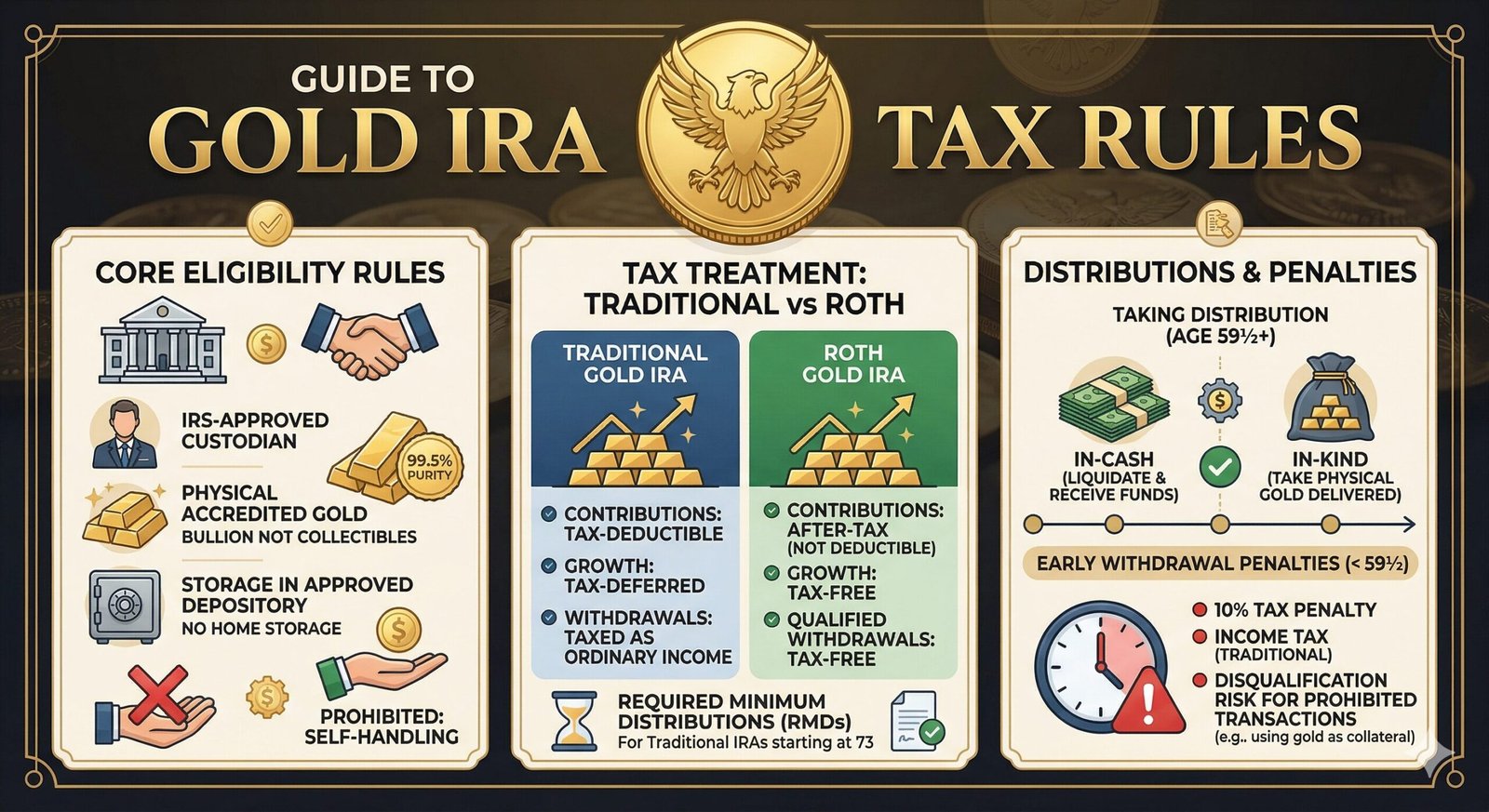
The IRS sets specific purity standards for metals held in these accounts. Gold, for example, must be at least 99.5% pure. You can find a broader discussion of IRA-eligible gold coins if you want to explore which specific products qualify.
Does West Virginia Have Any Special Gold IRA Rules?
Here’s the short answer: no. Gold IRAs are federally governed, meaning the rules you follow in West Virginia are the same rules that apply in every other U.S. state. The IRS — not individual state governments — sets the contribution limits, purity standards, distribution rules, and custodian requirements.
That said, it’s worth being aware of a few state-level considerations:
West Virginia income tax on retirement distributions. West Virginia does tax retirement income, though the state has been gradually phasing in exemptions on Social Security benefits and certain pension income in recent years. Distributions from a traditional gold IRA are treated as ordinary income, just like distributions from a conventional traditional IRA. The West Virginia State Tax Department is the appropriate resource for current information on how your specific distributions may be taxed at the state level. This is not tax advice — consult a qualified tax professional familiar with West Virginia law.
No state-level precious metals IRA mandates. West Virginia has not enacted any legislation that specifically governs how precious metals must be held in IRAs, what custodians must be used, or what fees can be charged. Everything follows federal law.
The Federal Rules You Need to Know
Whether you’re in Charleston, Morgantown, Huntington, or anywhere else in the Mountain State, these are the IRS rules that govern your gold IRA.
Contribution Limits
For 2026, the IRS contribution limit for IRAs (including self-directed gold IRAs) is $7,000 per year, with a $1,000 catch-up contribution available for those aged 50 and older. You can confirm current figures directly through the IRS contribution limits page.
Custodian Requirement
The IRS requires that all IRA assets — including physical metals — be held by an approved custodian. You cannot simply buy gold coins, lock them in your home safe, and call it a gold IRA. The metals must be stored at an IRS-approved depository, and the account must be administered by a qualified custodian (typically a trust company or bank). Attempting to take personal possession of the metals before a qualifying distribution event is treated by the IRS as a taxable distribution.
Required Minimum Distributions
If you hold a traditional gold IRA, you’ll be subject to Required Minimum Distributions (RMDs) starting at age 73 under current law. Because your gold IRA holds a physical asset rather than cash, you’ll need to plan how you’ll meet those distributions — either by liquidating a portion of your metals or, in some cases, taking an in-kind distribution. The IRS RMD FAQ provides authoritative detail on how these rules work.
Rollover Rules
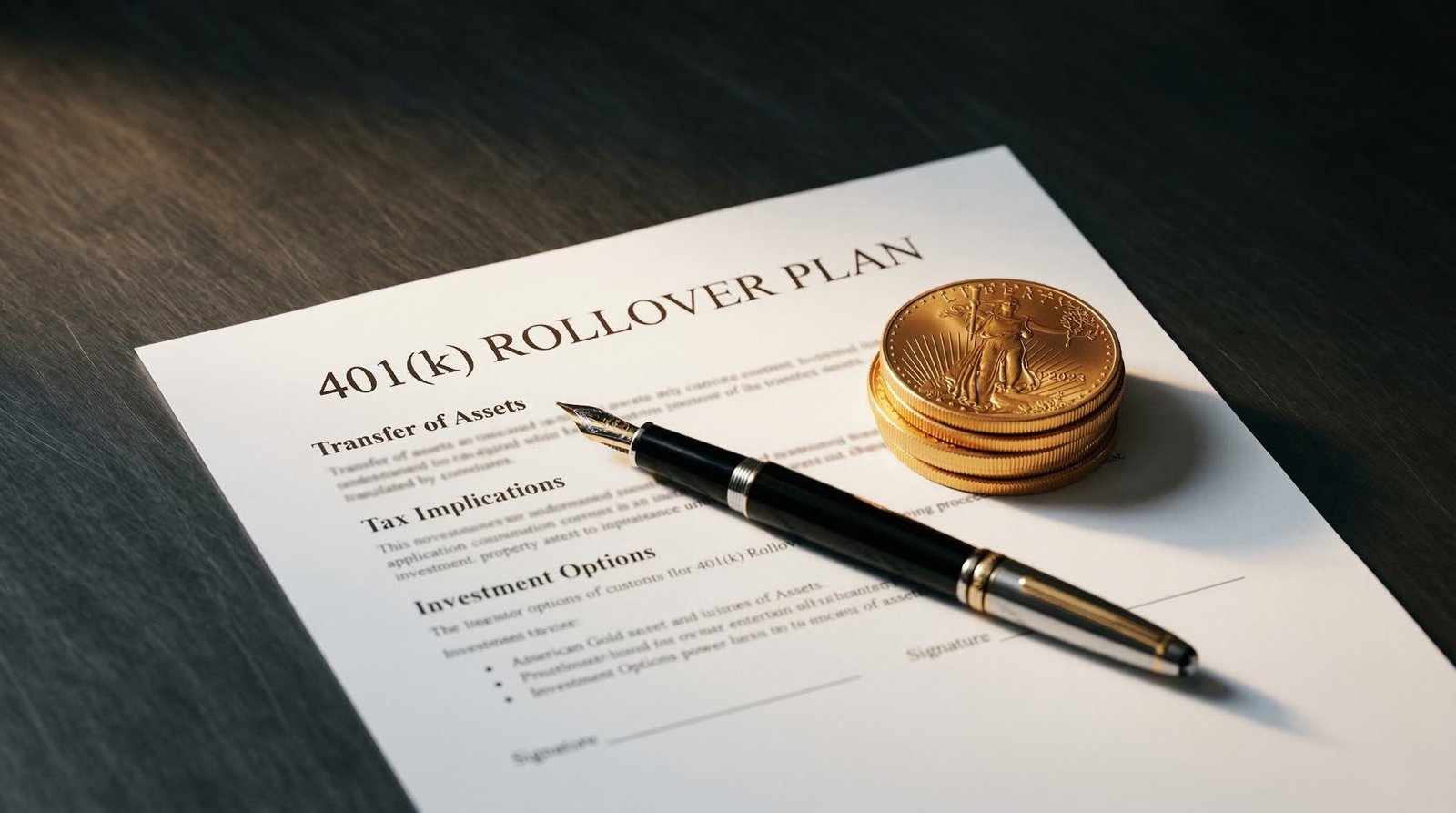
Many West Virginia investors fund their gold IRAs by rolling over an existing 401(k), 403(b), or traditional IRA. The IRS allows this, but there are important rules to follow. If you’re considering this path, the Gold IRA rollover rules guide covers the mechanics in detail, including the 60-day rollover rule and the one-rollover-per-year limit. Our 401(k) to Gold IRA rollover guide is also useful if your funds are currently sitting in a workplace plan.
Understanding Gold IRA Fees
One of the most important — and often under-discussed — aspects of a gold IRA is the fee structure. Unlike a conventional IRA at a large brokerage where you might pay very little in administrative costs, a gold IRA involves multiple layers of fees because of the physical nature of the asset.
Here’s a general overview of what to expect:
For a more complete breakdown of what you might pay and how to compare providers, visit our Gold IRA fees guide. The cumulative cost of these fees is a material consideration that should be factored into any decision you make.
Choosing a Custodian as a West Virginia Resident
Because gold IRA custodians operate federally — not state-by-state — a West Virginia investor has access to the same pool of custodians as someone in California or Texas. You are not limited to companies with a physical office in the state.
That said, due diligence matters. FINRA’s guidance on self-directed IRAs at FINRA’s guidance on self-directed IRAs is worth reading carefully. Self-directed IRAs come with unique risks, particularly because custodians are not required to evaluate the quality or legitimacy of the assets inside the account.
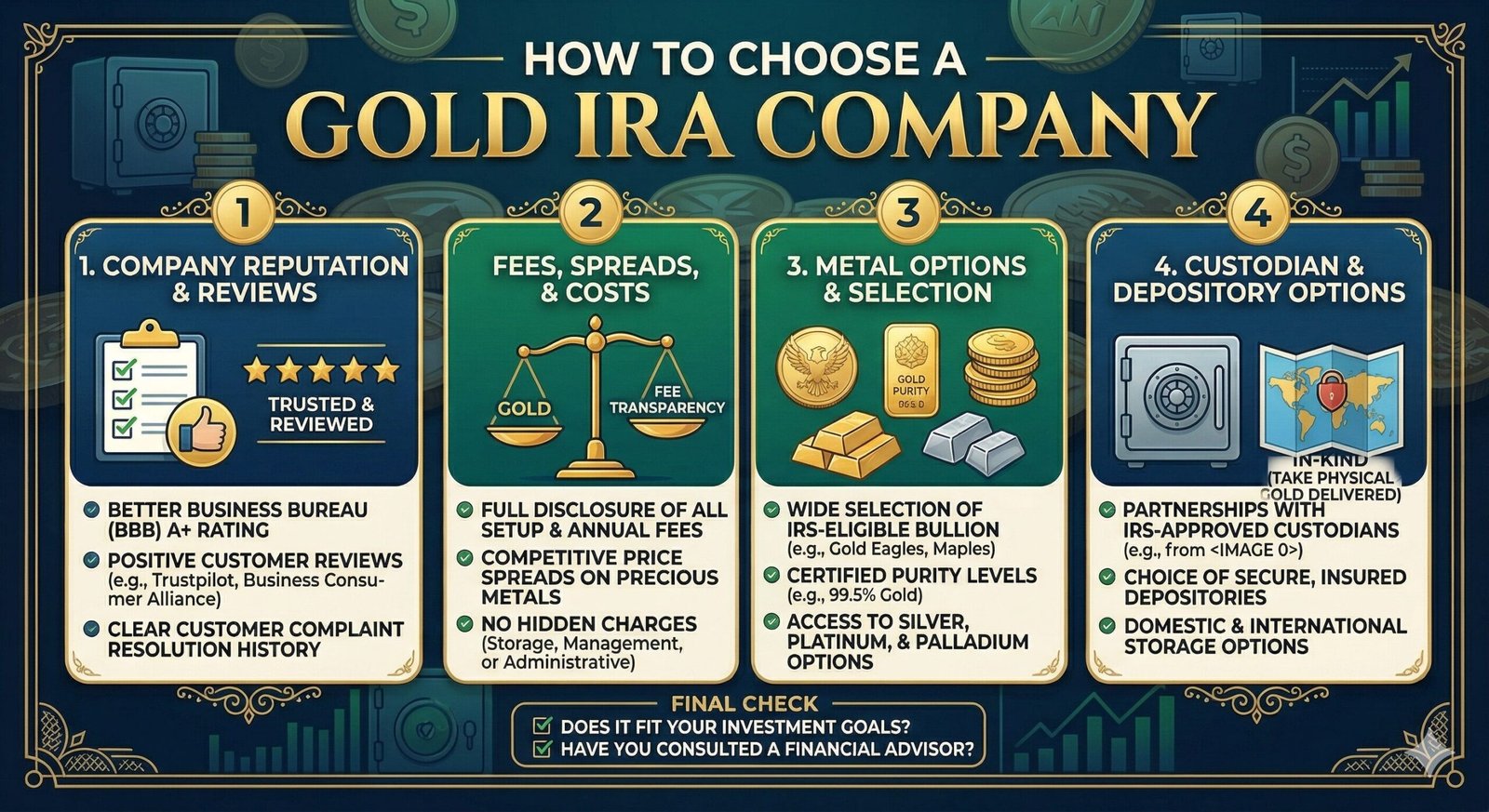
Before selecting any company, consider the following:
Regulatory standing. Check whether the custodian is registered with the appropriate regulatory body. You can use FINRA BrokerCheck to look up broker-dealer registrations, and bbb.org to review complaint histories and ratings for gold IRA companies.
Fee transparency. A reputable company will provide a clear, written fee schedule before you commit. If a company is vague about costs or pushes you to act quickly, that’s a red flag.
Storage options. Ask whether the company uses segregated or commingled storage. Segregated storage means your metals are stored separately from other customers’ metals — this typically comes at a higher fee but gives some investors peace of mind.
No pressure sales practices. Legitimate companies give you time to review your options. Our Gold IRA scams guide outlines common warning signs to watch for.
For a curated list of established, well-reviewed companies, see our Best Gold IRA Companies of 2026 page.
Is a Gold IRA Right for West Virginia Investors?
That depends entirely on your individual circumstances — your age, retirement timeline, current account balances, income, existing assets, and personal preferences. No article can answer that for you, and neither should any salesperson.
What we can say is that West Virginia investors are in exactly the same position as investors anywhere else in the country when it comes to eligibility and access. If you meet the IRS income and contribution requirements, you can open a gold IRA. The question of whether you should — and how much, if any, of your retirement savings to allocate there — is one for a licensed financial professional.
If you’re still in the early research phase, it may help to read our article on is a Gold IRA a good idea, which lays out some of the key considerations in plain terms. You might also benefit from reading the Gold IRA vs Traditional IRA comparison, which covers structural and tax treatment differences between the two account types.
Additional official resources include IRS Publication 590-A, which covers IRA contributions in detail, and the IRS IRA investment FAQ, which addresses frequently asked questions about what IRAs can and cannot hold. The SEC investor resources page is also a helpful, impartial starting point for understanding retirement account structures.
Frequently Asked Questions
Can I open a gold IRA if I live in West Virginia?
Yes. There are no state-specific restrictions that prevent West Virginia residents from opening a gold IRA. Eligibility is governed by federal IRS rules, which apply equally in all 50 states.
Does West Virginia tax gold IRA distributions?
West Virginia does tax retirement income, including distributions from traditional IRAs. How your specific distributions are taxed depends on your total income and filing situation. Contact the West Virginia State Tax Department or a licensed tax professional for guidance specific to your circumstances.
Can I store my gold IRA metals at home in West Virginia?
No. IRS rules require that metals held in a gold IRA be stored at an approved third-party depository. Taking personal possession of the metals — including storing them at home — before a qualifying distribution event is considered a taxable distribution by the IRS. You can review the IRS IRA investment FAQ for more detail.
How do I move an existing 401(k) into a gold IRA?
This is typically done through a rollover or transfer process. Our 401(k) to Gold IRA rollover guide walks through the steps and key rules. It’s important to follow IRS procedures carefully to avoid unintended tax consequences.
What gold products can I actually hold in a gold IRA?
The IRS requires gold held in an IRA to be at least 99.5% pure. Qualifying products include certain government-minted coins and bars that meet that purity threshold. American Gold Eagles are a notable exception — they’re permitted despite being 91.67% pure. See our guide to IRA-eligible gold coins for a more detailed breakdown.
Ready to take the next step? Explore our independently researched list of the Best Gold IRA Companies of 2026 to compare established custodians and dealers side by side — at no cost and with no obligation.
This article is for informational purposes only and does not constitute financial or tax advice. Investing in precious metals involves risk including possible loss of principal.
Related guides
- Gold IRA Consumer Affairs Reviews: What to Look For
- Gold IRA Trustpilot Reviews: What Real Customers Say
- Gold IRA BBB Complaints: What Consumer Reports Reveal
- Is a Gold IRA Worth the Fees? A Cost-Benefit Analysis
- Are Gold IRA Fees Too High? Breaking Down the Real Costs
- Gold IRA Mistakes to Avoid: 10 Common Errors Investors Make