
Gold IRA in South Carolina: Complete Guide 2026
Retirement planning looks a little different for everyone, and South Carolina residents are no exception. Whether you’re approaching retirement in Charleston, Columbia, Greenville, or anywhere across the Palmetto State, you may have come across gold IRAs as a way to hold physical precious metals inside a tax-advantaged retirement account. The concept is straightforward enough, but the details — IRS rules, custodian requirements, storage obligations, and fees — deserve careful attention before you take any steps.
This guide is designed to give South Carolina residents a clear, honest overview of how gold IRAs work, what federal rules apply regardless of where you live, and what practical considerations are worth thinking through before making any decisions.
What Is a Gold IRA?
A gold IRA is a type of self-directed Individual Retirement Account that holds physical precious metals — most commonly gold bullion or coins — rather than conventional assets like stocks or mutual funds. The account operates under the same broad IRS framework as a traditional or Roth IRA, but because it holds a non-traditional asset class, it requires a few additional components that standard IRAs do not.
If you’re new to the concept, our Gold IRA hub is a good starting point. For a more thorough breakdown of the mechanics, Gold IRAs Explained in Detail walks through each component step by step.
The key thing to understand upfront is that a gold IRA is not something you open at your local bank or with a mainstream brokerage. It requires a specialist custodian, IRS-approved storage, and metals that meet specific purity standards. More on each of those below.
Federal Rules Apply — Not State Rules
One of the most important things to understand as a South Carolina resident is that gold IRAs are governed almost entirely by federal law, not state law. The IRS sets the rules for contribution limits, eligible metals, required minimum distributions, and custodian requirements. South Carolina does not impose a separate regulatory layer on top of federal IRA rules.
This means that what applies to a gold IRA investor in California or Texas applies equally to you in South Carolina. For the authoritative source, the IRS IRA investment FAQ outlines which assets are and are not permitted inside an IRA. You can also refer to IRS Publication 590-A for detailed guidance on contributions and rollovers.
That said, there are a couple of South Carolina-specific points worth noting:
State income tax on retirement distributions. South Carolina has its own income tax structure, and distributions from a traditional gold IRA are generally subject to state income tax in the same way they are subject to federal income tax. South Carolina does offer some retirement income deductions for residents over certain age thresholds, but for guidance on your personal tax situation, you should consult a qualified tax advisor. This article does not constitute tax advice.
No South Carolina-specific gold IRA custodians are required. Your custodian can be based anywhere in the United States — many of the established custodians operate nationally.
The Three Components of a Gold IRA
Regardless of where you live, a gold IRA requires three distinct elements working together: a custodian, a dealer, and an approved depository.
The Custodian
The IRS requires that all IRAs — including self-directed ones — be held by a qualified trustee or custodian. For gold IRAs, this is typically a trust company or non-bank institution that specialises in alternative assets. The custodian handles account administration, IRS reporting, and coordinates the purchase and storage of your metals on your behalf.
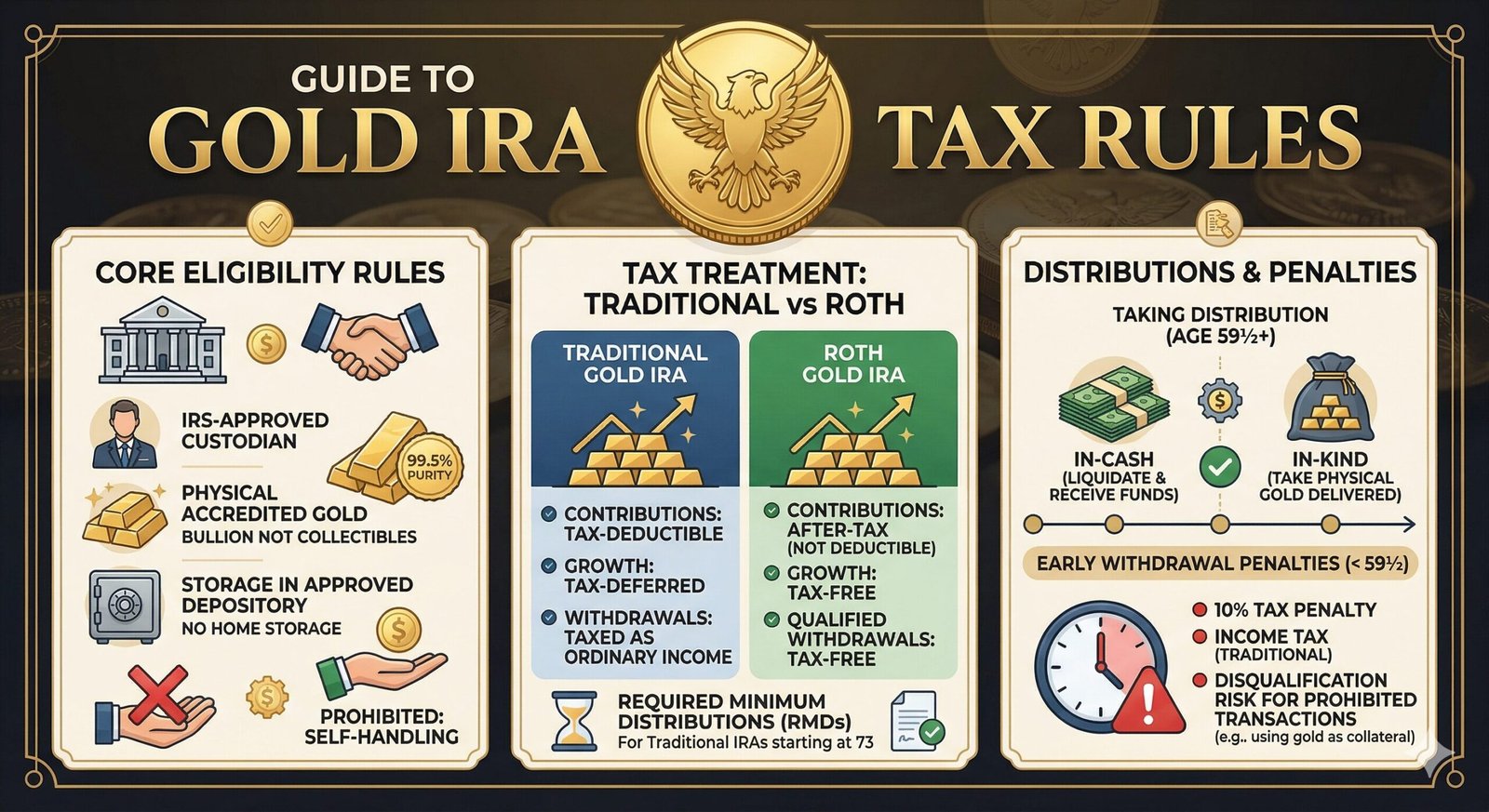
You cannot act as your own custodian. Storing IRA gold at home — even in a safe — is explicitly prohibited by IRS rules and can result in the account being treated as a fully taxable distribution. FINRA’s guidance on self-directed IRAs is worth reviewing if you’re unfamiliar with how self-directed accounts work.
The Precious Metals Dealer
Once your account is established and funded, you’ll purchase metals through an approved dealer. The dealer sells the metals to your custodian, who then arranges for delivery to a depository. You do not take physical possession of the metals at any point during this process if they are to remain inside the IRA.
The Depository
Physical metals held in an IRA must be stored at an IRS-approved depository — a secure, insured vault facility. These depositories operate in various states across the U.S. As a South Carolina resident, you are not required to use a depository located in South Carolina. Most investors use one of the major national facilities regardless of their home state.
IRS Rules for Eligible Metals
Not every gold coin or bar qualifies for inclusion in a gold IRA. The IRS sets minimum purity standards:
- Gold must be at least 99.5% pure (0.995 fineness)
- Silver must be at least 99.9% pure
- Platinum and palladium must each be at least 99.95% pure
There are some exceptions. American Gold Eagle coins, for example, are permitted despite being 91.67% gold, because they are explicitly approved by statute. Most other coins must meet the 99.5% purity threshold. For a more complete list, see our guide to IRA-eligible gold coins.
Collectibles, rare coins, and certain foreign coins are not eligible. Your custodian and dealer should be able to confirm eligibility before any purchase is made.
Contribution Limits and Rollovers
For 2025 and 2026, the IRS annual contribution limit for IRAs is $7,000, with an additional $1,000 catch-up contribution available for those aged 50 and older. These limits apply to your total IRA contributions across all accounts, not per account. See the IRS contribution limits page for current figures.
Many South Carolina investors fund a gold IRA not through annual contributions but through a rollover from an existing retirement account — such as a 401(k), 403(b), or traditional IRA. Rollovers can be a practical way to move existing retirement savings into a gold IRA without triggering immediate taxes, provided the rollover is executed correctly.
Our 401(k) to Gold IRA rollover guide explains the process in detail, and our Gold IRA rollover rules page covers the key IRS requirements, including the 60-day rollover window and the once-per-year rollover limitation.
Understanding Gold IRA Fees
Gold IRAs generally carry higher ongoing fees than conventional IRAs. This is a practical reality of storing a physical asset, and it’s important to understand the fee structure before committing to an account.
Typical fees include:
Fees vary considerably between providers. Our dedicated Gold IRA fees guide goes into more detail on what to look for and how to compare cost structures across custodians.
Required Minimum Distributions
If you hold a traditional gold IRA, you will be subject to required minimum distributions (RMDs) starting at age 73 under current IRS rules. RMDs apply to traditional IRAs — not Roth IRAs — and require you to withdraw a minimum amount each year based on your account balance and life expectancy.
For a gold IRA, this creates a practical consideration: if your account holds physical metals, you either need to sell some of the metals to generate cash for the distribution, or you may be able to take an in-kind distribution of physical metal in some circumstances (depending on your custodian’s policies). The IRS RMD FAQ provides authoritative guidance on how RMDs are calculated and applied.
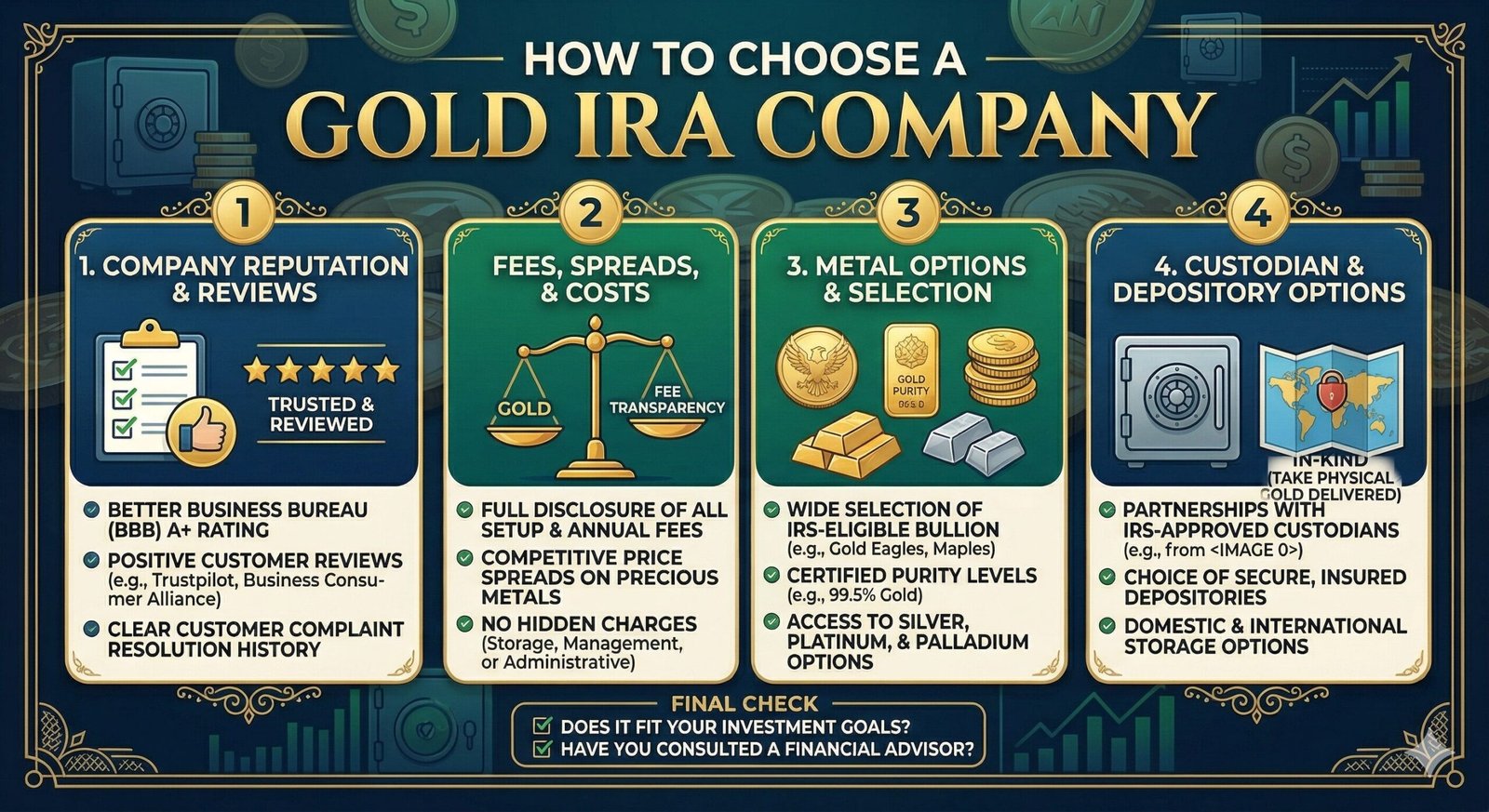
Choosing a Reputable Provider
South Carolina residents should apply the same due diligence to selecting a gold IRA company as they would to any significant financial decision. The self-directed IRA space, while legitimate, does attract some bad actors. Our Gold IRA scams guide outlines common red flags and how to avoid them.
When evaluating a company, consider checking their rating and complaint history at bbb.org, and for any broker-related activity, FINRA BrokerCheck is a useful resource. The SEC investor resources page also provides helpful background on retirement account types and investor protections.
You may also want to review how a gold IRA compares to the accounts you already hold. Our Gold IRA vs Traditional IRA comparison and Gold IRA vs 401(k) page can help you understand the structural differences.
Is a Gold IRA Right for You?
That’s ultimately a question only you — ideally in consultation with a qualified financial advisor — can answer. Gold IRAs are not for everyone. They carry fees that conventional IRAs do not, they involve an illiquid physical asset, and they require more administrative involvement than a standard brokerage IRA. At the same time, some retirement savers find value in holding physical metals as part of their long-term retirement strategy.
For a balanced look at the considerations involved, our article on is a Gold IRA a good idea may be a useful read. If you’re thinking about minimum investment thresholds before deciding whether an account makes financial sense, our Gold IRA minimum investment page covers what different providers typically require.
FAQ
Do I need to use a South Carolina-based custodian for a gold IRA?
No. Gold IRA custodians are regulated at the federal level and can operate nationally. You are free to use any IRS-qualified custodian in the United States, regardless of where it is headquartered.
Can I store my gold IRA metals at home in South Carolina?
No. IRS rules require that metals held in an IRA be stored at an approved depository. Storing IRA metals at home — even in a secured safe — is treated by the IRS as a distribution, which can trigger taxes and penalties.
Are distributions from a gold IRA taxed in South Carolina?
Distributions from a traditional gold IRA are generally subject to both federal and state income tax. South Carolina does offer some retirement income deductions, but you should speak with a qualified tax professional about your specific situation. This article is not tax advice.
What gold coins and bars are eligible for a South Carolina gold IRA?
Eligibility is determined by IRS purity standards, not by state rules. Gold must generally be at least 99.5% pure. American Gold Eagles are a notable exception permitted by statute. Your custodian and dealer can confirm eligibility for specific products.
How do I roll over an existing 401(k) to a gold IRA from South Carolina?
The rollover process is the same regardless of your state. You’ll need to open a self-directed IRA with a qualified custodian, request a distribution or direct rollover from your existing plan, and complete the transfer within the IRS’s required timeframes. Our 401(k) to Gold IRA rollover guide walks through the full process.
If you’re ready to explore your options, our independently researched roundup of the Best Gold IRA Companies of 2026 can help you compare leading providers based on fees, transparency, customer service, and more.
This article is for informational purposes only and does not constitute financial or tax advice. Investing in precious metals involves risk including possible loss of principal.
Related guides
- Gold IRA Consumer Affairs Reviews: What to Look For
- Gold IRA Trustpilot Reviews: What Real Customers Say
- Gold IRA BBB Complaints: What Consumer Reports Reveal
- Is a Gold IRA Worth the Fees? A Cost-Benefit Analysis
- Are Gold IRA Fees Too High? Breaking Down the Real Costs
- Gold IRA Mistakes to Avoid: 10 Common Errors Investors Make