Self-Directed IRA Gold Rules: What the IRS Requires
Self-directed Individual Retirement Accounts offer a pathway for retirement savers to hold physical precious metals alongside traditional investments. However, the IRS maintains strict regulations governing how gold and other precious metals can be held within these retirement accounts. Understanding these rules is essential for anyone considering precious metals as part of their retirement strategy.
The regulatory framework surrounding self-directed IRAs and precious metals stems from decades of tax code evolution designed to maintain the integrity of retirement savings while preventing abuse. These rules touch every aspect of precious metals ownership within retirement accounts, from initial purchase to final distribution.
Understanding Self-Directed IRA Precious Metals Eligibility
The Internal Revenue Service has established specific criteria that determine which precious metals qualify for inclusion in self-directed IRAs. These standards go far beyond simply owning gold or silver—they require meeting precise purity requirements and sourcing from approved manufacturers.
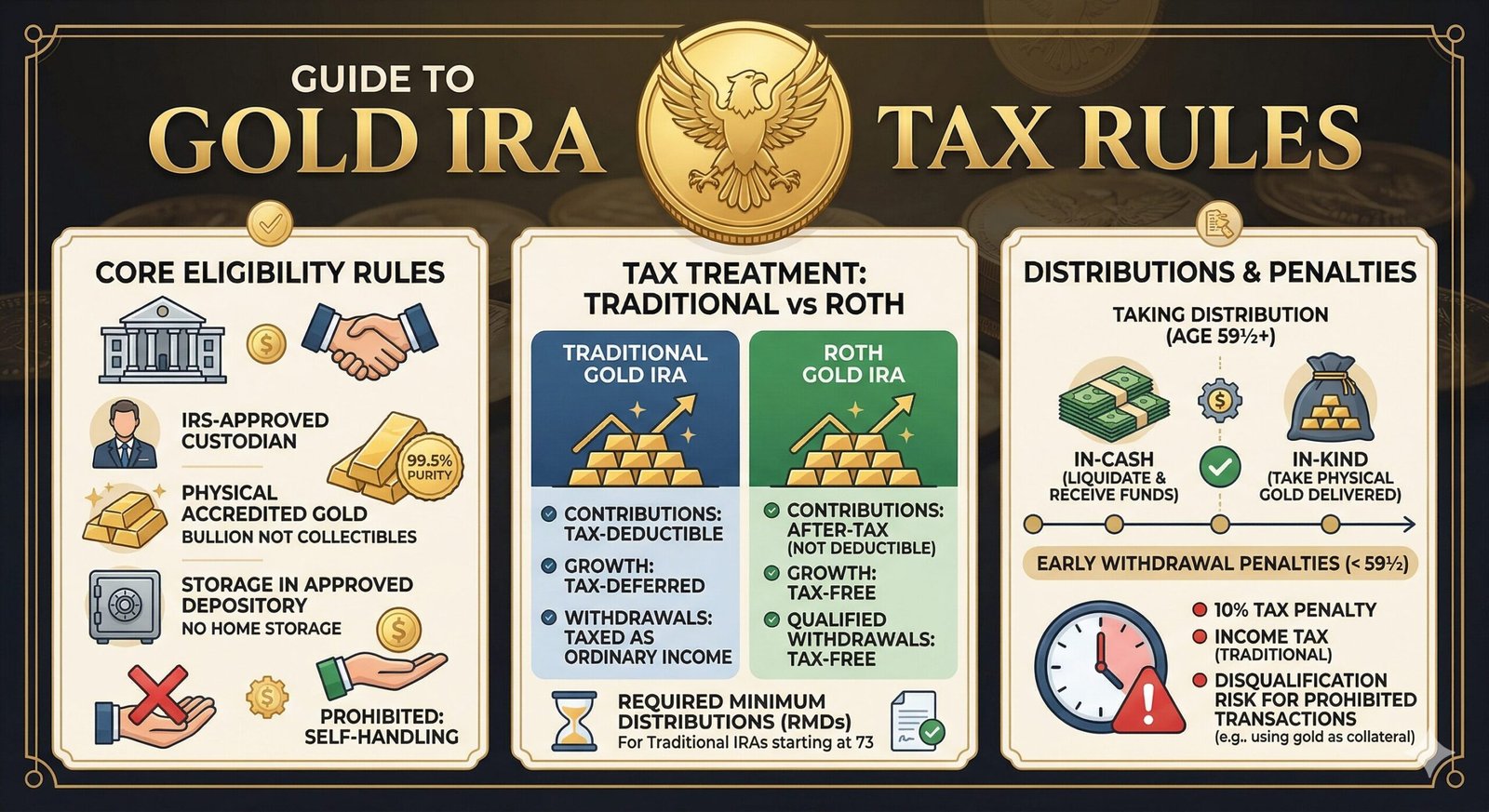
For gold to be eligible for IRA inclusion, it must meet a minimum fineness requirement of .995 (99.5% purity). This standard applies to both gold coins and gold bars held within retirement accounts. Silver faces an even stricter requirement, needing to achieve .999 fineness (99.9% purity) to qualify for IRA ownership.
Platinum and palladium also qualify for self-directed IRA inclusion, both requiring .9995 fineness (99.95% purity). These higher purity standards for platinum and palladium reflect their industrial applications and market characteristics, where even small impurities can significantly affect value.
The purity requirements extend beyond the metals themselves to encompass the manufacturing process. Only precious metals produced by approved refiners and mints can be held in self-directed IRAs. The IRS maintains that these manufacturers must be accredited by organizations like the London Bullion Market Association (LBMA) or equivalent bodies that certify precious metals quality and authenticity.
Approved Precious Metals Products for IRA Investment
Not all precious metals products meeting purity requirements automatically qualify for IRA inclusion. The IRS has created specific categories of eligible products, with detailed restrictions on what retirement savers can and cannot own within their accounts.
American Eagle coins represent one of the most straightforward categories of IRA-eligible precious metals. These coins, produced by the United States Mint, qualify for retirement account ownership despite not meeting the standard purity requirements. American Gold Eagles, for instance, contain 91.67% gold content but receive special IRS exemption due to their status as official U.S. legal tender.
Canadian Maple Leaf coins also qualify for IRA ownership, meeting both purity and legal tender requirements. These coins achieve the required fineness levels while being backed by the Royal Canadian Mint, making them acceptable for retirement account inclusion.
Most foreign coins, however, face significant restrictions. The IRS generally excludes foreign coins from IRA eligibility unless they meet specific criteria including legal tender status in their country of origin and recognition by major precious metals exchanges. This limitation eliminates many collectible coins and regional precious metals products from retirement account consideration.
Bullion bars face their own set of requirements beyond purity standards. IRA-eligible gold bars must be produced by approved refiners and carry proper hallmarks indicating their purity and origin. The bars must also meet specific size requirements, with most custodians accepting bars ranging from one ounce to 400 ounces for gold.
Storage and Custodial Requirements
Perhaps no aspect of self-directed IRA gold ownership generates more confusion than storage requirements. The IRS mandates that all precious metals held within retirement accounts must be stored by approved third-party depositories, eliminating any possibility of home storage or personal possession.
This requirement stems from IRS regulations governing retirement account assets generally. Since retirement accounts receive tax advantages, the IRS maintains strict control over how these assets are held and accessed. Personal possession of IRA-held precious metals would constitute a prohibited transaction, potentially disqualifying the entire retirement account.
Approved depositories must meet extensive security and insurance requirements established by both the IRS and industry standards. These facilities typically feature 24-hour security monitoring, sophisticated alarm systems, and comprehensive insurance coverage for stored precious metals. The depositories must also maintain detailed records of all precious metals held on behalf of IRA owners.
Segregated storage options allow IRA owners to have their specific precious metals stored separately from other customers’ holdings. This arrangement typically costs more than commingled storage but provides additional peace of mind for some retirement savers. Commingled storage combines multiple customers’ precious metals of the same type and purity, reducing storage costs while maintaining the same security standards.
The choice between segregated and commingled storage often depends on individual preferences and the specific precious metals being stored. Some IRA owners prefer segregated storage for rare or unique pieces, while others find commingled storage adequate for standard bullion products.
Required Minimum Distribution Rules for Precious Metals
Self-directed IRAs containing precious metals remain subject to the same required minimum distribution (RMD) rules that apply to all traditional retirement accounts. These rules require account holders to begin taking distributions at age 73, regardless of whether they prefer to keep their precious metals or convert them to cash.
When RMD obligations arise, IRA owners face a choice between taking physical possession of precious metals or having the custodian sell the metals and distribute cash. Taking physical possession counts as an in-kind distribution, with the precious metals valued at fair market value on the distribution date for tax purposes.
The IRS RMD FAQ provides detailed guidance on calculating required distributions from retirement accounts holding various asset types. For precious metals, the valuation process typically involves obtaining current market prices from recognized precious metals dealers or exchanges.
Many IRA owners choose to have their custodians sell precious metals to meet RMD requirements rather than taking physical possession. This approach simplifies the tax reporting process and avoids the logistical challenges of storing precious metals outside the retirement account structure.
The timing of precious metals sales for RMD purposes can significantly impact the distribution value, given the volatility that can characterize precious metals markets. Some custodians allow IRA owners to specify timing preferences for these sales, while others handle the transactions according to standard procedures.
Prohibited Transactions and IRA Disqualification Risks
The IRS maintains strict prohibitions on certain transactions involving self-directed IRA assets, including precious metals. Understanding these prohibited transactions is crucial because violations can disqualify an entire IRA, causing immediate taxation of all account assets and potential penalty assessments.
Personal use or possession of IRA-held precious metals represents one of the most serious prohibited transactions. This includes storing precious metals at home, in a personal safe deposit box, or any location other than an approved depository. Even temporary possession for inspection or transport can trigger prohibited transaction rules.
Using IRA assets as collateral for loans also violates prohibited transaction rules. This restriction means IRA-held precious metals cannot be pledged as security for personal loans or other financial obligations. The IRS considers such arrangements as indirect personal use of retirement account assets.
Self-dealing transactions between IRA owners and their retirement accounts are prohibited. This means IRA owners cannot sell precious metals to their own IRAs or purchase precious metals from their IRAs at below-market prices. All transactions must occur at fair market value with unrelated parties.
Family members are considered “disqualified persons” under IRA rules, creating additional restrictions on precious metals transactions. IRA owners cannot buy precious metals from or sell precious metals to spouses, children, parents, or other linear descendants and ascendants. These restrictions also apply to businesses owned by family members.
Comparison of Precious Metals IRA Rules by Metal Type
Tax Implications and Reporting Requirements
Self-directed IRAs holding precious metals face the same tax treatment as other traditional IRAs, with distributions taxed as ordinary income. However, the physical nature of precious metals creates unique considerations for tax reporting and valuation.
Fair market value determinations become critical when precious metals are distributed from IRAs or when RMDs are calculated. The IRS requires that these valuations reflect current market conditions, typically based on spot prices from recognized precious metals exchanges or dealer quotes.
The IRS Publication 590-A provides comprehensive guidance on IRA distribution taxation, including special rules that may apply to in-kind distributions of precious metals. IRA owners receiving physical precious metals must report the full fair market value as taxable income, regardless of what they originally paid for the metals.
Cost basis tracking becomes important for precious metals held in Roth IRAs, where contributions are made with after-tax dollars. While Roth IRA distributions of precious metals are generally tax-free after age 59½ and a five-year holding period, proper record-keeping remains essential for tax compliance.
State tax implications vary significantly depending on where IRA owners reside. Some states impose additional taxes on precious metals transactions or distributions, while others provide exemptions for retirement account activities. Consulting with tax professionals familiar with both federal IRA rules and state precious metals taxation is often advisable.
Working with Custodians and Depositories
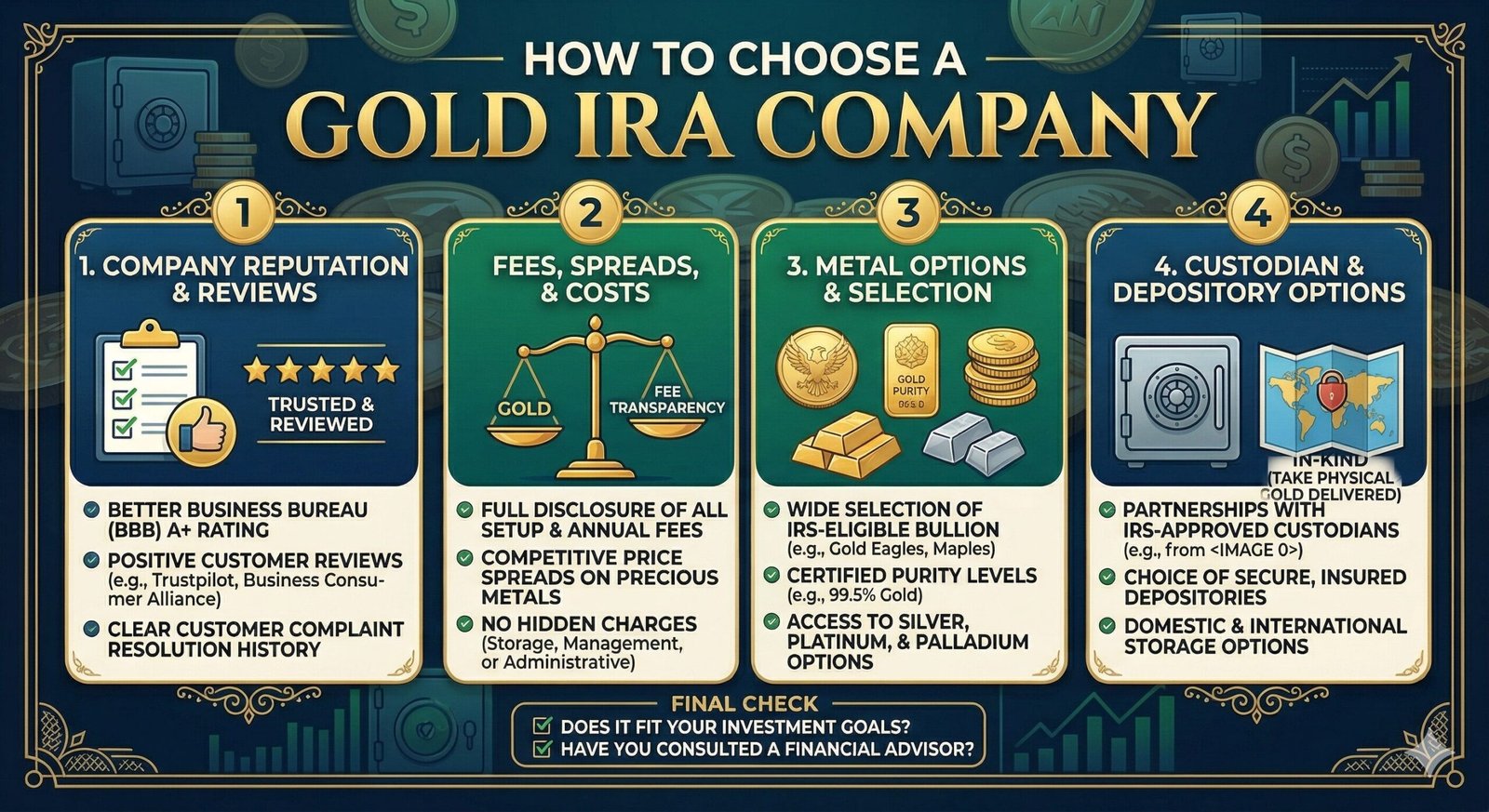
Success with self-directed IRA precious metals ownership often depends on choosing qualified custodians and depositories that understand the complex regulatory requirements. Not all IRA custodians offer precious metals services, and those that do may have varying levels of expertise and service quality.
Qualified custodians must be approved by the IRS to hold retirement account assets and typically include banks, credit unions, trust companies, and specialized precious metals IRA companies. These entities handle the administrative aspects of precious metals ownership, including purchase documentation, storage arrangements, and distribution processing.
Due diligence on custodians should include verifying their IRS approval status, examining their fee structures, and understanding their precious metals expertise. The FINRA BrokerCheck database can provide valuable information about the regulatory history of financial services companies offering IRA custodial services.
Depository selection often involves choosing between facilities owned by custodians and independent third-party storage companies. Independent depositories may offer more storage options and competitive pricing, while custodian-owned facilities may provide more integrated services and simplified account management.
Insurance coverage represents a critical consideration when evaluating depositories. Comprehensive coverage should include protection against theft, natural disasters, and other potential losses. Understanding the specifics of insurance policies, including coverage limits and deductible amounts, helps inform storage decisions.
Our Gold IRA fees guide provides detailed information about the various costs associated with precious metals IRA ownership, including custodial fees, storage charges, and transaction costs that can impact long-term returns.
Establishing Compliance Procedures
Maintaining compliance with self-directed IRA gold rules requires establishing systematic procedures for monitoring and managing precious metals holdings. This includes regular communication with custodians, periodic review of storage arrangements, and staying informed about regulatory changes.
Documentation plays a crucial role in IRA compliance. IRA owners should maintain detailed records of all precious metals transactions, including purchase invoices, storage receipts, and any correspondence with custodians or depositories. These records become essential for tax reporting and potential IRS inquiries.
Annual account statements from custodians should accurately reflect precious metals holdings, including quantities, types, and current valuations. Discrepancies between expected holdings and custodial records should be addressed promptly to prevent potential compliance issues.
Regular review of precious metals IRA rules helps ensure ongoing compliance as regulations evolve. The IRS occasionally issues new guidance or clarifications that may affect precious metals IRA ownership, making it important to stay informed through reliable sources.
For those considering precious metals as part of their retirement strategy, understanding what a Gold IRA is provides essential foundation knowledge before exploring the specific rules and requirements.
Frequently Asked Questions
Can I store IRA-purchased gold at home or in a personal safe deposit box?
No, IRS rules require that all precious metals held in self-directed IRAs be stored at approved third-party depositories. Home storage or personal safe deposit box storage constitutes a prohibited transaction that can disqualify your entire IRA.
What happens if I accidentally violate self-directed IRA precious metals rules?
Prohibited transactions can result in immediate disqualification of your entire IRA, causing all assets to become taxable as ordinary income. Additionally, if you’re under age 59½, you may face a 10% early withdrawal penalty on the entire account value. It’s essential to work with qualified custodians to avoid such violations.
Are there limits on how much gold I can hold in my self-directed IRA?
The IRS doesn’t impose specific limits on precious metals quantities within IRAs, but standard IRA contribution limits still apply. For 2024, individuals can contribute up to $7,000 annually ($8,000 if age 50 or older). These contributions can be used to purchase precious metals within the account.
How are precious metals valued for required minimum distributions?
Precious metals are valued at fair market value on the date of distribution, typically based on current spot prices from recognized exchanges or dealer quotes. Your custodian will handle this valuation process and provide the necessary tax documentation.
Can I personally inspect my IRA-held precious metals at the depository?
Most approved depositories allow account holders to schedule visits to inspect their precious metals holdings, though specific procedures vary by facility. However, you cannot remove the metals from the depository or handle them outside the facility’s secure environment, as this would constitute a prohibited transaction.
Understanding and following self-directed IRA gold rules ensures compliance with IRS requirements while enabling retirement savers to include precious metals in their retirement planning strategy. For comprehensive information about precious metals retirement accounts and qualified custodians, visit our Best Gold IRA Companies of 2026 guide to explore your options.
This article is for informational purposes only and does not constitute financial or tax advice. Investing in precious metals involves risk including possible loss of principal.
Related guides
- Gold IRA Consumer Affairs Reviews: What to Look For
- Gold IRA Trustpilot Reviews: What Real Customers Say
- Gold IRA BBB Complaints: What Consumer Reports Reveal
- Is a Gold IRA Worth the Fees? A Cost-Benefit Analysis
- Are Gold IRA Fees Too High? Breaking Down the Real Costs
- Gold IRA Mistakes to Avoid: 10 Common Errors Investors Make