
How to Verify a Gold IRA Company is Legitimate
The Gold IRA industry has grown substantially over the past two decades, and with that growth has come a predictable side effect: an increase in companies that are either poorly run, misleading in their marketing, or — in the worst cases — outright fraudulent. For retirement investors, the stakes are high. The money you are putting into a Gold IRA has likely taken decades to accumulate, and a costly mistake at this stage of your financial life can be difficult to recover from.
The good news is that verifying a Gold IRA company’s legitimacy is entirely possible. It takes time and a methodical approach, but the process is not complicated. This guide walks you through exactly what to check, where to look, and what warning signs should prompt you to walk away.
Why Verification Matters More in This Industry
Unlike publicly traded financial products, Gold IRAs involve physical assets — coins and bars held in a third-party depository — and a more complex account structure that includes at least three separate entities: the Gold IRA company, the custodian, and the storage facility. That layered structure creates more opportunities for confusion and, unfortunately, more opportunities for bad actors.
Regulators including FINRA and the SEC have both issued warnings about self-directed IRAs, which include Gold IRAs, noting that they are a frequent vehicle for investment fraud. FINRA’s guidance on self-directed IRAs is a useful starting point for understanding the risks. The SEC investor resources page also contains practical information on retirement account fraud.
None of this means Gold IRAs themselves are problematic — they are a legitimate, IRS-recognized account structure. It simply means due diligence is essential, and skipping it is a mistake.
Step One: Confirm the Company’s IRS and Regulatory Standing
The first thing to understand is that a Gold IRA company — sometimes called a precious metals dealer — is not the same as the custodian that actually holds your IRA. Under IRS rules, all IRAs must be held by an approved custodian, typically a bank, credit union, trust company, or entity specifically authorized by the IRS. The Gold IRA company you engage with is usually acting as a dealer and facilitator.
That said, a legitimate company will always work with a properly registered custodian. If a company is vague about who will be custodying your account, or implies that they themselves hold the assets, that is a serious red flag.
You can check the IRS’s own published guidance on what qualifies as an acceptable IRA custodian via IRS Publication 590-A. For a plain-English overview of how the structure works end-to-end, our Gold IRAs Explained in Detail page covers the mechanics thoroughly.
Step Two: Search Industry Watchdog Databases
Check the Better Business Bureau
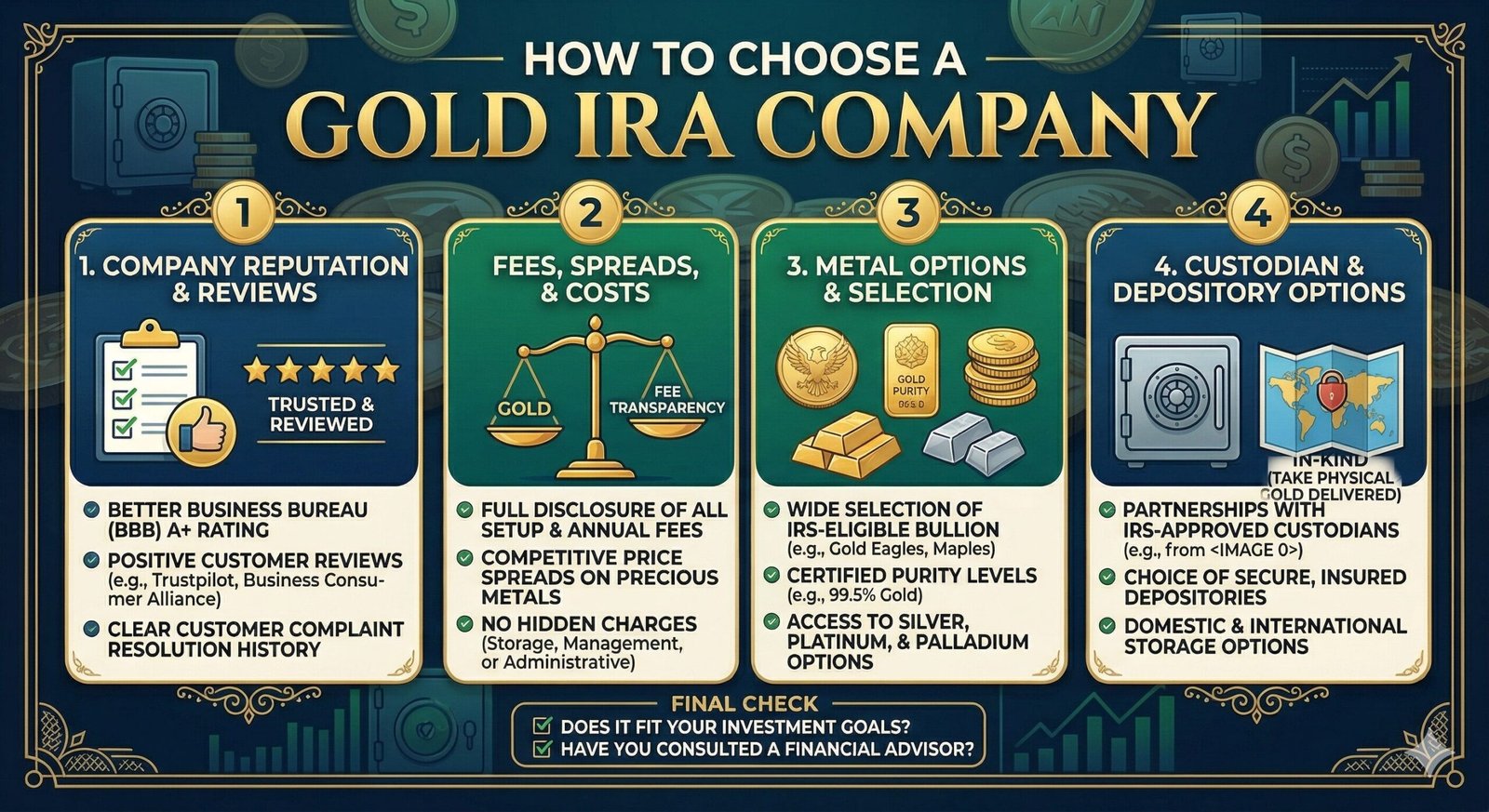
The Better Business Bureau (BBB) is one of the most accessible starting points for researching any company that deals directly with consumers. At bbb.org, you can look up a Gold IRA company to see its rating (A+ through F), how long it has been accredited, and — critically — the nature and volume of any complaints filed against it.
A high rating with long-standing accreditation is a positive signal, but it is not a complete picture on its own. Pay close attention to complaint patterns. A company might have an A+ rating but show a recurring pattern of complaints about high-pressure sales tactics, undisclosed fees, or slow processing times. The substance of complaints often tells you more than the letter grade.
Search FINRA BrokerCheck
If you are dealing with any individual who claims to be a financial professional, or if the Gold IRA company has an investment advisory arm, you should verify them through FINRA BrokerCheck. This free tool lets you look up the licensing history, qualifications, and any disciplinary actions associated with registered brokers and investment advisors.
Not all Gold IRA salespeople are required to be registered with FINRA, but if someone is giving you anything that resembles personalized investment advice, they should be licensed and registered. An unlicensed individual providing guidance on how to structure your retirement assets is operating outside the law.
Look for Business Registrations and State Licensing
Precious metals dealers are subject to varying state licensing requirements. Some states require dealers to obtain a money transmitter or precious metals dealer license. Checking your state’s Department of Financial Institutions or equivalent regulator can confirm whether a company is operating legally in your jurisdiction.
Step Three: Evaluate Transparency Around Fees
One of the clearest indicators of a company’s legitimacy is how openly and clearly it discloses its fees. Gold IRA accounts involve several layers of costs that legitimate companies will document clearly: setup fees, annual custodian fees, storage fees, and dealer markups on the metals themselves.
A company that buries these costs in fine print, refuses to provide a written fee schedule before you commit, or uses vague language like “nominal fees” without defining them is a company worth avoiding. Our detailed Gold IRA fees guide breaks down every cost category you should expect to see disclosed.
The table below outlines the typical fee types associated with a Gold IRA and what a transparent, legitimate company should be willing to disclose upfront:
If a company cannot or will not populate every row of that table for you before you open an account, that is a meaningful warning sign.
Step Four: Verify the Metals and Storage Arrangements
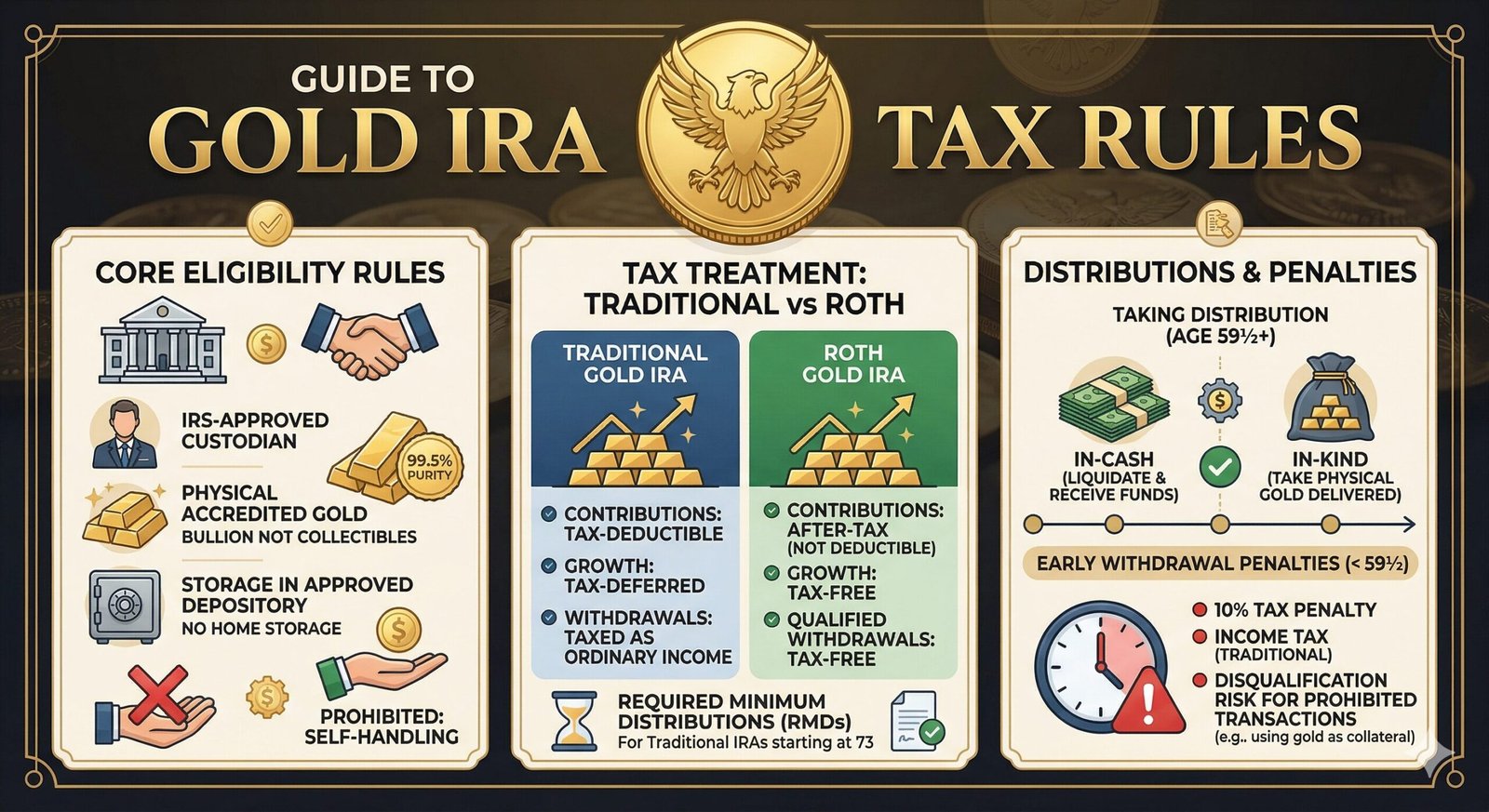
A Gold IRA must hold IRS-approved precious metals — not every gold coin or bar qualifies. The IRS specifies minimum purity standards and eligible product types. Gold must generally meet a .995 fineness standard, with certain exceptions for specific coins. Our guide on IRA-eligible gold coins provides a detailed breakdown of which products qualify.
A legitimate company will be completely transparent about which products it sells that meet IRS requirements and which do not. If a salesperson is steering you toward numismatic or collectible coins — and framing them as IRA-eligible without being certain — that warrants careful scrutiny. In many cases, numismatic coins are not IRA-eligible, and their valuation can be highly speculative.
On the storage side, your metals must be held at an IRS-approved depository — not at home, and not in a safety deposit box. A legitimate company will name the specific depository (or offer a selection of approved options) and will provide you with documentation confirming your ownership and storage arrangement. If either of those things is missing, treat it as a serious concern.
Step Five: Read Reviews — but Read Them Critically
Online reviews are a useful data point, but they require a discerning eye. The Gold IRA industry has a known problem with manufactured or incentivized reviews. Some companies pay third-party sites to publish favorable content, and some review platforms are not independent.
Look for reviews on independent platforms that include detailed, specific accounts of the customer experience — not generic praise. Watch for negative reviews that describe similar problems across multiple posters, which can indicate a systemic issue. Be particularly wary of sites that rank every company highly and use aggressive affiliate marketing language; their objectivity may be compromised.
For a structured look at what legitimate companies look like in practice, visit our Gold IRA scams guide for a comprehensive breakdown of industry red flags and manipulation tactics to watch out for.
Step Six: Understand the Rollover and Transfer Process
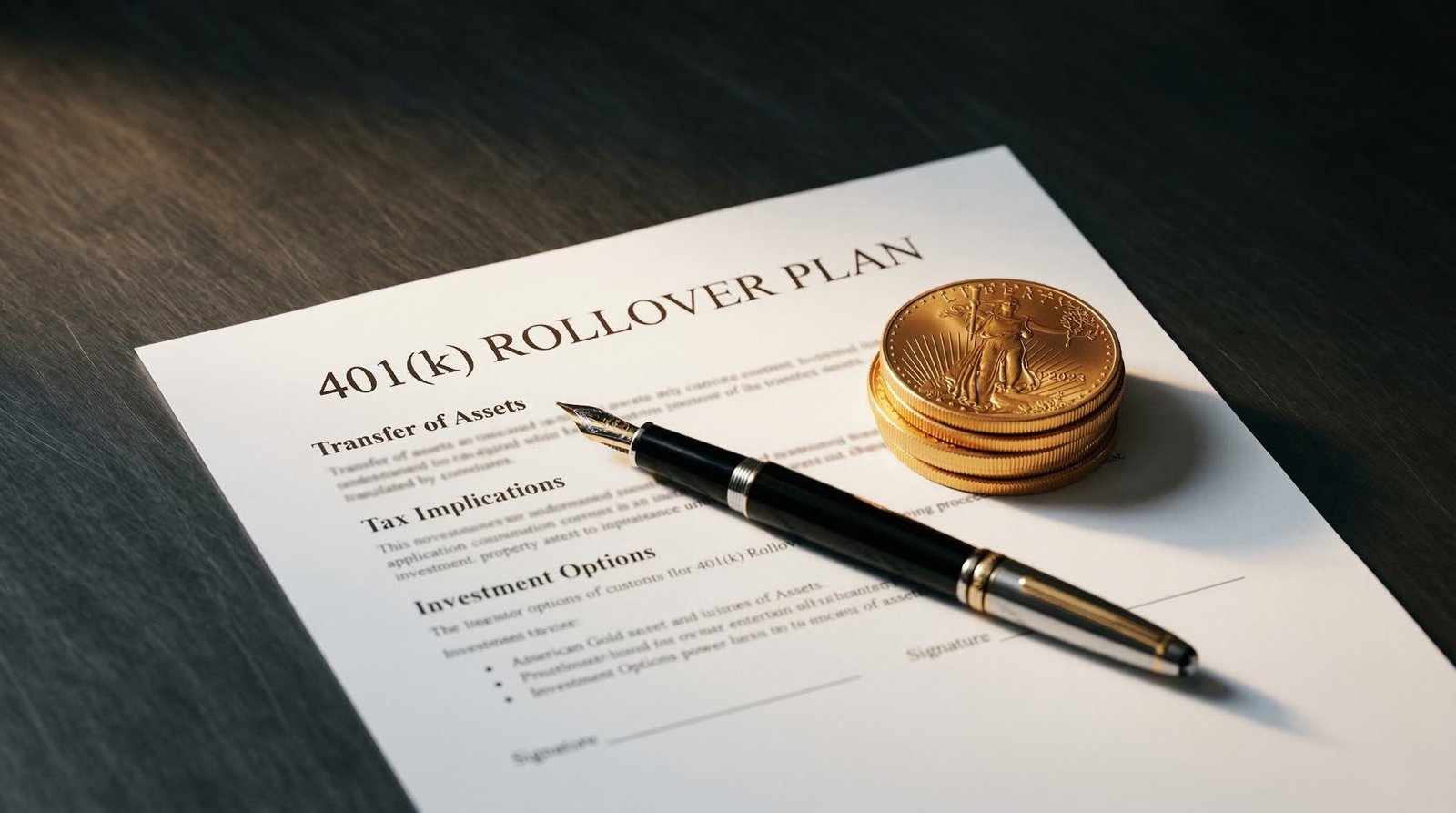
If you are funding your Gold IRA through a rollover from an existing 401(k) or traditional IRA, the process has specific rules that a legitimate company will explain clearly and in full. Rollovers must generally be completed within 60 days to avoid tax consequences, and there are limits on how often you can execute an indirect rollover in a given year.
Our Gold IRA rollover rules page covers these requirements in depth. If you are coming from an employer-sponsored plan, our 401(k) to Gold IRA rollover guide walks through that specific process step by step. The IRS also publishes guidance on contribution rules and rollover mechanics via their IRS IRA investment FAQ.
A company that rushes you through the rollover process, minimizes the importance of the 60-day rule, or does not explain the tax implications clearly is not serving your interests.
Red Flags: A Summary of What to Watch For
Rather than a checklist, think of these as patterns. Any single one might have an innocent explanation. Multiple red flags appearing together should prompt you to disengage and look elsewhere.
Legitimate companies do not use high-pressure tactics or create artificial urgency around market timing. They do not promise guaranteed returns, and they do not make dramatic claims about gold’s future performance in either direction. They clearly identify their custodian partners and storage arrangements. They provide written fee disclosures before you sign anything. They welcome your questions, and they give you time to think.
If a company seems reluctant to answer direct questions about its structure, its fees, its custodian relationships, or its storage facilities — that reluctance is itself informative.
Frequently Asked Questions
Q: Is a Gold IRA company the same as an IRA custodian?
No. A Gold IRA company typically acts as a precious metals dealer and account facilitator. Your IRA must be held by a separate, IRS-approved custodian — usually a trust company or bank. A legitimate Gold IRA company will work with one or more approved custodians and should be able to identify them clearly.
Q: How do I know if the gold products I’m being sold are IRS-eligible?
The IRS specifies minimum purity requirements for metals held in a self-directed IRA. Gold generally must be at least .995 fine. Certain government-minted coins meet this standard, but many collectible or numismatic coins do not. A legitimate company will identify clearly which products qualify for IRA inclusion and will not push non-eligible products as IRA investments.
Q: What should I do if I’ve already invested with a company that seems questionable?
Contact your custodian directly — not the Gold IRA company — to verify the status of your account and your holdings. If you believe you have been defrauded or misled, you can file a complaint with the SEC, your state securities regulator, or the FTC. Document all communications with the company.
Q: Are online reviews reliable for evaluating Gold IRA companies?
Partially. Reviews on independent platforms can surface consistent patterns — both positive and negative — that are worth examining. However, the Gold IRA industry has a well-documented problem with sponsored or incentivized review content. Focus on detailed, specific reviews rather than generic praise, and cross-reference multiple platforms.
Q: How much should I expect to invest in a Gold IRA?
Most Gold IRA companies set minimum investment thresholds, which can range from a few thousand dollars to $50,000 or more depending on the provider. Our Gold IRA minimum investment page outlines what to expect and how minimums vary across companies.
Ready to Compare Legitimate Gold IRA Companies?
Verification is the first step — knowing what to look for in a reputable company is the second. Our independently researched guide to the Best Gold IRA Companies of 2026 evaluates leading providers across fee transparency, custodian relationships, customer service standards, and regulatory standing. It is designed to give retirement investors a structured, objective starting point for their research.
This article is for informational purposes only and does not constitute financial or tax advice. Investing in precious metals involves risk including possible loss of principal.
Related guides
- Gold IRA Consumer Affairs Reviews: What to Look For
- Gold IRA Trustpilot Reviews: What Real Customers Say
- Gold IRA BBB Complaints: What Consumer Reports Reveal
- Is a Gold IRA Worth the Fees? A Cost-Benefit Analysis
- Are Gold IRA Fees Too High? Breaking Down the Real Costs
- Gold IRA Mistakes to Avoid: 10 Common Errors Investors Make