
How Long Does a Gold IRA Rollover Take? Timeline Explained
If you’ve decided to explore a Gold IRA and you’re coming from an existing retirement account — whether that’s a 401(k), a traditional IRA, or another plan — one of the first practical questions you’ll ask is a simple one: how long is this going to take?
The honest answer is that a Gold IRA rollover typically takes between two and six weeks from start to finish, though in some cases the process can be completed in as little as ten business days. The wide range exists because several different parties are involved — your current plan administrator, the IRS, your new Gold IRA custodian, and a precious metals dealer — and the speed of the overall process depends heavily on how quickly each of those parties moves.
This guide walks you through each stage of the rollover timeline so you know what to expect, what you can control, and where delays are most likely to occur.
What Is a Gold IRA Rollover?
Before diving into timelines, it helps to briefly clarify what a rollover actually involves. A Gold IRA is a self-directed IRA that holds physical precious metals — typically gold, silver, platinum, or palladium — rather than stocks or mutual funds. Because it is still a tax-advantaged retirement account governed by the IRS, moving money into one requires following specific procedures.
You can learn more about the structure and mechanics of these accounts in our Gold IRA hub, or if you want a thorough breakdown of how they function, Gold IRAs Explained in Detail is a good place to start. For the purposes of this article, we’re focusing specifically on the timeline — what happens when, and how long each step realistically takes.
The Two Main Types of Rollovers
The type of rollover you choose has a direct effect on your timeline and on your tax obligations.
Direct Rollover
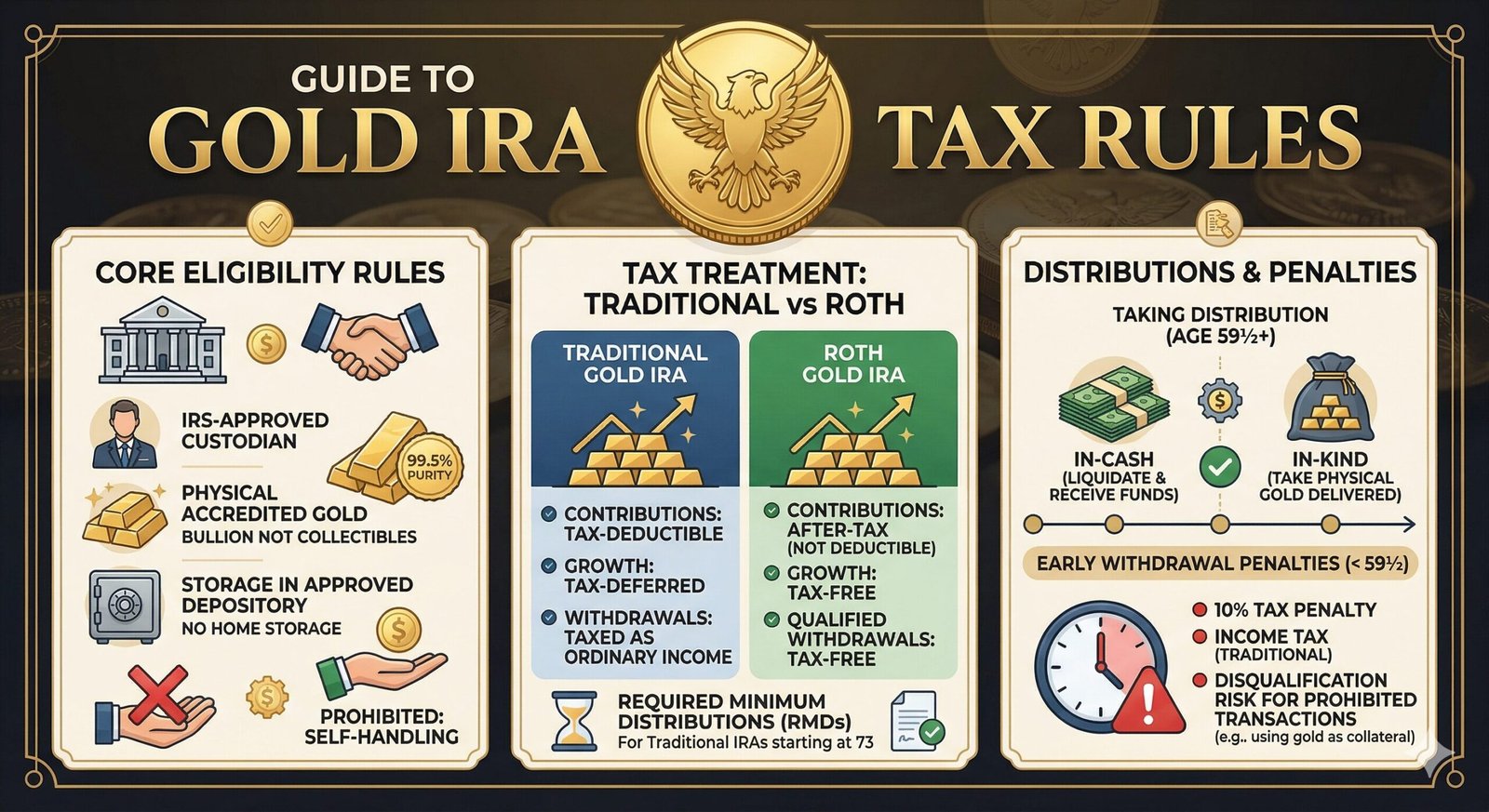
In a direct rollover, funds move from your existing retirement account directly to your new Gold IRA custodian — you never personally receive the money. This is the cleaner and more commonly recommended approach because it avoids mandatory withholding and eliminates the risk of missing the IRS’s 60-day window.
Indirect Rollover
In an indirect rollover, the funds are distributed to you personally, and you have 60 days to deposit them into your new IRA. If you miss that deadline, the IRS treats the distribution as taxable income, and if you’re under 59½, a 10% early withdrawal penalty applies on top. The IRS outlines these rules clearly in IRS Publication 590-A, which is worth reading before you begin.
For most people, a direct rollover is the more straightforward path, and it’s the approach we’ll focus on throughout this timeline.
Stage-by-Stage: The Gold IRA Rollover Timeline
Stage 1: Choosing Your Custodian and Opening Your Account (3–7 Business Days)
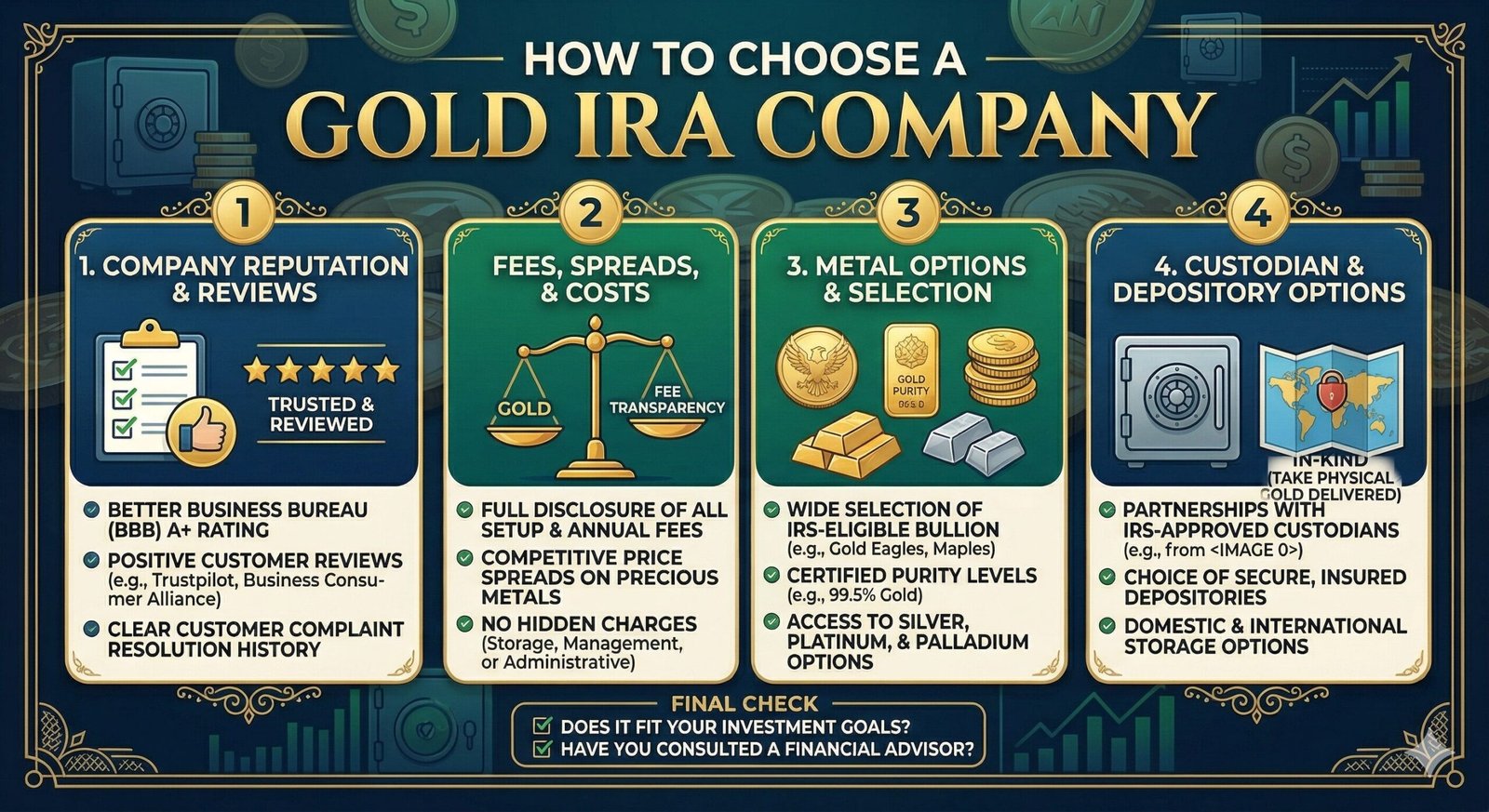
Everything begins with selecting a custodian — the IRS-approved entity that will hold your Gold IRA and handle the administrative requirements. This is not a trivial decision. Custodians vary considerably in their fee structures, responsiveness, and experience with precious metals accounts. Our Gold IRA fees guide breaks down what you should expect to pay at each stage.
Once you’ve chosen a custodian, you’ll fill out an account application and provide identification documents. Most custodians can open an account within three to seven business days of receiving your completed paperwork. Some may offer expedited processing, though this often depends on how quickly you return the required forms.
Before committing, it’s worth checking a custodian’s standing with organisations like bbb.org and reviewing FINRA’s guidance on self-directed IRAs to understand what questions you should be asking.
Stage 2: Initiating the Transfer with Your Current Plan (3–10 Business Days)
Once your Gold IRA is open, your new custodian will typically help you initiate the transfer request to your existing account holder. This involves submitting a transfer of assets (TOA) request or a similar form, depending on the institution.
Here is where delays are most common. Large financial institutions — especially 401(k) administrators associated with former employers — can take longer to process outgoing transfer requests than smaller IRA custodians. Some process them within a few days; others may take up to two weeks. If you’re moving funds from a 401(k), our 401(k) to Gold IRA rollover guide covers additional considerations specific to employer-sponsored plans.
What you can do to minimise delays: follow up directly with your current plan administrator to confirm they’ve received the request, and ask for a specific processing timeline.
Stage 3: Funds in Transit (1–5 Business Days)
Once your current institution processes the request, funds are typically sent as either a wire transfer or a check. Wire transfers are faster — usually arriving within one to two business days. Checks take longer because your new custodian must receive them physically and then process the deposit, which can add another two to four business days to the timeline.
Some custodians will allow you to request that funds be sent by wire rather than check, which is worth asking about upfront if speed matters to you.
Stage 4: Funds Received and Account Funded (1–2 Business Days)
Once the funds arrive at your Gold IRA custodian, they are typically posted to your account within one to two business days. At this point, your account is technically funded, but you’re not finished — the money still needs to be used to purchase the actual metals.
Stage 5: Selecting and Purchasing Your Precious Metals (1–3 Business Days)
With cash settled in your account, you’ll work with your custodian and/or a precious metals dealer to select which metals to purchase. The IRS has strict purity requirements for metals held in an IRA — for gold, the standard is 99.5% purity or higher. Our guide to IRA-eligible gold coins outlines what qualifies and what doesn’t.
The purchase itself typically settles within one to three business days. Pricing is usually locked in at the time of purchase.
Stage 6: Metals Shipped to an Approved Depository (3–7 Business Days)
IRS rules require that physical metals held in a Gold IRA be stored at an IRS-approved depository — you cannot take personal possession of the metals while they’re inside the IRA. See the IRS IRA investment FAQ for more on this requirement.
Shipping and verification at the depository typically takes three to seven business days. Once the metals are logged in and confirmed, the rollover is complete.
Summary: Gold IRA Rollover Timeline at a Glance
The table below gives a realistic overview of each stage and the time you should expect it to take.
What Can Slow Things Down?
Several factors can push your timeline toward the longer end of the range — or in rare cases, even beyond it.
Unresponsive plan administrators are the most common culprit. If your current retirement account is held by a large institutional provider or a former employer’s plan, the outgoing transfer process may require additional paperwork, approval steps, or signature guarantees.
Incomplete paperwork on your end is the second most common cause of delay. Custodians can only act on what you provide, so submitting all required documents accurately and promptly matters.
Holidays and high-volume periods can also slow things down at financial institutions — particularly around the end of the calendar year, when IRA activity tends to spike.
If you want to understand the rules that govern these transfers in more detail, our Gold IRA rollover rules page is a useful reference.
The 60-Day Rule and Why It Matters
If you’re doing an indirect rollover — one where the funds are distributed to you personally — the IRS requires that you re-deposit the full amount into a qualified IRA within 60 calendar days. The clock starts on the day you receive the funds, not the day you request the distribution.
Missing this deadline has serious financial consequences. The distributed amount becomes fully taxable, and if you’re under 59½, the 10% early withdrawal penalty applies as well. Given the potential consequences, the direct rollover approach eliminates this risk entirely.
The IRS also limits indirect rollovers to once every 12-month period per person — not per account. This is an easy rule to overlook, so it’s worth reviewing the IRS IRA investment FAQ before proceeding.
How Much Do You Need to Get Started?
Timing isn’t the only practical question people ask at this stage. Another common one is whether there’s a minimum amount required to open a Gold IRA. Our Gold IRA minimum investment page covers this in detail, as requirements vary between custodians. You may also want to review how this account type compares structurally to other retirement vehicles — our Gold IRA vs Traditional IRA and Gold IRA vs 401(k) pages address those comparisons without making recommendations.
Protecting Yourself During the Process
Any time money is moving between retirement accounts, it’s important to stay vigilant. Unfortunately, the Gold IRA space does attract bad actors. Our Gold IRA scams guide outlines the warning signs to watch for. You can also verify the credentials of any company you’re considering through FINRA BrokerCheck and the SEC investor resources portal.
Frequently Asked Questions
How long does a Gold IRA rollover typically take from start to finish?
For most people, the complete process — from opening an account to metals being confirmed at a depository — takes between two and six weeks. If all parties process paperwork quickly and funds are sent by wire, the timeline can be as short as ten to twelve business days.
What is the biggest cause of delays in a Gold IRA rollover?
The most common delay comes from the outgoing transfer request at your current plan administrator. Large institutional custodians and former employer 401(k) plans sometimes take ten business days or more to process outgoing requests, especially if additional documentation is required.
Can I lose my tax-advantaged status during a Gold IRA rollover?
In a direct rollover, the funds move institution to institution without ever touching your hands, so your tax-advantaged status is preserved. In an indirect rollover, you must re-deposit the full amount within 60 days or the distribution becomes taxable. The IRS also withholds 20% of a distribution from employer plans for tax purposes, which you would need to make up out of pocket if you want to roll over the full amount.
Does the 60-day rule apply to direct rollovers?
No. The 60-day re-deposit rule only applies to indirect rollovers, where you personally receive the funds. In a direct rollover, the money goes straight from one custodian to another, and the 60-day clock never starts.
Can I roll over any retirement account into a Gold IRA?
Most tax-advantaged retirement accounts can be rolled into a Gold IRA, including traditional IRAs, Roth IRAs, 401(k)s, 403(b)s, TSPs, and certain other employer-sponsored plans. The mechanics and rules differ slightly depending on the account type. Review our Gold IRA rollover rules page for more detail on specific account types.
Ready to Learn More?
If you’re weighing your options and want to compare the leading custodians side by side, visit our Best Gold IRA Companies of 2026 page for an in-depth, independently researched overview of the top-rated providers in the space.
This article is for informational purposes only and does not constitute financial or tax advice. Investing in precious metals involves risk including possible loss of principal.
Related guides
- Gold IRA Consumer Affairs Reviews: What to Look For
- Gold IRA Trustpilot Reviews: What Real Customers Say
- Gold IRA BBB Complaints: What Consumer Reports Reveal
- Is a Gold IRA Worth the Fees? A Cost-Benefit Analysis
- Are Gold IRA Fees Too High? Breaking Down the Real Costs
- Gold IRA Mistakes to Avoid: 10 Common Errors Investors Make