Gold IRA vs Treasury Bonds: Comparing Retirement Safety Options
For retirement investors in the 45–70 age range, the question of where to hold wealth becomes increasingly important with each passing year. Two options that frequently come up in this conversation are Gold IRAs and Treasury bonds — both are widely discussed, both carry distinct characteristics, and both appeal to people who are thinking carefully about the years ahead.
This article is not here to tell you which one is right for you. That decision belongs to you and a qualified financial advisor. What this article can do is give you a clear, honest look at how each option works, how they differ structurally, and what questions are worth asking before you make any decisions.
What Is a Gold IRA?
A Gold IRA is a type of self-directed Individual Retirement Account that holds physical precious metals — most commonly gold — rather than stocks, mutual funds, or bonds. Like a traditional IRA, it comes with tax advantages tied to the IRS retirement framework, but the underlying assets are tangible metals stored in an approved depository.
If you want a thorough grounding in how these accounts function, our Gold IRA hub covers the core mechanics in depth. The IRS imposes specific rules about which metals qualify, where they must be stored, and how contributions and distributions work — so understanding the structure before opening an account matters. For a detailed walkthrough of those rules, Gold IRAs Explained in Detail is a solid starting point.
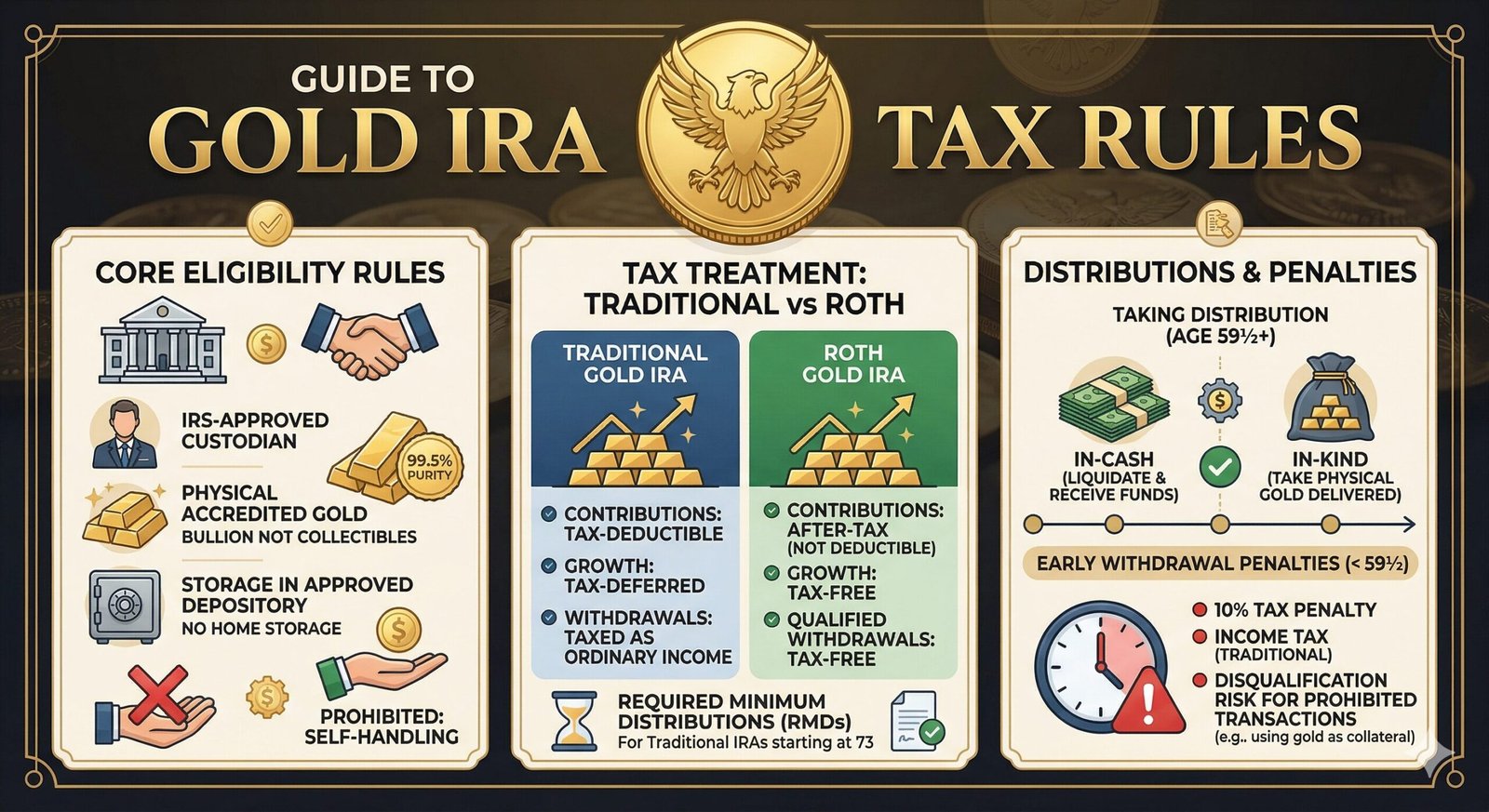
The IRS requires that gold held in an IRA meet a minimum purity standard of 99.5%. It must also be stored with an IRS-approved custodian and depository — you cannot simply keep gold coins in a home safe and call it an IRA. For more on which coins and bars are eligible, see our guide to IRA-eligible gold coins.
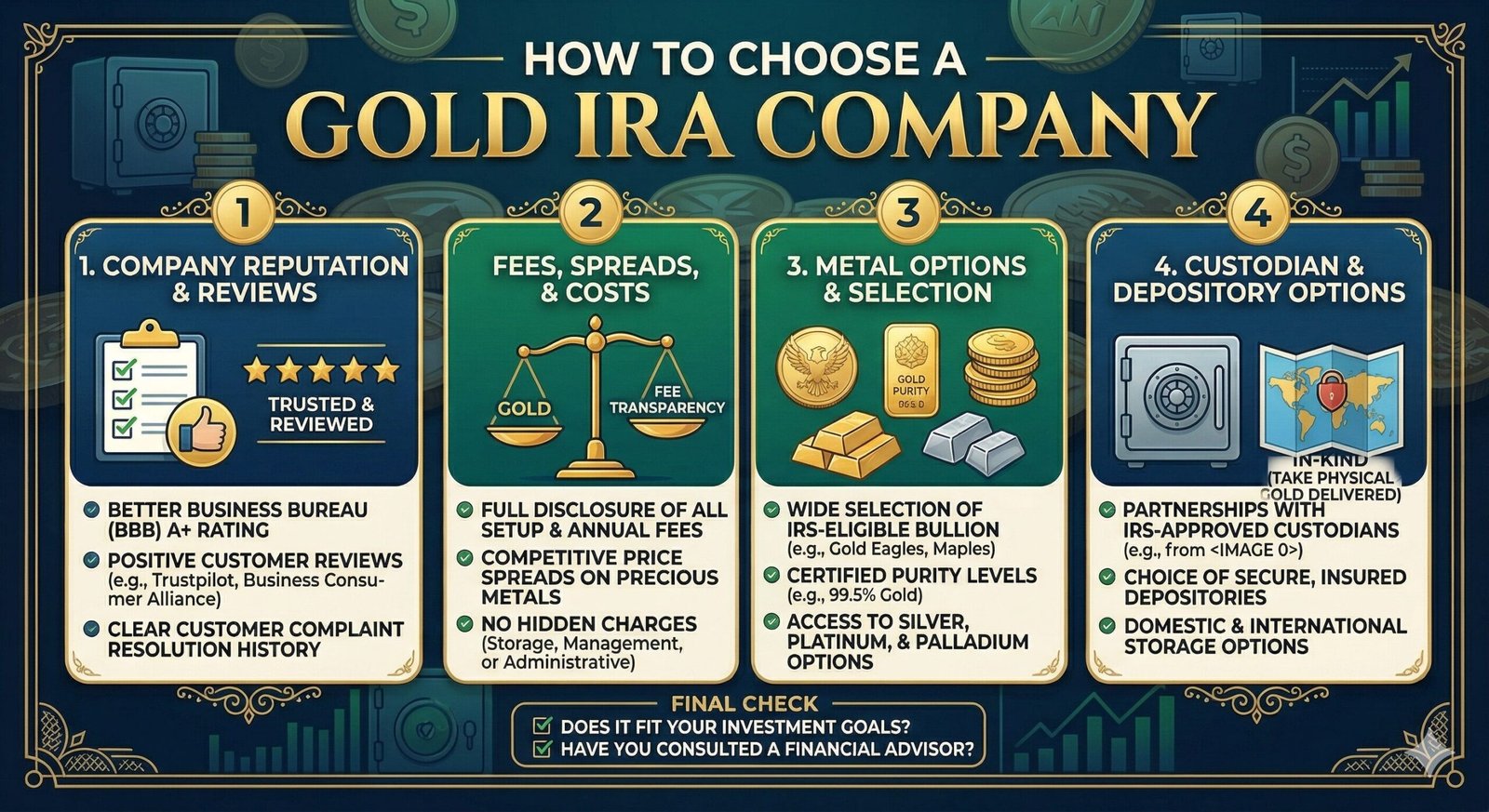
From a fee perspective, Gold IRAs typically involve more moving parts than standard retirement accounts. Custodian fees, storage fees, and sometimes account setup or transaction fees are all common. Our Gold IRA fees guide breaks down what to expect and how to compare providers.
What Are Treasury Bonds?
Treasury bonds — often called T-bonds — are debt securities issued by the U.S. federal government. When you buy a Treasury bond, you are essentially lending money to the government in exchange for regular interest payments over a fixed period, with the face value returned to you at maturity.
Standard Treasury bonds carry maturities of 20 or 30 years, though the broader category of U.S. Treasury securities includes shorter-duration instruments like Treasury notes (2–10 years) and Treasury bills (less than one year). The interest payments — known as coupon payments — are made semi-annually and are fixed at the time of purchase.
Because they are backed by the full faith and credit of the U.S. government, Treasuries are widely regarded as among the lowest-credit-risk instruments available to American investors. They are also highly liquid — they can be bought and sold on the secondary market, and they are available directly from the government through TreasuryDirect.gov.
Interest income from Treasury bonds is subject to federal income tax but exempt from state and local taxes. The IRS IRA investment FAQ and SEC investor resources both provide useful background on how different asset types function within retirement frameworks.
Key Structural Differences
Understanding the core structural differences between these two account types is essential before drawing any conclusions about their role in a retirement plan.
Ownership and Tangibility
Gold, when held in a Gold IRA, is a physical commodity — it has weight, it takes up space, and it must be stored somewhere secure. You own a specific quantity of a physical asset.
A Treasury bond, by contrast, is a financial instrument — a legal obligation by the U.S. government to repay a debt. It exists as an electronic record (since 2012, Treasury bonds are no longer issued in paper form) and its value is tied to interest rate conditions, inflation expectations, and government creditworthiness.
Income vs. No Income
This is one of the most significant differences between the two. Treasury bonds generate predictable, fixed income in the form of regular coupon payments. If you purchase a 30-year Treasury bond at a 4.5% coupon rate, you will receive that interest payment every six months for the life of the bond, regardless of what markets are doing.
Gold generates no income. It pays no dividends, no interest, no coupons. Its value fluctuates based on supply and demand dynamics, currency conditions, global sentiment, and a range of other factors. This means that a Gold IRA investor is entirely dependent on price appreciation for any return — and as with any asset, past performance is not a guarantee of future results.
Liquidity
Treasury bonds can be bought and sold relatively easily on the secondary market, though selling before maturity may result in a gain or loss depending on prevailing interest rates. Gold IRAs, while the underlying gold is a globally traded commodity, involve additional administrative steps when liquidating — you’re working through a custodian, and timing can affect net proceeds.
Fees and Complexity
Treasury bonds held in a standard brokerage account or through TreasuryDirect carry minimal costs. Gold IRAs, as noted above, involve ongoing fees for custody and storage that do not apply to bond investing. If you’re weighing the Gold IRA minimum investment requirements against what it takes to start with Treasuries, the operational difference is notable.
Comparing Gold IRAs and Treasury Bonds: A Side-by-Side View
Regulatory and IRS Considerations
Both Treasury bonds and Gold IRAs exist within regulatory frameworks that investors need to understand before proceeding.
For Gold IRAs specifically, the IRS has detailed rules covering everything from eligible metals to required minimum distributions (RMDs). IRS Publication 590-A is the primary source for understanding IRA contribution and eligibility rules. RMD requirements — which kick in at age 73 under current law — apply to Gold IRAs just as they do to traditional IRAs. The IRS RMD FAQ provides authoritative detail on these obligations.
Because Gold IRAs are self-directed accounts, they also come with additional due diligence requirements. FINRA’s guidance on self-directed IRAs (available at FINRA’s guidance on self-directed IRAs) is worth reading before engaging with any provider. Scams and misleading operators do exist in this space — our Gold IRA scams guide covers what warning signs to look for and how to verify providers using resources like bbb.org and FINRA BrokerCheck.
If you already have funds in a 401(k) or existing IRA and are exploring whether to move any portion into a Gold IRA, the mechanics and rules matter enormously. Our 401(k) to Gold IRA rollover guide and Gold IRA rollover rules page both explain how to navigate that process correctly.
Questions Worth Asking Before You Decide
Rather than presenting a verdict, here are the kinds of questions that can help clarify your thinking:
Do you need income from your retirement assets? If yes, Treasury bonds provide a defined income stream. Gold does not.
How do you feel about ongoing fees? Gold IRA costs accumulate annually. Treasury bonds held directly have essentially no management cost.
What is your time horizon? Long-dated Treasuries can lose market value if interest rates rise before maturity. Gold values fluctuate with commodity dynamics. Neither is without risk.
Are you already familiar with self-directed IRAs? If not, it’s worth reading up on what a Gold IRA is and consulting our Gold IRA vs Traditional IRA comparison before making any commitments.
Have you spoken with a licensed financial advisor? Both of these options are complex enough that professional guidance is always worth considering — particularly for decisions affecting retirement savings.
For broader context on where Gold IRAs sit within the retirement account landscape, our Gold IRA vs 401(k) article may also be useful reading.
Frequently Asked Questions
Q: Can I hold Treasury bonds inside a Gold IRA?
No. A Gold IRA is specifically structured to hold IRS-approved physical precious metals. If you want to hold Treasury bonds in a tax-advantaged account, a standard traditional IRA or brokerage IRA would be the appropriate vehicle.
Q: Are Gold IRAs riskier than Treasury bonds?
They carry different types of risk. Treasury bonds carry credit risk (though this is minimal given the U.S. government backing), interest rate risk, and inflation risk on fixed payments. Gold IRAs carry price volatility risk, liquidity risk, and fee-related drag. Neither option is without drawbacks, and the right choice depends on individual circumstances.
Q: Do Gold IRAs pay any interest or dividends?
No. Physical gold held in an IRA generates no income. Any return comes solely from changes in the market value of gold, which can move in any direction. Past performance is not a guarantee of future results.
Q: What happens to a Gold IRA when I reach RMD age?
Like traditional IRAs, Gold IRAs are subject to required minimum distribution rules beginning at age 73 (under current law). Distributions can be taken in cash or, in some cases, in-kind as physical metal — though this depends on your custodian’s policies and has its own tax implications. Consult the IRS RMD FAQ and a tax professional for specifics.
Q: Is a Gold IRA a good idea for retirement investors?
That depends on your individual financial situation, goals, and risk tolerance. We’ve explored this question more thoroughly in our dedicated article on is a Gold IRA a good idea, which covers the key considerations from multiple angles.
Whether you’re leaning toward one option, the other, or still trying to understand the landscape, the most important next step is getting accurate information from credible sources. To see which providers currently stand out in the Gold IRA space, visit our independently reviewed list of Best Gold IRA Companies of 2026.
This article is for informational purposes only and does not constitute financial or tax advice. Investing in precious metals involves risk including possible loss of principal.
Related guides
- Gold IRA Consumer Affairs Reviews: What to Look For
- Gold IRA Trustpilot Reviews: What Real Customers Say
- Gold IRA BBB Complaints: What Consumer Reports Reveal
- Is a Gold IRA Worth the Fees? A Cost-Benefit Analysis
- Are Gold IRA Fees Too High? Breaking Down the Real Costs
- Gold IRA Mistakes to Avoid: 10 Common Errors Investors Make