
Gold IRA: 15 Questions to Ask Before Opening an Account
Opening a Gold IRA is a meaningful financial decision — one that involves IRS regulations, custodian relationships, storage logistics, and ongoing costs that many investors don’t fully anticipate. The gold industry, like any sector that attracts retirement dollars, has its share of reputable companies and those best avoided. Asking the right questions before you commit to any provider can be the difference between a well-structured account and a costly mistake.
This guide walks you through 15 of the most important Gold IRA questions to ask — organized by the stage of the process where they matter most. Whether you’re just beginning to research your options or you’re already speaking with companies, these questions will help you evaluate providers with confidence and clarity.
For a foundational overview before diving in, visit our Gold IRA guide to understand the structure and mechanics of these accounts.
Questions to Ask About the Company Itself
1. How Long Have You Been in Business?
Longevity in the precious metals IRA industry isn’t everything, but it matters. A company that has been operating for ten or more years has navigated regulatory changes, market cycles, and customer complaints — and survived them. Ask specifically about how long the company has been facilitating Gold IRAs, not just selling coins or bullion.
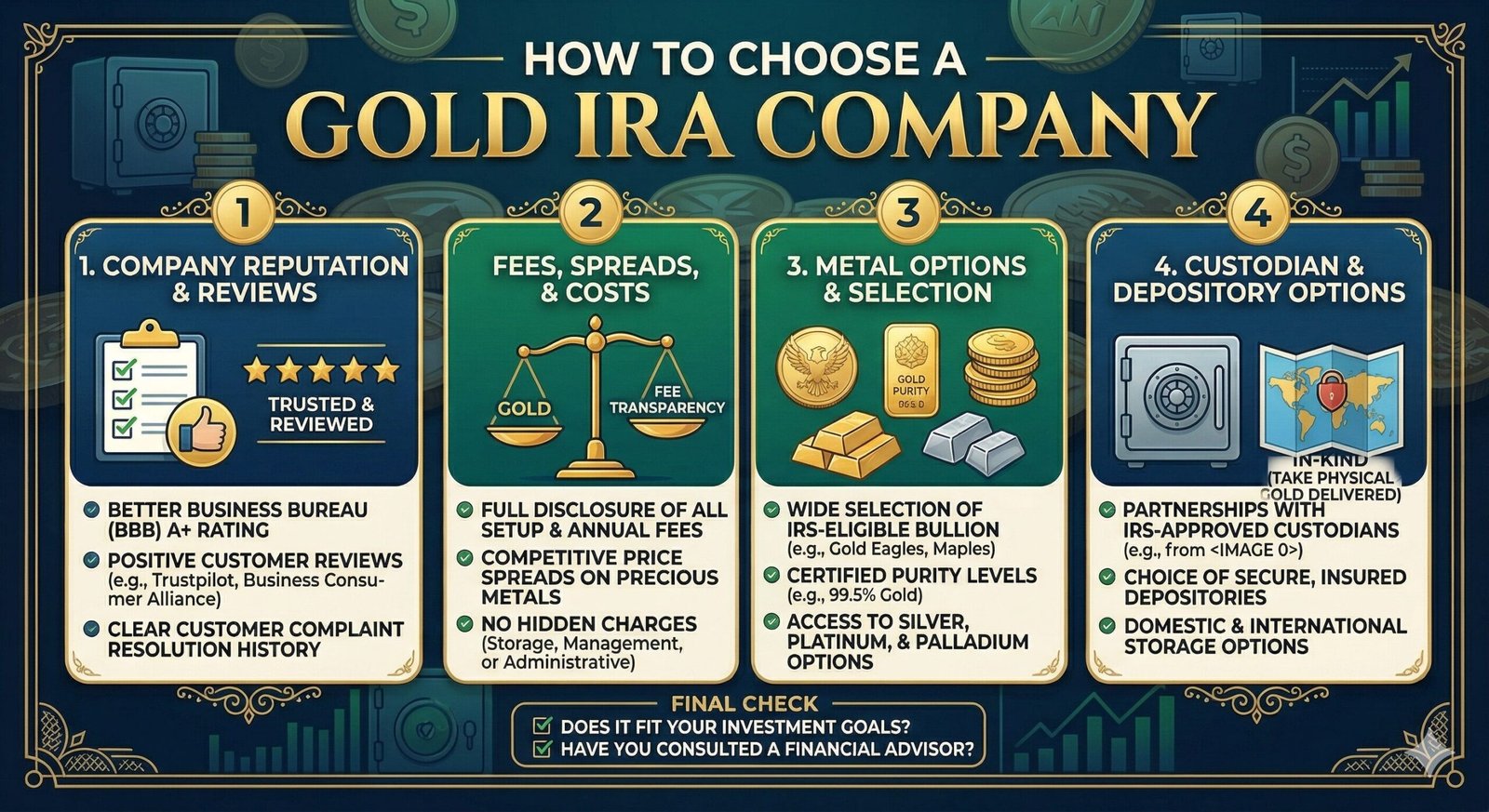
2. What Are Your Ratings With the BBB and Business Review Sites?
Third-party ratings are one of the most reliable signals of a company’s track record. The bbb.org is a useful starting point for checking complaint histories and how companies respond to customer issues. Look for consistent patterns in reviews rather than fixating on isolated complaints, which almost every company will have.
3. Are Your Representatives Licensed or Credentialed?
Not all Gold IRA salespeople are registered financial advisors, and that’s worth understanding. If someone is presenting investment options to you, it’s reasonable to ask whether they hold any licenses or credentials. You can verify the registration status of individuals and firms through FINRA BrokerCheck.
Questions to Ask About Fees and Costs
This is where many investors are caught off guard. Gold IRA fees are typically more layered than those of a conventional IRA. For a thorough breakdown, see our Gold IRA fees guide.
4. What Are All the Fees I Will Pay — Now and Annually?
Ask for a complete, written fee schedule. Common charges include a one-time account setup fee, an annual IRA administration or custodian fee, storage fees for the physical metals, and transaction fees each time you buy or sell. Some companies bundle fees; others itemize them. You need to understand the total annual cost of maintaining the account, not just the setup cost.
5. Is Storage Billed as a Flat Fee or a Percentage of Assets?
This distinction matters significantly as your account grows. A flat annual storage fee of, say, $200 stays constant regardless of how much gold you hold. A percentage-based fee grows with your account value. Neither structure is inherently better — it depends on your account size — but you should know which model applies to you.
6. Are There Any Minimums, and What Happens if I Fall Below Them?
Many providers require a minimum investment to open an account, and some charge additional fees if the account value drops below a threshold. Visit our Gold IRA minimum investment page for context on what’s typical across the industry.
Questions to Ask About the Custodian and Storage
A Gold IRA must be held by an IRS-approved custodian, and the physical metals must be stored in an approved depository. This isn’t optional — it’s a legal requirement. FINRA’s guidance on self-directed IRAs explains why custodian oversight is a critical consumer protection.
7. Who Is the Custodian, and Are They IRS-Approved?
The gold company you speak with is typically a dealer, not the custodian. The custodian is a separate entity — usually a trust company or bank — that holds your account and handles IRS reporting. Ask for the custodian’s name and verify that they are an IRS-approved non-bank trustee or a licensed trust company in their state.
8. Where Will My Metals Be Stored?
Your metals must be stored in an IRS-approved depository — not in your home, a personal safe, or a bank safety deposit box. Ask which depository the company uses, where it’s located, and whether it is insured. Reputable depositories include Brink’s, Delaware Depository, and International Depository Services.
9. Will My Metals Be Held in Segregated or Commingled Storage?
Segregated storage means your specific metals are stored separately and can be returned to you by serial number or lot. Commingled (or allocated) storage pools your metals with those of other clients, and you receive metals of equal type and weight when you take a distribution. Segregated storage typically costs more. Ask which is available and what the price difference is.
Questions to Ask About Eligible Metals and IRS Compliance
The IRS has specific purity and product requirements for metals held in an IRA. You can find the authoritative rules in IRS Publication 590-A and the IRS IRA investment FAQ.
10. Which Specific Products Are IRA-Eligible?
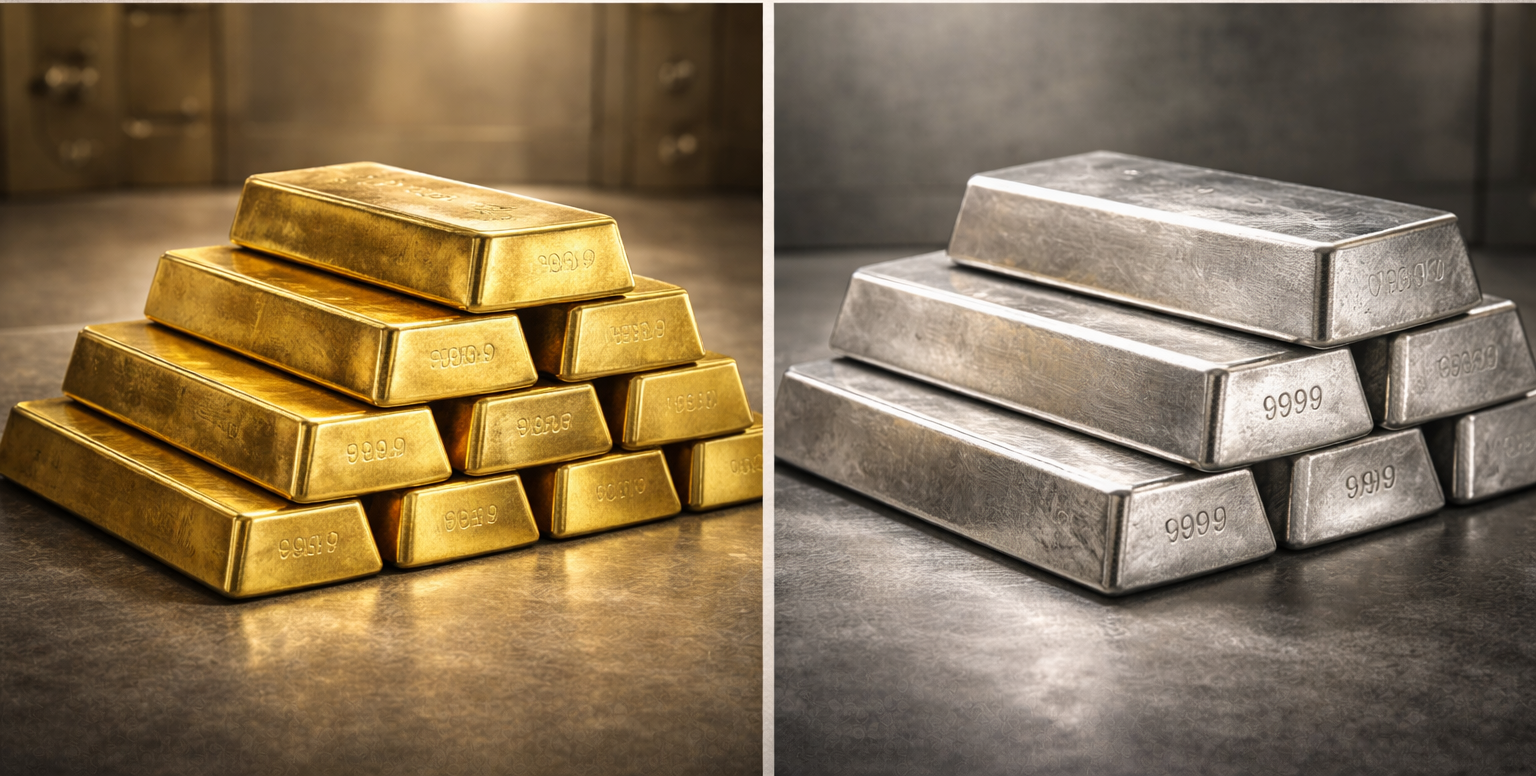
This is an essential question. Not every gold coin or bar qualifies for IRA inclusion. The American Gold Eagle is a notable exception to the standard .9999 purity rule — it’s permitted despite being .9167 fine, due to a specific congressional carve-out. Ask your dealer to clearly identify which products meet IRS standards. You can also review IRA-eligible gold coins for a broader reference.
11. Who Decides What I Buy, and Can I Request Specific Products?
Some companies guide clients toward particular products — sometimes ones with higher dealer margins. Ask whether you have full flexibility to choose from any IRS-eligible product or whether you’re limited to what the company offers in its own inventory.
Questions to Ask About Rollovers and Transfers
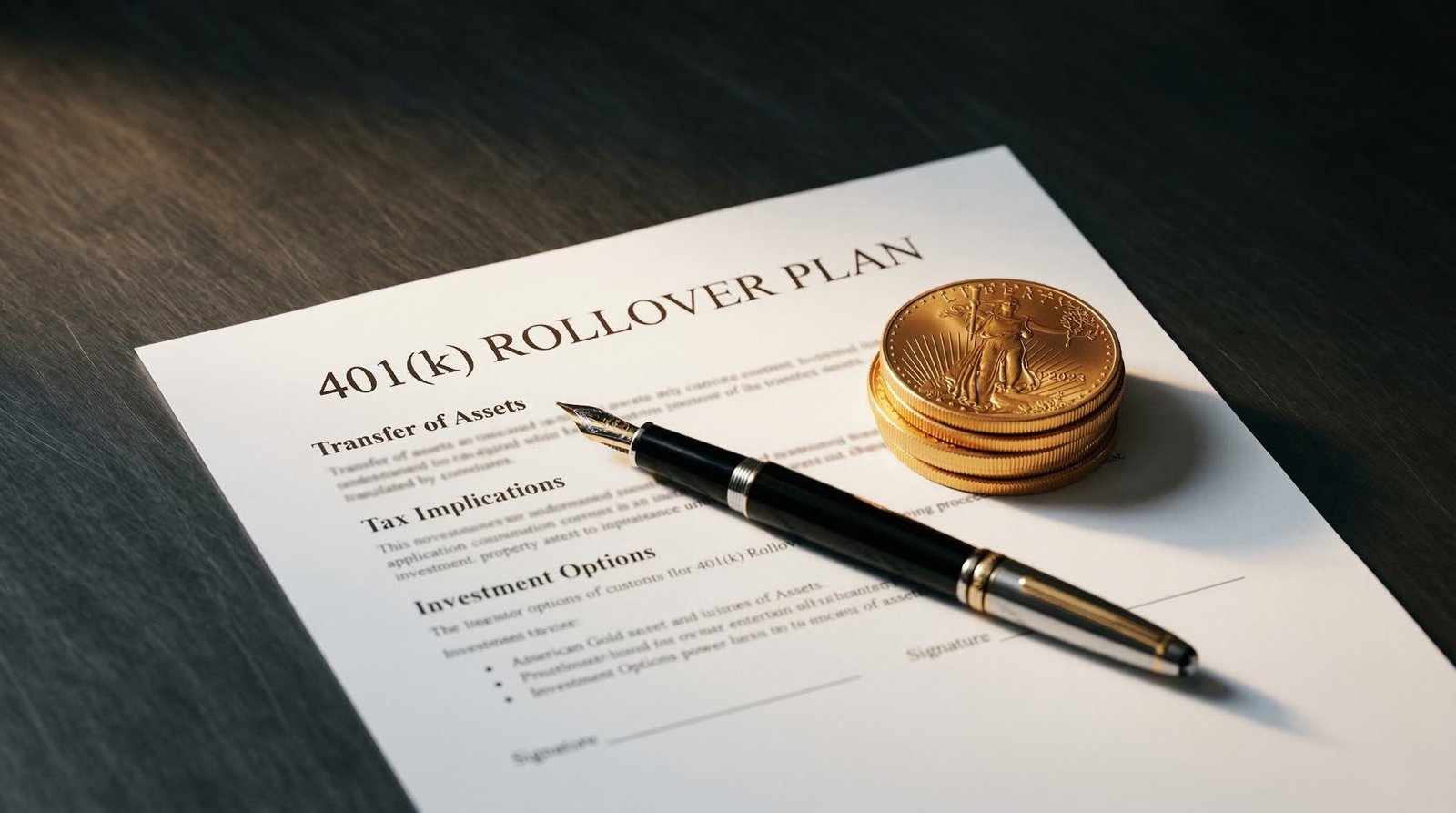
Many people fund a Gold IRA by rolling over assets from an existing 401(k) or traditional IRA. It’s a common and well-established process, but there are rules you need to follow carefully. Our Gold IRA rollover rules page explains these in plain English, and our 401(k) to Gold IRA rollover guide provides a step-by-step walkthrough.
12. What Is the Difference Between a Rollover and a Transfer, and Which Applies to My Situation?
A direct transfer moves funds from one IRA custodian to another without the money ever touching your hands — there’s no 60-day clock and no withholding risk. A rollover involves the funds being paid to you first, which triggers a 60-day window to redeposit them into a new IRA before taxes and penalties apply. Understanding which process you’ll be using — and why — is fundamental.
13. Will You Handle the Paperwork With My Existing Custodian?
Most reputable Gold IRA companies offer to manage much of the administrative process on your behalf. Ask specifically what they handle, what requires your signature, and how long the transfer process typically takes. Delays of four to six weeks are common, but an experienced company should be able to give you a realistic timeline.
Questions to Ask About Liquidation and Distributions
14. How Do I Take a Distribution When the Time Comes?
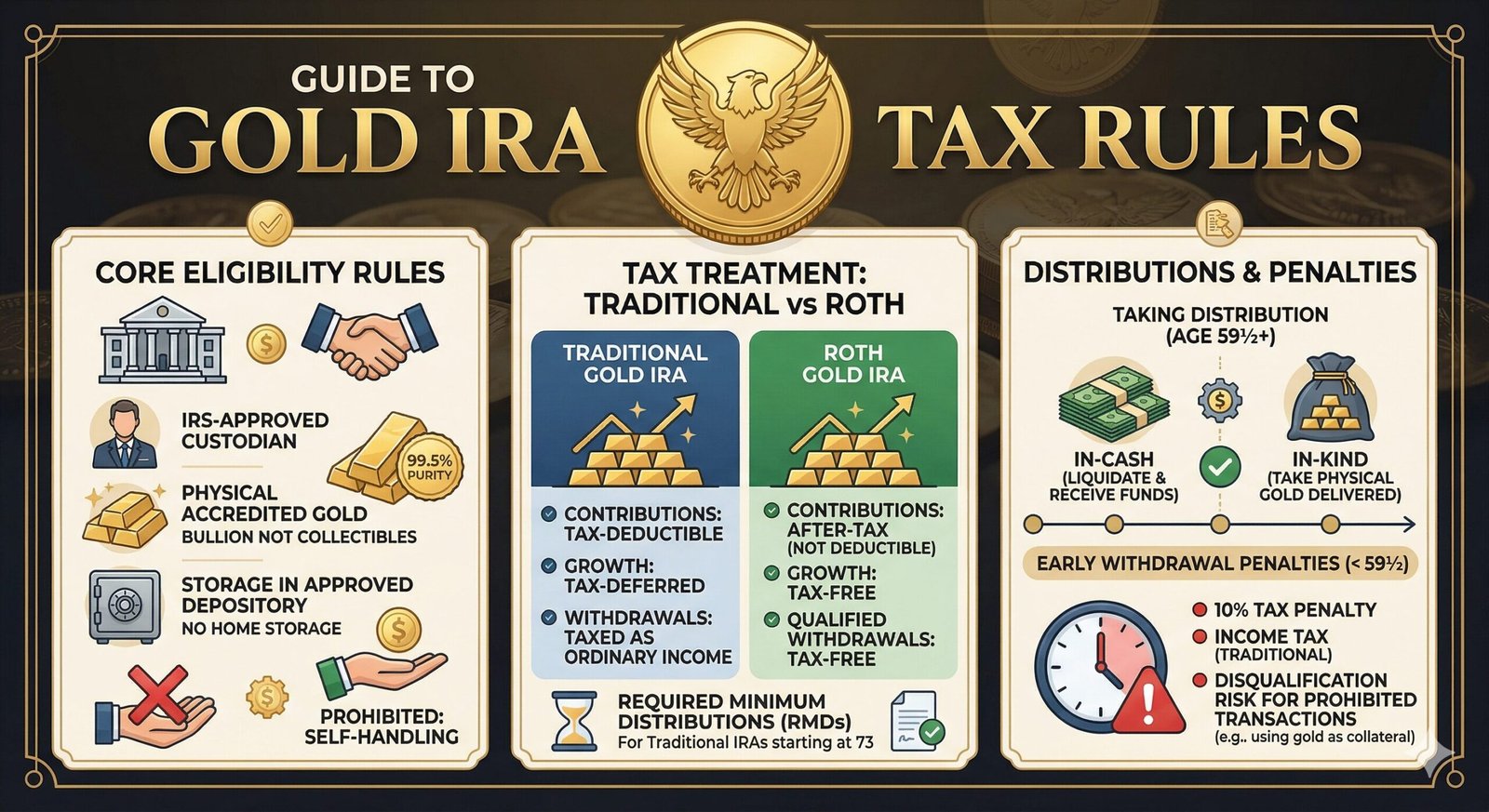
When you reach retirement age and begin taking distributions, you generally have two options: take the physical metals themselves (an in-kind distribution) or sell the metals and receive cash. Ask the company to walk you through both options, the timeline for each, and any fees involved. Also ask about Required Minimum Distributions — the IRS requires that you begin taking RMDs at age 73. The IRS RMD FAQ is the authoritative reference on these rules.
15. What Is Your Buyback Policy?
If and when you want to liquidate your holdings, will the company buy the metals back from you? At what price — spot price, below spot, or somewhere else? Is there a fee? Some companies offer competitive buyback programs; others make the process difficult. Ask for the buyback terms in writing before you open an account.
Doing Your Own Research
No set of questions replaces independent research. Before committing to any provider, cross-reference your findings with third-party sources, read through verified customer reviews, and consult SEC investor resources for general guidance on retirement accounts. Our Gold IRA scams guide outlines the warning signs that should prompt you to walk away from any provider.
It’s also worth reading Gold IRAs Explained in Detail before your first conversation with a company — the more clearly you understand how these accounts work, the more productive those conversations will be.
Frequently Asked Questions
Can any gold I already own be transferred into a Gold IRA?
No. Metals you personally own cannot be contributed to a Gold IRA. All metals held in the account must be purchased through the IRA structure and delivered directly to an IRS-approved depository. Placing personally owned metals into an IRA is treated as a prohibited transaction under IRS rules.
What happens if my Gold IRA custodian goes out of business?
Your metals are held in a separate depository and are not part of the custodian’s balance sheet, so they are generally protected in the event the custodian closes. However, you should ask about the contingency procedures and whether the depository holds insurance independent of the custodian.
Is a Gold IRA taxed the same way as a traditional IRA?
The tax treatment of a Gold IRA follows the same structure as a conventional IRA — traditional Gold IRAs involve pre-tax contributions and taxable distributions, while Roth Gold IRAs involve after-tax contributions and potentially tax-free qualified distributions. The IRS contribution limits page provides current figures. This article does not constitute tax advice — speak with a qualified tax professional for guidance specific to your situation.
How do I know if a Gold IRA is even appropriate for my retirement plan?
That’s a personal question that depends on your financial goals, timeline, and existing retirement holdings. Our article is a Gold IRA a good idea walks through the relevant considerations in a balanced way. Speaking with a fee-only financial advisor who has no stake in your product selection is always a sound approach.
What is the difference between a Gold IRA and a standard IRA that holds gold ETFs?
A Gold IRA holds physical precious metals — actual coins or bars — stored in an approved depository. A conventional IRA can hold gold-related securities such as ETFs or mining stocks, but those are paper assets, not physical metal. The two structures carry different costs, logistics, and regulatory requirements.
Ready to Compare Providers?
Once you’ve worked through these questions with any company you’re evaluating, the next step is comparing your options side by side. Our independently researched guide to the Best Gold IRA Companies of 2026 reviews leading providers across the criteria that matter most to retirement investors — including fees, custodian relationships, storage options, and customer service records.
This article is for informational purposes only and does not constitute financial or tax advice. Investing in precious metals involves risk including possible loss of principal.
Related guides
- Gold IRA Consumer Affairs Reviews: What to Look For
- Gold IRA Trustpilot Reviews: What Real Customers Say
- Gold IRA BBB Complaints: What Consumer Reports Reveal
- Is a Gold IRA Worth the Fees? A Cost-Benefit Analysis
- Are Gold IRA Fees Too High? Breaking Down the Real Costs
- Gold IRA Mistakes to Avoid: 10 Common Errors Investors Make