Gold IRA in Washington State: Complete Investor Guide
Washington State residents exploring retirement investment options often consider precious metals as part of their financial planning strategy. A Gold IRA represents one avenue for incorporating physical gold, silver, platinum, and palladium into a tax-advantaged retirement account structure.
For Washington investors, understanding the specific regulatory landscape, available custodians, and operational considerations becomes essential when evaluating whether a Gold IRA aligns with their retirement objectives. This comprehensive guide examines the key aspects of establishing and maintaining a Gold IRA while residing in the Evergreen State.
Understanding Gold IRAs for Washington Residents
A Gold IRA operates as a self-directed Individual Retirement Account that permits ownership of physical precious metals within the account structure. Unlike conventional IRAs that typically hold stocks, bonds, and mutual funds, these specialized accounts accommodate IRS-approved gold bars, coins, and other precious metal products.
Washington residents must work with IRA-approved custodians who possess the expertise and infrastructure to handle precious metals transactions. These custodians facilitate the purchase, storage, and eventual distribution of metals while ensuring compliance with federal regulations governing retirement accounts.
The IRS Publication 590-A establishes the fundamental rules governing IRA contributions, distributions, and acceptable investments. For precious metals, the Internal Revenue Service maintains strict purity standards: gold must meet 99.5% fineness requirements, while silver requires 99.9% purity.
Understanding what a Gold IRA is becomes particularly relevant for Washington investors considering this option alongside traditional retirement vehicles. The account structure mirrors conventional IRAs in terms of contribution limits, distribution rules, and tax treatment, with the primary distinction being the underlying asset holdings.
Washington State Regulatory Environment
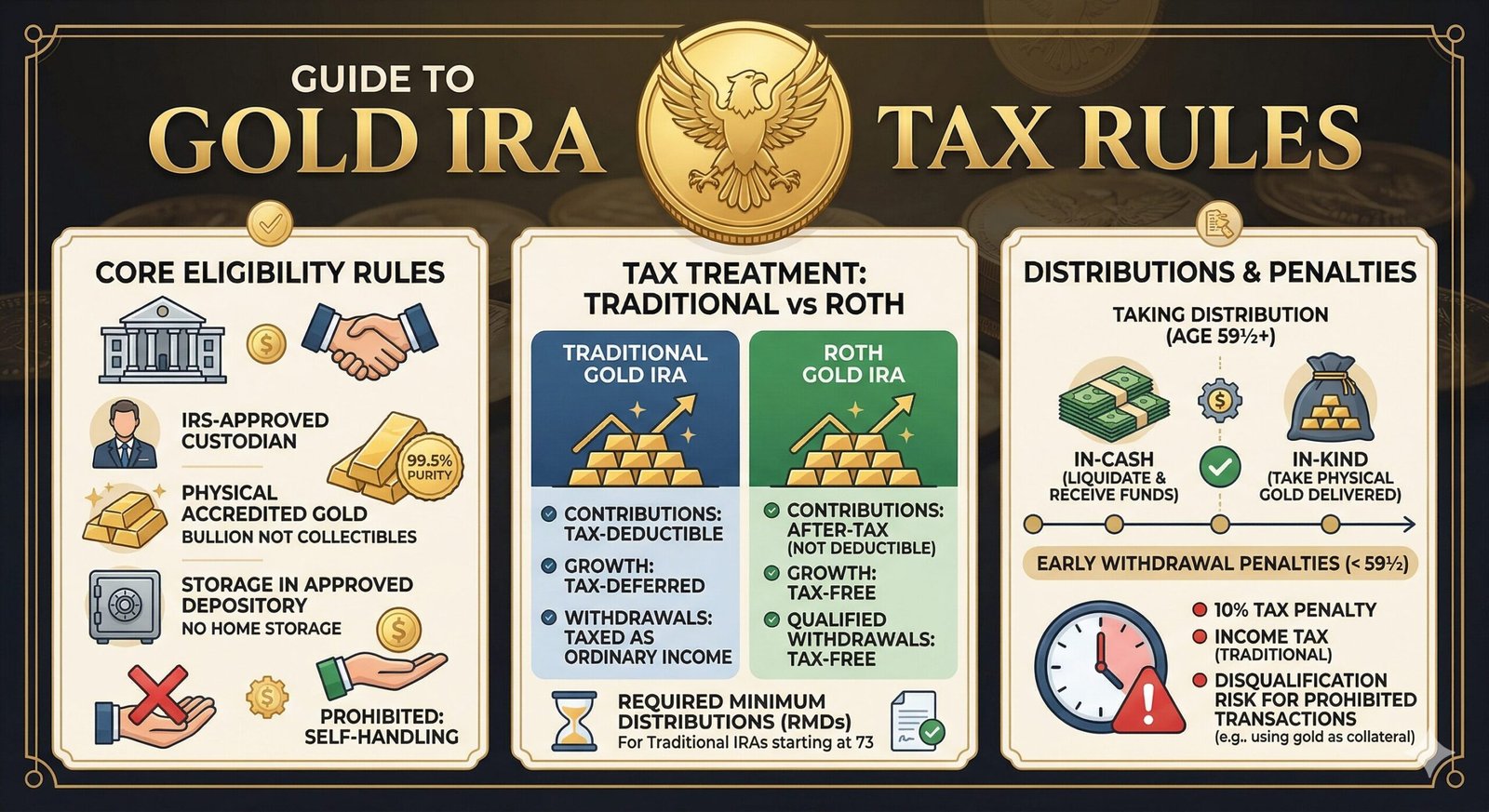
Washington State does not impose additional restrictions on Gold IRA ownership beyond federal requirements. The state follows IRS guidelines for retirement account taxation, meaning Traditional Gold IRA distributions face ordinary income tax rates while Roth Gold IRA qualified distributions occur tax-free.
Washington’s lack of state income tax creates a favorable environment for retirement planning generally. This absence of state-level taxation on retirement distributions can benefit Gold IRA holders when they begin taking required minimum distributions or make early withdrawals.
The Washington State Department of Financial Institutions oversees financial services companies operating within the state. While this agency does not specifically regulate Gold IRA custodians, it maintains authority over financial institutions that might offer precious metals services to state residents.
Investors should verify that their chosen custodian maintains proper licensing and registration with relevant federal agencies. The FINRA BrokerCheck database provides verification of broker-dealer registrations, while state securities regulators can confirm investment adviser credentials.
Approved Depositories and Storage Options
Washington State Gold IRA holders must store their precious metals in IRS-approved depositories. These specialized facilities maintain the security, insurance, and reporting capabilities required for retirement account assets.
Delaware Depository, located in Wilmington, Delaware, serves as one of the most commonly used facilities for West Coast investors. This IRS-approved depository offers segregated and non-segregated storage options for precious metals held in retirement accounts.
Brink’s Global Services operates multiple depository locations that serve Gold IRA investors nationwide. Their facilities maintain comprehensive security systems, insurance coverage, and regular auditing procedures to ensure asset safety and compliance.
International Depository Services (IDS) in Delaware provides another storage option for Washington residents. This facility specializes in precious metals custody and offers both allocated and unallocated storage arrangements depending on investor preferences and custodian requirements.
Storage Methods and Considerations
The choice between storage methods affects both costs and the level of control over specific metal products. Segregated storage provides the highest level of individual control but typically carries premium pricing compared to commingled arrangements.
Custodian Selection for Washington Investors
Washington residents must select IRA-approved custodians capable of handling precious metals transactions. These financial institutions facilitate the establishment, funding, and ongoing administration of Gold IRA accounts.
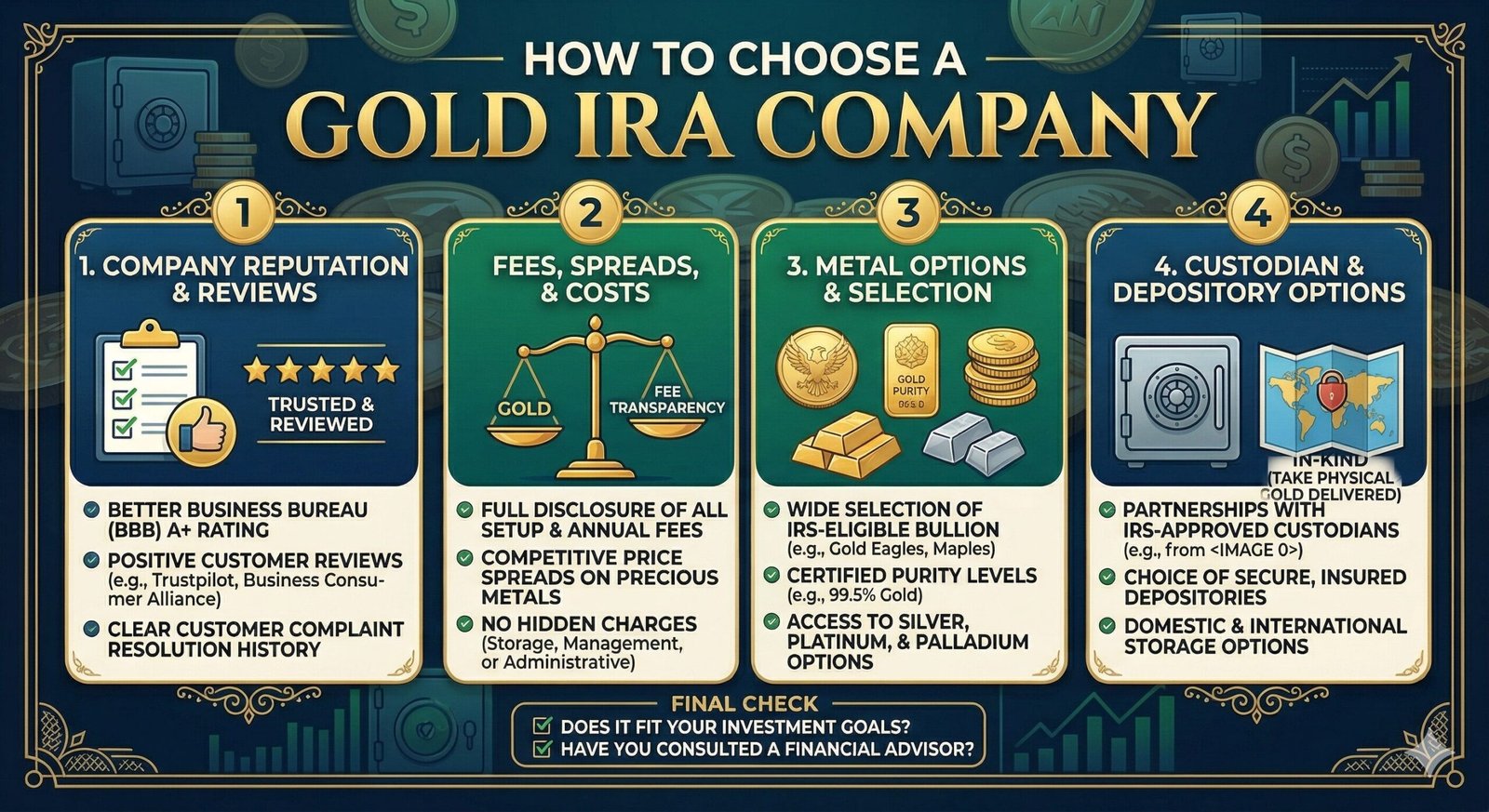
Custodians typically charge various fees including account setup costs, annual maintenance fees, storage charges, and transaction fees for buying or selling metals. Understanding the complete fee structure becomes essential for evaluating the long-term costs associated with Gold IRA ownership.
Some custodians specialize exclusively in precious metals IRAs, while others offer these services as part of broader self-directed IRA platforms. Specialized firms often provide deeper expertise in metals markets and storage logistics, while generalist custodians might offer more competitive pricing structures.
The Gold IRA fees guide provides detailed information about typical cost structures and fee comparisons across different service providers. Washington investors should evaluate these costs against their expected account values and investment timelines.
IRA-Eligible Precious Metals
The IRS maintains specific requirements for precious metals held within retirement accounts. Gold products must meet 99.5% purity standards, while silver requires 99.9% fineness. Platinum and palladium must achieve 99.95% purity levels.
American Eagle gold and silver coins represent the most commonly held products in Gold IRAs. These U.S. Mint products automatically qualify for IRA inclusion regardless of their slightly lower gold purity compared to other approved coins.
Canadian Maple Leaf coins, Austrian Philharmonics, and certain bars from approved refiners also meet IRS requirements. The complete list of IRA-eligible gold coins includes products from various international mints and private refiners.
Collectible coins, numismatic pieces, and jewelry do not qualify for IRA inclusion. The IRS specifically prohibits these items to maintain the investment focus of retirement accounts rather than collectible interests.
Funding Your Washington Gold IRA
Washington residents can fund Gold IRAs through several methods including direct contributions, rollovers from existing retirement accounts, and transfers between custodians. Each funding method carries specific rules and potential tax implications.
Direct contributions follow standard IRA limits established annually by the IRS. For 2024, individuals under age 50 can contribute up to $7,000, while those 50 and older benefit from catch-up contributions allowing $8,000 total contributions.
Rollover transactions from 401(k) plans, 403(b) accounts, or other employer-sponsored retirement plans can provide substantial funding for Gold IRAs. The 401(k) to Gold IRA rollover guide explains the specific steps and requirements for these transactions.
Understanding Gold IRA rollover rules becomes particularly important for avoiding unintended tax consequences or early withdrawal penalties. Proper execution of rollover transactions ensures tax-deferred status continues uninterrupted.
Tax Implications for Washington Residents
Washington’s lack of state income tax simplifies the tax treatment of Gold IRAs for state residents. Traditional Gold IRA contributions may qualify for federal tax deductions, while distributions face ordinary income tax rates at the federal level only.
Roth Gold IRAs operate differently, with contributions made using after-tax dollars but qualified distributions occurring completely tax-free. This structure can benefit Washington residents who expect higher tax rates in retirement or prefer tax-free distribution flexibility.
Required minimum distributions begin at age 73 for Traditional Gold IRAs. The IRS RMD FAQ provides detailed information about calculation methods and distribution requirements.
Early distributions before age 59½ typically incur 10% federal penalties plus ordinary income taxes. Certain exceptions exist for first-time home purchases, higher education expenses, and other qualifying circumstances as outlined in federal regulations.
Minimum Investment Requirements
Gold IRA minimum investment amounts vary significantly among custodians and can range from $10,000 to $50,000 or higher. Some providers offer lower minimums for regular contribution accounts while requiring higher amounts for rollover transactions.
The Gold IRA minimum investment considerations include not only the initial account opening requirements but also ongoing purchase minimums for adding metals to existing accounts. These minimums can affect the ability to make small, regular additions to precious metals holdings.
Washington investors should evaluate minimum requirements against their available retirement funds and investment timelines. Higher minimums might limit access for some investors while potentially providing better fee structures for larger accounts.
Comparing Gold IRAs to Other Retirement Options
Washington residents often evaluate Gold IRAs alongside traditional retirement investment options. Understanding the key differences helps inform decision-making about retirement portfolio construction.
The Gold IRA vs Traditional IRA comparison highlights the operational and investment differences between these account types. Traditional IRAs offer broader investment options and typically lower fees, while Gold IRAs provide physical precious metals ownership within the retirement account structure.
Similarly, the Gold IRA vs 401(k) analysis examines how these retirement vehicles differ in terms of contribution limits, investment options, and distribution rules. Many investors use both account types as complementary components of their overall retirement strategy.
The question of is a Gold IRA a good idea depends on individual circumstances, risk tolerance, and retirement objectives. Washington residents should consider their complete financial picture when evaluating this option.
Avoiding Common Pitfalls and Scams
The precious metals industry unfortunately attracts various fraudulent schemes targeting retirement investors. Washington residents should remain vigilant about high-pressure sales tactics, unrealistic return promises, and companies operating without proper licensing.
The Gold IRA scams guide identifies common warning signs including guarantees of specific returns, pressure to liquidate existing retirement accounts quickly, and claims about “secret” government programs affecting precious metals.
Legitimate Gold IRA companies maintain proper licensing, provide transparent fee structures, and allow investors time to make informed decisions. The Better Business Bureau maintains records of consumer complaints and company ratings that can help identify reputable service providers.
Washington’s Attorney General’s office also maintains resources for identifying and reporting investment fraud targeting state residents. Verifying company credentials and researching customer reviews provides additional layers of protection.
Getting Started with a Gold IRA in Washington
The process of establishing a Gold IRA begins with selecting an appropriate custodian and understanding the complete fee structure. Washington residents should obtain quotes from multiple providers to compare costs and services.
Gold IRAs Explained in Detail provides comprehensive information about the account establishment process, required documentation, and timeline expectations. Most accounts can be established within 1-2 weeks once all paperwork and funding arrangements are completed.
The initial metal selection process requires consideration of IRS requirements, storage logistics, and personal preferences regarding specific products. Many investors begin with widely recognized products like American Eagle coins before exploring other approved options.
Ongoing account management involves monitoring storage fees, reviewing annual statements, and coordinating any additional purchases or distributions with the custodian. Regular communication with the custodian ensures smooth operations and compliance with all applicable regulations.
Frequently Asked Questions
Can Washington residents open Gold IRAs with out-of-state custodians?
Yes, Washington residents can work with IRA-approved custodians located anywhere in the United States. The custodian’s location does not affect account eligibility or tax treatment for state residents.
Do Gold IRAs face different tax treatment in Washington compared to other states?
Washington’s lack of state income tax means Gold IRA distributions face only federal taxation. This can provide advantages compared to states with income taxes that apply to retirement distributions.
What happens to Gold IRA metals during inheritance?
Gold IRA assets pass to designated beneficiaries following standard IRA inheritance rules. Beneficiaries can continue holding the metals in inherited IRA structures or take distributions according to IRS requirements.
Can I store Gold IRA metals at home in Washington?
No, IRS regulations require Gold IRA metals to be stored at approved depositories. Home storage would violate the rules governing retirement account assets and could result in immediate taxation and penalties.
How do I verify a Gold IRA company’s legitimacy in Washington?
Check the company’s licensing status with relevant regulatory agencies, review Better Business Bureau ratings, and verify custodian approvals with the IRS. Legitimate companies provide transparent information about their credentials and regulatory status.
For Washington residents considering precious metals as part of their retirement planning strategy, thorough research and careful custodian selection remain essential steps. Comparing options among the Best Gold IRA Companies of 2026 helps ensure alignment between investor needs and service provider capabilities.
This article is for informational purposes only and does not constitute financial or tax advice. Investing in precious metals involves risk including possible loss of principal.
Related guides
- Gold IRA Consumer Affairs Reviews: What to Look For
- Gold IRA Trustpilot Reviews: What Real Customers Say
- Gold IRA BBB Complaints: What Consumer Reports Reveal
- Is a Gold IRA Worth the Fees? A Cost-Benefit Analysis
- Are Gold IRA Fees Too High? Breaking Down the Real Costs
- Gold IRA Mistakes to Avoid: 10 Common Errors Investors Make