
Gold IRA in Oklahoma: Rules and Top Providers
Oklahoma investors approaching retirement have a growing number of options when it comes to structuring their savings. Among those options, the Gold IRA has attracted meaningful attention — not as a magic solution, but as a legitimate retirement account structure that allows Americans to hold physical precious metals inside a tax-advantaged account.
If you live in Oklahoma and you’ve been curious about how a Gold IRA actually works, what the rules are, how much it costs, and which providers are worth considering, this guide walks through everything you need to know — in plain terms, without the hype.
What Is a Gold IRA, and How Does It Work?
A Gold IRA is a self-directed Individual Retirement Account that holds physical gold — and in some cases, other IRS-approved precious metals like silver, platinum, and palladium — rather than paper assets like stocks or mutual funds. The underlying tax structure is the same as a conventional IRA, but the assets inside the account are fundamentally different.
To understand the mechanics properly, visit our Gold IRA hub or read Gold IRAs Explained in Detail for a thorough breakdown. The short version: you open a self-directed IRA through a custodian that is specifically authorized to hold alternative assets, fund the account (either through contributions, a rollover from an existing IRA, or a 401(k) transfer), purchase IRS-eligible gold, and arrange for that gold to be stored in an approved depository.
Every step of this process is governed by IRS rules. For the authoritative source, the IRS IRA investment FAQ and IRS Publication 590-A are the definitive references on IRA investment restrictions and contribution rules.
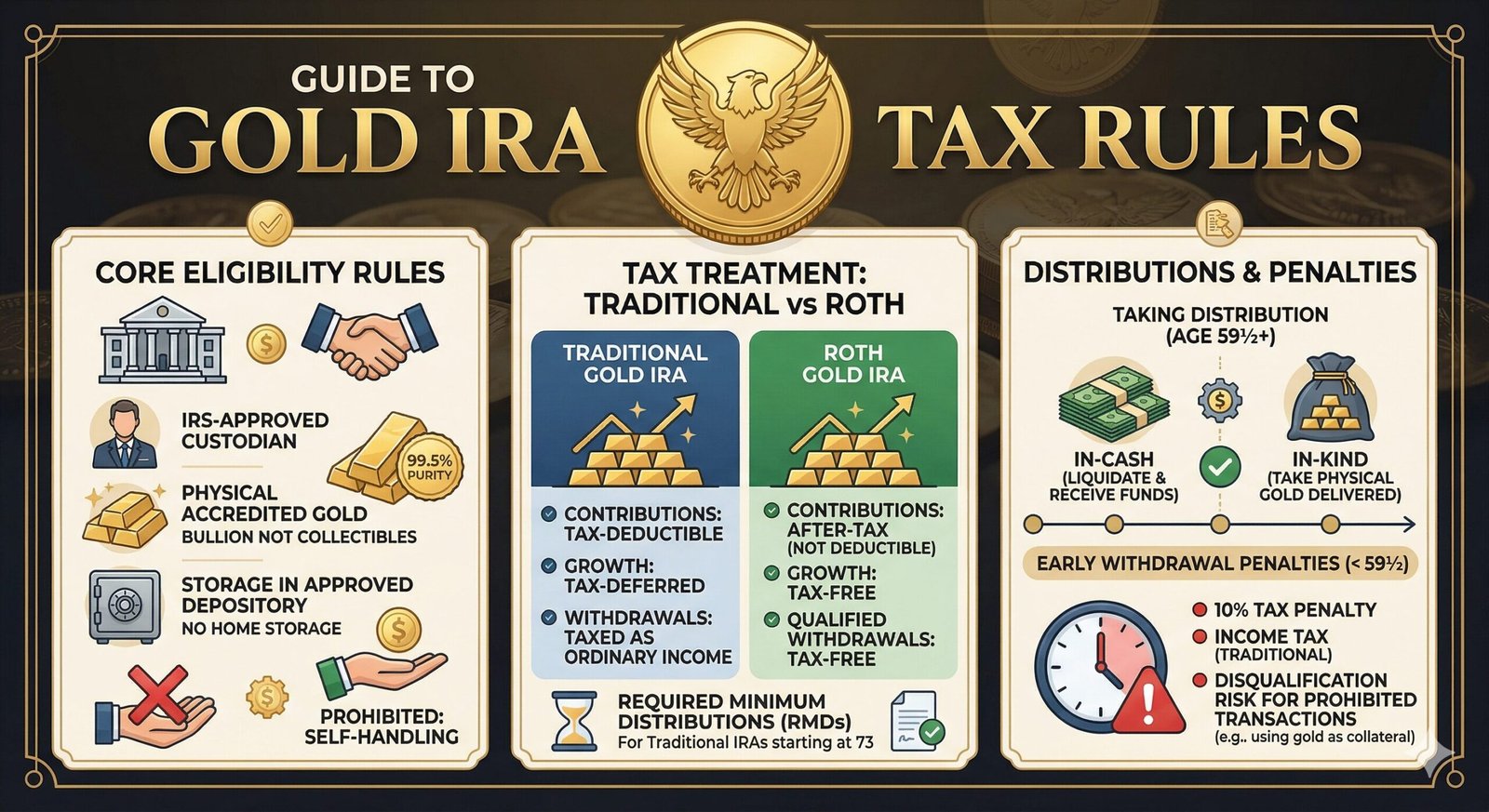
One point that trips up many first-time investors: you cannot take physical possession of the gold while it remains inside the IRA. The metal must be stored with an IRS-approved third-party custodian. Holding the coins or bars at home or in a personal safe constitutes a distribution — which triggers taxes and potentially penalties.
Gold IRA Rules That Apply to Oklahoma Residents
Gold IRAs are federally regulated instruments. The rules are set by the IRS, not by individual states, so being an Oklahoma resident does not create a separate layer of state-specific Gold IRA regulation. That said, there are a few areas where Oklahoma’s broader financial and tax environment is relevant.
Federal IRS Rules That Govern Your Account
The core federal rules every Gold IRA holder must understand include:
Contribution limits. For 2025, the IRS allows contributions of up to $7,000 per year to an IRA, or $8,000 if you are 50 or older (the catch-up provision). These limits apply across all your IRAs combined, not per account. You can find the current figures on the IRS contribution limits page.
Eligible metals. Not all gold qualifies. The IRS requires that gold held in an IRA meet a minimum fineness standard of 0.995 (99.5% purity). American Gold Eagles are a notable and IRS-approved exception — they are permitted despite technically not meeting the 0.995 standard, because they are explicitly named in the tax code. Our guide to IRA-eligible gold coins covers the full approved list.
Storage requirements. All physical metals must be stored in an IRS-approved depository — a secure, insured, audited facility. Home storage is not permitted and risks the IRS treating the entire account as a distribution.
Required Minimum Distributions. Traditional Gold IRAs are subject to RMDs starting at age 73. Because the account holds physical metal rather than cash, you will either need to liquidate a portion of your gold to take the distribution or, in some cases, take the distribution in-kind as physical metal — though this approach has additional logistical and tax considerations. The IRS RMD FAQ is a useful reference.
Oklahoma State Tax Considerations
Oklahoma generally conforms to federal tax treatment for IRAs. Contributions to a traditional Gold IRA that are federally deductible are also deductible on your Oklahoma state return. Roth Gold IRA withdrawals that are federally tax-free are similarly free of Oklahoma state income tax in retirement. This article does not constitute tax advice — consult a licensed tax professional or CPA familiar with Oklahoma tax law for guidance specific to your situation.
Rolling Over an Existing Account Into a Gold IRA
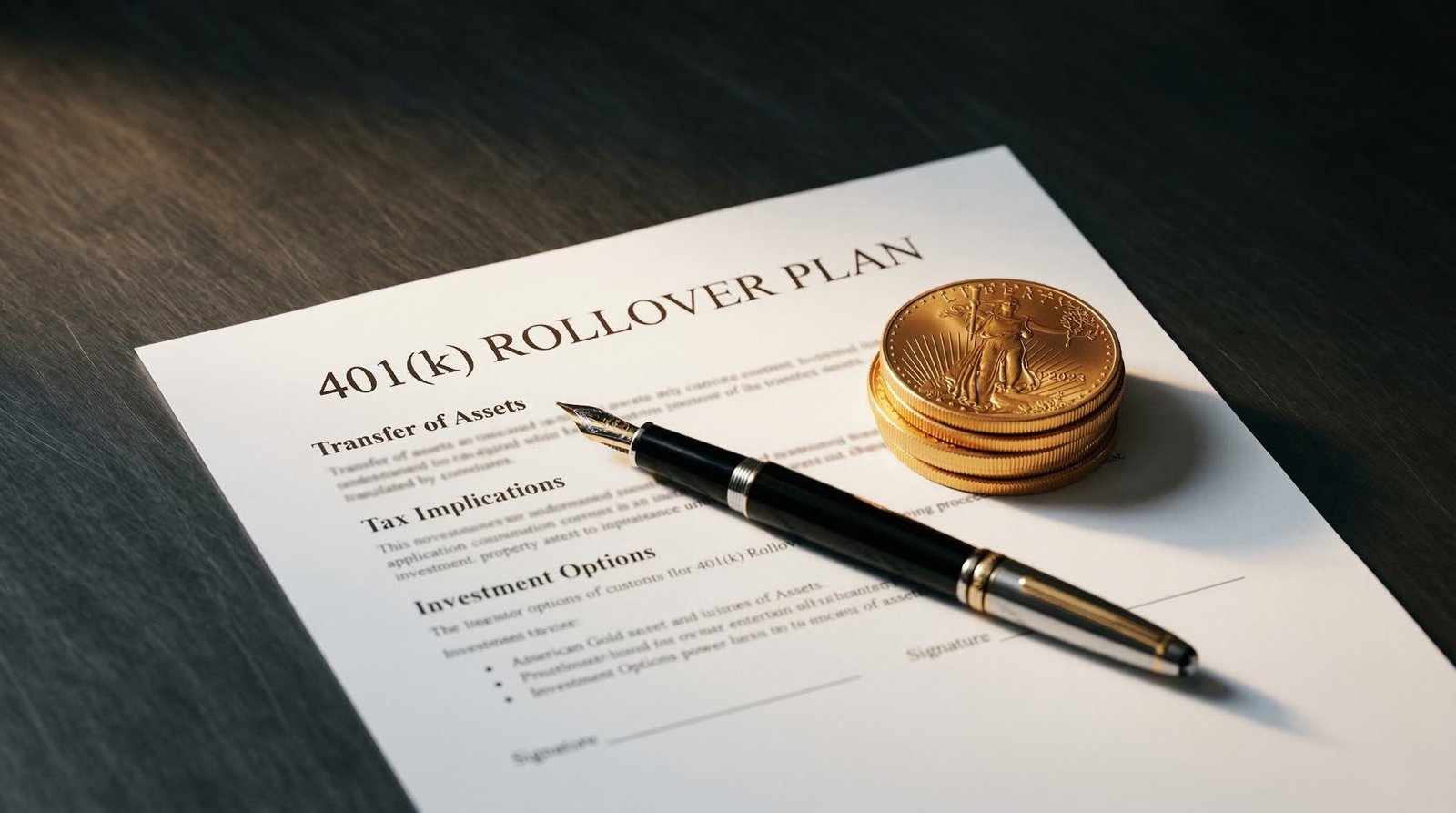
For most Oklahoma investors, the funding method of choice is a rollover from an existing 401(k), 403(b), or traditional IRA. This is a well-established process, and when executed correctly, it does not trigger taxes or penalties.
There are two main methods: a direct rollover, where the funds move directly from your old custodian to the new Gold IRA custodian without passing through your hands, and an indirect rollover, where the funds are paid to you and you have 60 days to deposit them into the new account. The direct rollover is almost always preferable — there is no 60-day deadline to manage and no withholding to reconcile.
Before initiating any rollover, read through our 401(k) to Gold IRA rollover guide and familiarise yourself with our detailed Gold IRA rollover rules. The IRS has specific requirements around rollover frequency (generally one indirect rollover per 12-month period per IRA), and mistakes can have meaningful tax consequences.
Understanding Gold IRA Fees in Oklahoma
One of the most important factors to evaluate when comparing Gold IRA providers is the fee structure. Gold IRAs typically carry higher fees than conventional IRAs, and those costs can compound meaningfully over a long retirement timeline.
Our comprehensive Gold IRA fees guide covers every category in detail, but here is a summary of the typical fee types you will encounter:
Not all providers disclose their fees with the same clarity. Reputable companies will provide a complete fee schedule before you open an account. If a provider is vague about costs, that is a red flag worth taking seriously.
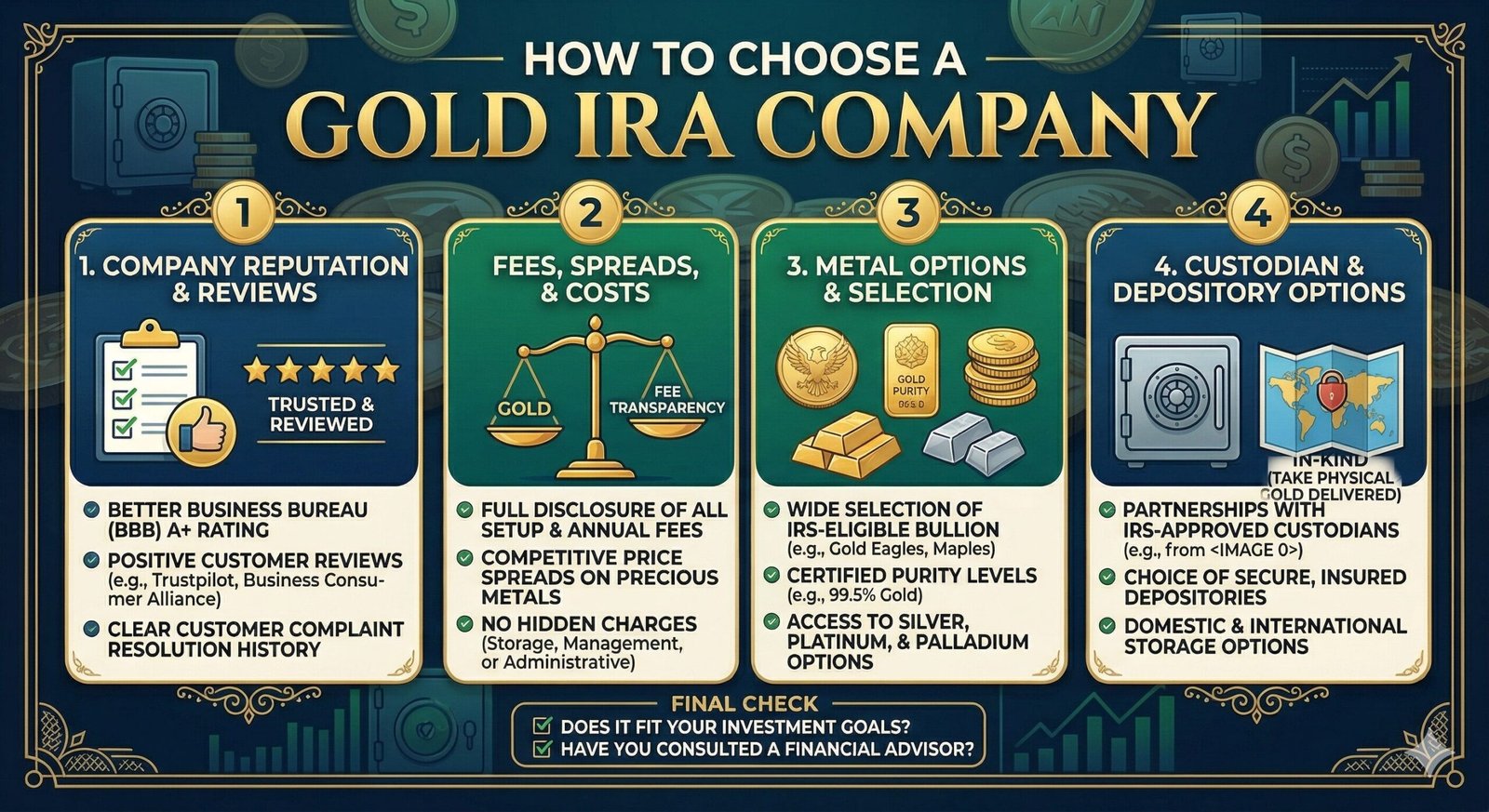
Choosing a Gold IRA Provider as an Oklahoma Resident
Because Gold IRAs are federally regulated and not state-chartered instruments, Oklahoma residents have access to the same national pool of custodians and dealers as investors in any other state. You are not limited to Oklahoma-based companies — and in practice, most of the reputable Gold IRA providers operate nationally from offices in states like Texas, California, and Nevada.
What matters is not where the company is headquartered, but whether it has a strong compliance record, transparent fees, and a track record of treating customers fairly.
What to Look For in a Custodian
The custodian holds your account and is responsible for IRS reporting, transaction processing, and maintaining the administrative structure of the IRA. Key things to evaluate include whether the custodian is licensed and regulated, how long they have been operating self-directed IRAs, and whether they carry adequate insurance on the assets they hold.
FINRA’s guidance on self-directed IRAs is an excellent resource on what to expect from a legitimate custodian and how to identify potential red flags in the industry.
What to Look For in a Gold Dealer
Most Gold IRA companies function as a dealer (selling you the metals) and help coordinate the custodian relationship — but the custodian and dealer are typically separate entities, even if the Gold IRA company packages them together. Evaluate the dealer’s markup over spot price, the breadth of IRS-approved products they offer, and their customer service quality.
For independent reputation research, bbb.org and FINRA BrokerCheck are useful starting points for verifying a company’s standing and complaint history.
Our Gold IRA scams guide outlines the most common predatory tactics in the industry — required reading before you commit to any provider.
Minimum Investment Requirements
Gold IRA providers typically require a minimum initial investment, which can range from a few thousand dollars to $50,000 or more depending on the company. Our Gold IRA minimum investment guide compares minimums across major providers so you can narrow down options that are realistic for your situation.
Is a Gold IRA Right for You?
Whether a Gold IRA makes sense as part of your retirement plan depends on your personal financial situation, your timeline, your existing account structure, and how you think about retirement more broadly. Our article on is a Gold IRA a good idea walks through the key questions to work through before making any decisions.
If you are weighing a Gold IRA against your existing account options, the Gold IRA vs Traditional IRA and Gold IRA vs 401(k) comparison guides may also be useful reference points. The SEC investor resources page is another worthwhile stop for foundational information on retirement account structures.
Frequently Asked Questions: Gold IRA in Oklahoma
Can I store my Gold IRA metals in Oklahoma?
Potentially, yes — if there is an IRS-approved depository operating in or near Oklahoma. However, many Gold IRA investors store their metals at major approved depositories in states like Delaware, Utah, or Texas, where the largest and most established facilities are located. Your custodian will typically offer you a choice of approved storage locations.
Are there any Oklahoma-specific Gold IRA rules I need to know?
No. Gold IRAs are governed by federal IRS rules, not state law. Oklahoma does not impose additional regulations specific to Gold IRAs. However, state income tax treatment of IRA contributions and withdrawals is relevant, so consulting a local tax professional is advisable.
How long does it take to open a Gold IRA in Oklahoma?
The account opening process typically takes a few business days once your paperwork is submitted. If you are rolling over funds from an existing account, that transfer can take anywhere from one to three weeks depending on the outgoing custodian’s processing time.
What happens to my Gold IRA metals when I retire?
When you begin taking distributions, you can either sell the metals and receive cash, or in some cases take an in-kind distribution of the physical metal itself (subject to applicable taxes). How you handle distributions should be discussed with your custodian and a qualified tax professional well in advance.
Is it safe to open a Gold IRA online without visiting a physical office?
Yes — virtually all reputable Gold IRA companies operate entirely online or by phone. Physical offices are not required. What matters is that the company is properly licensed, the custodian is IRS-approved, and the depository carries independent insurance and auditing. Always verify credentials independently before opening an account.
Ready to Compare Your Options?
If you are an Oklahoma resident considering opening a Gold IRA, the most important next step is comparing the leading national providers side by side — looking at fees, minimums, customer service, and custodian relationships. Our independently researched Best Gold IRA Companies of 2026 page is the best place to start that comparison.
This article is for informational purposes only and does not constitute financial or tax advice. Investing in precious metals involves risk including possible loss of principal.
Related guides
- Gold IRA Consumer Affairs Reviews: What to Look For
- Gold IRA Trustpilot Reviews: What Real Customers Say
- Gold IRA BBB Complaints: What Consumer Reports Reveal
- Is a Gold IRA Worth the Fees? A Cost-Benefit Analysis
- Are Gold IRA Fees Too High? Breaking Down the Real Costs
- Gold IRA Mistakes to Avoid: 10 Common Errors Investors Make