Gold IRA in Michigan: What Retirement Investors Should Know
Michigan has long been a state shaped by industry, resilience, and a strong working culture. For many residents approaching retirement — whether they spent decades on the factory floor in Detroit, in the skilled trades across Grand Rapids, or building a small business in Traverse City — the question of how to structure a retirement account is one that deserves careful thought. One option that continues to attract attention is the Gold IRA.
This guide explains what a Gold IRA is, how the setup process works, what the IRS requires, and what Michigan residents specifically should be aware of when evaluating this type of account. Nothing here constitutes financial advice, and the decision to open any retirement account should be made with a qualified financial professional.
What Is a Gold IRA?
A Gold IRA is a type of self-directed Individual Retirement Account that allows you to hold physical precious metals — such as gold, silver, platinum, and palladium — as the assets within the account, rather than the stocks, bonds, or mutual funds found in a conventional IRA.
The key word here is self-directed. Standard IRAs offered through banks and brokerage firms typically limit your investment options to securities. A self-directed IRA (SDIRA) opens the door to alternative assets, including physical metals. For a thorough breakdown of how these accounts function, visit our Gold IRA hub.
It’s worth noting that while the account holds physical gold, you do not take possession of the metal yourself. The IRS requires that all assets held inside a Gold IRA be stored with an approved custodian and in an IRS-compliant depository. FINRA has published guidance on self-directed IRAs that is well worth reading before you proceed.
How Gold IRAs Work: The Basics
Opening a Gold IRA follows a structured process that involves several parties: the account holder, a custodian, a precious metals dealer, and a storage depository.
The Custodian’s Role
All IRAs — including Gold IRAs — must be administered by an IRS-approved custodian. For Gold IRAs, this custodian must be experienced with self-directed accounts and alternative assets. The custodian handles account paperwork, IRS reporting, and coordinates the purchase and storage of metals on your behalf.
Michigan residents are not required to use a custodian based in Michigan. Many reputable custodians operate nationally and can serve clients across all fifty states. What matters is that your custodian is IRS-approved and has a demonstrated track record with precious metals accounts.
Metal Eligibility Requirements
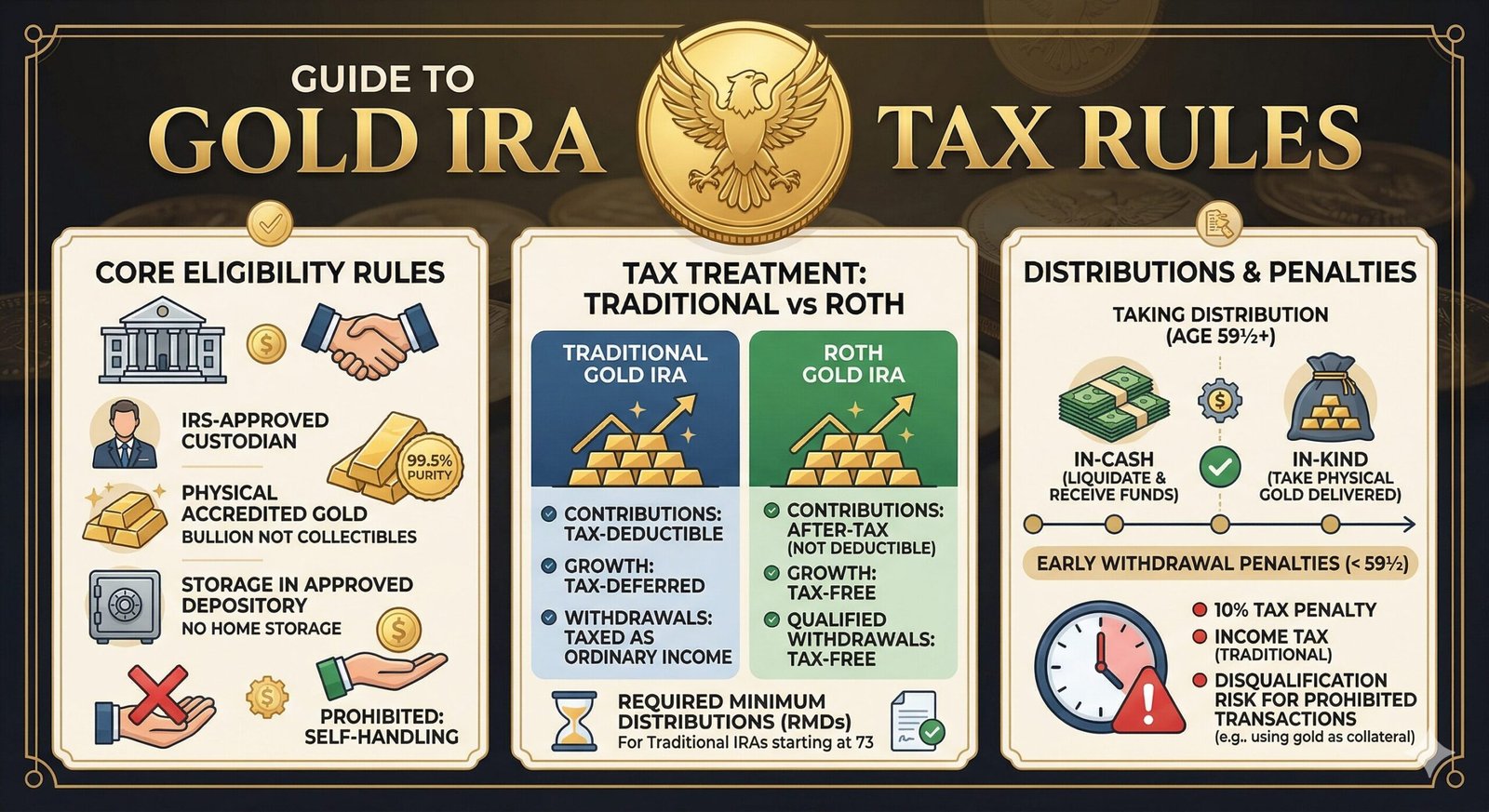
Not all gold qualifies for inclusion in an IRA. The IRS sets specific purity standards under IRS Publication 590-A. Gold must meet a minimum fineness of 0.995 (99.5% pure) to be eligible. Common qualifying options include American Gold Eagle coins, American Gold Buffalo coins, and certain gold bars and rounds produced by approved refiners.
For a detailed list of what qualifies, our guide to IRA-eligible gold coins covers the topic thoroughly.
Storage Requirements
Physical metals inside a Gold IRA must be stored at an approved depository — a secure, insured facility that meets IRS standards. You cannot store your IRA gold at home, in a personal safe, or in a local bank deposit box. Doing so would be treated as a distribution by the IRS, which triggers taxes and potential penalties.
Depositories commonly used by Gold IRA custodians are typically located in states like Delaware, Texas, and Nevada, though some facilities exist elsewhere. Michigan residents would need to arrange storage through their chosen custodian’s network.
Opening a Gold IRA as a Michigan Resident
The process for opening a Gold IRA in Michigan is functionally the same as it is anywhere in the United States. Federal IRS rules govern Gold IRAs — there is no Michigan-specific legislation that alters how these accounts operate.
For a step-by-step walkthrough of the entire process, our Gold IRAs Explained in Detail page is a good starting point.
Step One: Choose a Custodian
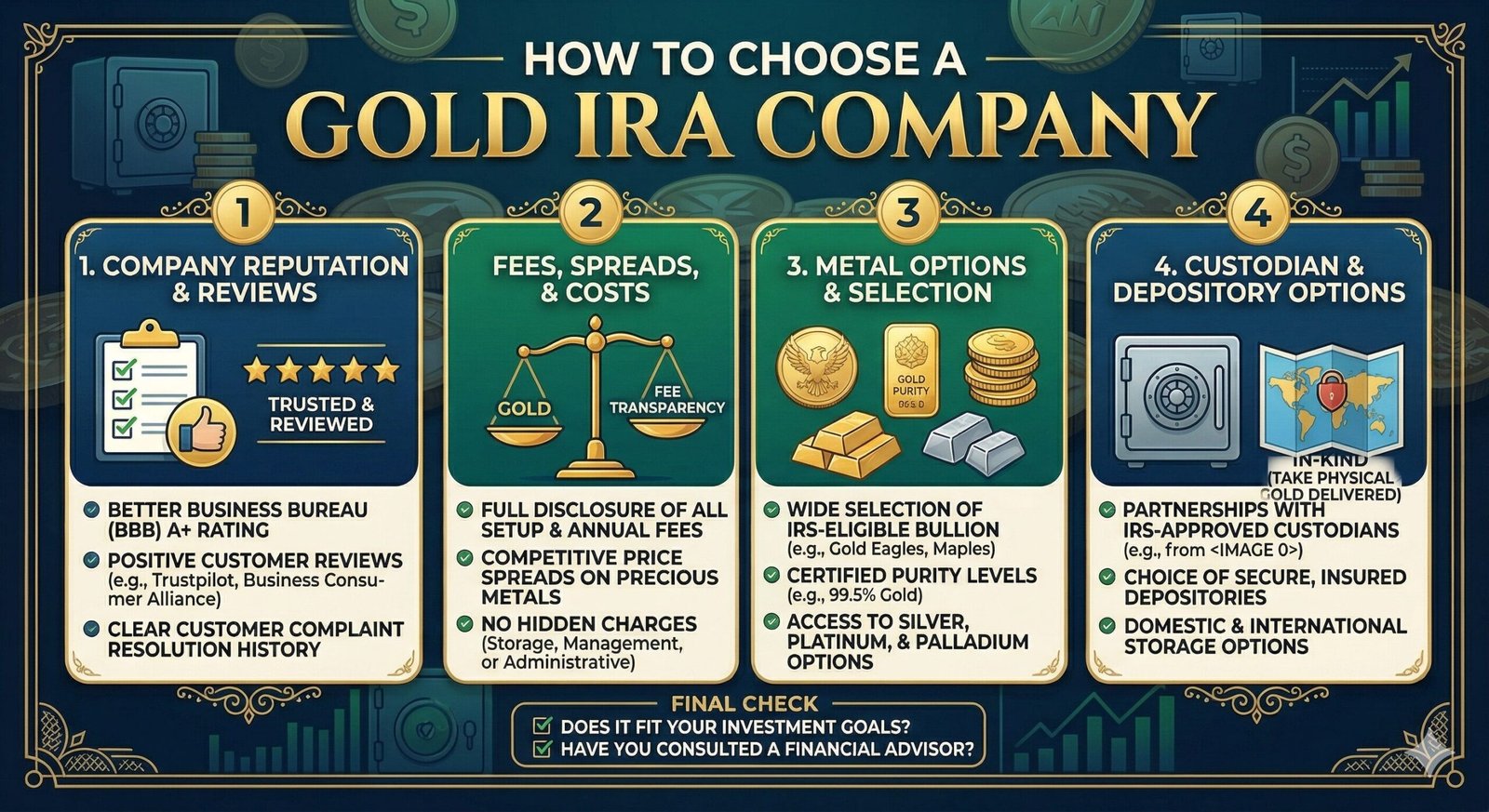
Research custodians with experience in self-directed precious metals IRAs. Look for companies with clear fee structures, verifiable credentials, and strong third-party reviews. You can verify a company’s standing through bbb.org or use FINRA BrokerCheck to check any registered individuals associated with the firm. Our Gold IRA scams guide outlines the warning signs to watch for when evaluating companies.
Step Two: Fund the Account
You can fund a Gold IRA in several ways:
- New cash contribution: Subject to annual IRS contribution limits. For 2024, the limit is $7,000 for those under 50 and $8,000 for those 50 and older. You can find the current figures on the IRS contribution limits page.
- IRA-to-IRA transfer: Moving funds from an existing traditional or Roth IRA into a new self-directed Gold IRA.
- Rollover from a 401(k) or employer plan: Many Michigan residents nearing retirement may have significant 401(k) balances from decades with an employer. Our 401(k) to Gold IRA rollover guide explains how this process works and what timelines to follow.
If you’re considering a rollover, it’s important to understand the rules governing indirect rollovers (where funds are sent to you before being deposited into the new account) versus direct rollovers (where funds move directly between institutions). Our Gold IRA rollover rules page explains the distinction clearly.
Step Three: Select Your Metals and Dealer
Once the account is funded, your custodian will coordinate the purchase of eligible metals through an approved precious metals dealer. The metals are then shipped directly to the chosen depository — again, bypassing your personal custody entirely.
Key Fees to Understand
Gold IRAs typically carry a different cost structure than conventional IRAs. Understanding these costs upfront is essential.
These figures are general estimates. Actual fees will vary depending on the custodian and depository you select. Our Gold IRA fees guide provides a more detailed breakdown of how to evaluate and compare cost structures.
Comparing a Gold IRA to Other Retirement Account Types
Michigan residents evaluating a Gold IRA are often also weighing it against the accounts they already have. While this guide does not make recommendations about which account type is superior for any individual, it’s useful to understand some structural differences.
For a side-by-side look at how a Gold IRA differs from a conventional IRA, visit our Gold IRA vs Traditional IRA comparison. If you’re weighing a Gold IRA against your existing workplace plan, our Gold IRA vs 401(k) page addresses the key structural distinctions.
You may also find it helpful to read our broader discussion on is a Gold IRA a good idea, which walks through the considerations investors commonly weigh when evaluating this type of account.
Required Minimum Distributions and Gold IRAs
If you hold a traditional Gold IRA, you will be subject to Required Minimum Distributions (RMDs) beginning at age 73, in line with current IRS rules. The IRS RMD FAQ provides detailed guidance on how these distributions work.
Taking RMDs from a Gold IRA can be slightly more complex than from a conventional IRA, because the assets are physical metals rather than cash. You have two general options: sell a portion of your metals to generate cash for the distribution, or take the distribution in-kind — meaning you receive physical metal equal to the RMD value. Your custodian can walk you through both approaches and the administrative steps involved.
What Michigan Investors Should Consider
While Gold IRA rules are governed at the federal level, Michigan residents may have particular circumstances worth factoring into their thinking:
Retirement timing: Many Michigan workers have historically benefited from pension plans through unionized industries. If you have a pension alongside your IRA, your overall retirement income picture will look different from someone relying solely on personal savings — a factor your financial advisor should account for.
Cost of living: Michigan’s relatively modest cost of living compared to coastal states means that retirement income needs may differ from national averages, which can influence how individuals structure their overall savings approach.
Local advisors: Michigan has a strong network of independent financial advisors and registered investment advisors (RIAs) who can provide personalized guidance. The SEC investor resources page is a helpful starting point for understanding the types of professionals who can provide licensed advice.
Minimum Investment Requirements
Many Gold IRA custodians set minimum investment thresholds — sometimes as low as $5,000 and in other cases upward of $25,000 or more. Understanding what a custodian requires before you begin is important for planning purposes. Our Gold IRA minimum investment page explains what to expect and how minimums vary across providers.
Frequently Asked Questions
Can I open a Gold IRA if I live in Michigan?
Yes. Gold IRAs are available to U.S. residents in all fifty states, including Michigan. The rules governing these accounts are set at the federal level by the IRS and apply uniformly regardless of which state you live in.
Do I need to use a Michigan-based custodian?
No. You are free to use any IRS-approved custodian, regardless of where that company is located. Many of the custodians who specialize in self-directed precious metals IRAs operate nationally and serve Michigan residents regularly.
Can I store my Gold IRA metals at home in Michigan?
No. The IRS requires that metals held inside a Gold IRA be stored at an approved depository. Storing them personally — at home, in a personal safe, or even in a bank safe deposit box — would be treated as a taxable distribution.
What happens to my Gold IRA when I want to retire and start taking money out?
When you reach retirement age and begin taking distributions from a traditional Gold IRA, you can choose to either sell your metals and take cash distributions, or take in-kind distributions of physical metal. Both options have tax implications, so working with a qualified tax professional is important.
Are Gold IRAs regulated differently from regular IRAs?
No — Gold IRAs are subject to the same IRS regulations as other IRA types, including contribution limits, distribution rules, and RMD requirements. The primary distinction is that they hold physical precious metals as assets rather than securities, which introduces additional operational steps around storage and custodianship.
Ready to Learn More?
If you’re considering a Gold IRA as part of your retirement planning, the next step is doing thorough research on the companies and custodians available to you. Our independently reviewed roundup of the Best Gold IRA Companies of 2026 is a good place to continue your research and compare the leading providers currently serving U.S. investors.
This article is for informational purposes only and does not constitute financial or tax advice. Investing in precious metals involves risk including possible loss of principal.
Related guides
- Gold IRA Consumer Affairs Reviews: What to Look For
- Gold IRA Trustpilot Reviews: What Real Customers Say
- Gold IRA BBB Complaints: What Consumer Reports Reveal
- Is a Gold IRA Worth the Fees? A Cost-Benefit Analysis
- Are Gold IRA Fees Too High? Breaking Down the Real Costs
- Gold IRA Mistakes to Avoid: 10 Common Errors Investors Make