Gold IRA in Maine: Investor Guide for 2026
Maine is not a state typically associated with Wall Street energy or fast-moving financial markets. It is a place where people tend to plan carefully, think long-term, and value stability — qualities that align well with the deliberate, structured nature of a Gold IRA. Whether you are approaching retirement in Portland, Augusta, Bangor, or a quieter corner of Aroostook County, the fundamentals of a Gold IRA are the same regardless of your zip code.
This guide walks Maine-based investors through what a Gold IRA actually is, how the federal rules work, what the setup process looks like, what costs to expect, and what questions to ask before moving forward. There is no financial advice here — just clear, factual information to help you make an informed decision.
What Is a Gold IRA?
A Gold IRA is a self-directed Individual Retirement Account that holds physical precious metals — typically gold, silver, platinum, or palladium — rather than the stocks, bonds, and mutual funds found in conventional retirement accounts.
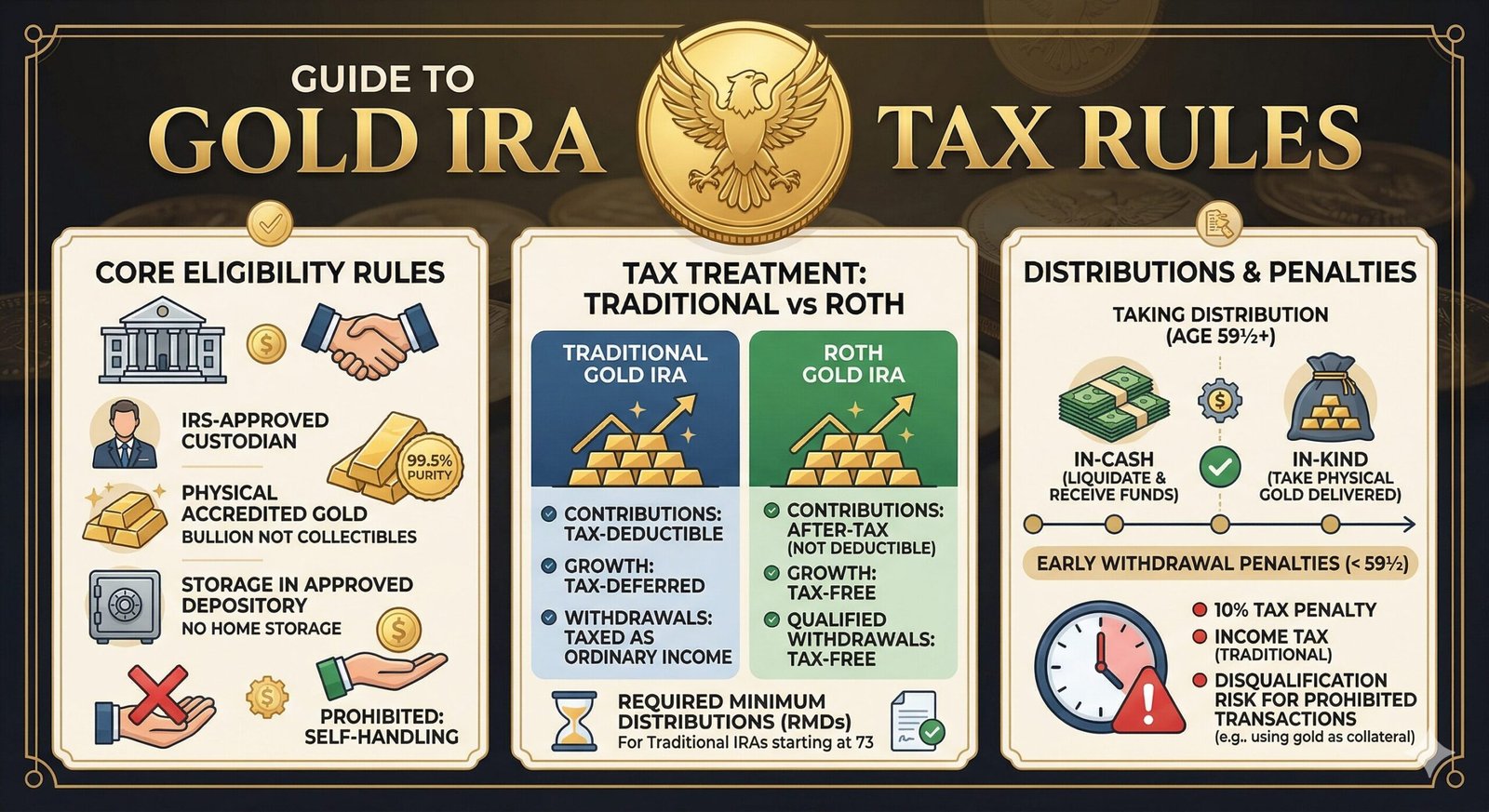
The “self-directed” part is important. Standard IRAs through brokerages like Fidelity or Vanguard do not allow physical metal holdings. A Gold IRA requires a specialized IRS-approved custodian to administer the account and an IRS-approved depository to store the metal. You cannot take possession of the gold yourself while it remains inside the IRA — that is a firm IRS rule, not a technicality.
For a fuller overview, visit our Gold IRA hub, or read Gold IRAs Explained in Detail for a deeper breakdown of how these accounts are structured.
Federal Rules That Apply to Maine Investors
Maine does not impose its own state-level rules on IRAs beyond standard income tax treatment. The rules governing a Gold IRA are federal, set by the IRS, and apply equally to investors in every U.S. state.
Contribution Limits
For 2026, the IRS annual contribution limit for an IRA is $7,000 for individuals under age 50, and $8,000 for those aged 50 and older (the additional $1,000 is called the “catch-up contribution”). These limits apply to Gold IRAs just as they do to traditional or Roth IRAs. You can confirm current figures directly through the IRS contribution limits page.
Eligible Metals
The IRS sets strict purity standards for precious metals held in a Gold IRA. Gold must be at least 99.5% pure, silver 99.9%, and platinum and palladium 99.95%. Coins and bars must also meet specific approval criteria. Not every gold coin qualifies — collectibles and certain foreign bullion are excluded. Our guide to IRA-eligible gold coins covers which products meet IRS standards.
Required Minimum Distributions
Once you reach age 73, the IRS requires you to begin taking Required Minimum Distributions (RMDs) from a traditional Gold IRA. Because your holdings are physical metal rather than cash, this can create a logistical complication — you may need to liquidate some metal to meet your distribution requirement, unless your account has enough cash on hand. The IRS RMD FAQ provides authoritative detail on how these rules work.
Tax Structure
A traditional Gold IRA operates on a pre-tax basis: contributions may be tax-deductible, and you pay income tax on withdrawals. A Roth Gold IRA uses after-tax contributions, with qualified withdrawals in retirement generally being tax-free. The IRS Publication 590-A covers IRA contribution rules in full. For a side-by-side breakdown, see our Gold IRA vs Traditional IRA comparison.
How Maine Investors Typically Fund a Gold IRA
Rolling Over an Existing Retirement Account
Most Gold IRA investors do not fund their accounts through new cash contributions alone. The more common path is a rollover from an existing 401(k), 403(b), or traditional IRA. This can be a significant sum for someone approaching retirement who has spent decades building up workplace savings.
The IRS permits two types of rollovers. A direct rollover moves funds from your existing custodian straight to the new Gold IRA custodian — no money passes through your hands, and there is no tax withholding. An indirect rollover sends the funds to you first, and you have 60 days to deposit them into the new account; failure to do so within that window may trigger taxes and penalties.
For Maine investors moving funds from a former employer’s plan, our 401(k) to Gold IRA rollover guide explains the full process step by step. It is also worth reviewing the Gold IRA rollover rules to understand the IRS restrictions that apply.
New Contributions
If you are simply opening a new Gold IRA and funding it gradually, you are subject to the annual contribution limits described above. Some investors do both — they roll over an existing account to fund the bulk of the account, then make annual contributions going forward.
The Setup Process: Step by Step
Setting up a Gold IRA involves more moving parts than opening a standard brokerage account. Here is a general outline of how it works.
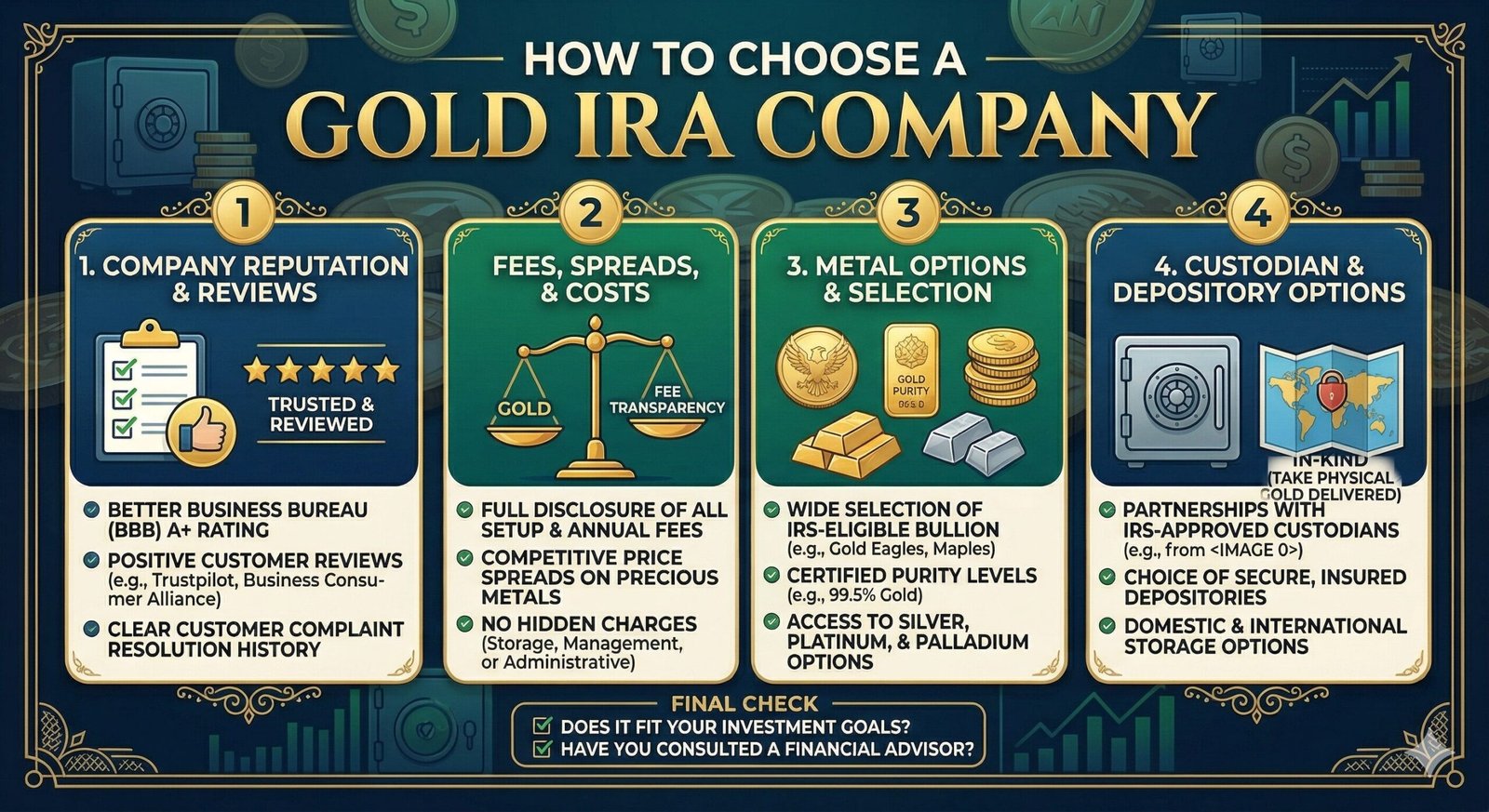
Step one — choose a custodian. You need an IRS-approved self-directed IRA custodian that specializes in precious metals. This is not your local bank. These are specialized financial firms that handle the administrative and compliance requirements of self-directed accounts. FINRA’s guidance on self-directed IRAs at FINRA’s guidance on self-directed IRAs is a useful starting point for understanding what questions to ask.
Step two — choose a dealer. A precious metals dealer is separate from the custodian. The dealer is who you buy the metal from. Research the dealer’s reputation carefully — check their standing at bbb.org and their licensing through FINRA BrokerCheck. Our Gold IRA scams guide outlines what red flags to watch for.
Step three — select a depository. The IRS requires that IRA-held metal be stored at an approved third-party depository. You cannot store it at home or in a local safe deposit box. Depositories are typically located in states like Delaware, Texas, or Utah — the location of the depository does not affect your account’s legal standing as a Maine resident.
Step four — fund the account. Via rollover, transfer, or direct contribution, as described above.
Step five — purchase metals. Once funded, you direct the custodian to purchase specific approved metals through your chosen dealer. The metal is then shipped to and stored at the depository.
What Does a Gold IRA Cost in Maine?
Cost structure is one of the most important factors to understand before committing to a Gold IRA. These accounts carry higher fees than standard IRAs, and the fee structures vary considerably between providers.
Maine investors should request a full fee schedule in writing before signing anything. Hidden or unclear fee structures are one of the more common issues in this industry. Our Gold IRA fees guide breaks down each fee category in detail.
Minimum Investment Considerations
Gold IRAs are not typically suitable for very small account balances. The combination of fixed custodial fees, storage costs, and purchase minimums set by dealers means that low balances can be disproportionately eroded by fees. Most reputable providers have a minimum investment requirement ranging from $5,000 to $25,000 or more. Our Gold IRA minimum investment article covers what to expect across different providers.
Is a Gold IRA Right for You?
That is ultimately a personal decision — one that depends on your overall financial picture, your timeline to retirement, your income needs in retirement, and your comfort with an asset class that carries its own set of risks and operational complexities.
A Gold IRA is not a simple or low-cost retirement vehicle. It requires more active administration than a standard IRA, involves third-party custodians and depositories, and the value of the metal inside it will rise and fall — past performance is not a guarantee of future results. For a more thorough look at the considerations involved, see our article on is a Gold IRA a good idea.
If you currently hold a 401(k) or similar plan and want to understand how a Gold IRA compares structurally, the Gold IRA vs 401(k) page covers the key differences.
SEC investor resources at SEC investor resources also provide useful, independent context on self-directed IRAs and the risks involved.
Frequently Asked Questions
Q: Can I open a Gold IRA if I live in Maine?
A: Yes. Gold IRAs are governed by federal law and are available to eligible U.S. residents in all 50 states, including Maine. Your state of residence does not restrict your ability to open or fund one.
Q: Do I need to find a Maine-based custodian?
A: No. Gold IRA custodians operate nationally. You are not required to use a Maine-based firm, and in practice, most specialized self-directed IRA custodians are based outside of Maine. What matters is that the custodian is IRS-approved and has a strong compliance record.
Q: Is the gold stored in Maine?
A: It is unlikely. IRS-approved precious metals depositories are located in specific states with specialized facilities. Your metal will almost certainly be stored out of state, which is standard practice and does not affect the account’s tax status.
Q: Can I take physical delivery of my gold when I retire?
A: Once you reach the age at which you can take distributions (currently 59½ without penalty), you may take an “in-kind” distribution of the actual physical metal, which would then be taxable as ordinary income. Alternatively, you can liquidate the metal and receive cash. Discuss both options with a tax professional before making that decision.
Q: How does Maine’s state income tax affect Gold IRA withdrawals?
A: Maine taxes retirement income, including traditional IRA withdrawals, as ordinary income under state law. However, Maine does provide some retirement income exclusions for residents over certain age thresholds. This guide does not constitute tax advice — speak with a Maine-licensed tax professional for guidance specific to your situation.
Ready to Research Your Options?
If you are a Maine investor considering a Gold IRA, the most productive next step is comparing the reputable companies that specialize in this space — looking carefully at fee structures, minimum investment requirements, custodian relationships, storage options, and customer service track records.
We have done much of that groundwork for you. Visit our Best Gold IRA Companies of 2026 page for a detailed, side-by-side look at the leading providers in this space.
This article is for informational purposes only and does not constitute financial or tax advice. Investing in precious metals involves risk including possible loss of principal.
Related guides
- Gold IRA Consumer Affairs Reviews: What to Look For
- Gold IRA Trustpilot Reviews: What Real Customers Say
- Gold IRA BBB Complaints: What Consumer Reports Reveal
- Is a Gold IRA Worth the Fees? A Cost-Benefit Analysis
- Are Gold IRA Fees Too High? Breaking Down the Real Costs
- Gold IRA Mistakes to Avoid: 10 Common Errors Investors Make