Gold IRA in Kentucky: Complete Guide for 2026
For Kentucky residents approaching or already in retirement, questions about how to structure long-term savings are becoming more pressing than ever. Gold IRAs have attracted growing attention from investors in the Bluegrass State — and for understandable reasons. They offer a way to hold physical precious metals inside a tax-advantaged retirement account, which is a structure that many people simply aren’t aware exists.
This guide is written specifically for Kentucky residents who want a clear, honest explanation of how Gold IRAs work, what the rules are, what costs to expect, and how to get started without making costly mistakes. Whether you’re in Louisville, Lexington, Bowling Green, or a smaller community, the federal rules governing Gold IRAs apply equally to you — and understanding them is the first step toward making a well-informed decision.
What Is a Gold IRA?
A Gold IRA is a self-directed Individual Retirement Account that is structured to hold physical precious metals — including gold, silver, platinum, and palladium — rather than the paper-based assets typically found in a conventional IRA.
The term “self-directed” is important here. A standard IRA through a brokerage or bank limits you to investments like stocks, bonds, mutual funds, and ETFs. A self-directed IRA (SDIRA) opens the door to alternative assets, including physical gold. For a full explanation of the structure, see our Gold IRA hub.
It’s worth being clear about what a Gold IRA is not. It is not a gold ETF or a gold mining stock account. When we say Gold IRA, we mean an account that holds actual, physical gold bullion or coins — stored in an IRS-approved depository on your behalf.
The IRS governs these accounts strictly. For a thorough breakdown of the regulatory framework, the IRS IRA investment FAQ is a reliable starting point. FINRA also publishes helpful guidance on self-directed IRAs that Kentucky investors would do well to review before opening an account.
Are There Any Kentucky-Specific Gold IRA Rules?
This is one of the most common questions from Kentucky residents, and the short answer is: no, there are no Kentucky-specific rules that modify how a Gold IRA operates.
Gold IRAs are governed entirely by federal law — specifically, the Internal Revenue Code and IRS regulations. Kentucky’s state tax laws do not change the structure of the account, who can open one, what assets can be held, or how distributions are taxed at the federal level.
That said, Kentucky residents should be aware of how state income tax interacts with retirement distributions generally. Kentucky has a flat individual income tax rate, and retirement income — including IRA distributions — may be subject to that rate. This article does not provide tax advice, and you should speak with a licensed Kentucky tax professional about how your specific situation may be affected. Nothing in this guide should be construed as tax guidance.
What matters for Gold IRA purposes is federal IRS compliance, and that applies uniformly to every American, including Kentuckians.
How Does a Gold IRA Work?
Understanding the mechanics of a Gold IRA is essential before you commit to opening one. For a detailed walkthrough, our Gold IRAs Explained in Detail page goes deeper — but here is the core structure.
The Three-Party Structure
Every Gold IRA involves three key parties working together:
The Custodian is an IRS-approved financial institution responsible for holding and administering your account. They handle the paperwork, tax reporting, and compliance. They do not provide investment advice.
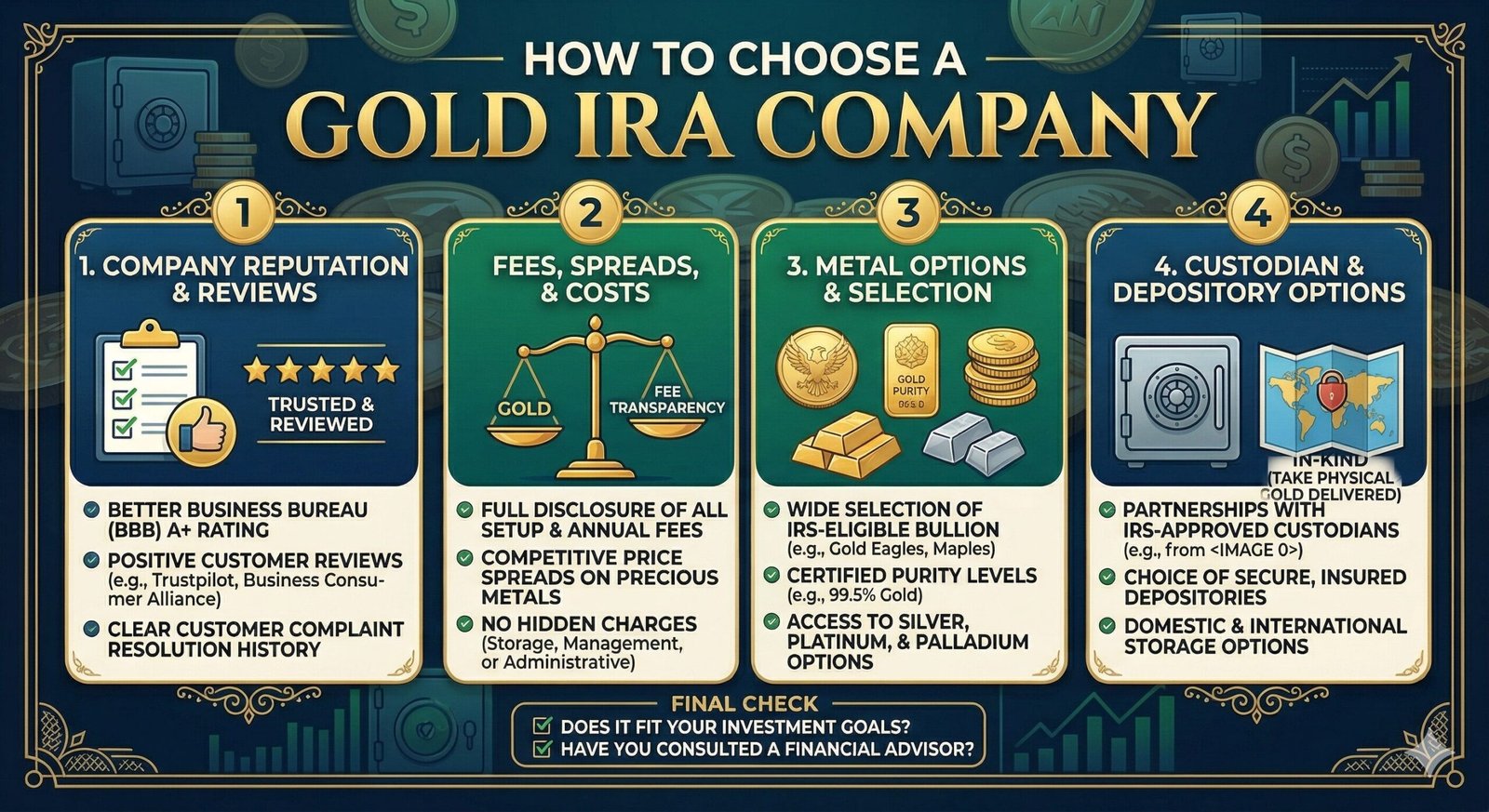
The Dealer is the precious metals company from which the actual gold is purchased. The quality and reputation of your dealer matters significantly — pricing transparency, product authenticity, and customer service all vary considerably across the industry.
The Depository is an IRS-approved, insured storage facility where your physical gold is held. You cannot store IRA gold at home or in a personal safe — this is a firm IRS prohibition. Popular depositories include facilities in states like Delaware, Texas, and Nevada, and Kentucky residents’ metals would be stored at one of these approved locations.
Eligible Metals
Not all gold qualifies for IRA inclusion. The IRS sets minimum purity standards: gold must be at least 99.5% pure. Coins like the American Gold Eagle, American Gold Buffalo, Canadian Gold Maple Leaf, and Australian Gold Kangaroo meet IRS standards. For a complete list of qualifying products, see our guide to IRA-eligible gold coins.
Opening a Gold IRA in Kentucky: Step-by-Step
The process of opening a Gold IRA as a Kentucky resident follows the same federal pathway as it does anywhere in the country.
Step 1: Choose a custodian. Research IRS-approved self-directed IRA custodians. Look for verified credentials, clear fee disclosures, and positive complaint records with the Better Business Bureau at bbb.org and FINRA via FINRA BrokerCheck.
Step 2: Open your self-directed IRA. Complete the required account paperwork. This process is largely handled remotely and does not require you to visit any physical location in Kentucky or elsewhere.
Step 3: Fund your account. You can fund a new Gold IRA through a direct contribution (subject to annual IRS limits), a rollover from an existing IRA, or a rollover from a 401(k) or other employer-sponsored plan. See our 401(k) to Gold IRA rollover guide for specifics on the rollover process, and review the Gold IRA rollover rules before initiating any transfer.
Step 4: Purchase your metals. Once funded, direct your custodian to purchase IRS-eligible gold from an approved dealer. The metals are then shipped directly to your chosen IRS-approved depository — never to your home address.
Step 5: Ongoing management. Your custodian handles annual account statements and IRS reporting. You can typically monitor your holdings online and make additional purchases over time.
Gold IRA Fees: What Kentucky Investors Should Expect
Fees are an important and often underestimated component of owning a Gold IRA. Unlike a standard brokerage IRA where asset management fees may be minimal, Gold IRAs carry a distinct fee structure that reflects the cost of physical custody and storage. Our Gold IRA fees guide explains each fee category in detail.
The total annual cost of maintaining a Gold IRA can run anywhere from $175 to $600 or more per year, depending on the custodian, depository, and account size. This is why understanding fee structures before committing is essential. Some companies offer scaled fees that decrease as account balances grow; others charge flat fees regardless of account size.
Also be aware of minimum investment requirements, which can range substantially across providers. Our Gold IRA minimum investment guide covers what to expect across the industry.
Rollovers and Contribution Limits
Many Kentucky investors fund their Gold IRAs by rolling over an existing retirement account rather than making new contributions. A rollover from a 401(k) — particularly from a previous employer — or an existing traditional IRA can transfer funds without triggering taxes, provided the rollover is executed correctly and within IRS guidelines.
For those making fresh contributions, the IRS sets annual contribution limits that apply to all IRA types. For 2025, the standard limit is $7,000 per year, with a $1,000 catch-up contribution available to those aged 50 and older. These limits are updated periodically; the IRS contribution limits page provides the most current figures. For broader context on how a Gold IRA compares with conventional retirement accounts, see our Gold IRA vs Traditional IRA comparison.
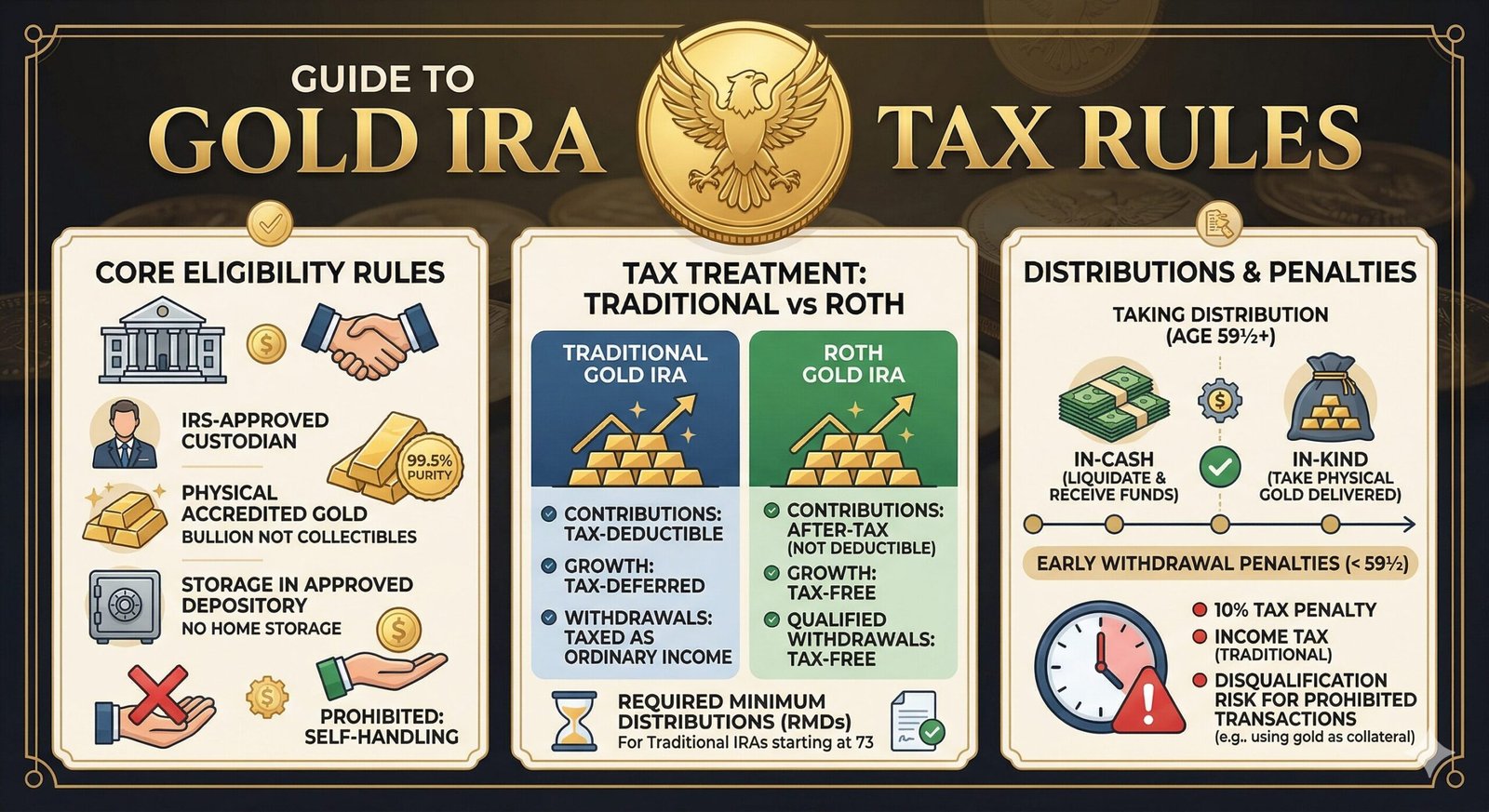
Gold IRAs can be structured as either Traditional or Roth accounts, with the same pre-tax/post-tax distinctions that apply to conventional IRAs. IRS Publication 590-A provides the full regulatory framework for IRA contributions.
Required Minimum Distributions
If your Gold IRA is structured as a Traditional IRA, you will be subject to Required Minimum Distributions (RMDs) beginning at age 73 under current rules. Because your assets are physical gold rather than cash, satisfying an RMD may require liquidating a portion of your metals or taking an “in-kind” distribution — meaning you receive actual gold rather than cash.
In-kind distributions require proper valuation and have specific procedural requirements. The IRS RMD FAQ is the definitive source for RMD rules, and your custodian should be equipped to guide you through the process.
Avoiding Scams: A Priority for Kentucky Investors
The self-directed IRA space, including Gold IRAs, has unfortunately attracted fraudulent operators over the years. Kentucky investors should be aware of common red flags, including unsolicited outreach, pressure tactics, unrealistic return promises, and companies that cannot provide verifiable credentials.
Always verify a company’s standing through bbb.org and check any associated financial professionals through FINRA BrokerCheck. Our dedicated Gold IRA scams guide outlines the warning signs in detail and is recommended reading before you engage with any company. The SEC investor resources page also offers practical guidance on protecting yourself.
Frequently Asked Questions
Q: Do I need to live in Kentucky to open a Gold IRA?
No. Gold IRAs are federally governed and available to all U.S. residents regardless of state. Kentucky residency has no bearing on your eligibility to open or maintain a Gold IRA.
Q: Can I store my IRA gold at home in Kentucky?
No. IRS regulations strictly prohibit storing IRA-owned precious metals at your personal residence or in a home safe. All IRA gold must be held at an IRS-approved, insured depository. Violation of this rule can result in the account being disqualified, triggering taxes and penalties.
Q: How do I know if a Gold IRA is a good fit for my retirement plan?
That’s a question best explored with a licensed financial advisor who understands your full financial picture. You can also review our is a Gold IRA a good idea article for a balanced look at the key considerations. We do not provide investment advice on this site.
Q: Can I roll over my Kentucky state pension or public employee retirement funds into a Gold IRA?
This depends on whether your pension allows in-service withdrawals or lump-sum distributions. Most defined benefit pension plans do not permit rollovers until retirement or separation from service. Consult your plan administrator and a qualified advisor before attempting any rollover. Our Gold IRA vs 401(k) guide covers employer plan rollover considerations more broadly.
Q: What happens to my Gold IRA if I move out of Kentucky?
Nothing changes. Your Gold IRA remains the same federally governed account regardless of which state you reside in. Your custodian and depository arrangements stay in place, and the IRS rules governing your account do not change based on state of residence.
Take the Next Step
If you’re a Kentucky investor ready to explore specific companies and compare your options, our independently researched rankings are a strong starting point. We evaluate custodians across fees, transparency, customer service, and regulatory standing to help you make a well-informed choice.
Explore our list of Best Gold IRA Companies of 2026 to compare the top-rated providers and find the right fit for your retirement goals.
This article is for informational purposes only and does not constitute financial or tax advice. Investing in precious metals involves risk including possible loss of principal.
Related guides
- Gold IRA Consumer Affairs Reviews: What to Look For
- Gold IRA Trustpilot Reviews: What Real Customers Say
- Gold IRA BBB Complaints: What Consumer Reports Reveal
- Is a Gold IRA Worth the Fees? A Cost-Benefit Analysis
- Are Gold IRA Fees Too High? Breaking Down the Real Costs
- Gold IRA Mistakes to Avoid: 10 Common Errors Investors Make