Gold IRA in Kansas: What Investors Need to Know
If you live in Kansas and you’re thinking seriously about your retirement strategy, you may have come across the concept of a Gold IRA. Whether you’ve been reading about it online, heard it mentioned at a financial seminar, or simply found yourself curious about what role physical gold might play in your retirement years, this guide is designed to give you a clear, honest picture of how these accounts work — and what Kansas investors specifically need to know before taking any steps.
This is not investment advice, and nothing here should be read as a recommendation to buy, sell, or hold any asset. What follows is a factual overview to help you understand the landscape so you can have a more informed conversation with your financial or tax professional.
What Is a Gold IRA?
A Gold IRA is a type of self-directed Individual Retirement Account that allows the account holder to hold physical precious metals — including gold, silver, platinum, and palladium — rather than being limited to the stocks, bonds, and mutual funds that populate conventional retirement accounts.
The IRS permits this under specific conditions. The metals must meet strict purity standards, they must be held by an approved custodian, and they must be stored in an IRS-approved depository. To understand the full picture of how these accounts are structured, see our Gold IRAs Explained in Detail resource, or visit our broader Gold IRA hub for an overview of everything involved.
It’s worth noting that a Gold IRA is not a separate category of IRA in the tax code — it is a self-directed IRA that happens to hold precious metals. The same contribution limits, distribution rules, and tax treatment that apply to traditional or Roth IRAs generally apply here as well. The IRS outlines the foundational rules in IRS Publication 590-A, which is a useful starting point for understanding how contributions and rollovers work at a federal level.
Does Kansas Have Specific Rules for Gold IRAs?
This is one of the first questions Kansas residents tend to ask, and the short answer is: no, Kansas does not impose state-specific regulations on Gold IRAs beyond what federal law already requires.
Gold IRAs are governed primarily at the federal level by the IRS and, where applicable, by financial regulators such as FINRA and the SEC. Kansas investors are subject to the same rules as investors in any other state. The custodian you work with will be a federally regulated entity — typically a bank, trust company, or non-bank custodian approved by the IRS — and the storage facility will be an IRS-approved depository, which may be located outside Kansas entirely. That’s completely standard.
Kansas does conform to federal tax treatment for traditional IRAs in most respects, which means your pre-tax contributions to a traditional Gold IRA may reduce your Kansas taxable income in the year they’re made, subject to the same limits and eligibility rules that apply federally. However, this is an area where you should consult a qualified tax professional familiar with Kansas state tax law, as individual circumstances vary and this article does not constitute tax advice.
How Does a Gold IRA Actually Work?
Understanding the mechanics is important before you do anything else.
The Custodian Requirement
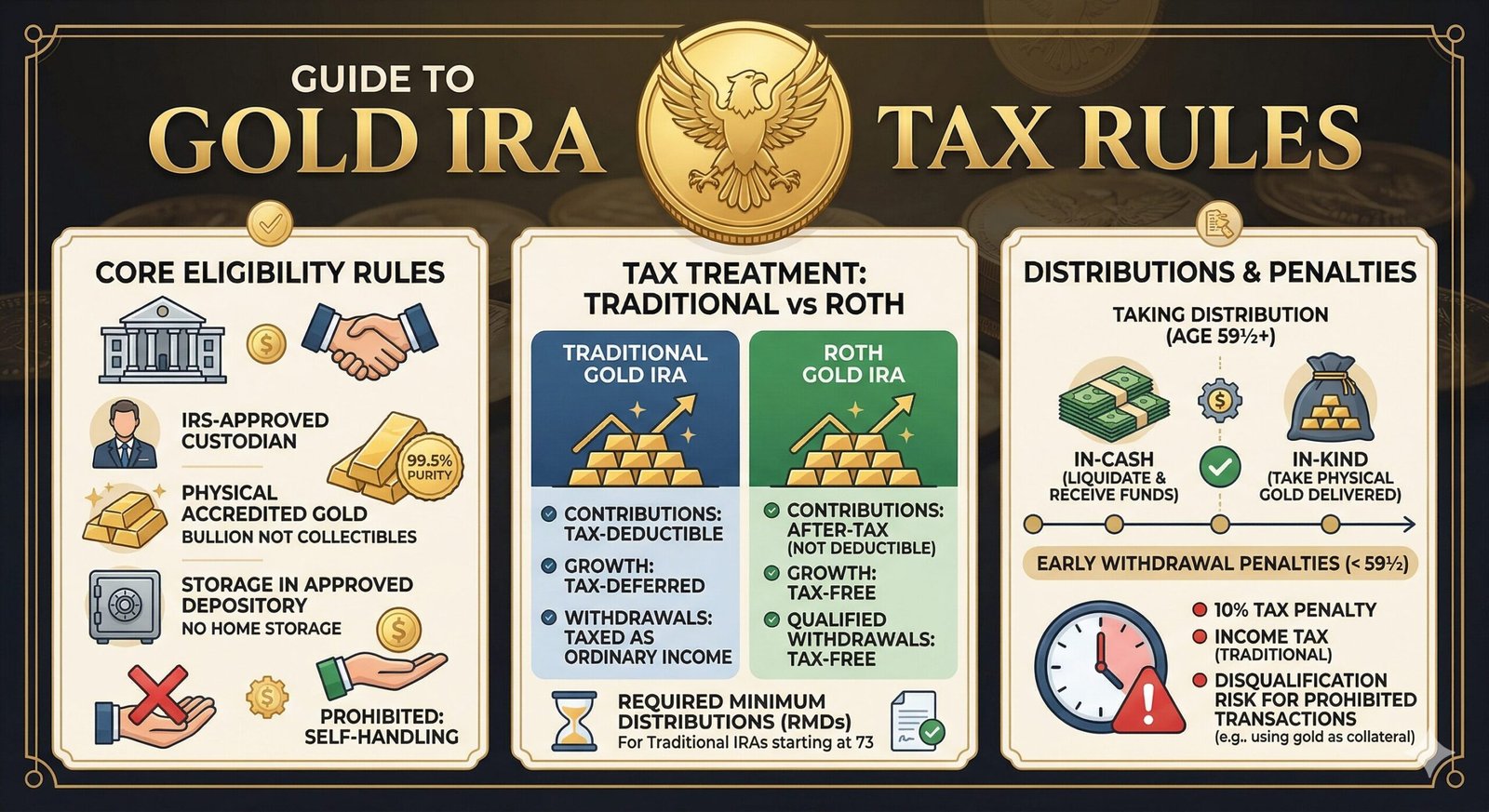
The IRS requires that all IRA assets — including precious metals — be held by a qualified custodian. You cannot simply purchase gold coins and store them in your home safe and call it an IRA. Doing so would be treated as a distribution and could trigger taxes and penalties. A custodian handles the administrative side of your account, maintains the required records, and facilitates purchases, sales, and distributions.
FINRA’s guidance on self-directed IRAs at FINRA’s guidance on self-directed IRAs is worth reading before you engage with any company in this space, as it covers important considerations about due diligence.
Eligible Metals
Not all gold qualifies. The IRS requires gold held in an IRA to be at least 99.5% pure. This generally includes American Gold Eagle coins (which are a notable exception to the purity rule), American Gold Buffalo coins, and certain gold bars from approved refiners. For a full breakdown of what qualifies, our guide to IRA-eligible gold coins explains the specifics in plain language.
Storage Rules
Physical gold in an IRA must be stored at an IRS-approved depository — not at your home or a local bank branch. Approved depositories include facilities like the Delaware Depository, Brinks, and others. Your custodian will typically have relationships with one or more of these facilities and will arrange storage on your behalf.
Fees
Gold IRAs tend to carry more fees than conventional IRAs. These typically include account setup fees, annual custodian fees, and storage fees charged by the depository. It’s essential to understand what you’ll be paying before you commit. Our Gold IRA fees guide provides a thorough breakdown of the cost structures involved, which vary meaningfully from one provider to another.
Rolling Over an Existing Retirement Account
Many Kansas investors who explore Gold IRAs already have existing retirement savings — a 401(k) from a current or former employer, a traditional IRA, or both. In many cases, these funds can be rolled over or transferred into a self-directed Gold IRA without triggering immediate taxes, provided the process is followed correctly.
There are two primary methods: a direct rollover (also called a trustee-to-trustee transfer) and an indirect rollover. With a direct rollover, funds move directly between institutions and you never take possession of the money. With an indirect rollover, the funds are distributed to you first, and you have 60 days to deposit them into the new account. Missing that 60-day window can result in the distribution being treated as taxable income, and potentially subject to a 10% early withdrawal penalty if you’re under 59½.
If you have a 401(k) you’re looking to move, our 401(k) to Gold IRA rollover guide walks through the process step by step. You’ll also want to be familiar with the Gold IRA rollover rules before you initiate anything, as there are limits on how often you can conduct rollovers and other important constraints.
The IRS’s own IRS IRA investment FAQ is a reliable reference for understanding what the rules say at the source.
Comparing Key Gold IRA Account Types
Understanding which type of Gold IRA is appropriate for your situation is a meaningful decision. Here’s a quick comparison of the two most common structures:
For a deeper comparison of how a Gold IRA stacks up against a standard IRA structure, see our Gold IRA vs Traditional IRA article.
If you’re still weighing whether a Gold IRA even makes sense for your situation, our article on is a Gold IRA a good idea may help you think through the relevant factors.
What to Watch Out For
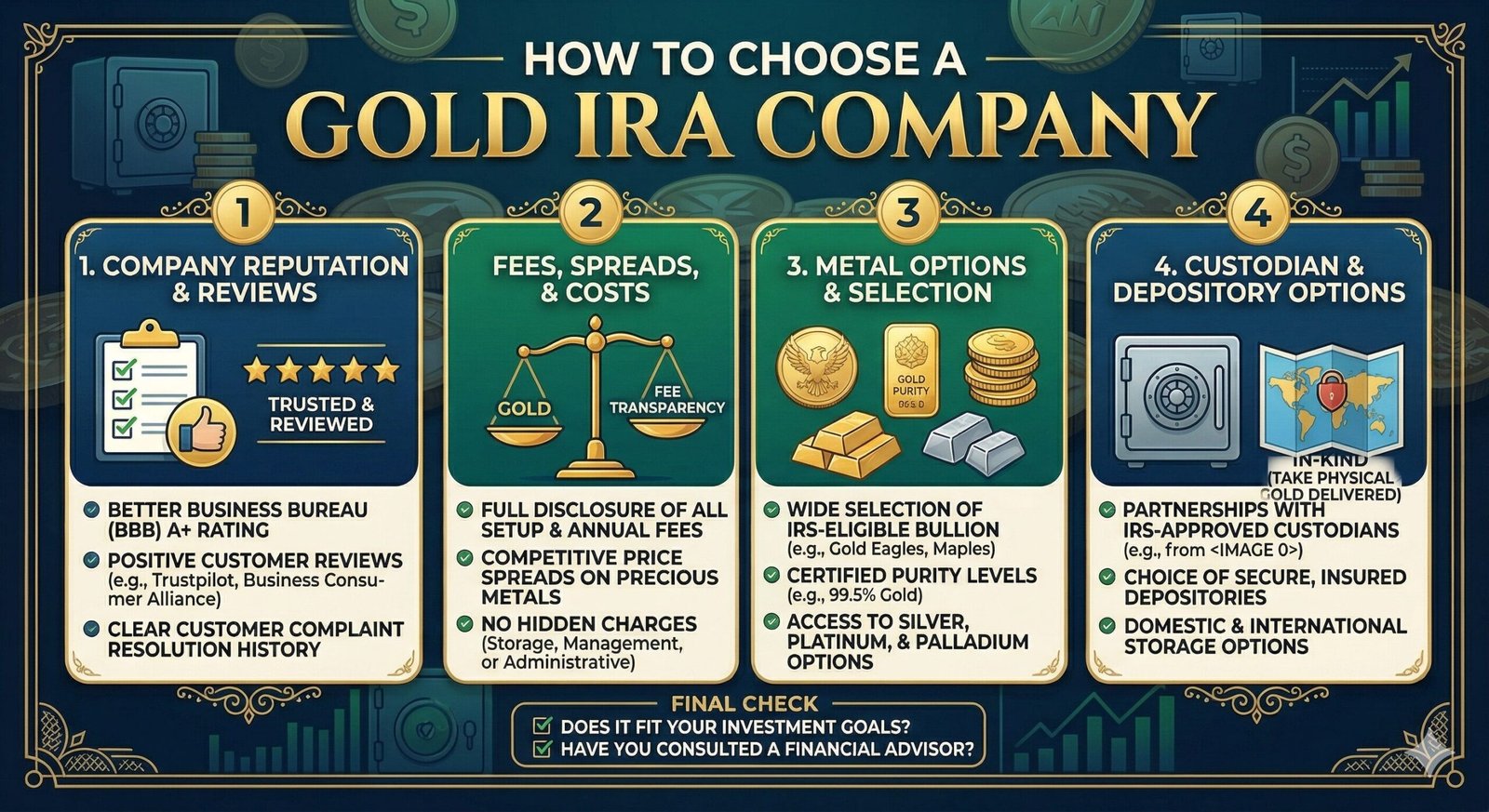
The Gold IRA space is not without its pitfalls. Certain companies use high-pressure sales tactics, obscure fee disclosures, or misleading claims about the nature of gold as an investment. Kansas consumers should approach any company in this space with healthy skepticism and take the time to verify credentials.
Check any company you’re considering with the Better Business Bureau at bbb.org and look up any associated brokers using FINRA BrokerCheck. If the company employs registered investment advisors or broker-dealers, their records and any complaints will be accessible through these tools.
You should also be aware of the Gold IRA minimum investment requirements that some companies impose — these can range from a few thousand dollars to $50,000 or more, depending on the provider.
For a full overview of the red flags and warning signs to watch for, our Gold IRA scams guide is required reading before you engage with any company. The SEC investor resources page is also a useful reference point for understanding your rights as a retail investor.
Frequently Asked Questions
Can I open a Gold IRA if I live in Kansas?
Yes. There are no Kansas-specific restrictions that prevent residents from opening a self-directed Gold IRA. The same federal rules that apply nationwide govern these accounts.
Does Kansas tax Gold IRA distributions?
Kansas generally conforms to federal tax treatment for IRA distributions, meaning distributions from a traditional Gold IRA are typically subject to Kansas state income tax as ordinary income. A qualified tax professional familiar with Kansas tax law can give you guidance specific to your situation.
Can I store my Gold IRA metals in Kansas?
No. IRS rules require that physical metals held in an IRA be stored at an IRS-approved depository, which may or may not be located in Kansas. Storing IRA-held gold at home or in a local safe deposit box is not permitted and would be treated as a taxable distribution.
What are the contribution limits for a Gold IRA?
Gold IRAs follow the same IRS contribution limits as other IRAs. For 2025, the limit is $7,000 per year ($8,000 if you’re age 50 or older). These limits apply across all your IRA accounts combined. See the IRS contribution limits page for the most current figures.
What happens to a Gold IRA when I reach the required minimum distribution age?
If you hold a traditional Gold IRA, you’ll be required to take minimum distributions starting at age 73. Because physical gold cannot be split easily, you have the option of either liquidating a portion of your metals to satisfy the RMD or taking an in-kind distribution of physical metal. The IRS RMD FAQ provides detailed guidance on how these rules work.
Ready to Learn More?
If you’re a Kansas investor who has read this far, you now have a solid foundation for understanding how Gold IRAs work at a federal level, what fees and rules to expect, and how to approach the research process carefully. The next logical step is to compare the companies that offer these accounts, understand their fee structures, and evaluate their reputations before making any decisions.
Our independently researched guide to the Best Gold IRA Companies of 2026 is the best place to continue your research.
This article is for informational purposes only and does not constitute financial or tax advice. Investing in precious metals involves risk including possible loss of principal.
Related guides
- Gold IRA Consumer Affairs Reviews: What to Look For
- Gold IRA Trustpilot Reviews: What Real Customers Say
- Gold IRA BBB Complaints: What Consumer Reports Reveal
- Is a Gold IRA Worth the Fees? A Cost-Benefit Analysis
- Are Gold IRA Fees Too High? Breaking Down the Real Costs
- Gold IRA Mistakes to Avoid: 10 Common Errors Investors Make