Gold IRA in Florida: Guide for Sunshine State Retirees
Florida retirees considering precious metals for their retirement accounts face unique opportunities and considerations when establishing a Gold IRA. The Sunshine State’s favorable tax environment and large retirement population make it an attractive location for exploring precious metals investments within retirement accounts.
Understanding the specific regulations, requirements, and benefits of opening a Gold IRA in Florida can help retirees make informed decisions about their retirement planning strategies. This comprehensive guide covers everything Florida residents need to know about Gold IRAs, from state-specific considerations to federal requirements.
Understanding Gold IRAs in Florida
A Gold IRA allows Florida residents to hold physical precious metals in their Individual Retirement Accounts, subject to strict IRS regulations. These self-directed retirement accounts must comply with federal rules while operating within Florida’s regulatory environment.
Florida follows federal IRA guidelines without imposing additional state-level restrictions on precious metals IRAs. This creates a straightforward regulatory environment for residents interested in adding physical gold, silver, platinum, or palladium to their retirement portfolios through what a Gold IRA is.
The state’s absence of personal income tax provides an additional advantage for retirees, as traditional IRA distributions won’t face state-level taxation. However, federal tax obligations remain unchanged regardless of Florida residency status.
Florida State Tax Benefits for Gold IRA Holders
Florida’s tax structure offers significant advantages for Gold IRA holders compared to many other states. The absence of state income tax means that traditional Gold IRA distributions won’t face state-level taxation, potentially reducing overall tax liability for retirees.
Roth Gold IRA distributions, already tax-free at the federal level for qualified withdrawals, maintain their tax-free status without additional state complications. This straightforward tax treatment simplifies retirement planning calculations for Florida residents.
Property taxes in Florida can vary significantly by county, but precious metals held in IRAs typically don’t trigger local property tax obligations since they’re held by qualified custodians rather than directly owned by individuals.
Estate planning considerations in Florida may benefit from Gold IRAs, particularly given the state’s favorable inheritance laws. However, specific estate planning strategies should always be discussed with qualified professionals familiar with both federal IRA rules and Florida state law.
Federal Requirements for Gold IRAs
Regardless of state residence, all Gold IRAs must comply with federal regulations established by the IRS. These requirements govern everything from eligible precious metals to custodian qualifications and storage requirements.
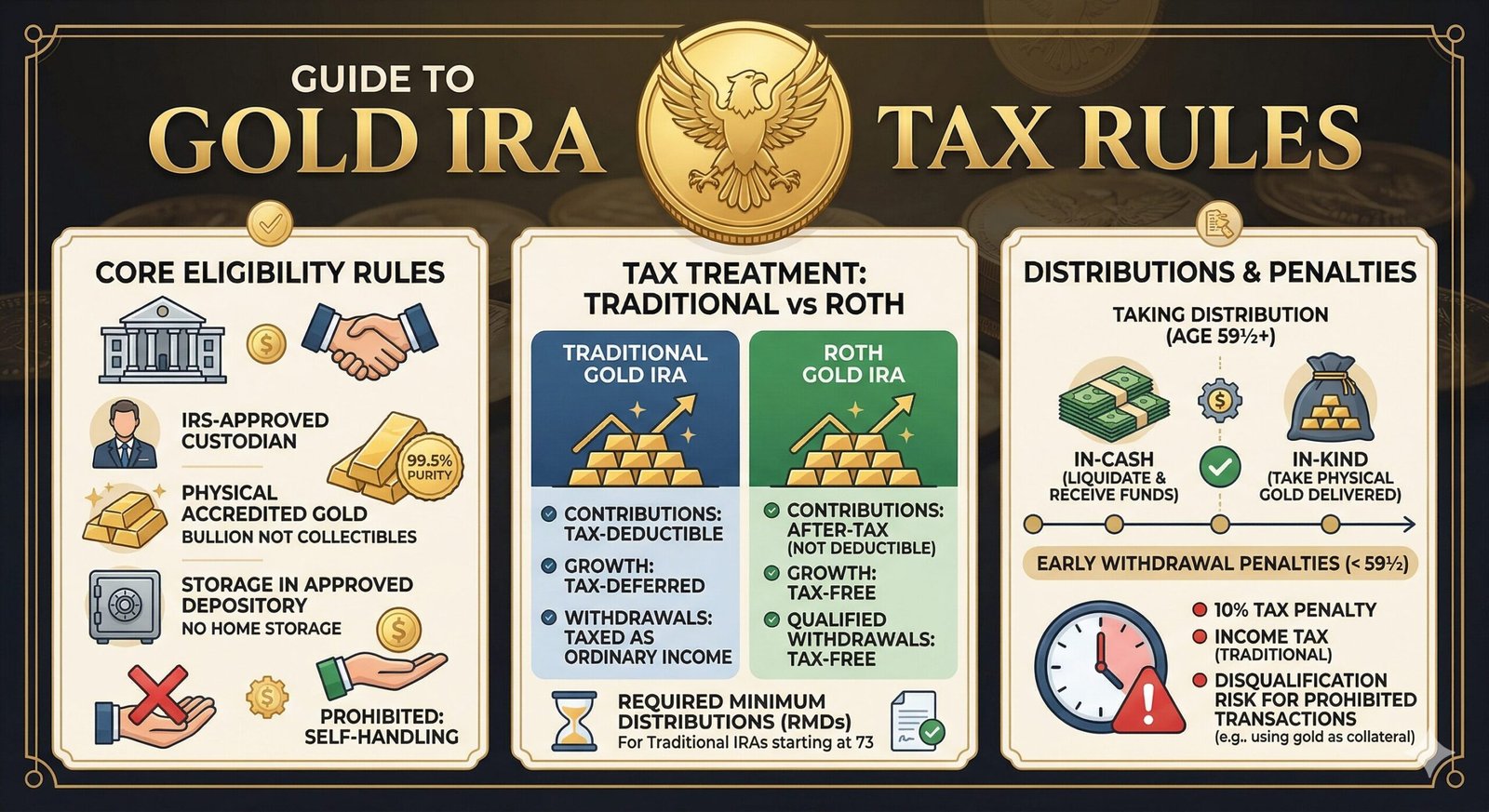
Eligible precious metals must meet specific purity standards: gold must be 99.5% pure, silver 99.9% pure, platinum 99.95% pure, and palladium 99.95% pure. Popular IRA-eligible gold coins include American Gold Eagles, American Gold Buffalo coins, and various foreign coins meeting IRS specifications.
All precious metals in a Gold IRA must be stored in an IRS-approved depository facility. Florida residents cannot store IRA precious metals at home or in personal safe deposit boxes. Qualified depositories maintain insurance coverage and security standards required by federal law.
Required Minimum Distributions (RMDs) apply to traditional Gold IRAs beginning at age 73, following the same timeline as other traditional IRAs. The IRS RMD FAQ provides detailed guidance on calculation methods and distribution requirements.
Choosing a Gold IRA Custodian in Florida
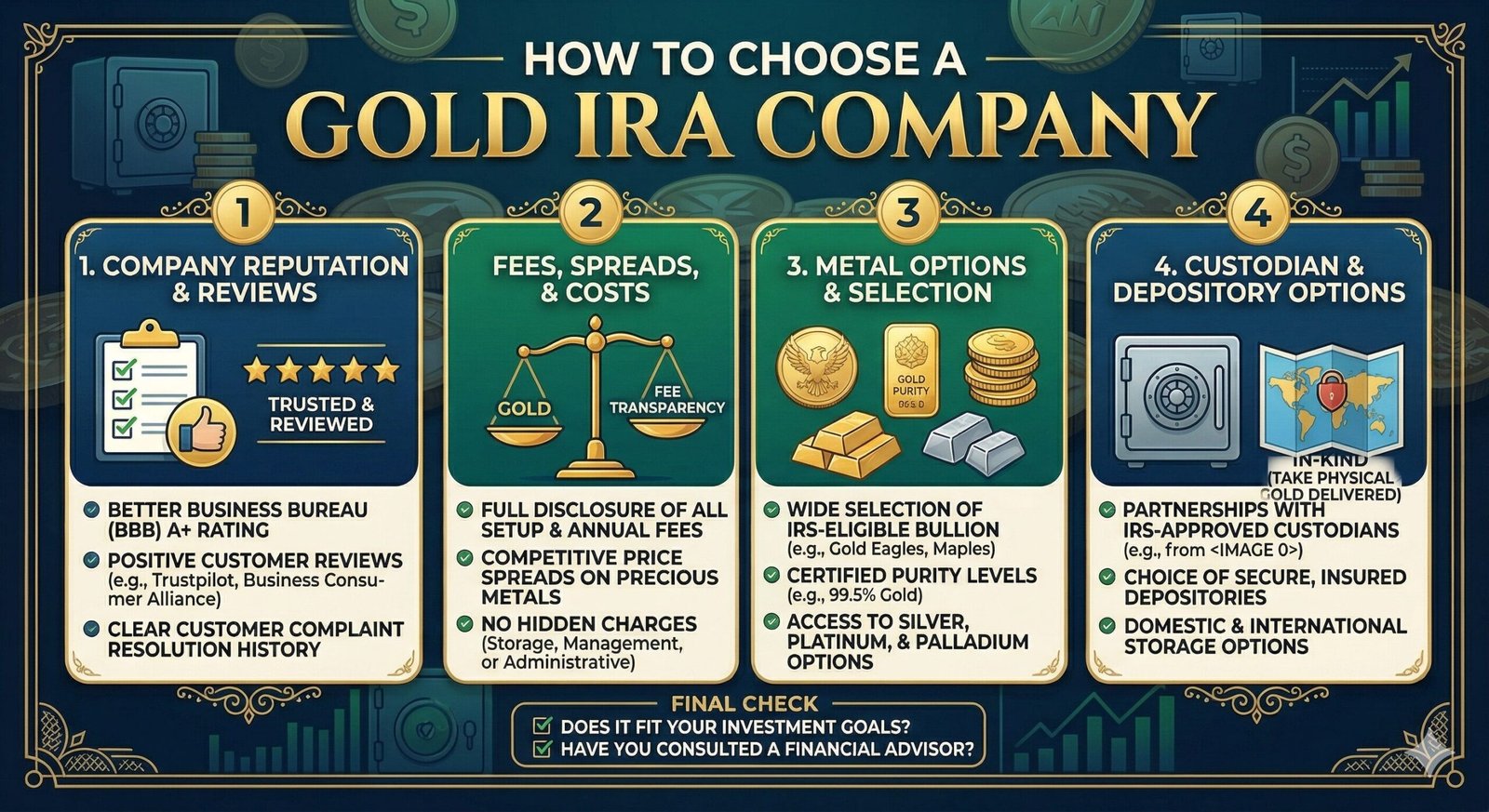
Florida residents can work with any qualified Gold IRA custodian nationwide, as physical location doesn’t restrict custodian selection. However, several factors should influence the decision-making process when selecting a custodian provider.
Custodian fees vary significantly across providers and can impact long-term returns. Common fee structures include setup fees, annual administrative fees, storage fees, and transaction costs. Understanding the complete Gold IRA fees guide helps evaluate total costs over time.
Customer service quality becomes particularly important for Florida retirees who may prefer phone or online communication over in-person meetings. Evaluating response times, educational resources, and account management tools can help identify suitable custodian partners.
Depository options offered by different custodians may include facilities in various states, with some offering segregated storage options for an additional fee. Florida residents should understand storage choices and associated costs before making custodian selections.
Rolling Over Existing Retirement Accounts
Florida residents can transfer funds from existing retirement accounts into Gold IRAs through direct rollovers or 60-day indirect rollovers. Understanding the 401(k) to Gold IRA rollover guide helps ensure compliance with federal rules and avoid tax penalties.
Direct rollovers involve transferring funds directly from one custodian to another without the account holder taking possession of the money. This method eliminates the risk of missing the 60-day deadline and incurring taxes and penalties.
The 60-day indirect rollover allows account holders to receive funds from their existing retirement account and deposit them into a Gold IRA within 60 days. This method carries more risk due to the strict deadline and once-per-year limitation on indirect rollovers.
Florida residents with employer-sponsored 401(k) plans should verify their plan’s rollover provisions before initiating transfers. Some plans may restrict rollovers while employees remain with the company, requiring a triggering event like retirement or job change.
Storage and Security Considerations
All Gold IRA precious metals must be stored in IRS-approved depositories, which maintain strict security protocols and insurance coverage. Florida residents will typically use depositories located in states like Texas, Delaware, or Nevada, depending on their custodian’s partnerships.
Depository selection often depends on the custodian chosen rather than personal preference. However, understanding storage options helps evaluate different custodian offerings. Commingled storage pools customer metals together, reducing costs but eliminating individual identification. Segregated storage keeps individual accounts separate, typically at higher cost.
Insurance coverage protects against theft, loss, and damage while metals remain in approved depositories. Coverage limits and deductibles vary by facility, making it important to understand protection levels before committing to specific storage arrangements.
Transportation and handling procedures follow strict protocols when moving precious metals into or out of depositories. These processes include chain-of-custody documentation and secure transportation methods that comply with federal requirements.
Common Mistakes to Avoid
Florida residents should be aware of common Gold IRA mistakes that could result in tax penalties or account disqualification. Understanding these pitfalls helps ensure compliant account management throughout the investment period.
Purchasing non-eligible precious metals represents one of the most serious violations. Collectible coins, jewelry, and metals not meeting IRS purity standards cannot be held in Gold IRAs. Working with experienced custodians helps avoid inadvertent purchases of prohibited items.
Taking personal possession of IRA precious metals triggers immediate tax consequences and potential penalties. Florida’s favorable climate might make home storage seem appealing, but IRS rules strictly prohibit this practice for IRA-held metals.
Failing to complete required minimum distributions on schedule can result in substantial penalties equal to 50% of the required distribution amount. Planning ahead for RMD requirements helps avoid these costly mistakes.
Missing rollover deadlines or exceeding the once-per-year indirect rollover limitation can trigger immediate tax liability and penalties. Understanding Gold IRA rollover rules helps ensure compliant transfers.
Investment Considerations and Risks
Gold IRAs carry unique considerations compared to traditional retirement investments. Florida retirees should understand both the potential benefits and risks associated with precious metals investing before making allocation decisions.
Precious metals don’t generate dividends or interest, relying instead on potential appreciation for returns. This characteristic differs significantly from stocks, bonds, or other income-generating investments that might comprise other portions of a retirement portfolio.
Market volatility affects precious metals prices, sometimes significantly. While gold has maintained purchasing power over long periods historically, short-term price movements can be substantial. Past performance is not a guarantee of future results, and metal prices can decline as well as increase.
Liquidity considerations become important during retirement years when regular distributions may be needed. Converting precious metals to cash for RMD requirements involves selling metals and transferring cash, which may take longer than liquidating traditional investments.
Storage and insurance costs represent ongoing expenses that don’t exist with paper investments. These fees can impact overall returns and should be factored into long-term planning calculations.
Working with Financial Professionals
Florida residents considering Gold IRAs may benefit from consulting with qualified financial professionals familiar with precious metals investing and retirement planning. However, it’s important to work with properly credentialed advisors who understand both federal IRA rules and Florida-specific considerations.
Fee-only financial planners can provide objective guidance without sales incentives that might influence recommendations. Checking credentials through FINRA BrokerCheck helps verify advisor qualifications and identify any regulatory issues.
Tax professionals familiar with retirement planning can help evaluate how Gold IRAs fit into overall tax strategies. Florida’s favorable tax environment may influence timing decisions and distribution planning compared to other states.
Estate planning attorneys can advise on how Gold IRAs integrate with broader estate planning goals. Understanding beneficiary designations, trust structures, and inheritance implications helps ensure proper account setup and ongoing management.
Regulatory Environment and Compliance
Florida’s regulatory environment for Gold IRAs primarily involves federal oversight rather than state-specific regulations. The SEC investor resources provide comprehensive information about retirement account regulations and investor protections.
Self-directed IRA rules allow Florida residents significant flexibility in investment choices, but also place greater responsibility on account holders to ensure compliance. Understanding prohibited transactions and disqualified person rules helps maintain account eligibility.
Custodian oversight falls under federal banking regulations and FINRA supervision where applicable. Florida residents should verify custodian qualifications and regulatory standing before establishing accounts with any provider.
Reporting requirements for Gold IRAs follow standard IRA rules, with custodians providing annual statements and tax documentation. Florida residents don’t face additional state-level reporting obligations beyond federal requirements.
Future Considerations and Planning
Long-term planning for Gold IRAs in Florida should consider potential changes in federal regulations, tax laws, and personal circumstances. Staying informed about regulatory developments helps ensure continued compliance and optimal account management.
Required minimum distributions will eventually apply to traditional Gold IRAs, requiring careful planning to meet obligations while managing precious metals liquidation timing. Understanding distribution options and planning ahead helps avoid last-minute compliance issues.
Estate planning considerations may evolve over time, particularly as account values change and family circumstances develop. Regular review of beneficiary designations and estate planning documents helps ensure Gold IRAs integrate properly with overall plans.
Market conditions and personal financial needs may warrant periodic portfolio reviews and potential rebalancing. While Gold IRAs offer specific advantages, they should be evaluated within the context of complete retirement planning strategies rather than in isolation.
Florida’s continued status as a no-income-tax state benefits retirees, but tax law changes at federal or state levels could affect Gold IRA strategies. Staying informed about potential legislative changes helps maintain effective long-term planning.
FAQ
Can Florida residents open Gold IRAs with out-of-state custodians?
Yes, Florida residents can work with qualified Gold IRA custodians located anywhere in the United States. Physical location doesn’t restrict custodian selection, though customer service preferences and fee structures should influence the decision-making process.
Do Gold IRAs face Florida state taxes?
No, Florida doesn’t impose state income tax, so Gold IRA distributions won’t face state-level taxation. However, traditional Gold IRA distributions remain subject to federal income tax, while qualified Roth Gold IRA distributions remain tax-free at both levels.
What happens to Gold IRA storage if I move from Florida?
Moving to another state doesn’t affect Gold IRA storage since metals are held in IRS-approved depositories rather than locally. However, state tax implications for your new residence should be evaluated with qualified professionals familiar with local laws.
Can I visit my Gold IRA metals stored in depositories?
Some depositories offer viewing appointments by advance arrangement, but policies vary by facility. However, IRS rules strictly prohibit taking personal possession of IRA metals, so any viewing would be limited to observation only.
How do required minimum distributions work with Gold IRAs?
RMDs from Gold IRAs typically require selling sufficient precious metals to generate cash for distribution. Planning ahead for RMD requirements helps ensure smooth compliance with federal rules beginning at age 73 for traditional accounts.
Gold IRAs offer Florida retirees unique opportunities to include precious metals in their retirement planning while benefiting from the state’s favorable tax environment. Understanding federal requirements, custodian selection criteria, and ongoing compliance obligations helps ensure successful implementation of these specialized retirement accounts.
For more detailed information about precious metals retirement planning options, explore our comprehensive guide to the Best Gold IRA Companies of 2026 to compare providers and find solutions that meet your specific needs.
This article is for informational purposes only and does not constitute financial or tax advice. Investing in precious metals involves risk including possible loss of principal.
Related guides
- Gold IRA Consumer Affairs Reviews: What to Look For
- Gold IRA Trustpilot Reviews: What Real Customers Say
- Gold IRA BBB Complaints: What Consumer Reports Reveal
- Is a Gold IRA Worth the Fees? A Cost-Benefit Analysis
- Are Gold IRA Fees Too High? Breaking Down the Real Costs
- Gold IRA Mistakes to Avoid: 10 Common Errors Investors Make