Gold IRA Early Withdrawal Penalty: What You’ll Owe
Understanding the Gold IRA early withdrawal penalty is crucial for retirement investors considering precious metals within their Individual Retirement Accounts. Like traditional and Roth IRAs, Gold IRAs carry specific rules and penalties for early distributions that can significantly impact your retirement savings if not properly understood.
The Internal Revenue Service treats Gold IRAs identically to other self-directed IRAs when it comes to withdrawal penalties. This means the same 10% early withdrawal penalty that applies to conventional retirement accounts also applies to your precious metals holdings. However, the complexity increases when dealing with physical assets like gold coins and bars, making it essential to understand both the rules and the practical implications.
How Gold IRA Early Withdrawal Penalties Work
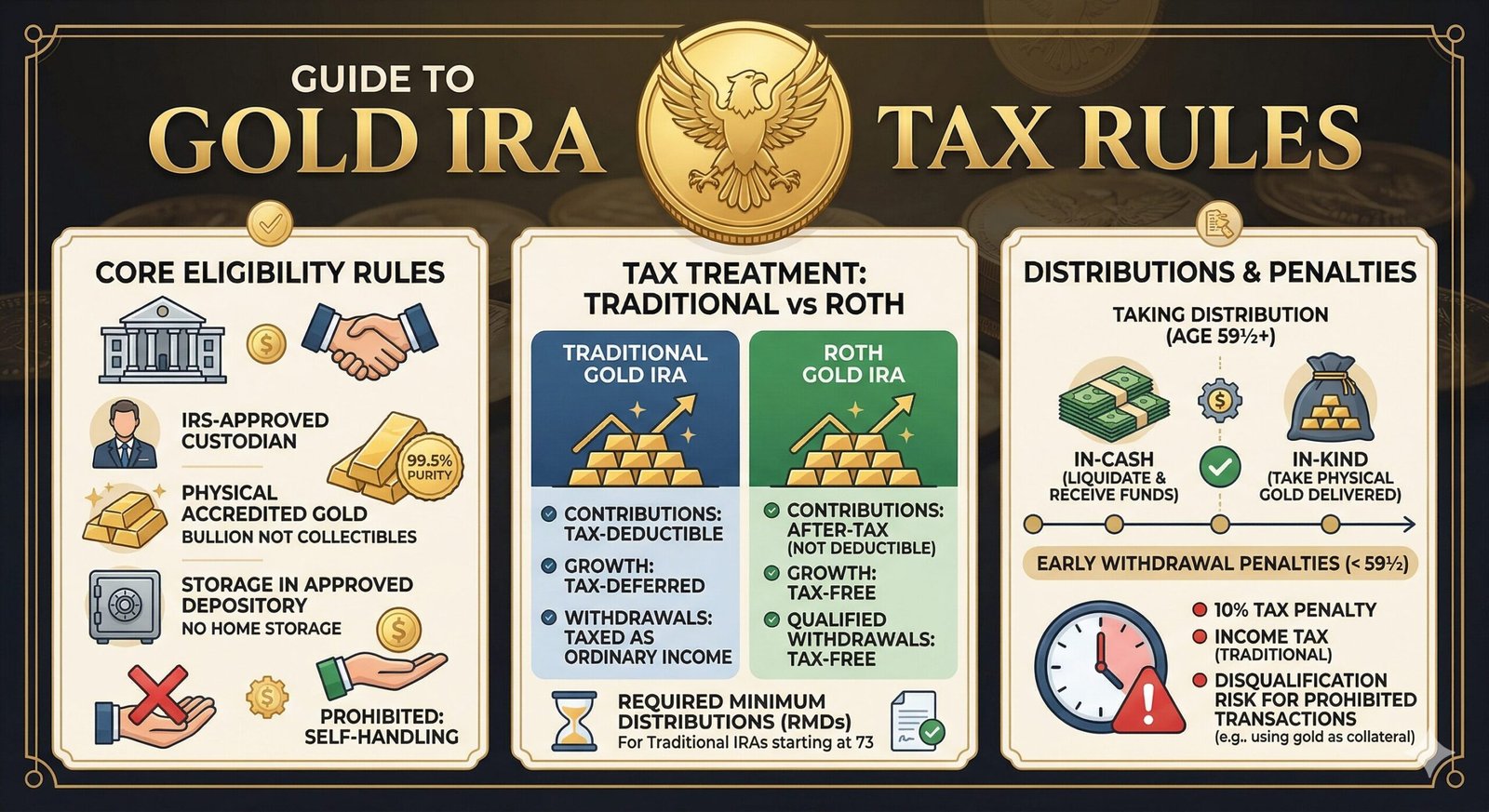
The fundamental structure of Gold IRA early withdrawal penalties mirrors traditional retirement account rules. If you withdraw funds or assets from your Gold IRA before reaching age 59½, the IRS typically imposes a 10% penalty on top of any ordinary income taxes owed on the distribution.
For Gold IRA holders, this penalty applies to the fair market value of any precious metals withdrawn early. Unlike paper assets that can be easily valued, precious metals require professional appraisal to determine their current market value for tax purposes. This valuation becomes the basis for both the penalty calculation and any income tax obligations.
The penalty timing depends on how you structure your withdrawal. Some Gold IRA custodians require you to take physical possession of the metals, while others may facilitate the sale of your precious metals holdings and distribute the cash proceeds. In either case, the 10% penalty applies to the full distribution value.
According to IRS Publication 590-A, the early withdrawal penalty is calculated on the entire distribution amount, regardless of whether you’ve made deductible or non-deductible contributions to your account over the years.
Calculating Your Gold IRA Early Withdrawal Penalty
The calculation process for Gold IRA early withdrawal penalties involves several steps that can become complex when dealing with physical precious metals. First, you’ll need to establish the fair market value of any metals being withdrawn on the distribution date. This typically requires a professional appraisal from a qualified precious metals dealer or certified appraiser.
Once the value is established, the 10% penalty applies to the full distribution amount. For example, if you withdraw gold coins valued at $50,000 before age 59½, you would owe a $5,000 early withdrawal penalty, plus ordinary income taxes on the entire distribution if it comes from a traditional Gold IRA.
The timing of when you owe these penalties and taxes depends on your tax filing schedule. Early withdrawals taken during a calendar year must be reported on that year’s tax return, with both the penalty and any income taxes due by the filing deadline.
Understanding Gold IRA rollover rules can help you avoid unintentional early withdrawals during account transfers or custodian changes.
Exceptions to Gold IRA Early Withdrawal Penalties
The IRS provides several exceptions to the 10% early withdrawal penalty that apply to Gold IRAs just as they do to traditional retirement accounts. These exceptions can provide crucial relief for investors facing unexpected financial hardships or specific qualifying expenses.
Medical expenses represent one of the most commonly used exceptions. If you have unreimbursed medical expenses that exceed 7.5% of your adjusted gross income, you can withdraw from your Gold IRA without penalty to cover these costs. This exception requires careful documentation and applies only to the amount needed to cover qualifying medical expenses.
Higher education expenses for yourself, your spouse, children, or grandchildren can also qualify for penalty-free withdrawals. The IRS IRA investment FAQ provides detailed guidance on what educational expenses qualify, including tuition, fees, books, and room and board for enrolled students.
First-time homebuyer expenses offer another penalty exception, though “first-time” is defined as not owning a home in the previous two years. You can withdraw up to $10,000 penalty-free for qualifying home purchase expenses, though this is a lifetime limit that applies across all your IRA accounts.
Other qualifying exceptions include unemployment-related distributions for health insurance premiums, IRS levy payments, and military reservist distributions. Each exception has specific requirements and documentation needs that must be met to avoid the penalty.
Tax Implications Beyond the Penalty
Gold IRA early withdrawal penalties represent only part of the total tax burden you may face when taking early distributions. The more significant cost often comes from ordinary income taxes on traditional Gold IRA withdrawals, which are taxed at your marginal income tax rate.
When you withdraw precious metals or cash from a traditional Gold IRA, the entire distribution generally counts as ordinary income for the year you receive it. This can potentially push you into a higher tax bracket, especially if the withdrawal is substantial relative to your other income.
Roth Gold IRA withdrawals follow different rules that can be more favorable. Contributions to Roth accounts can always be withdrawn penalty and tax-free since they were made with after-tax dollars. However, any earnings withdrawn before age 59½ may be subject to both penalties and taxes unless specific exceptions apply.
The valuation requirements for precious metals add complexity to tax reporting. Unlike selling stocks or bonds with clear market prices, precious metals distributions require professional appraisal to establish fair market value. This appraisal cost becomes an additional expense associated with early withdrawals.
Understanding what a Gold IRA is helps clarify why these tax rules apply and how they differ from owning precious metals outside retirement accounts.
Strategies to Minimize Penalty Impact
Several strategies can help Gold IRA holders minimize the impact of early withdrawal penalties when facing financial emergencies. Planning ahead and understanding your options can save thousands of dollars in unnecessary penalties and taxes.
The most straightforward approach is timing withdrawals to occur after age 59½ when the 10% penalty no longer applies. If you’re close to this age and can manage your financial needs through other means temporarily, waiting can provide substantial savings.
For those who must withdraw early, consider whether any penalty exceptions apply to your situation. Medical expenses, education costs, or first-time home purchases might qualify for penalty relief. Even if these exceptions don’t cover your entire withdrawal need, they can reduce the penalty on the qualifying portion.
Partial withdrawals can sometimes be more tax-efficient than large single distributions. Spreading withdrawals across multiple tax years can help manage your overall tax burden, though each early distribution will still incur the 10% penalty on any amount not covered by exceptions.
Some investors explore alternative funding sources before tapping retirement accounts. Home equity loans, 401(k) loans, or other financing options might provide better after-tax returns than paying early withdrawal penalties and taxes.
Working with qualified financial and tax professionals becomes especially important when dealing with Gold IRA early withdrawals. The complexity of precious metals valuation and the interaction between various tax rules can create unexpected consequences without proper guidance.
Required Minimum Distributions and Gold IRAs
Understanding required minimum distributions (RMDs) becomes important for Gold IRA holders approaching age 73, as these mandatory withdrawals can help you avoid early withdrawal penalties while managing your retirement income. The IRS RMD FAQ provides comprehensive guidance on calculation and timing requirements.
Gold IRAs are subject to the same RMD rules as traditional IRAs, meaning you must begin taking distributions by April 1 of the year after you turn 73. The calculation is based on your account balance and life expectancy factors provided by the IRS, but the physical nature of precious metals can complicate the distribution process.
Many Gold IRA custodians handle RMDs by liquidating a portion of your precious metals holdings and distributing cash to meet the requirement. This approach simplifies the valuation and distribution process, though some investors prefer taking physical possession of metals to satisfy their RMD obligations.
The penalty implications change significantly once you reach RMD age. Failing to take required distributions results in a penalty equal to 25% of the shortfall amount, which is far more severe than the 10% early withdrawal penalty. This makes proper RMD planning crucial for Gold IRA holders.
Custodian Policies and Early Withdrawal Procedures
Different Gold IRA custodians have varying policies and procedures for handling early withdrawals, which can impact both the ease of access to your funds and the costs involved. Understanding your custodian’s specific requirements can help you plan more effectively and avoid unnecessary delays or expenses.
Most custodians require written distribution requests with specific documentation, including proof of age and any claimed penalty exceptions. The processing time for Gold IRA withdrawals typically takes longer than traditional IRA distributions due to the need for precious metals valuation and potential liquidation.
Some custodians specialize in facilitating physical delivery of precious metals to satisfy distribution requirements, while others primarily work with dealers to liquidate holdings and distribute cash proceeds. The approach your custodian takes can affect both the timeline and cost of your withdrawal.
Storage and insurance considerations also come into play with physical metal distributions. If you choose to take possession of precious metals to satisfy a distribution requirement, you’ll need to arrange for secure storage and potentially insurance coverage, adding to the overall cost of the withdrawal.
Understanding Gold IRA fees helps you anticipate the various costs associated with early withdrawals beyond just the IRS penalty.
Documentation and Record-Keeping Requirements
Proper documentation becomes especially critical for Gold IRA early withdrawals due to the complexity of precious metals transactions and the potential for penalty exceptions. Maintaining detailed records can help you substantiate any exception claims and ensure accurate tax reporting.
For penalty exception claims, you’ll need comprehensive documentation of qualifying expenses or circumstances. Medical expense exceptions require receipts, insurance statements, and potentially physician documentation. Education expense exceptions need enrollment verification and qualified expense receipts.
Precious metals valuation documentation is essential for accurate tax reporting. Professional appraisals, dealer purchase/sale agreements, and market price documentation on the distribution date help establish the fair market value used for penalty and tax calculations.
Distribution timing records become important for tax reporting and potential audit situations. The IRS requires specific forms and reporting for early distributions, and having detailed records of when and how distributions occurred can streamline the tax filing process.
Many Gold IRA holders work with tax professionals to ensure proper documentation and reporting, particularly when dealing with penalty exceptions or substantial distributions that could impact their overall tax situation.
Alternatives to Early Withdrawals
Before taking early withdrawals from your Gold IRA and incurring penalties, consider alternative strategies that might meet your financial needs without triggering tax consequences. Several options can provide access to funds while preserving your retirement savings.
401(k) loans, where available, allow you to borrow against your workplace retirement plan without penalties or taxes, provided you repay the loan according to plan terms. This option isn’t available for IRAs, but many people have both types of accounts and can choose which to access first.
Traditional bank loans, home equity lines of credit, or personal loans might provide better after-tax returns than paying early withdrawal penalties and taxes. The interest rates on these alternatives should be compared to the effective cost of early IRA withdrawals.
For temporary cash flow needs, some investors explore short-term solutions like credit cards or family loans while waiting to reach penalty-free withdrawal age. This approach works best when the time horizon is relatively short and the financial need is temporary.
Understanding is a Gold IRA a good idea for your situation can help inform these decisions and clarify the long-term impact of early withdrawals on your retirement planning.
Planning for Retirement Access
Effective retirement planning with Gold IRAs requires understanding how to access your precious metals investments when needed without incurring unnecessary penalties. This planning should begin well before you need to make withdrawals and consider both tax efficiency and practical logistics.
Age-based withdrawal strategies can help you sequence distributions from various retirement accounts to minimize overall tax burden. Some investors plan to access taxable accounts first, then tax-deferred accounts like traditional Gold IRAs, and finally tax-free Roth accounts.
Geographic considerations may also play a role in Gold IRA withdrawal planning. If you plan to relocate in retirement, understanding the logistics of precious metals storage and distribution in your new location can help inform your strategy.
Estate planning implications should be considered as well, since Gold IRAs pass to beneficiaries with their own set of distribution rules and requirements. Understanding how early withdrawals might impact your legacy planning can influence your current withdrawal decisions.
Working with qualified professionals who understand both precious metals and retirement planning can help you develop a comprehensive strategy that addresses your specific needs while minimizing penalties and taxes.
Frequently Asked Questions
What is the penalty for early withdrawal from a Gold IRA?
The penalty for early withdrawal from a Gold IRA is 10% of the distribution amount, just like traditional IRAs. This penalty applies to withdrawals made before age 59½, in addition to any ordinary income taxes owed on the distribution from a traditional Gold IRA.
Are there any exceptions to the Gold IRA early withdrawal penalty?
Yes, the same exceptions that apply to traditional IRAs also apply to Gold IRAs. These include qualified medical expenses, higher education costs, first-time home purchases (up to $10,000 lifetime limit), and several other specific circumstances outlined by the IRS.
How is the penalty calculated on physical gold withdrawals?
The penalty is calculated based on the fair market value of the precious metals on the distribution date. This typically requires a professional appraisal to establish the current market value, which then becomes the basis for both the 10% penalty and any income tax obligations.
Can I avoid the penalty by rolling over my Gold IRA to another account?
Yes, if you complete a proper rollover within 60 days, you can avoid early withdrawal penalties. However, understanding Gold IRA rollover rules is essential to ensure you meet all requirements and deadlines.
Do Roth Gold IRA withdrawals have different penalty rules?
Roth Gold IRA contributions can always be withdrawn penalty and tax-free since they were made with after-tax dollars. However, earnings withdrawn before age 59½ may still be subject to the 10% penalty unless specific exceptions apply.
Considering your Gold IRA options requires careful evaluation of all costs and benefits, including potential early withdrawal penalties. For comprehensive guidance on selecting the right precious metals retirement account provider, review our analysis of the Best Gold IRA Companies of 2026 to make an informed decision that aligns with your retirement planning goals.
This article is for informational purposes only and does not constitute financial or tax advice. Investing in precious metals involves risk including possible loss of principal.
Related guides
- Gold IRA Consumer Affairs Reviews: What to Look For
- Gold IRA Trustpilot Reviews: What Real Customers Say
- Gold IRA BBB Complaints: What Consumer Reports Reveal
- Is a Gold IRA Worth the Fees? A Cost-Benefit Analysis
- Are Gold IRA Fees Too High? Breaking Down the Real Costs
- Gold IRA Mistakes to Avoid: 10 Common Errors Investors Make