
Gold IRA With $200,000: What to Expect When You’re Starting With a Larger Balance
If you’ve spent decades building a retirement nest egg and you’re now sitting on $200,000 or more that you’re considering placing into a Gold IRA, you’re not alone. Many pre-retirees and retirees in their 50s and 60s reach a point where they want to think carefully about how their savings are structured — and precious metals have become an increasingly discussed option in that conversation.
But starting with a larger balance like $200,000 also means the stakes are higher. Fees that seem insignificant at smaller amounts can become meaningful at this scale. Choosing the wrong custodian, misunderstanding the rollover process, or overlooking IRS rules can be costly mistakes. This guide walks you through what you actually need to know before opening a Gold IRA at this level — without the sales pitch.
For a broader overview of how these accounts work, start with our Gold IRA guide before diving into the specifics below.
What Is a Gold IRA and Why Does Balance Size Matter?
A Gold IRA is a self-directed Individual Retirement Account that holds physical precious metals — gold, silver, platinum, and palladium — rather than the stocks, bonds, and mutual funds found in a conventional IRA. The account must be held by an IRS-approved custodian and the metals themselves must be stored in an approved depository. For a thorough breakdown of the structure, see Gold IRAs Explained in Detail.
The reason your starting balance matters is straightforward: the fee structure of Gold IRAs doesn’t always scale the way you might expect. Many custodians charge flat annual fees for account administration and storage, which means a $200,000 account may actually pay a lower percentage in fees than a $20,000 account — but you’ll still want to understand exactly what you’re paying in dollar terms. At $200,000, even a modest percentage fee difference can add up to thousands of dollars over time.
It’s also worth noting that $200,000 is well above the minimum investment thresholds most reputable Gold IRA companies set. Our Gold IRA minimum investment page outlines how these thresholds vary across providers.
Understanding the Fee Structure at $200,000
Fees are one of the most critical factors when evaluating a Gold IRA — perhaps even more so when you’re bringing a significant balance to the table. There are several distinct fee types you should understand before committing to any custodian. Our full Gold IRA fees guide covers this topic in depth, but here’s a summary of what to expect.
Account Setup Fees
Most Gold IRA custodians charge a one-time setup fee when you open the account. These typically range from $50 to $300, though some companies waive this for larger accounts. At $200,000, you have genuine negotiating leverage — it’s worth asking whether setup fees can be waived or reduced.
Annual Administration Fees
Custodians charge an annual fee to manage the administrative side of your account — handling paperwork, IRS reporting, and account statements. These fees commonly range from $75 to $300 per year for a flat structure.
Storage Fees
This is often the most significant ongoing cost. Approved depositories charge either a flat fee or a percentage of the metals’ value. At $200,000, the difference between a flat fee structure and a percentage-based one becomes very real.
Seller Markups
When you purchase physical gold through a dealer, there is typically a markup over the spot price of gold. This isn’t always disclosed as a “fee,” but it represents a real cost. At $200,000 worth of metal, even a 1–2% markup translates to $2,000–$4,000.
Fee Comparison: Flat vs. Percentage-Based Storage
As this table illustrates, a flat fee structure is typically more favorable at higher balance levels. This is an important detail to clarify with any custodian before you open your account.
Rolling Over Existing Retirement Funds
Most people opening a Gold IRA with $200,000 aren’t writing a personal check — they’re rolling over funds from an existing 401(k), traditional IRA, or another qualified retirement account. This is an important process to understand clearly, because mistakes can trigger unexpected taxes and penalties.
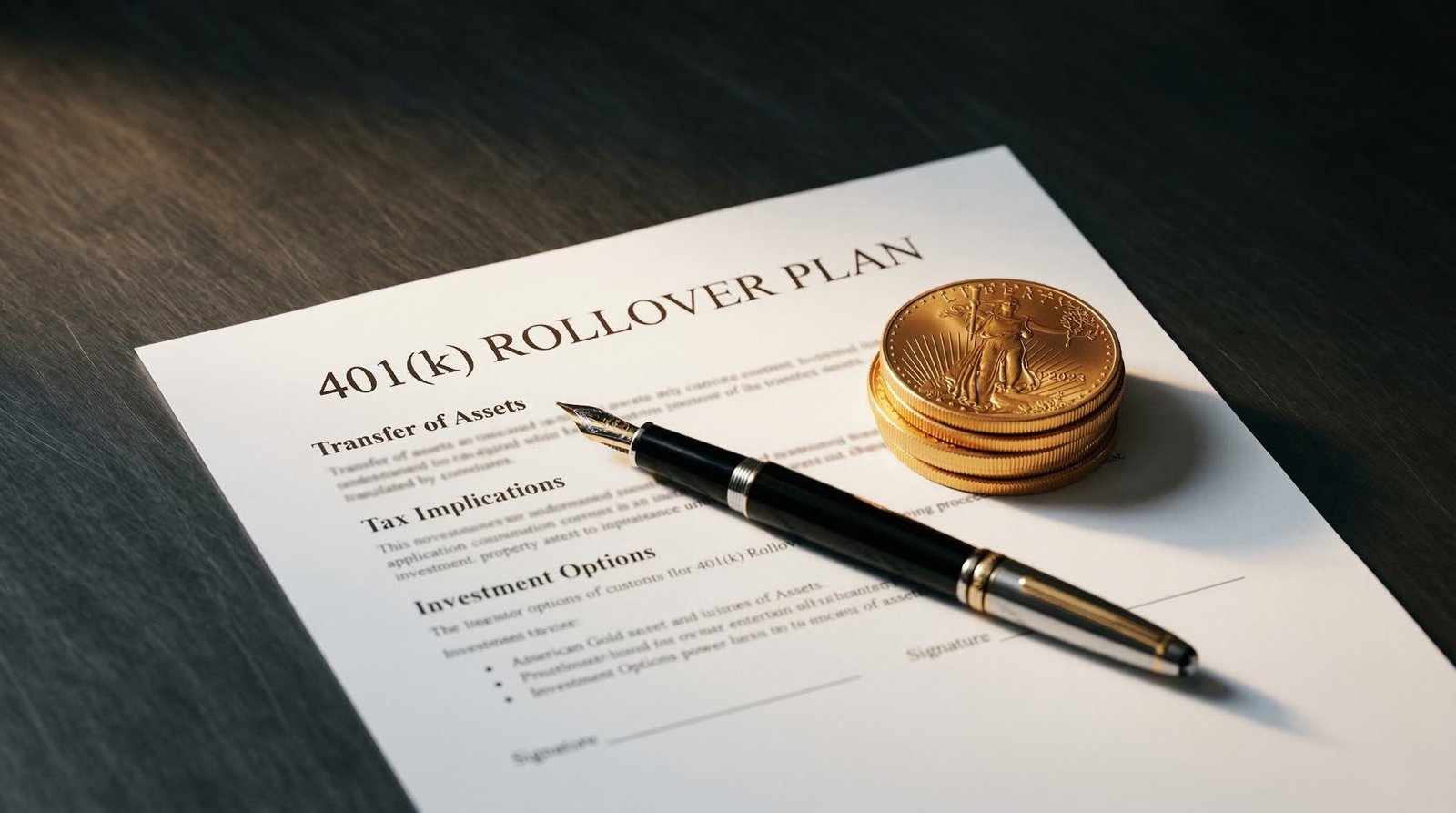
If you’re moving money from a workplace 401(k), our 401(k) to Gold IRA rollover guide walks through the process step by step. The key distinction to understand is the difference between a direct rollover and an indirect rollover.
In a direct rollover, funds move from your existing custodian directly to the new Gold IRA custodian without passing through your hands. In an indirect rollover, the funds are distributed to you first, and you have 60 days to deposit them into the new account. With an indirect rollover, your original custodian will withhold 20% for taxes — which means you’d need to deposit the full $200,000 yourself and claim the withholding back later, or you’ll owe taxes on the amount not redeposited.
For most people moving $200,000, a direct rollover is the cleaner and less risky option. Make sure to also review the Gold IRA rollover rules so you understand the IRS one-rollover-per-year rule and other important limitations. The IRS itself provides useful foundational reading in IRS Publication 590-A.
IRS Rules on Eligible Metals
Not every gold coin or bar qualifies for a Gold IRA. The IRS sets specific purity standards that metals must meet to be held in a self-directed IRA.
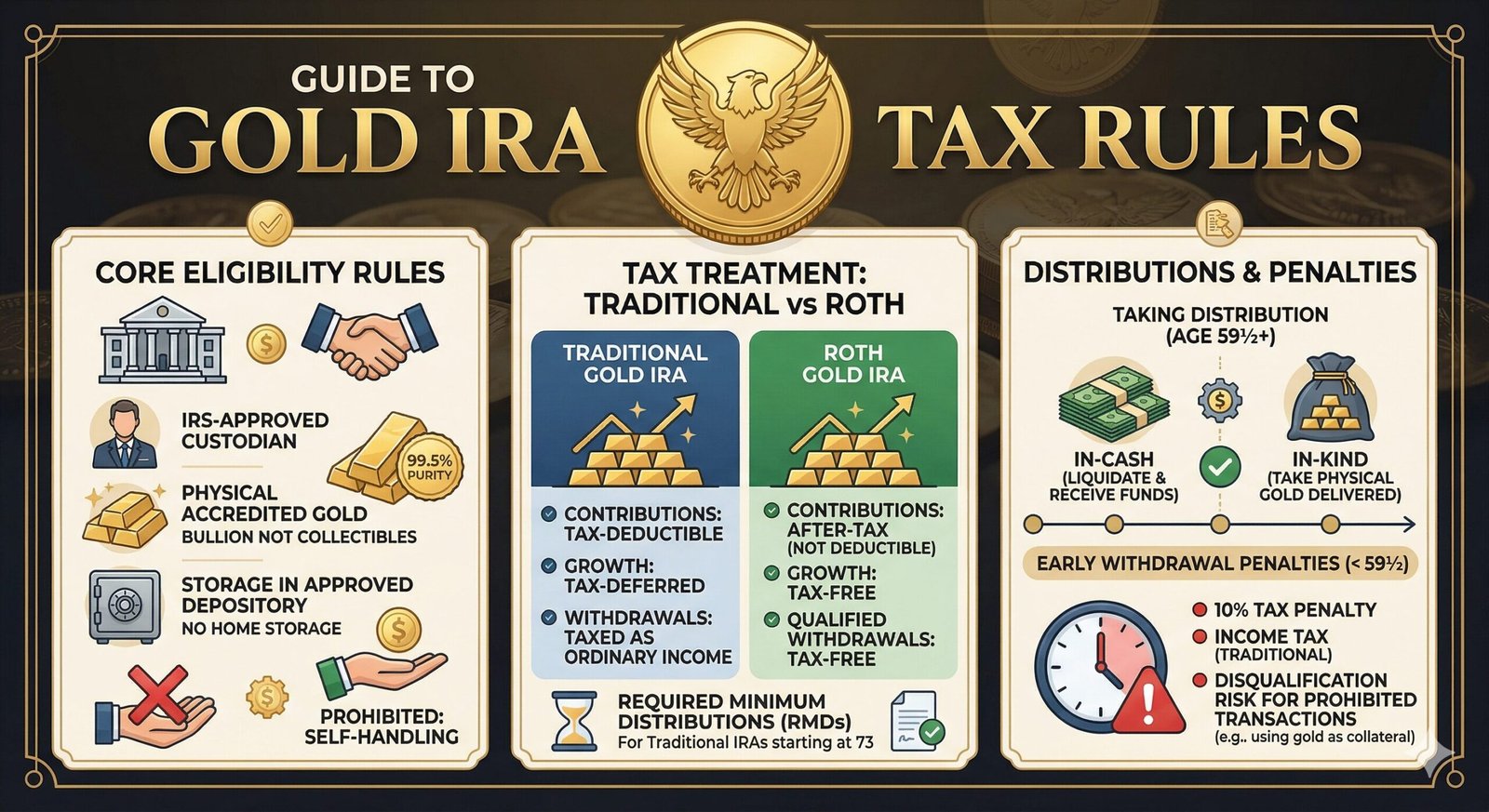
For gold, the minimum purity requirement is 99.5% (0.995 fineness). Common eligible options include American Gold Eagle coins (which are an exception to the purity rule by statute), American Gold Buffalo coins, and certain gold bars from approved refiners. For a detailed look at what qualifies, see our guide to IRA-eligible gold coins.
The IRS also requires that the physical metals be held by an approved custodian and stored at an approved depository — you cannot take personal possession of the metals while they remain in the IRA. The IRS IRA investment FAQ provides official clarification on this point.
Choosing a Custodian for a $200,000 Account
At the $200,000 level, your choice of custodian carries more weight than it might at lower account sizes. You want a company with strong regulatory standing, transparent fee disclosures, and clear communication. FINRA’s guidance on self-directed IRAs is worth reading, as it outlines several risk factors specific to this account type.
Here’s what to look for when evaluating custodians at this balance level:
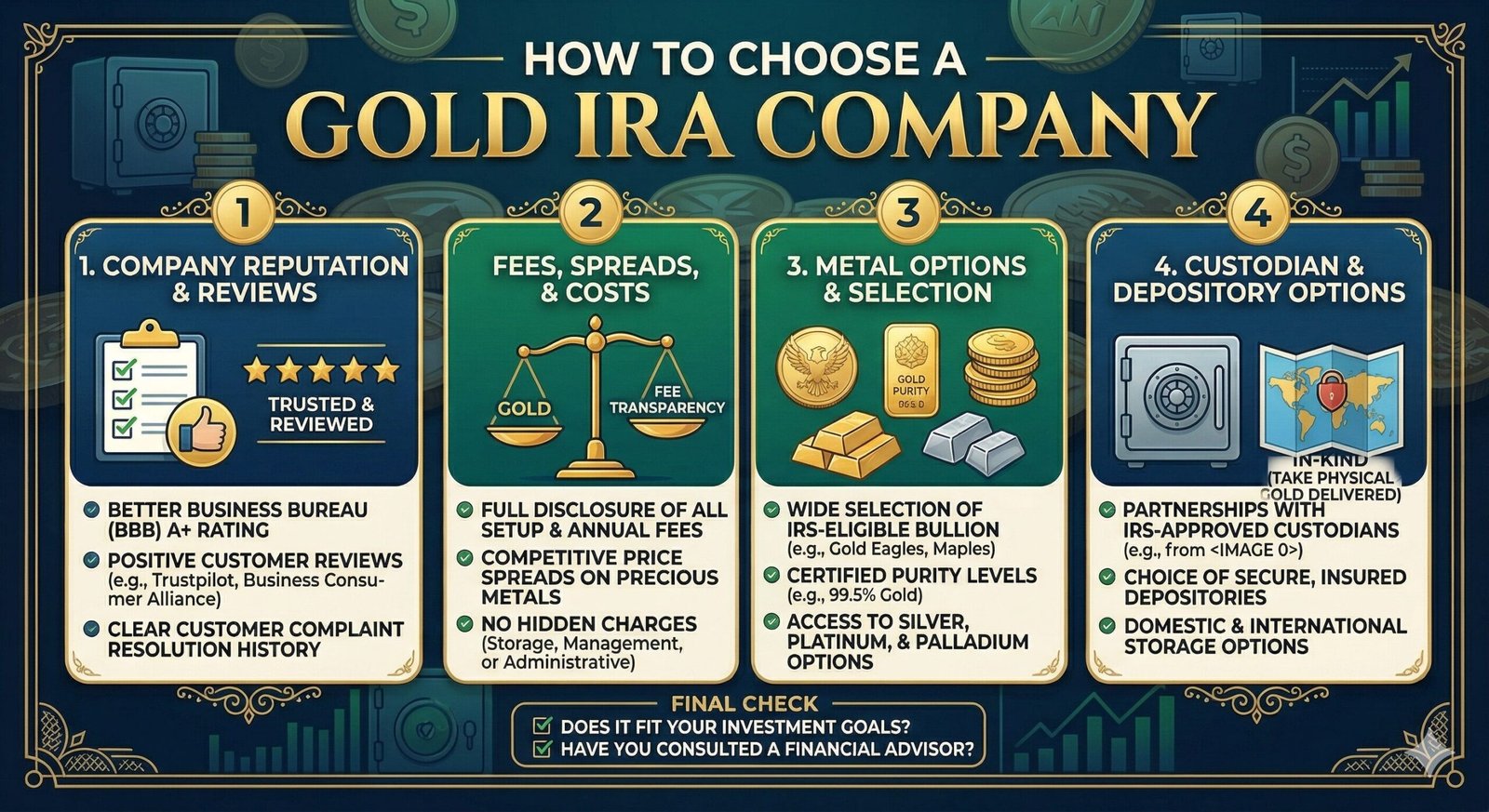
Regulatory standing: Confirm that the custodian is properly chartered and in good standing. You can verify dealer credentials through FINRA BrokerCheck and check company ratings on bbb.org.
Fee transparency: Any reputable custodian will provide a full fee schedule upfront in writing. If fees are difficult to find or require a phone call to discover, that’s a warning sign.
Storage options: Understand whether segregated or commingled storage is offered, and what the cost difference is. At $200,000, many investors opt for segregated storage, where your metals are physically separated from other clients’ holdings.
Customer service: With a larger balance, you want a custodian that provides dedicated account support, not just an online portal.
You can also compare top-rated options in our Best Gold IRA Companies of 2026 roundup, which evaluates custodians across several of these criteria. And if you’re concerned about due diligence, our Gold IRA scams guide is essential reading before you commit.
Gold IRA vs. Traditional IRA at This Balance Level
If you’re currently holding $200,000 in a traditional IRA, it’s natural to compare the two structures. The tax treatment at the account level is similar — both traditional Gold IRAs and traditional IRAs offer pre-tax contributions and tax-deferred growth, with distributions taxed as ordinary income in retirement. Our Gold IRA vs Traditional IRA comparison goes into more detail on the structural differences.
What differs significantly is the asset type and the associated complexity. A Gold IRA requires a custodian, a dealer, and a depository — three parties instead of one. That additional infrastructure is what drives the higher fee structure described above. It also means more moving parts when it comes to required minimum distributions (RMDs), since RMDs from a Gold IRA may require liquidating or distributing physical metals.
This isn’t necessarily a reason to avoid a Gold IRA — but it is a reason to go in with realistic expectations about the administrative requirements. The SEC investor resources page also provides useful background on retirement account types for those comparing options.
Is a Gold IRA a Good Fit at $200,000?
That’s ultimately a personal decision that depends on your overall financial picture, your time horizon, and your comfort with the structure and fees involved. Our article on is a Gold IRA a good idea explores that question in more depth and may help you think through the considerations.
What we can say is that at $200,000, the flat-fee structure of most Gold IRA custodians works in your favor on a percentage basis. You have leverage to negotiate on fees, you meet the threshold requirements of virtually every reputable provider, and you have enough capital to cover a meaningful allocation without liquidating your entire retirement savings.
Whatever you decide, do your homework thoroughly before signing any agreements. Clarify every fee in writing, verify every custodian’s credentials, and ensure you understand the rollover process before initiating any transfers.
Frequently Asked Questions
What is the typical minimum investment for a Gold IRA?
Most reputable Gold IRA custodians set minimums somewhere between $10,000 and $50,000, though some set higher thresholds. At $200,000, you will comfortably exceed the minimum requirements of virtually all established providers. See our Gold IRA minimum investment page for a provider-by-provider breakdown.
Can I roll over my entire 401(k) into a Gold IRA?
In most cases, yes — though it depends on your plan rules and whether you’ve separated from your employer. If you’re still employed, your plan may restrict in-service rollovers. Our 401(k) to Gold IRA rollover guide covers eligibility in detail.
How are storage fees calculated on a $200,000 Gold IRA?
Storage fees are calculated either as a flat annual rate (commonly $150–$300) or as a percentage of your account’s value (often 0.5–1.0%). At $200,000, a percentage-based fee of 1% would cost $2,000 per year — significantly more than a flat-fee structure. Always confirm the fee model before opening an account.
What happens to my Gold IRA when I need to take required minimum distributions?
Once you reach the RMD age threshold set by the IRS, you must begin taking minimum distributions from your IRA each year. With a Gold IRA, this may require selling a portion of your metals to generate cash for the distribution, or taking the metals themselves as an in-kind distribution. The IRS RMD FAQ provides current rules and thresholds.
Are there annual contribution limits for a Gold IRA?
Yes. A Gold IRA follows the same contribution limits as a standard IRA — for 2025, the limit is $7,000 per year ($8,000 if you’re 50 or older). These limits apply to new contributions only; rollovers from other qualified accounts are not subject to this cap. See the IRS contribution limits page for the most current figures.
Ready to compare your options? Visit our Best Gold IRA Companies of 2026 page for an independent look at the top-rated custodians, evaluated across fees, transparency, storage options, and customer service quality.
This article is for informational purposes only and does not constitute financial or tax advice. Investing in precious metals involves risk including possible loss of principal.
Related guides
- Gold IRA With $500,000: What Higher-Balance Investors Should Know
- Gold IRA With $100K: What to Know Before You Commit
- How to Invest $100,000 in Gold: Complete Strategy Guide
- How to Invest $50,000 in Gold: Strategy for Larger Positions
- How to Invest $10,000 in Gold: Best Options for 2026
- How to Buy Gold With Your IRA: Step-by-Step Guide