
What Is the Best Age to Open a Gold IRA?
If you’ve been researching retirement accounts and precious metals, you’ve likely wondered whether your age plays a role in whether a Gold IRA makes sense for you. It’s a smart question — and the honest answer is that there’s no single “perfect” age. However, age does affect several important practical factors: how IRS rules apply to you, what your retirement timeline looks like, and what costs and considerations you’ll be managing along the way.
This guide walks through what retirement investors at different life stages should understand about Gold IRAs, so you can make a more informed decision in consultation with your financial or tax advisor.
Understanding What a Gold IRA Actually Is
Before addressing age, it helps to clarify what a Gold IRA is. A Gold IRA is a self-directed individual retirement account that holds physical precious metals — such as gold, silver, platinum, or palladium — rather than the paper-based assets you’d find in a conventional IRA. Like a traditional or Roth IRA, a Gold IRA is governed by IRS rules and offers the same tax structure depending on which account type you choose.
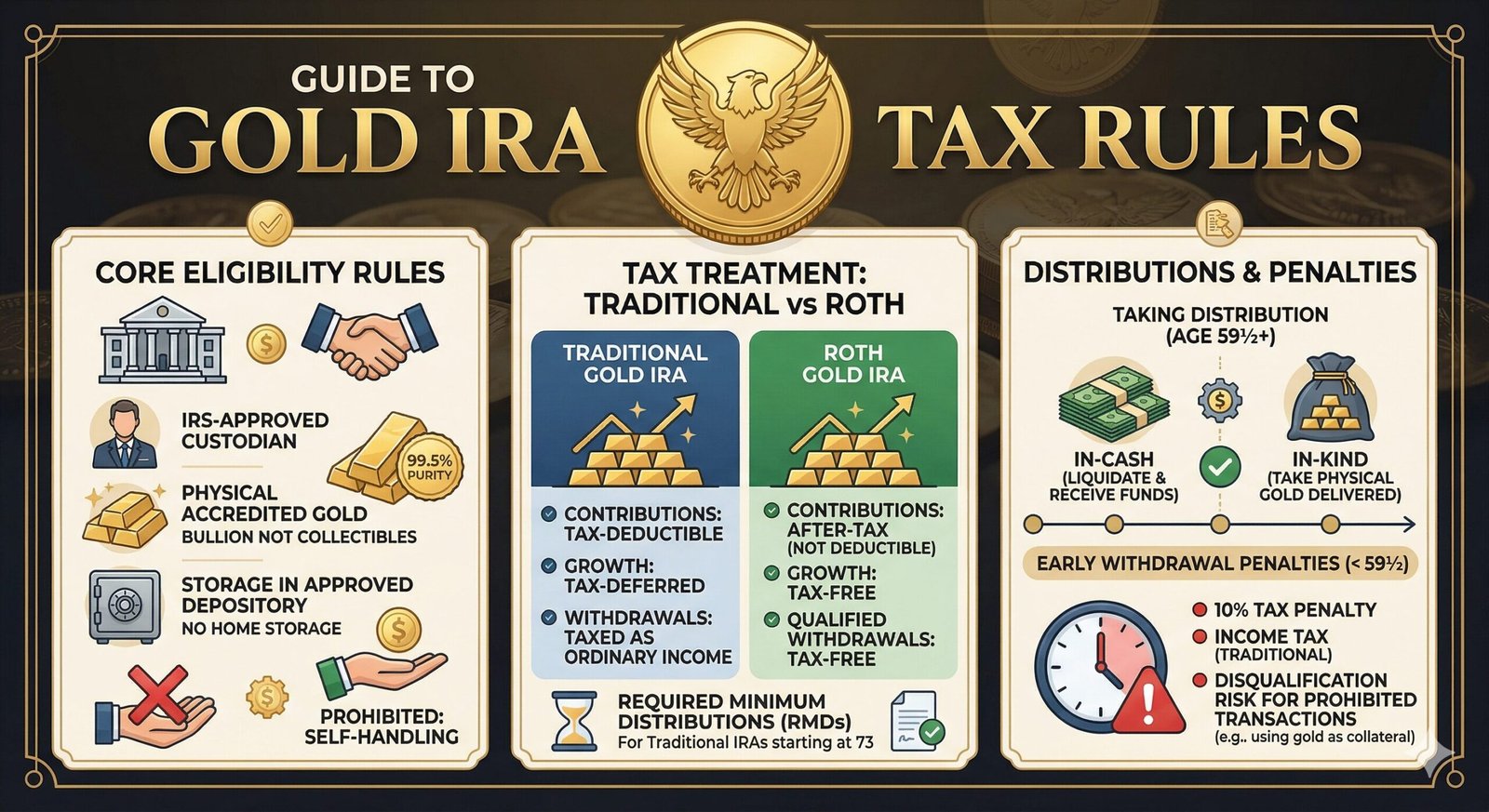
What makes it “self-directed” is that the account holder directs what assets to purchase, rather than relying on a fund manager. The IRS requires that a qualified custodian hold the account and that the physical metals be stored in an approved depository. For a more thorough breakdown of how these accounts work, see our Gold IRAs Explained in Detail page.
It’s also worth reviewing FINRA’s guidance on self-directed IRAs before opening any self-directed account — they outline specific risks and due diligence steps that every investor should consider.
Why Age Matters When Opening a Gold IRA
Your age intersects with a Gold IRA in several concrete ways: contribution rules, rollover eligibility, required minimum distributions, and how much runway you have before you’re likely to need your retirement funds. None of these factors automatically tells you whether to open a Gold IRA — that’s a decision for you and your advisor — but they do shape what the experience will look like at different stages of life.
Gold IRAs in Your 40s: Time Is on Your Side
Investors in their 40s are often in a strong position to explore a Gold IRA simply because they still have a meaningful number of years before traditional retirement age. This longer horizon gives more time for the account to grow within its tax-advantaged structure, and it also means you have more opportunity to understand the costs involved before making a major commitment.
If you’re in your 40s and considering a Gold IRA, one of the most common pathways is rolling over funds from a former employer’s 401(k). This can be done without incurring immediate taxes if handled correctly — our 401(k) to Gold IRA rollover guide walks through the process step by step. You’ll also want to familiarise yourself with the Gold IRA rollover rules before initiating any transfer.
One important consideration at this stage: Gold IRAs typically carry higher annual fees than conventional IRAs, covering custodian charges and storage costs. When you have decades ahead, those fees compound over time. Understanding the full fee picture up front is essential — our Gold IRA fees guide breaks down what to expect.
Gold IRAs in Your 50s: The Prime Planning Window
Many financial planners consider the decade between ages 50 and 62 a critical window for retirement planning. You’re close enough to retirement to be thinking seriously about how your savings will behave in the years ahead, but still far enough away that you have meaningful time to build and manage your accounts.
One significant IRS benefit kicks in at age 50: catch-up contributions. As of 2024, the standard IRA contribution limit is $7,000 per year, but investors aged 50 and older can contribute an additional $1,000, bringing the total to $8,000. You can confirm current figures directly at the IRS contribution limits page.
This catch-up provision applies to Gold IRAs structured as traditional or Roth IRAs, and it’s one reason why investors in their 50s often find Gold IRAs particularly worth exploring. The extra contribution room, combined with a multi-year timeline before distributions are required, gives you more flexibility in how the account develops.
For a detailed comparison of how a Gold IRA stacks up against a conventional retirement account from a structural standpoint, see our Gold IRA vs Traditional IRA comparison.
Gold IRAs in Your 60s: Approaching the Distribution Phase
Investors in their early 60s are at a genuinely pivotal point. At age 59½, the IRS allows penalty-free withdrawals from traditional IRAs, including Gold IRAs. This means that if you open or expand a Gold IRA in your early 60s, you’re already past the threshold where early withdrawal penalties would apply.
However, this is also the age at which required minimum distributions (RMDs) start to become a near-future concern. Under the SECURE 2.0 Act, RMDs from traditional IRAs currently begin at age 73. The IRS RMD rules are detailed in the IRS RMD FAQ.
Here’s why this matters for Gold IRAs specifically: unlike a mutual fund or stock account, where taking a distribution is as simple as selling a share, a Gold IRA holds physical metal. If you need to take an RMD and your account holds physical gold, you either need to liquidate some of the metal or take an “in-kind” distribution — meaning you physically receive the metal. Planning for this well before age 73 is advisable.
For investors in their 60s, the question isn’t just “should I open a Gold IRA?” but also “how does this fit my distribution needs?” That’s a nuanced conversation best had with a qualified advisor.
Gold IRAs After 70: Still Possible, But Complexity Increases
There’s no IRS rule that prevents someone over 70 from opening a Gold IRA. The IRS eliminated the age cap on traditional IRA contributions as part of the SECURE Act. You can contribute to a traditional IRA at any age, provided you have earned income. The IRS Publication 590-A outlines the full contribution rules, including income requirements.
That said, if you’re already past age 73, RMDs are in effect for traditional IRAs. This means you’d be contributing to an account while simultaneously being required to take distributions from it. Whether that makes practical or financial sense depends heavily on your individual circumstances.
A Roth Gold IRA may be worth exploring in this context, as Roth IRAs are not subject to RMDs during the account holder’s lifetime. However, income limits and conversion rules apply, and this is firmly a conversation for a tax professional.
Key IRS Age Milestones for Gold IRA Investors
Note: These figures reflect current IRS rules and may change. Always verify with a qualified tax advisor or the IRS directly.
Practical Considerations Regardless of Age
No matter where you fall on the age spectrum, a few considerations apply universally when evaluating a Gold IRA.
Minimum investment requirements. Most Gold IRA companies set a minimum investment threshold, often ranging from $10,000 to $50,000 or more. Our Gold IRA minimum investment guide covers what to expect from different providers.
Eligible metals. Not all gold coins or bars qualify for IRA inclusion. The IRS has specific purity requirements. Our guide to IRA-eligible gold coins outlines what meets the standard.
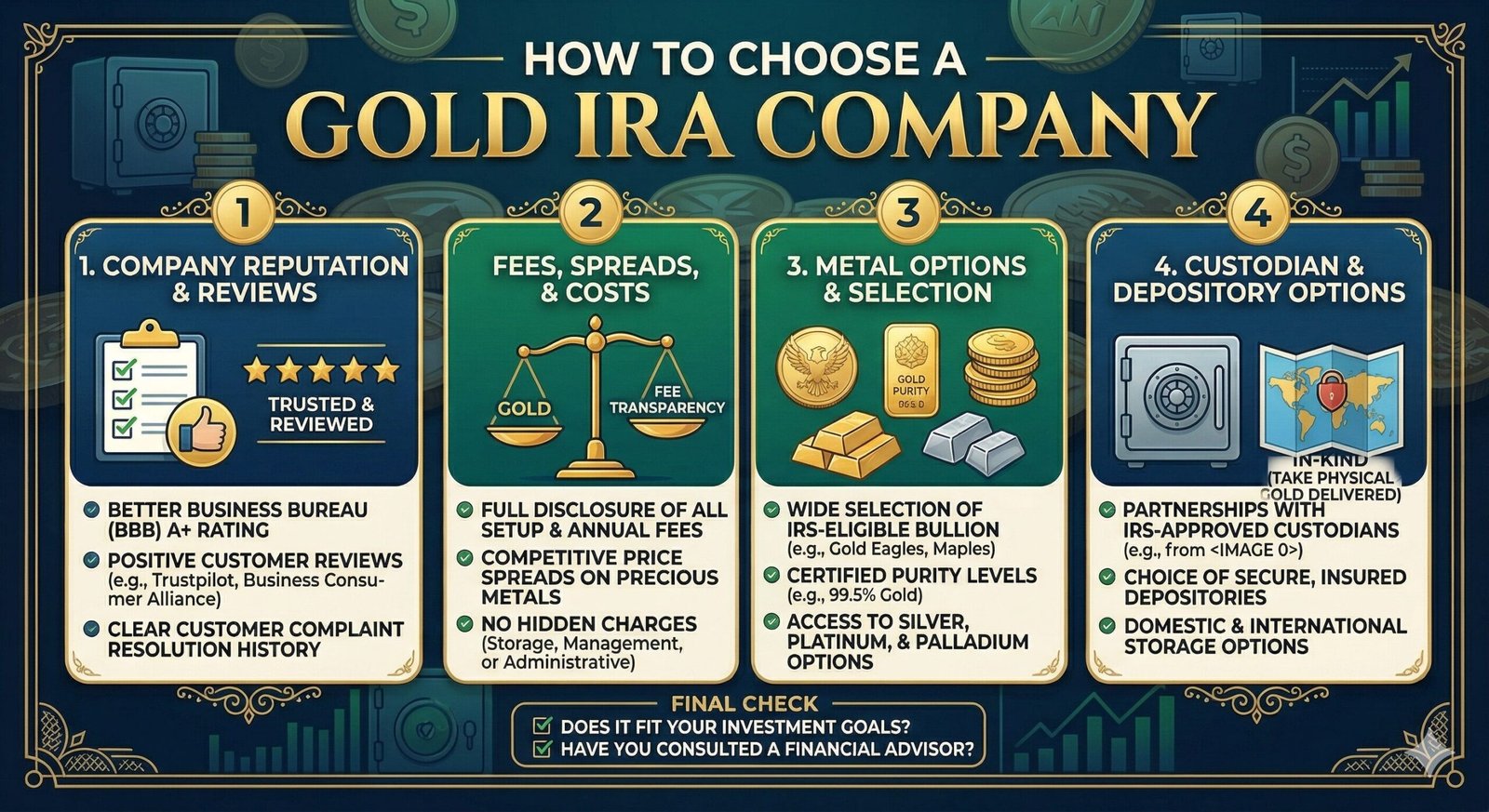
Custodian and company vetting. The Gold IRA industry includes reputable companies and, unfortunately, some that are not. Researching any company’s standing with the Better Business Bureau at bbb.org and reviewing our Gold IRA scams guide before committing is time well spent.
Comparing account types. If you’re weighing a Gold IRA against keeping funds in your workplace plan, our Gold IRA vs 401(k) comparison may be a useful reference.
FAQ: Age and Gold IRAs
Is there a minimum age to open a Gold IRA?
There’s no IRS-specified minimum age to open an IRA, but you do need earned income to make contributions to a traditional IRA. In practice, Gold IRA providers typically have minimum investment thresholds that make these accounts more relevant for investors further along in their careers.
Can I open a Gold IRA if I’m already retired?
Yes, you can open a Gold IRA after retiring, but the contribution rules become more complex. You generally need earned income to contribute to a traditional IRA. If you’re over 73, you’ll also be subject to RMD rules simultaneously. Consulting a tax advisor before proceeding is strongly recommended.
Does my age affect the fees I pay on a Gold IRA?
Your age doesn’t directly affect fee structures, but it does affect how long you’ll be paying those fees — and therefore how significantly they’ll impact your account over time. Investors with shorter time horizons may find the cost structure of a Gold IRA more impactful. Our Gold IRA fees guide explains the typical fee components in detail.
What happens to my Gold IRA when I reach RMD age?
At age 73, the IRS requires you to begin taking minimum distributions from traditional IRAs, including Gold IRAs. Because physical metal can’t be split the way paper assets can, you’ll need to either liquidate a portion of your holdings or take an in-kind distribution. Planning ahead for this is important.
Is a Gold IRA a good idea for someone in their 60s?
That depends entirely on your individual financial situation, goals, and retirement timeline — and it’s a question best explored with a qualified financial advisor. For a balanced look at the factors involved, see our article on is a Gold IRA a good idea.
Next Steps
Understanding how age interacts with Gold IRA rules is a meaningful first step, but it’s only part of the picture. If you’re ready to explore which providers are worth considering, our independent review page covers the leading options in the market today. Visit our Best Gold IRA Companies of 2026 guide to compare providers across key criteria including fees, minimums, custodian relationships, and customer service reputation.
This article is for informational purposes only and does not constitute financial or tax advice. Investing in precious metals involves risk including possible loss of principal.
Related guides
- Gold IRA Consumer Affairs Reviews: What to Look For
- Gold IRA Trustpilot Reviews: What Real Customers Say
- Gold IRA BBB Complaints: What Consumer Reports Reveal
- Is a Gold IRA Worth the Fees? A Cost-Benefit Analysis
- Are Gold IRA Fees Too High? Breaking Down the Real Costs
- Gold IRA Mistakes to Avoid: 10 Common Errors Investors Make