Can I Take Physical Possession of My Gold IRA Metals?
It’s one of the most common questions retirement investors ask when they first learn about Gold IRAs: if I own physical gold inside my retirement account, can I simply take it home and store it myself?
The short answer is no — not while the gold remains inside your IRA. But the longer answer is more nuanced, and understanding it fully could save you from a costly tax mistake. This article walks through exactly what the IRS allows, what happens when you take a distribution from a Gold IRA, and why the custody rules exist in the first place.
How Gold IRA Ownership Actually Works
Before getting into the possession rules, it helps to understand the structure of a Gold IRA. A Gold IRA — formally called a Precious Metals IRA or Self-Directed IRA (SDIRA) — holds physical gold, silver, platinum, or palladium rather than conventional paper assets. If you’re new to this structure, our Gold IRA hub covers the fundamentals in plain terms.
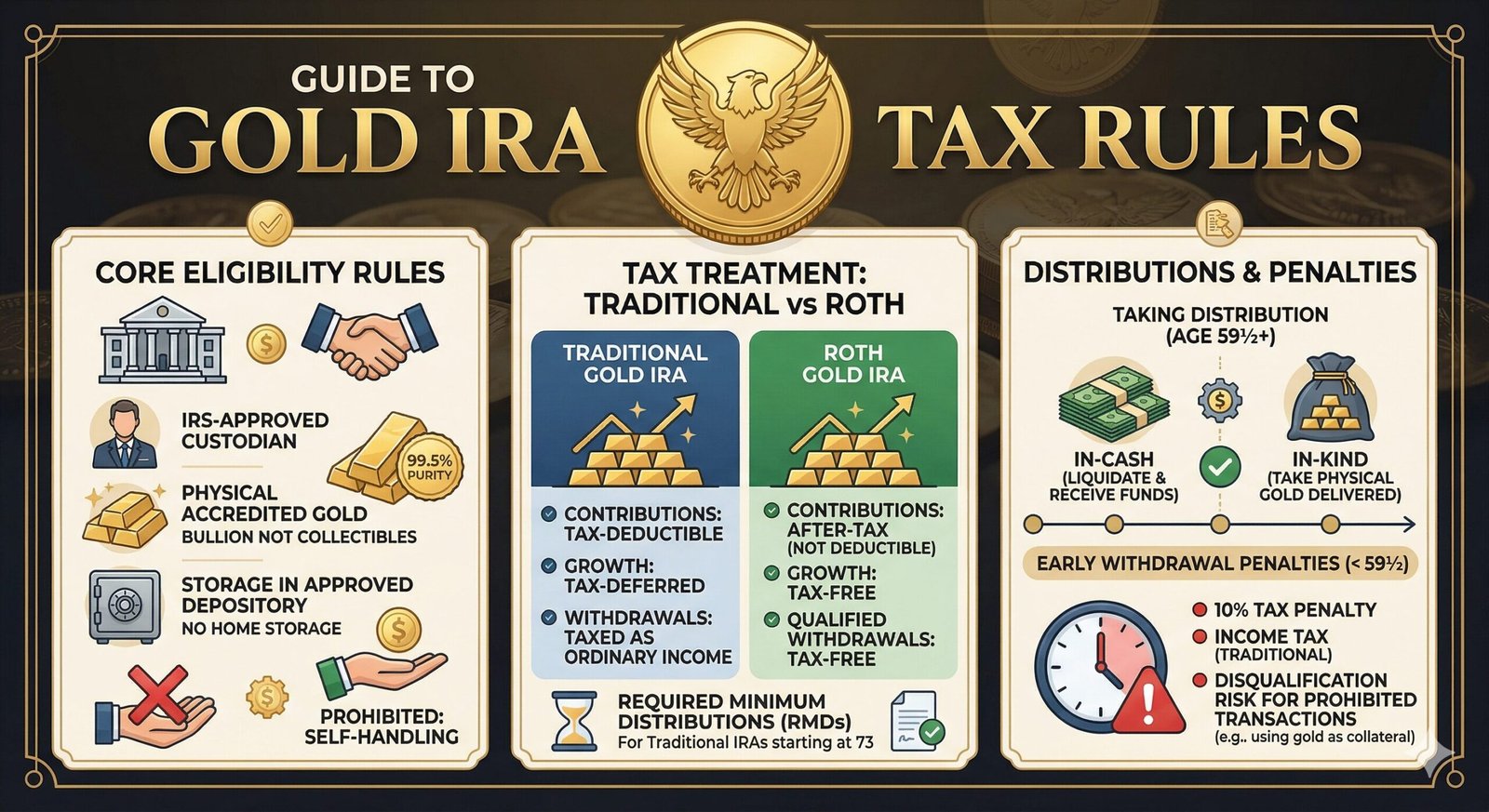
The critical distinction is this: you are the account owner, but you do not hold the assets directly. The IRS requires that all IRA assets — including physical metals — be held by a qualified custodian. For a Gold IRA, this means the physical coins or bars must be stored at an IRS-approved depository, not at your home, in a personal safe, or in a bank safety deposit box that you control.
This rule stems from the same principle that governs all IRAs. The tax advantages you receive — whether a deduction upfront in a Traditional IRA or tax-free growth in a Roth IRA — come with strings attached. One of those strings is that the IRS retains oversight of the assets through required custodianship. You can read more about the custodian and depository framework in our Gold IRAs Explained in Detail resource.
What the IRS Says About Home Storage
Over the years, a number of promoters have marketed what they call “home storage Gold IRAs” or “checkbook IRAs,” suggesting that investors can legally store their IRA-held gold at home by forming a limited liability company (LLC) that acts as an intermediary.
The IRS has been clear that this arrangement is not compliant with federal tax law in most circumstances. In nearly every case, having direct personal access to gold that is held in your IRA counts as a distribution — regardless of what kind of corporate structure sits between you and the metal.
FINRA’s guidance on self-directed IRAs explicitly warns investors to be cautious about promoters who claim that certain structures make home storage of IRA assets permissible. If a custodian or dealer is aggressively marketing home storage Gold IRAs, that is a significant red flag. Our Gold IRA scams guide covers this specific tactic in more detail.
The IRS IRA investment FAQ also makes clear that the prohibited transaction rules under IRC Section 4975 can be triggered when account holders exercise inappropriate control over IRA-held assets — which is precisely what home storage arrangements involve.
What Happens When You Take a Distribution?
Here is the important nuance: while you cannot take physical possession of gold while it remains inside your IRA, you can take a distribution — and that distribution can, in some cases, come in the form of the physical metal itself rather than cash.
When you request an in-kind distribution from your Gold IRA, the custodian arranges for the actual coins or bars to be shipped to you. At that point, you own the metal outright and can store it however you choose. However, an in-kind distribution is still a taxable event (and potentially subject to early withdrawal penalties), just like a cash distribution would be.
Here is how the tax treatment breaks down depending on the type of IRA:
It’s worth noting that the taxable value of an in-kind distribution is calculated based on the fair market value of the metal on the date of distribution — not what you originally paid for it. This means the value for tax purposes is determined by the current spot price of gold at the time, which can differ significantly from your original purchase price. As always, past performance is not a guarantee of future results, and metal values can rise or fall.
For a broader comparison of how these rules sit alongside other retirement account structures, see our Gold IRA vs Traditional IRA article.
Required Minimum Distributions and Physical Gold
Once you reach the age at which the IRS requires you to begin taking Required Minimum Distributions (RMDs) — currently age 73 under the SECURE 2.0 Act — you must begin withdrawing from your Traditional Gold IRA each year, just as you would with any other Traditional IRA.
The complication with a physical metals account is liquidity. With a stock-based IRA, your custodian can sell shares to fund a cash distribution easily. With physical gold, you have two options: the custodian can liquidate a portion of your metals and send you the cash equivalent, or they can arrange an in-kind distribution of physical metal.
Some investors prefer the in-kind route because it allows them to continue holding the metal outside of the IRA structure. Others prefer the simplicity of cash distributions. Either approach satisfies the RMD requirement, provided the value distributed meets or exceeds the IRS-calculated minimum for that year.
The IRS RMD FAQ provides the official calculation methodology if you want to understand how the minimum is determined. It’s worth reviewing well before you approach age 73 so there are no surprises.
IRS-Approved Depositories: Why They Exist
The IRS-approved depository requirement is not arbitrary bureaucracy. It serves several legitimate functions that genuinely benefit account holders.
First, it ensures independent verification of what you hold. Approved depositories maintain detailed records of every account holder’s metal holdings, verified through regular audits. This protects you in the event of a dispute.
Second, it maintains the arm’s-length relationship the IRS requires between you and the assets in your retirement account. If you were permitted to store IRA gold at home, the temptation to dip into it — or use it as collateral — would be significant, and the IRS has little appetite for creating enforcement loopholes.
Third, depositories carry substantial insurance coverage for the metals in their care. Your home, regardless of your homeowner’s insurance policy, is unlikely to offer the same level of protection for a significant quantity of gold.
Most Gold IRA custodians work with a small number of established, IRS-approved depositories. Common names you’ll encounter include Delaware Depository, Brink’s, and International Depository Services. Your custodian will handle the logistics of storage on your behalf.
If you’re still weighing up whether this kind of account makes sense for your situation, our article on is a Gold IRA a good idea walks through the practical considerations in a balanced way.
Setting Up a Gold IRA: The Custody Chain
Understanding the chain of custody helps clarify why the possession rules work the way they do. Here’s how the structure typically flows:
You (the account holder) → direct the account, make investment decisions within IRS rules
The custodian → an IRS-approved financial institution that holds the IRA in your name, handles paperwork, reports to the IRS, and instructs the depository
The depository → a licensed, insured, IRS-approved storage facility that physically holds the metals
The dealer → the company from which you purchase the actual gold or silver; the metal goes directly from the dealer to the depository, not through your hands
This chain means that even when you first purchase gold for your IRA, you never touch the metal. The dealer ships directly to the depository on instruction from the custodian. This is one of the features that distinguishes a Gold IRA from simply buying physical gold on the open market.
If you’re funding your Gold IRA through an existing 401(k) or another retirement account, our 401(k) to Gold IRA rollover guide explains how the transfer process works within this framework. And if you’re thinking about the rules that govern those transfers, our Gold IRA rollover rules page covers the critical IRS timing and eligibility requirements.
What Gold Is Eligible in the First Place?
Not every gold product qualifies for IRA inclusion. The IRS has specific fineness requirements: gold must be at least 99.5% pure (0.995 fineness) to be eligible. This rules out most collectible coins and older bullion that doesn’t meet the standard.
Eligible products include the American Gold Eagle coin (which is actually an exception to the fineness rule and is explicitly listed in IRS code), American Gold Buffalo coins, Canadian Gold Maple Leafs, and various approved gold bars and rounds produced by accredited refiners. Our IRA-eligible gold coins article provides a more complete breakdown of what meets the standard.
For a sense of what it costs to get started, our Gold IRA minimum investment and Gold IRA fees guide pages cover what you’ll typically encounter in terms of upfront and ongoing costs.
Per IRS Publication 590-A, collectibles are specifically excluded from IRA eligibility — and certain coins that might appear investment-grade can still fall into the collectibles category if they don’t meet the statutory requirements. When in doubt, confirm eligibility with your custodian before making a purchase.
Frequently Asked Questions
Can I store my Gold IRA metals in a bank safety deposit box?
No. Even if the safety deposit box is at a bank, if you have direct access to the box, the IRS considers this constructive receipt of the metals — which triggers a distribution. IRA-held metals must be stored at an IRS-approved depository, not in any facility where you hold personal access rights.
What if I want to take possession of my gold but keep it in an IRA?
You cannot do both simultaneously. Once you take physical possession of the metal, it is no longer inside the IRA — it has been distributed. If you’re under 59½, this triggers income tax and likely a 10% early withdrawal penalty. If you’re over 59½, it’s still a taxable distribution for a Traditional IRA.
Are there any exceptions that allow home storage of IRA gold?
In practice, no. While some promoters claim that LLC structures create legal home storage options, the IRS and tax courts have consistently found these arrangements to violate the custodianship rules. The penalties for getting this wrong — including potential disqualification of the entire IRA — are severe.
What happens to my gold if my custodian goes out of business?
Your gold is held at the depository separately from the custodian’s own assets, so the custodian’s financial difficulties do not affect your holdings. Another custodian can be appointed to take over the account. This is one of the reasons choosing an established, reputable custodian matters — you can check company histories at bbb.org or verify financial professional credentials through FINRA BrokerCheck.
Can I take an in-kind distribution and then put the gold back into an IRA?
You cannot return the same physical metal to the IRA. However, you could sell the distributed metal and contribute cash to a new IRA, subject to annual contribution limits and eligibility rules. The IRS contribution limits page has the current figures.
Ready to Learn More?
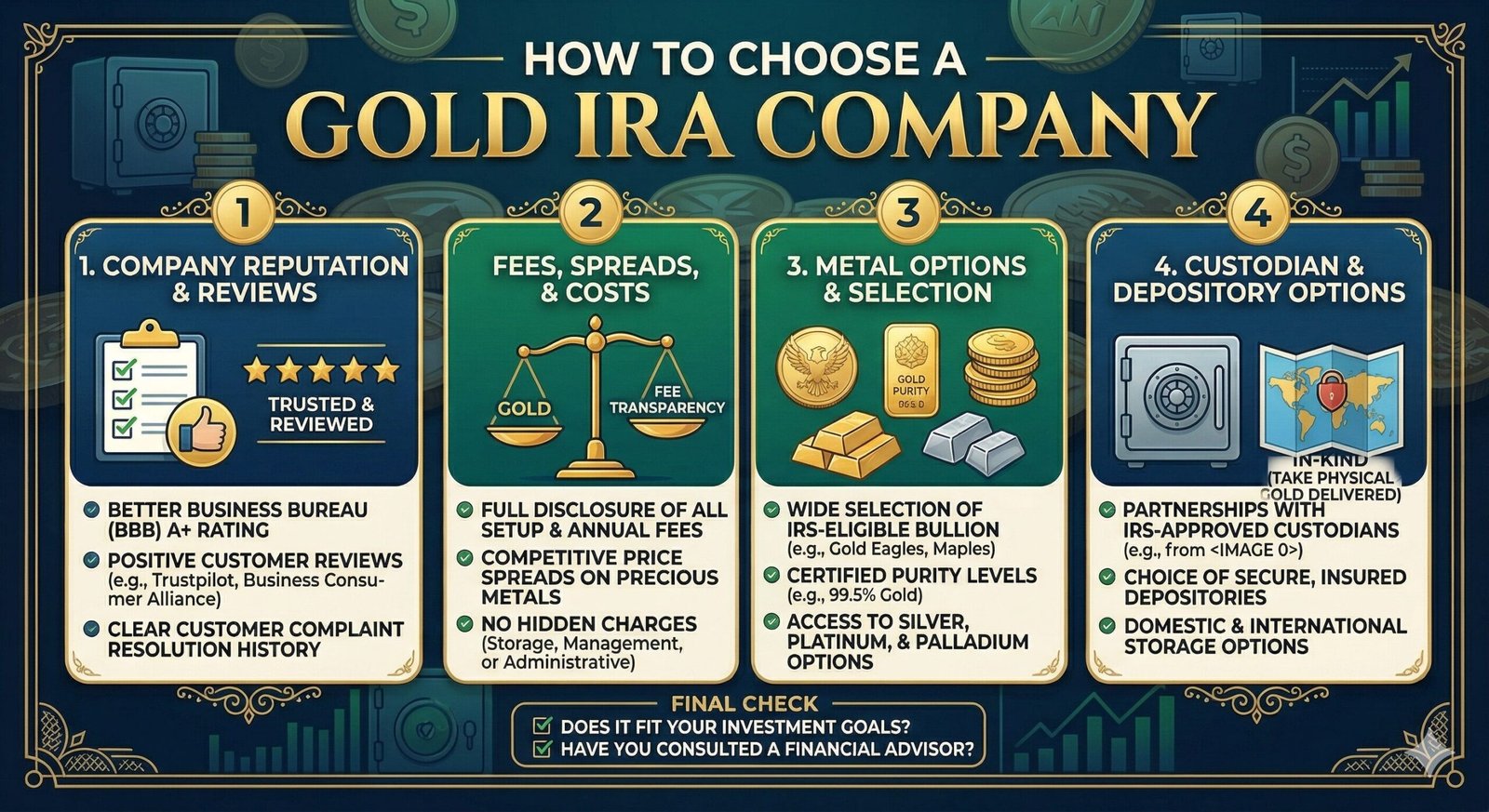
Understanding the custody and distribution rules is one of the most important steps in evaluating whether a Gold IRA fits your retirement planning picture. If you’re ready to compare your options and see which companies offer transparent fees, strong custodian relationships, and proper IRS-compliant storage arrangements, visit our full guide to the Best Gold IRA Companies of 2026.
This article is for informational purposes only and does not constitute financial or tax advice. Investing in precious metals involves risk including possible loss of principal.
Related guides
- Gold IRA Consumer Affairs Reviews: What to Look For
- Gold IRA Trustpilot Reviews: What Real Customers Say
- Gold IRA BBB Complaints: What Consumer Reports Reveal
- Is a Gold IRA Worth the Fees? A Cost-Benefit Analysis
- Are Gold IRA Fees Too High? Breaking Down the Real Costs
- Gold IRA Mistakes to Avoid: 10 Common Errors Investors Make