Gold IRA in Utah: Complete Investor Guide 2026
If you live in Utah and you’re approaching retirement, you’ve likely spent time thinking about how your savings are structured. A Gold IRA is one option that has attracted growing attention among retirement investors across the country — and Utah residents are no exception. Whether you’ve seen advertisements, heard a recommendation from a friend, or simply started researching on your own, this guide is designed to give you a grounded, factual overview of what a Gold IRA actually is, how it works within existing federal rules, and what Utah-specific considerations you should keep in mind.
This is not investment advice. It is information — and that distinction matters.
What Is a Gold IRA?
A Gold IRA is a type of self-directed Individual Retirement Account that holds physical precious metals — typically gold, silver, platinum, or palladium — rather than paper assets like stocks or mutual funds. The account functions under the same federal framework as a conventional IRA, meaning the same contribution limits, rollover rules, and required minimum distribution (RMD) requirements apply.
For a thorough breakdown of the account structure, see our Gold IRA hub, which walks through how these accounts are established and maintained. You can also read Gold IRAs Explained in Detail for a more technical breakdown.
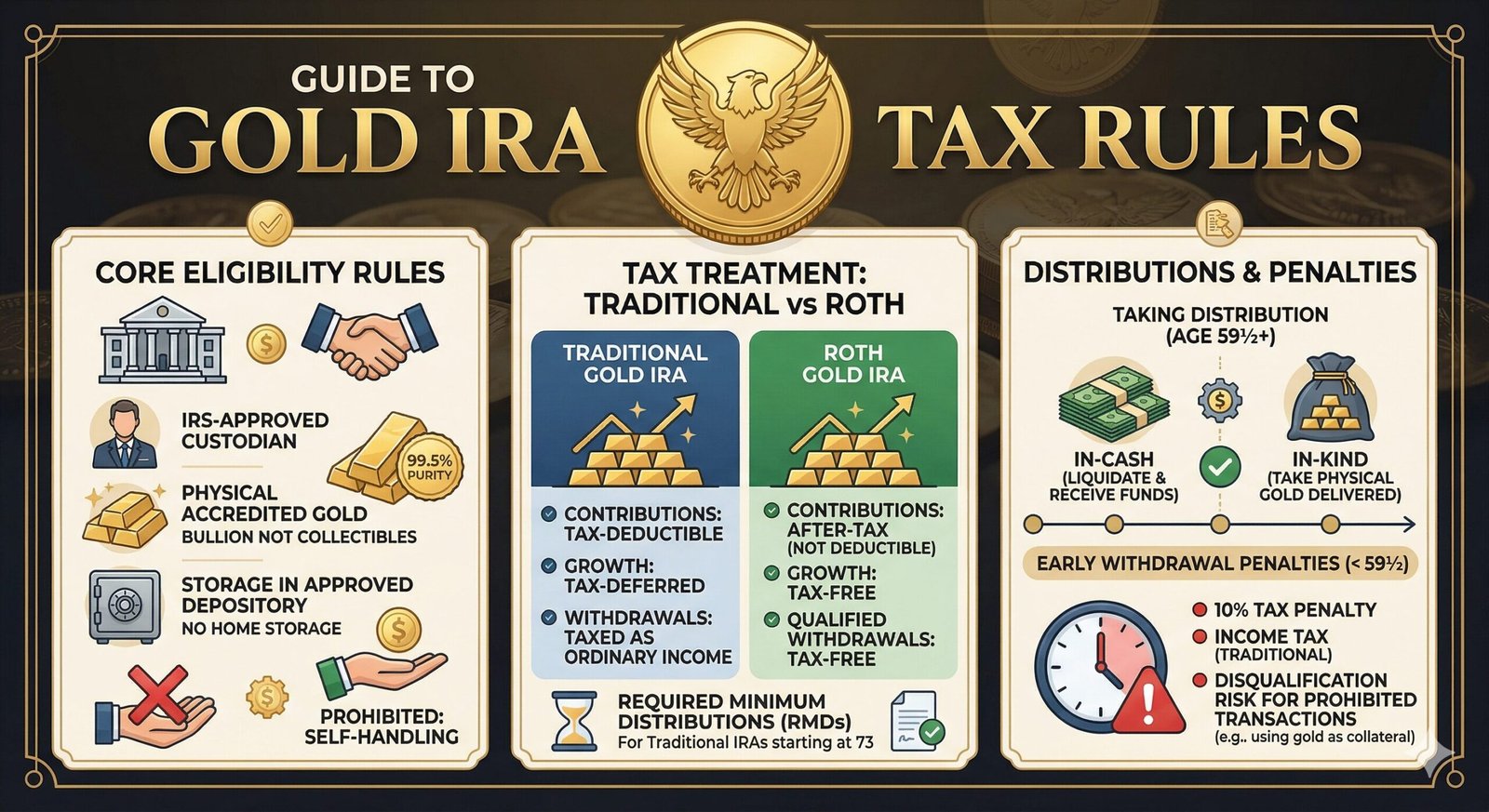
The IRS permits physical precious metals in self-directed IRAs, but with strict conditions. Not all gold qualifies. The metals must meet specific fineness standards, must be purchased through an approved custodian, and must be stored in an IRS-approved depository. You cannot store IRA-held gold at home or in a personal safe — doing so would constitute a distribution and trigger taxes and potential penalties.
Is a Gold IRA a Federal or State Account?
This is an important distinction for Utah residents to understand. Gold IRAs are governed entirely by federal law — specifically the Internal Revenue Code and IRS regulations. There is no separate Utah Gold IRA license, Utah-specific approval process, or state tax benefit unique to Gold IRAs. Utah conforms broadly to federal IRA tax treatment, so the same rules that apply to IRA holders in New York or Texas apply equally to Utah residents.
What this means practically is that your choice of Gold IRA custodian does not need to be a Utah-based company. Most reputable custodians operate nationally and are chartered in states such as South Dakota, Nevada, or Delaware — states that have established favorable trust and banking frameworks for self-directed account administration. You are free to work with any IRS-approved custodian regardless of where they are headquartered.
Setting Up a Gold IRA as a Utah Resident
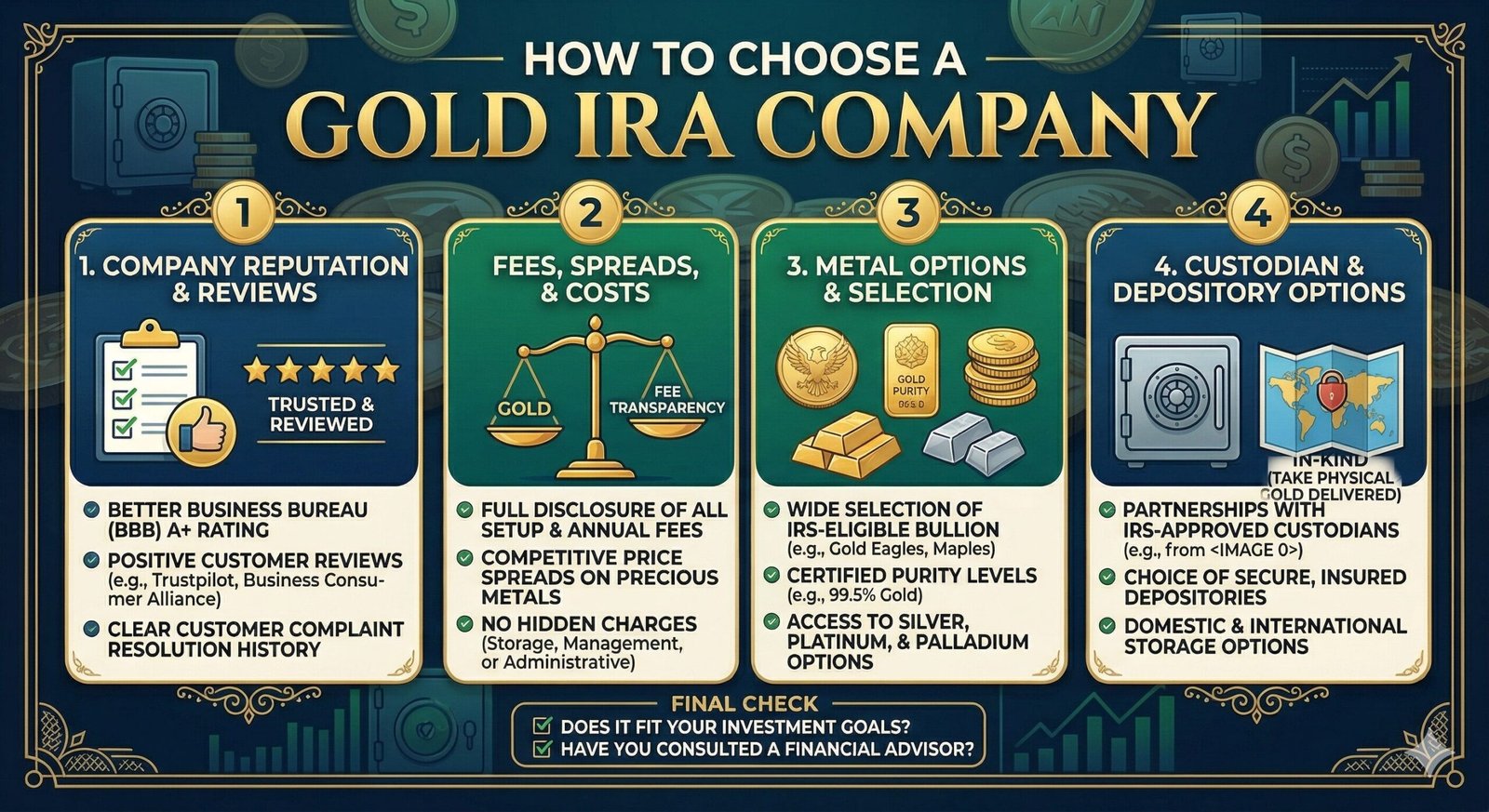
Step 1: Choose a Qualified Custodian
Federal law requires that all IRA assets — including physical metals — be held by a qualified trustee or custodian. This is typically a trust company, bank, or other IRS-approved financial institution. It is not a gold dealer.
FINRA offers useful background through its guidance on self-directed IRAs, which explains the responsibilities custodians carry and the due diligence investors should apply when selecting one. Do your homework before signing anything. Check the company’s standing through their state regulator and review their history at bbb.org.
Step 2: Fund Your Account
You can fund a Gold IRA through several methods:
- Annual contributions — subject to IRS limits (currently $7,000 per year for those under 50; $8,000 for those 50 and older, per IRS contribution limits)
- Rollovers from existing IRAs — a direct or indirect rollover from a traditional, SEP, or SIMPLE IRA
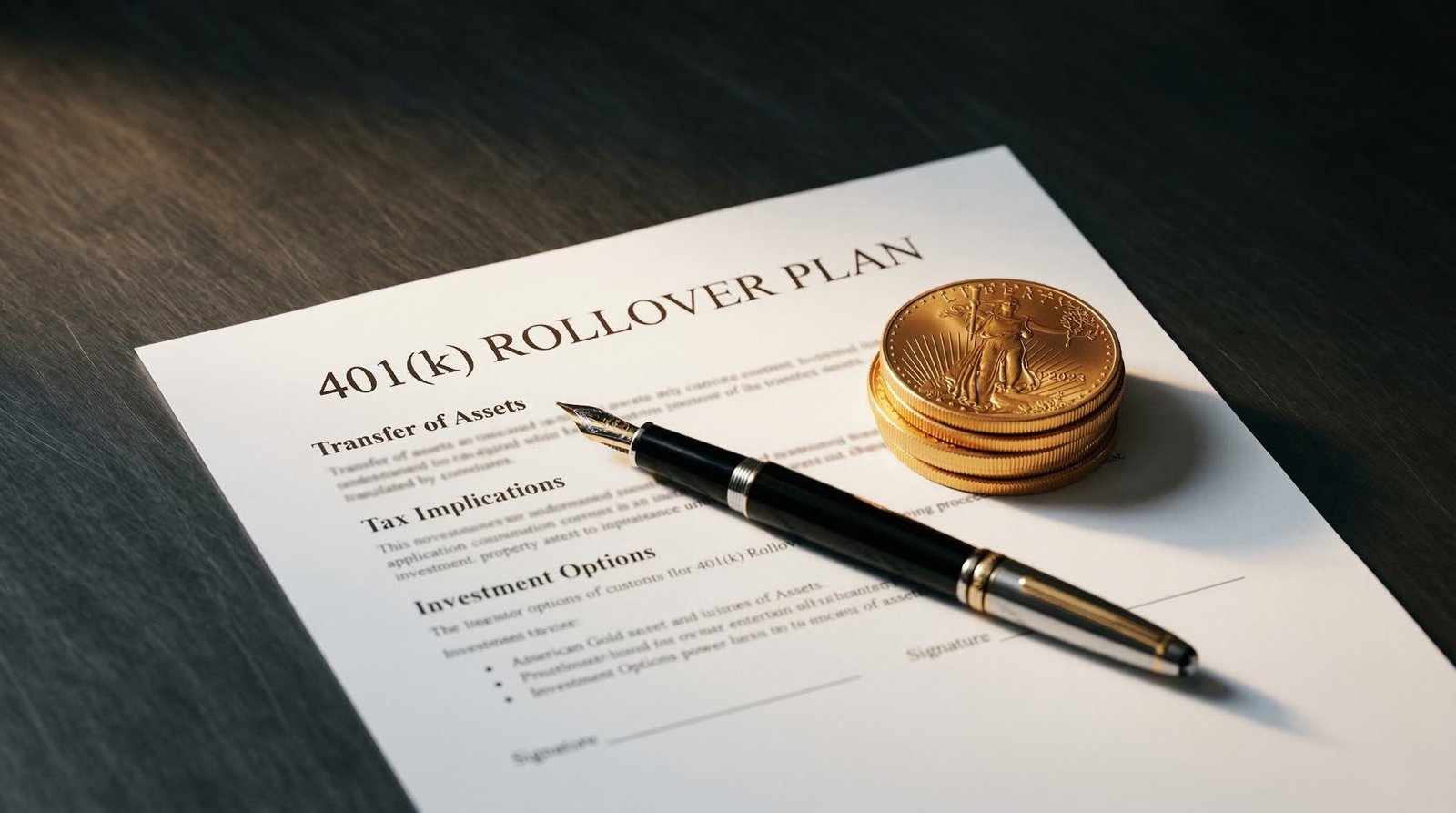
- Rollovers from a 401(k) — if you have left a job or have an eligible plan, you may be able to move funds via a rollover
If you’re considering moving workplace retirement savings into a Gold IRA, the 401(k) to Gold IRA rollover guide covers the mechanics in plain language, including the difference between direct and indirect rollovers and the 60-day rule that governs the latter.
Step 3: Select IRS-Eligible Metals
Once your account is funded, your custodian will facilitate the purchase of metals from an approved dealer. Not all gold qualifies for IRA inclusion. The IRS requires gold to be at least 99.5% pure (0.995 fineness). Common eligible products include American Gold Eagle coins, American Gold Buffalo coins, and various gold bars and rounds meeting the fineness threshold.
Our guide to IRA-eligible gold coins provides a practical reference for understanding which products meet the standard. The IRS IRA investment FAQ also outlines what is and is not permissible inside an IRA.
Step 4: Arrange Approved Storage
All IRA metals must be stored in an IRS-approved depository — not at your home, not in a bank safe deposit box rented in your own name, and not at your custodian’s office. Approved depositories are secured, insured facilities that hold metals on behalf of account holders. Some are located in Utah; many are in states like Delaware, Texas, or Nevada. Your custodian will typically present you with depository options.
Key Fees to Understand
Gold IRAs carry a different fee structure than conventional IRAs. Before opening an account, you should understand what you are agreeing to pay. Our detailed Gold IRA fees guide breaks down each category, but here is a summary of what to expect:
These fees are in addition to the cost of the metals themselves. Over many years, they compound and affect your account’s net value. Ask for a full written fee schedule before committing to any custodian.
Rollover Rules Utah Investors Should Know
The mechanics of rolling over an existing retirement account into a Gold IRA are the same for Utah residents as for everyone else — but the rules are precise, and mistakes can be costly. Our Gold IRA rollover rules article covers these in detail.
The two key rollover methods are:
Direct Rollover: Funds move from your existing custodian directly to your new Gold IRA custodian without passing through your hands. This is the simpler and lower-risk method.
Indirect (60-Day) Rollover: The funds are distributed to you first, and you have 60 calendar days to deposit them into the new account. If you miss the 60-day window, the IRS treats the distribution as taxable income — and if you are under 59½, an additional 10% early withdrawal penalty may apply. You are also limited to one indirect rollover per 12-month period, per IRS Publication 590-A.
Required Minimum Distributions and Gold IRAs
If you hold a traditional (pre-tax) Gold IRA, you are subject to the same RMD rules as any other traditional IRA holder. Starting at age 73, the IRS requires you to begin taking distributions — whether you want to or not. With a conventional IRA, distributions are straightforward because you hold liquid assets. With a Gold IRA, taking an RMD requires either selling a portion of your metals (which your custodian facilitates) or taking an “in-kind” distribution — meaning you receive the physical metal itself, which is then counted as taxable income at its fair market value.
The IRS RMD FAQ explains the calculation methods and timing requirements. Understanding this in advance helps avoid situations where you are forced to sell metals at an inconvenient time simply to meet a distribution deadline.
Avoiding Common Mistakes
Utah investors considering a Gold IRA should approach the process methodically. Some of the most common errors include:
Working with a dealer who also serves as the “custodian” is a red flag. These roles must be legally separate. If a company is trying to be your dealer, custodian, and storage provider all at once, scrutinize that arrangement carefully. FINRA’s FINRA BrokerCheck tool can help you verify the background of individuals and firms involved in your account.
Confusing a Gold IRA with home storage. Several companies market “home storage gold IRA” programs, implying you can keep IRA-held metals at home legally. This is not permitted under current IRS rules, and such arrangements may constitute a prohibited transaction. The SEC’s investor resources provide useful background on legitimate retirement account structures.
Our Gold IRA scams guide is worth reading before you engage with any company — it covers the tactics bad actors use and how to recognize warning signs early.
Gold IRA vs. Other Retirement Account Types
If you’re weighing a Gold IRA alongside other account structures, the comparison pages on this site may be useful. See our Gold IRA vs Traditional IRA article for a side-by-side look at how the two account types differ in terms of tax treatment, assets held, and administrative complexity. Our Gold IRA vs 401(k) page is similarly useful if you’re deciding what to do with workplace retirement savings.
For those still weighing whether the account type suits their situation at all, the article is a Gold IRA a good idea walks through the key questions to ask before making any decisions. And if you’re thinking about the minimum capital required to get started, our Gold IRA minimum investment page provides current figures from leading custodians.
Frequently Asked Questions
Does Utah have any special rules for Gold IRAs?
No. Gold IRAs are governed entirely by federal law — the Internal Revenue Code and IRS regulations. Utah does not have separate state-level rules for Gold IRA accounts. Utah’s income tax treatment of IRA distributions generally follows federal guidelines, but you should consult a qualified tax professional for advice specific to your circumstances.
Can I store my Gold IRA metals in Utah?
Yes, there are IRS-approved depositories that operate within Utah. However, the location of the depository is less important than whether it is IRS-approved, properly insured, and carries a strong track record. Your custodian will provide a list of depository options.
How long does it take to open a Gold IRA if I’m in Utah?
The process typically takes one to three weeks from account application to first metal purchase, depending on how quickly you complete paperwork, fund the account, and confirm metal selections. Rollover timelines may vary depending on how quickly your existing custodian processes the transfer.
Can I roll over my Utah state pension or 457(b) plan into a Gold IRA?
Government 457(b) plans have specific rollover rules that differ from private-sector retirement accounts. Whether a particular Utah pension or deferred compensation plan can be rolled over into a Gold IRA depends on the plan’s terms and applicable IRS rules. You should consult the plan administrator and a qualified financial or tax professional before attempting such a rollover.
What happens to my Gold IRA when I pass away?
Like all IRA accounts, a Gold IRA can name beneficiaries. Upon the account holder’s death, the metals remain in the account and are managed according to IRS inherited IRA rules — which include specific distribution timelines depending on the beneficiary’s relationship to the deceased. Your custodian and estate planning attorney can advise on how to structure your beneficiary designations correctly.
Ready to Research Your Options?
If you’ve found this guide useful, the next step is comparing the custodians and dealers currently available to Utah residents. Not all companies are equal in terms of fees, transparency, or customer service track record. Our independently researched Best Gold IRA Companies of 2026 page is a strong starting point for understanding which providers are worth a closer look.
This article is for informational purposes only and does not constitute financial or tax advice. Investing in precious metals involves risk including possible loss of principal.
Related guides
- Gold IRA Consumer Affairs Reviews: What to Look For
- Gold IRA Trustpilot Reviews: What Real Customers Say
- Gold IRA BBB Complaints: What Consumer Reports Reveal
- Is a Gold IRA Worth the Fees? A Cost-Benefit Analysis
- Are Gold IRA Fees Too High? Breaking Down the Real Costs
- Gold IRA Mistakes to Avoid: 10 Common Errors Investors Make