Gold IRA in Rhode Island: Investor Guide for 2026
Rhode Island may be the smallest state in the union, but its residents face the same retirement planning challenges as anyone else — market volatility, rising costs of living, and the ever-present question of how to build a retirement account that can weather changing economic conditions. For a growing number of Ocean State investors, a Gold IRA has entered that conversation as a structured, IRS-approved way to hold physical precious metals within a tax-advantaged retirement account.
This guide is designed to walk Rhode Island residents through what a Gold IRA is, how it works under federal rules, what to expect from the setup process, and what questions to ask before moving forward. If you’re in your 40s, 50s, or 60s and beginning to think more seriously about your retirement strategy, understanding the mechanics of this account type is a solid place to start.
What Is a Gold IRA and How Does It Work?
A Gold IRA is a self-directed individual retirement account that holds IRS-approved physical precious metals — typically gold, silver, platinum, or palladium — rather than conventional paper assets like mutual funds or stocks. It operates under the same broad federal framework as a traditional or Roth IRA, meaning the same annual contribution limits, the same required minimum distribution (RMD) rules, and the same custodian oversight requirements apply.
The critical distinction is in the asset class. Because physical gold is a tangible asset, the IRS imposes specific rules around purity, storage, and administration that don’t apply to a standard brokerage IRA. For a thorough breakdown of how these accounts are structured, our Gold IRA hub is a useful starting point, and for a deeper legal and structural walkthrough, you can also read Gold IRAs Explained in Detail.
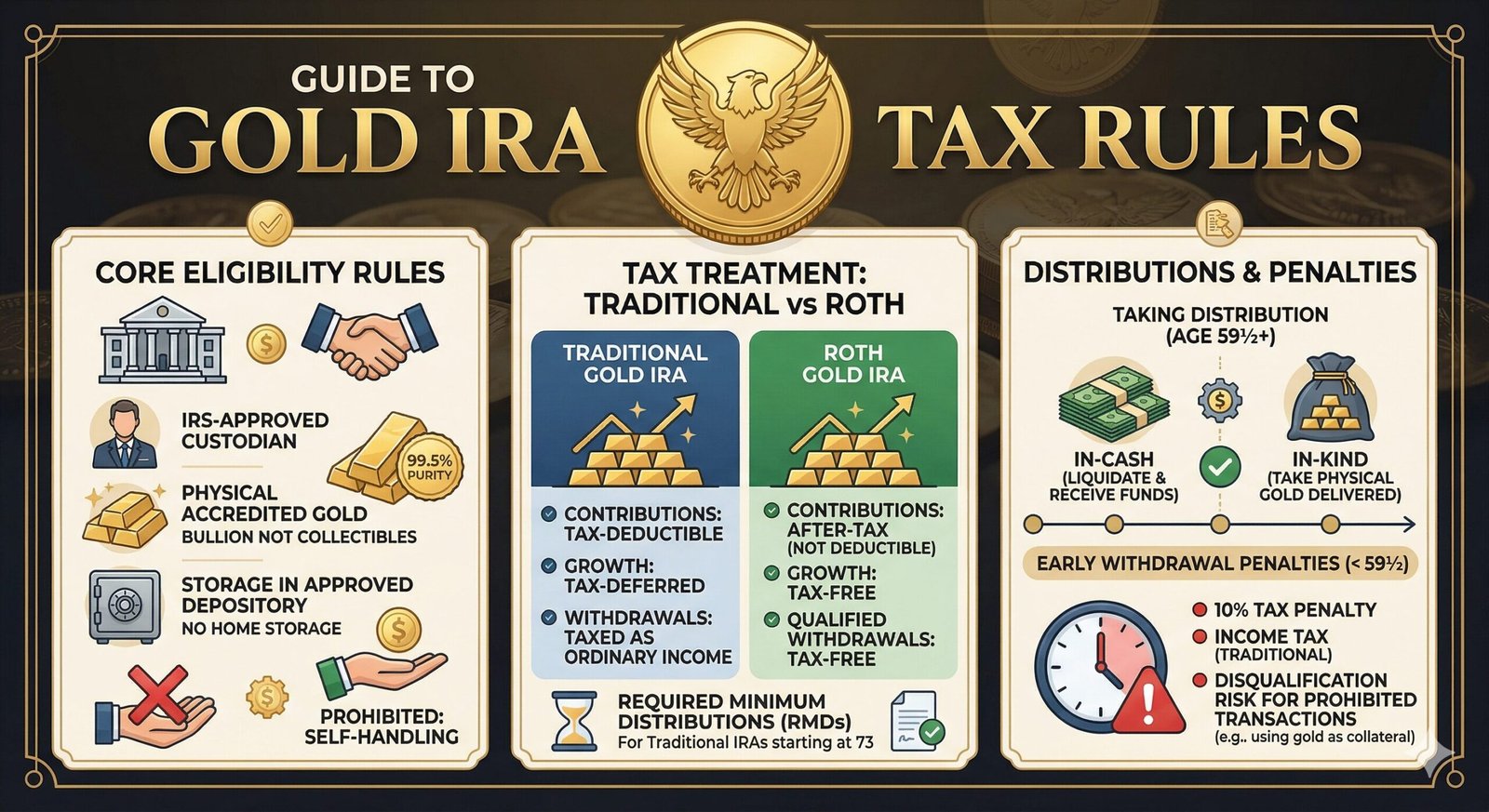
The IRS requires that any physical metals held in a Gold IRA be stored with an approved depository — not at home, not in a personal safe, and not in a local bank vault you rent privately. The metals must also meet minimum purity standards: gold must be at least .995 fine, silver .999 fine, and platinum and palladium .9995 fine. Certain coins — including American Gold Eagles and American Gold Buffalos — are explicitly permitted under IRS rules, and you can learn more about eligible options in our guide to IRA-eligible gold coins.
Is a Gold IRA Available to Rhode Island Residents?
Yes — Gold IRAs are federal accounts governed by IRS rules, not state-specific legislation. Rhode Island does not impose additional restrictions on self-directed IRAs, meaning residents have the same access to this account type as investors anywhere else in the country.
That said, where you live can still influence certain practical decisions: which custodians you’re comfortable working with, how you prefer to communicate with your account administrator, and whether you want any in-person access to company representatives. Most Gold IRA custodians operate nationally and are not located in Rhode Island — but that’s true for most specialty financial service providers, and it doesn’t affect the legality or functionality of the account.
For context on how the federal IRA rules function regardless of state, the IRS IRA investment FAQ provides clear guidance on what self-directed accounts can and cannot hold.
Opening a Gold IRA in Rhode Island: The Key Steps
Step 1 — Choose a Qualified Custodian
All IRAs must be held by an IRS-approved custodian — a bank, credit union, trust company, or other entity specifically authorized to administer self-directed accounts. Not all financial institutions offer this service. Most major brokerage firms do not support physical precious metals in their IRAs, so you’ll need to seek out a custodian that specializes in self-directed accounts.
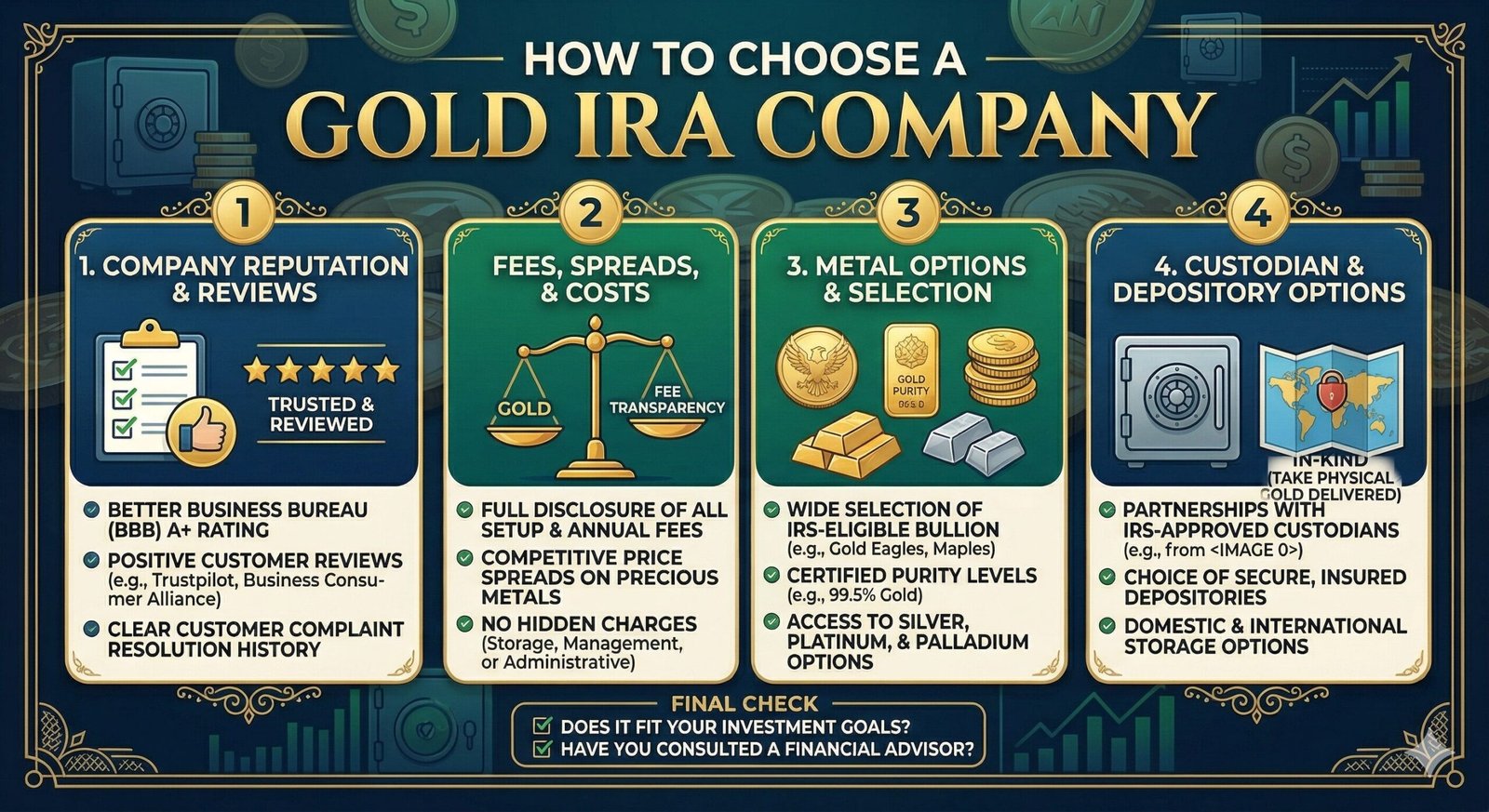
Before selecting a custodian, do your due diligence. Research their fee structures, read independent reviews, and check their standing with organizations like bbb.org. You can also review FINRA’s guidance on self-directed IRAs for an objective look at how these accounts work and what risks investors should be aware of.
Step 2 — Select an Approved Depository
Because IRS rules prohibit you from personally holding the metals in your Gold IRA, you’ll need to work with your custodian to designate an IRS-approved depository. These are typically large, insured vaulting facilities located in states like Delaware, Texas, or Nevada. Rhode Island investors have no geographic disadvantage here — the metals are held on your behalf, and your ownership is fully documented regardless of where the depository is located.
Step 3 — Fund Your Account
You can fund a Gold IRA in several ways: through a direct contribution, a rollover from an existing traditional IRA, or a transfer from a 401(k) or similar employer-sponsored plan. If you have a 401(k) from a previous employer, our 401(k) to Gold IRA rollover guide walks through the mechanics in plain language. For the rules governing how rollovers must be handled to remain tax-free, see our Gold IRA rollover rules page.
The IRS sets annual contribution limits that apply to all your IRAs combined. For 2025, the standard limit is $7,000 per year, with a $1,000 catch-up contribution available for those aged 50 and over. For the latest figures, refer directly to the IRS contribution limits page.
Step 4 — Purchase IRS-Approved Metals
Once your account is funded, your custodian will work with a dealer to purchase metals on your behalf. You don’t take personal possession of the gold at this stage — the metals are sent directly to your designated depository. It’s important to understand what metals qualify under IRS rules before you make any purchase selections.
Understanding Gold IRA Fees
Gold IRAs carry a different fee structure than conventional IRAs, and understanding those costs before you commit is essential. You’ll typically encounter some combination of the following: account setup fees, annual custodian administration fees, storage fees charged by the depository, and transaction fees when you buy or sell metals.
These fees vary meaningfully from one provider to the next, which is why comparison shopping matters. Our dedicated Gold IRA fees guide breaks down the typical ranges and explains what questions to ask providers before signing any agreements. Being informed about costs upfront helps you avoid surprises later in the life of the account.
Gold IRA vs. Other Retirement Accounts: A Quick Comparison
Rhode Island investors often come to Gold IRAs after comparing them with the accounts they already hold. The table below outlines some key structural differences.
For more side-by-side context, see our articles on Gold IRA vs Traditional IRA and Gold IRA vs 401(k).
Required Minimum Distributions and Rhode Island Tax Considerations
Once you reach age 73, the IRS requires you to begin taking required minimum distributions (RMDs) from your Gold IRA, just as you would from a traditional IRA or 401(k). For Gold IRAs, this creates a logistical consideration: because your assets are physical metals, not cash, you may need to liquidate a portion of the metals to meet your RMD — or take an in-kind distribution, depending on your custodian’s policies. The IRS RMD FAQ outlines the exact rules.
At the state level, Rhode Island does tax retirement income for residents, including distributions from traditional IRAs. As with any tax matter, the specifics of your situation should be discussed with a qualified tax professional. This article does not constitute tax advice, and nothing here should be read as a recommendation about your individual tax position.
Avoiding Common Mistakes
Self-directed IRAs — including Gold IRAs — offer real flexibility, but that flexibility comes with responsibility. The IRS places strict rules on what’s called “prohibited transactions,” and violating those rules can result in the entire account becoming taxable. Examples include using your IRA-owned gold for personal benefit or purchasing metals that don’t meet purity requirements.
There are also bad actors in the gold investment space who target retirement-age investors with high-pressure sales tactics or misleading claims. Before committing to any Gold IRA provider, read our Gold IRA scams guide and verify custodians through FINRA BrokerCheck. The SEC investor resources page also offers helpful background on what investor protections apply to retirement accounts.
Is a Gold IRA Right for You?
Whether a Gold IRA makes sense for your retirement plans depends on your individual circumstances, goals, and financial situation — not on any general claim about the merits of gold as an asset class. Our article on is a Gold IRA a good idea explores the considerations in more depth, without making recommendations on your behalf.
What’s clear is that these are real, IRS-sanctioned accounts with established rules, and they deserve the same careful evaluation you’d apply to any major financial decision. If you’re considering a Gold IRA minimum investment, knowing what providers typically require upfront is a practical first step.
Frequently Asked Questions
Can Rhode Island residents open a Gold IRA with any national custodian?
Yes. Gold IRAs are federal accounts and there are no Rhode Island-specific restrictions that limit which custodians you can use. You can work with any IRS-approved, nationally operating self-directed IRA custodian regardless of where they’re headquartered.
Do I have to store my gold physically in Rhode Island?
No. IRS rules require that metals in a Gold IRA be stored at an approved depository, and most of those facilities are located in other states. Your ownership of the metals is fully documented and legally protected regardless of where the depository is located.
Can I roll over my existing 401(k) into a Gold IRA?
In many cases, yes — particularly if the 401(k) is from a previous employer. Direct rollovers, when done correctly, can be completed without triggering taxes or penalties. The process has specific steps and timing requirements, which our 401(k) to Gold IRA rollover guide covers in detail.
What happens to my Gold IRA when I reach retirement age?
When you reach age 73, you’re required to begin taking RMDs. For a Gold IRA, this may involve liquidating a portion of your metals for cash or taking an in-kind distribution of physical metal, subject to your custodian’s policies and IRS rules. Distributions are generally taxed as ordinary income for traditional Gold IRAs.
How do I verify that a Gold IRA company is legitimate?
Start by checking the company’s rating and complaint history at bbb.org, and use FINRA BrokerCheck to verify any individuals or firms involved in the account. Reading IRS Publication 590-A can also help you understand what a legitimate IRA structure looks like, so you can spot anything that deviates from the rules.
If you’re ready to explore your options further, our independently researched list of the Best Gold IRA Companies of 2026 reviews leading providers across criteria including fees, custodian relationships, customer service, and transparency — giving you a structured starting point for your own research.
This article is for informational purposes only and does not constitute financial or tax advice. Investing in precious metals involves risk including possible loss of principal.
Related guides
- Gold IRA Consumer Affairs Reviews: What to Look For
- Gold IRA Trustpilot Reviews: What Real Customers Say
- Gold IRA BBB Complaints: What Consumer Reports Reveal
- Is a Gold IRA Worth the Fees? A Cost-Benefit Analysis
- Are Gold IRA Fees Too High? Breaking Down the Real Costs
- Gold IRA Mistakes to Avoid: 10 Common Errors Investors Make