Gold IRA in Maryland: Complete Guide for Investors
If you live in Maryland and you’re thinking about including physical gold in your retirement planning, you’ve likely come across the term “Gold IRA” more than a few times. Perhaps you’ve seen ads, received mailers, or spoken with a financial professional who mentioned the option. Whatever brought you here, this guide is designed to give you a clear, honest, and thorough overview of how Gold IRAs work — specifically for Maryland residents navigating federal IRS rules, custodian selection, and the practical steps involved.
This is not investment advice. What it is, however, is a factual walkthrough of one of the more complex retirement account structures available to American investors today.
What Is a Gold IRA, and Who Can Open One?
A Gold IRA is a type of self-directed Individual Retirement Account (IRA) that holds physical precious metals — including gold, silver, platinum, and palladium — rather than traditional paper assets like mutual funds or ETFs. To understand what a Gold IRA is at a foundational level, it helps to first understand what makes it “self-directed.”
Standard IRAs are administered by banks or brokerage firms that limit your investment options to the products they offer. A self-directed IRA, by contrast, allows account holders to choose from a much broader range of IRS-approved assets. FINRA’s guidance on self-directed IRAs is worth reading before you proceed, as it outlines some of the unique responsibilities — and risks — that come with this account structure.
Any U.S. resident with earned income can open a traditional or Roth IRA, including Maryland residents. There are no state-specific laws that restrict or modify federal IRA rules. Maryland follows federal IRS guidelines on contributions, rollovers, and distributions, so the rules you’ll read about in IRS Publication 590-A apply directly to you.
How Maryland Residents Can Open a Gold IRA
Opening a Gold IRA involves several steps that differ from setting up a standard brokerage IRA. The process typically unfolds in the following sequence.
Step 1: Choose a Self-Directed IRA Custodian
The IRS requires that all IRAs — including self-directed ones — be held by an approved custodian. For Gold IRAs, this means finding a custodian that specializes in alternative assets and physical precious metals. These are not your typical bank or credit union. They are often specialty trust companies or non-bank financial institutions approved by the IRS to hold self-directed accounts.
Maryland residents have no geographic restriction here. You are not required to use a Maryland-based custodian. Many of the most established Gold IRA custodians operate nationally and are based in states like South Dakota, Texas, or Nevada, where trust company regulations are favorable. What matters is that the custodian is IRS-approved and has a solid reputation.
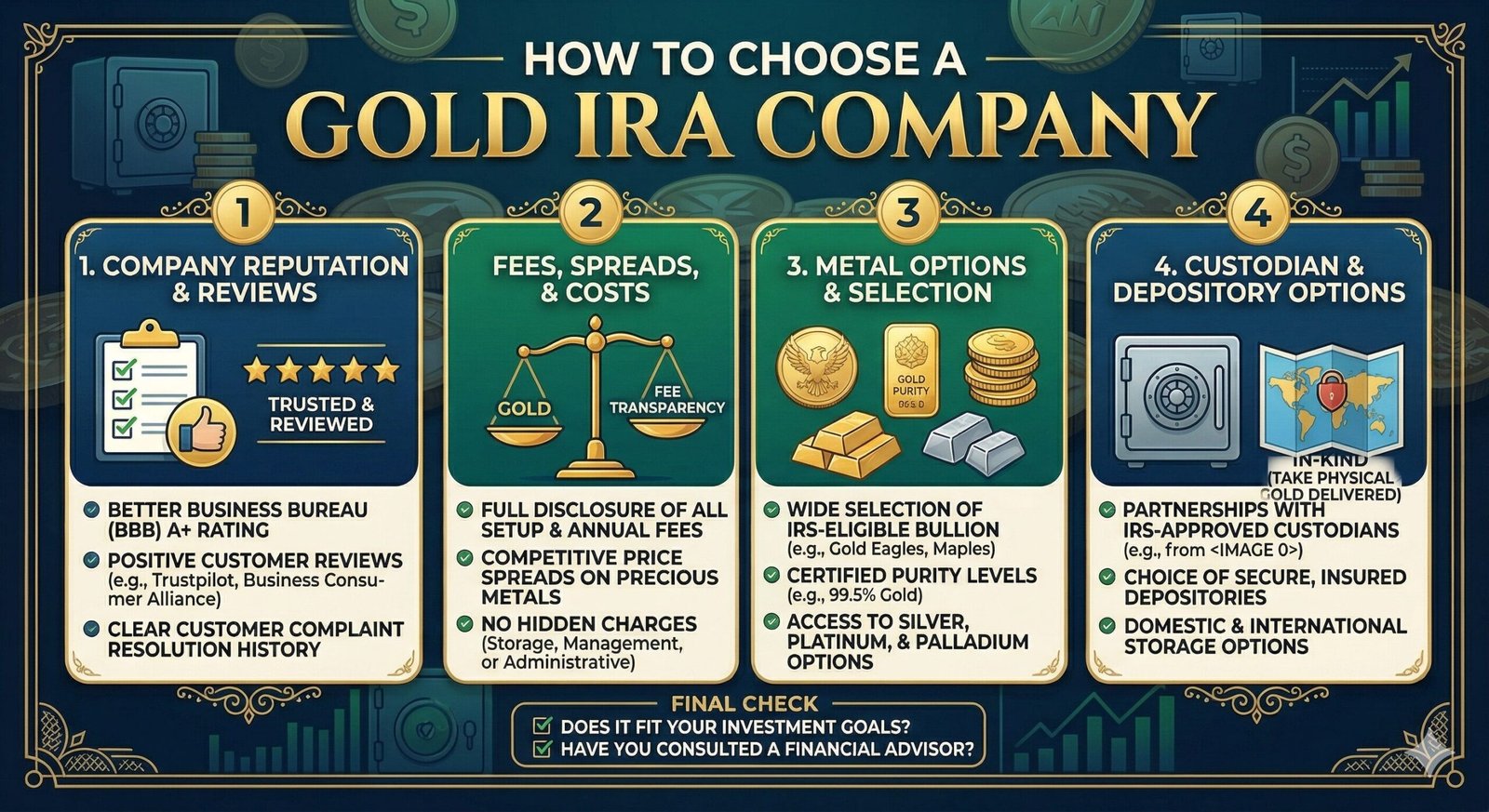
When evaluating custodians, look for clear fee disclosures, verifiable credentials, and strong ratings from third-party review organizations. Check their standing at bbb.org and verify that any financial professionals involved can be reviewed through FINRA BrokerCheck.
Step 2: Fund the Account
Once you’ve selected a custodian and completed the account paperwork, you’ll need to fund your Gold IRA. Maryland investors generally have three options:
New Contribution: Subject to annual IRS limits. For 2024, the contribution limit is $7,000 per year, or $8,000 if you are age 50 or older. You can review current figures directly at the IRS contribution limits page.
IRA Transfer: Moving funds directly from one IRA to another, with no tax withholding. This is generally the simplest method.
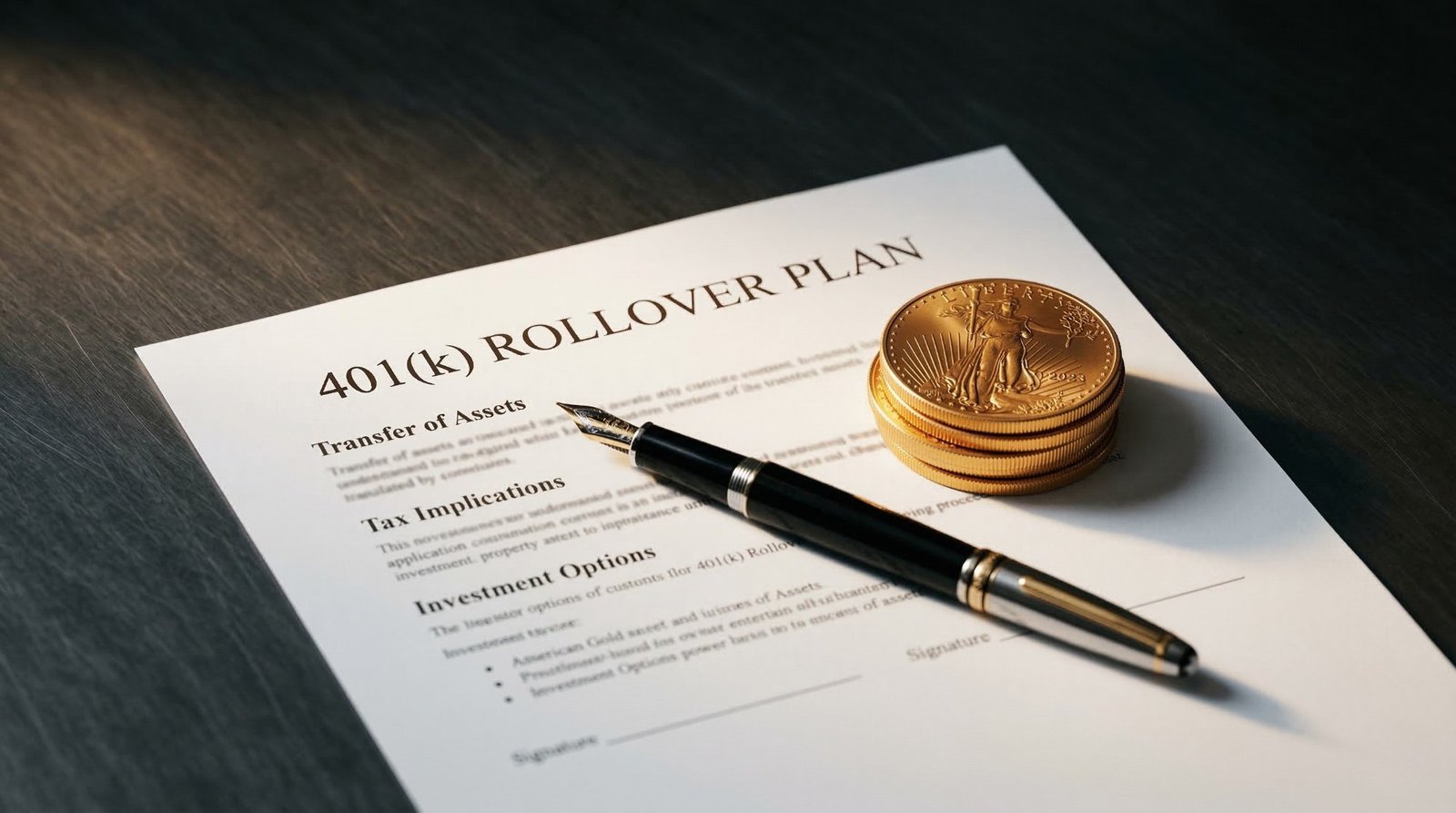
401(k) Rollover: If you have funds in a former employer’s 401(k) plan, you may be eligible to roll those over into a Gold IRA. For a detailed breakdown of this process, see our 401(k) to Gold IRA rollover guide.
Step 3: Select IRS-Approved Precious Metals
Not all gold qualifies for IRA inclusion. The IRS has strict purity requirements. Gold must be at least 99.5% pure (0.995 fineness) to qualify. This generally includes products like American Gold Eagle coins, American Gold Buffalo coins, and various gold bars produced by approved refiners.
Our guide to IRA-eligible gold coins covers the specific products that meet IRS standards and those that do not. Collectibles and certain foreign coins, for example, are typically excluded.
Step 4: Arrange for Approved Depository Storage
Physical gold held in an IRA cannot be stored at home or in a personal safe-deposit box. The IRS requires that it be held in an approved depository — a secure, insured, third-party storage facility. Depositories are typically located in financial centers such as Delaware, Texas, and Utah. Again, Maryland residents are not limited to in-state storage. The requirement is IRS approval, not geographic proximity.
Understanding the Fees Involved
One of the most important factors in evaluating any Gold IRA is the fee structure. Gold IRAs generally carry higher costs than standard IRAs, and those costs can meaningfully affect your long-term account value. Our Gold IRA fees guide breaks this down in full, but here is a general overview of what Maryland investors should expect.
Always request a complete written fee schedule before signing any paperwork. Some providers advertise low or “zero” fees for the first year but revert to standard pricing after an introductory period.
IRS Rules Maryland Residents Must Follow
Whether you live in Annapolis, Baltimore, Rockville, or Silver Spring, the federal rules governing Gold IRAs are uniform. Understanding them before you open an account is essential.
Contribution Limits and Eligibility
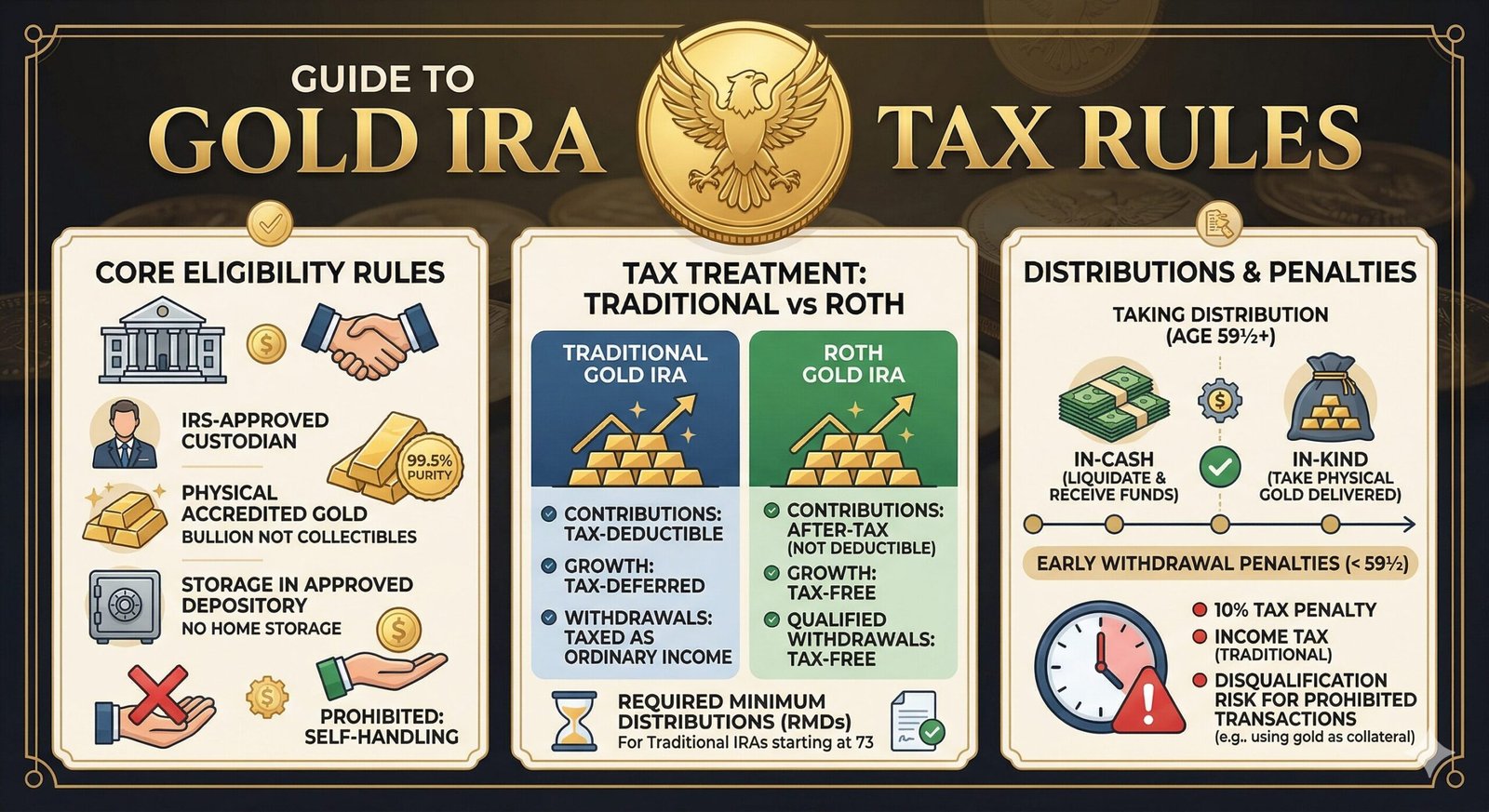
Contributions to a traditional Gold IRA are generally tax-deductible, depending on your income and whether you or your spouse is covered by a workplace retirement plan. Roth Gold IRA contributions are made with after-tax dollars and are subject to income phase-out thresholds. The IRS IRA investment FAQ provides authoritative detail on contribution eligibility.
Required Minimum Distributions (RMDs)
If you hold a traditional Gold IRA, you are subject to Required Minimum Distributions beginning at age 73 (under current SECURE 2.0 legislation). Because your holdings are in physical metal rather than cash, RMDs can require either selling a portion of your gold or taking an in-kind distribution. The IRS RMD FAQ explains this in plain language. Roth IRAs, including Roth Gold IRAs, are not subject to RMDs during the account owner’s lifetime.
Prohibited Transactions
The IRS prohibits certain transactions within a self-directed IRA that could create a conflict of interest. These include purchasing metals from a disqualified person (such as yourself or a family member), using IRA assets to benefit yourself before the account distributes, or personally storing the gold. Violating these rules can result in the entire account being treated as a distribution — which triggers taxes and potential penalties.
For a comprehensive review of rollover rules and prohibited transaction guidelines, our Gold IRA rollover rules article is a useful starting point.
Comparing a Gold IRA to Other Account Types
Maryland investors who are already contributing to a 401(k) through work, or who hold a traditional IRA, often ask how a Gold IRA compares. Our Gold IRA vs Traditional IRA guide and Gold IRA vs 401(k) page walk through the structural differences in detail.
The key distinction is that a Gold IRA holds physical assets rather than securities. This creates unique administrative requirements — specialized custodians, depository storage, purity requirements — that standard accounts simply do not have. Whether those additional layers are appropriate for your retirement goals is a question best explored with a licensed financial or tax professional.
Avoiding Scams and Choosing Reputable Providers
Unfortunately, the Gold IRA space attracts a disproportionate share of aggressive sales tactics and outright fraud. Retirement savers, particularly those approaching or in retirement, are frequently targeted. If you’re researching this topic, our Gold IRA scams guide is essential reading before you engage with any company.
Red flags include high-pressure sales calls, promises of guaranteed returns, offers that sound too good to be true, and reluctance to provide written fee disclosures upfront. Reputable custodians will welcome your questions, provide clear documentation, and never rush you into a decision. SEC investor resources also offer general guidance on evaluating retirement account providers.
Our Gold IRAs Explained in Detail article offers a deeper look at how to evaluate companies side by side, including what to look for in terms of custodian independence, depository relationships, and customer service track records.
Is a Gold IRA Right for You?
That’s ultimately a personal question — and one that depends on your financial situation, your retirement timeline, your existing account structure, and your comfort with a more complex account type. If you’re asking yourself is a Gold IRA a good idea, that article offers a balanced, non-advisory framework for thinking through the question.
It’s also worth reviewing the Gold IRA minimum investment requirements, as many custodians require a minimum initial deposit — often between $10,000 and $25,000 — which may affect your decision about timing and funding source.
Frequently Asked Questions
Are there any Maryland-specific rules that affect Gold IRAs?
No. Gold IRAs are governed by federal IRS rules, which apply uniformly across all U.S. states. Maryland does not impose state-level regulations that add to or modify federal IRA requirements. Maryland does have its own income tax treatment of retirement distributions, but that is a general state tax matter — not something unique to Gold IRAs specifically. Consult a Maryland tax professional for guidance on your individual situation.
Can I roll over my Maryland state pension or deferred compensation plan into a Gold IRA?
In some cases, yes — but the rules vary depending on the specific plan type. Government 457(b) plans, for example, have rollover rules that differ from standard 401(k) plans. You should contact your plan administrator and review the plan documents before initiating any rollover. A self-directed IRA custodian familiar with government plan rollovers can also help you navigate the process.
Do I need to use a Maryland-based custodian or storage facility?
No. There is no IRS requirement that your custodian or depository be located in your home state. Most Gold IRA custodians operate nationally, and the major IRS-approved depositories are located in states like Delaware, Texas, and Utah. What matters is that both the custodian and the storage facility meet IRS requirements.
What happens to my Gold IRA when I reach retirement age?
At retirement, you have the option to either liquidate your holdings and receive cash distributions, or take in-kind distributions of the physical metal itself. If you take an in-kind distribution, the gold is shipped to you and its fair market value at the time of distribution is treated as ordinary income (for a traditional Gold IRA). The specific tax implications should be reviewed with a qualified tax advisor.
How long does it take to open a Gold IRA and fund it?
The timeline varies depending on your funding method. Account setup paperwork typically takes a few business days. A direct IRA transfer can take one to two weeks. A 401(k) rollover may take two to four weeks, depending on how quickly your former plan administrator processes the request. Once funds are received, metal purchases can usually be executed within a few business days.
Ready to Learn More?
If you’re a Maryland investor who has done your initial research and is ready to compare providers, our regularly updated guide to the Best Gold IRA Companies of 2026 is a good next step. It covers the leading custodians in the self-directed IRA space, with a focus on transparency, fee clarity, and customer experience.
This article is for informational purposes only and does not constitute financial or tax advice. Investing in precious metals involves risk including possible loss of principal.
Related guides
- Gold IRA Consumer Affairs Reviews: What to Look For
- Gold IRA Trustpilot Reviews: What Real Customers Say
- Gold IRA BBB Complaints: What Consumer Reports Reveal
- Is a Gold IRA Worth the Fees? A Cost-Benefit Analysis
- Are Gold IRA Fees Too High? Breaking Down the Real Costs
- Gold IRA Mistakes to Avoid: 10 Common Errors Investors Make