Gold IRA in Nevada: Tax Advantages and Top Providers
Nevada offers unique advantages for retirement planning, particularly when considering alternative investments like precious metals within individual retirement accounts. The Silver State’s favorable tax environment and business-friendly regulations create an appealing landscape for residents exploring Gold IRA options as part of their retirement strategy.
Understanding how Gold IRAs function within Nevada’s regulatory framework helps investors make informed decisions about incorporating precious metals into their retirement planning. From state tax considerations to provider selection, Nevada residents have access to the same federal Gold IRA benefits while potentially enjoying additional state-level advantages.
Understanding Gold IRAs in Nevada’s Regulatory Environment
A Gold IRA functions as a self-directed individual retirement account that allows investors to hold physical precious metals alongside or instead of traditional paper assets. Nevada residents operate under the same federal regulations as investors in other states, following IRS Publication 590-A guidelines for retirement account management.
Nevada’s regulatory environment tends to favor investor choice and financial flexibility. The state does not impose additional restrictions on Gold IRA ownership beyond federal requirements, allowing residents to explore precious metals investments within their retirement accounts without additional state-level barriers.
The Nevada Division of Financial Institutions oversees certain aspects of financial services within the state, but Gold IRA custodians typically operate under federal oversight through agencies like the Securities and Exchange Commission or other federal regulatory bodies. This dual regulatory structure provides oversight while maintaining the flexibility that makes Nevada attractive for various investment strategies.
Federal regulations require Gold IRA assets to meet specific purity standards and be stored in approved depositories. Nevada residents must work with qualified custodians who understand both federal requirements and any state-specific considerations that might apply to their particular situation.
Nevada’s Tax Advantages for Retirement Planning
Nevada’s tax structure creates several advantages for retirement planning that extend to Gold IRA ownership. The state imposes no personal income tax, meaning Nevada residents avoid state-level taxation on traditional IRA distributions during retirement. This advantage applies equally to Gold IRA distributions, potentially increasing the after-tax value of retirement withdrawals.
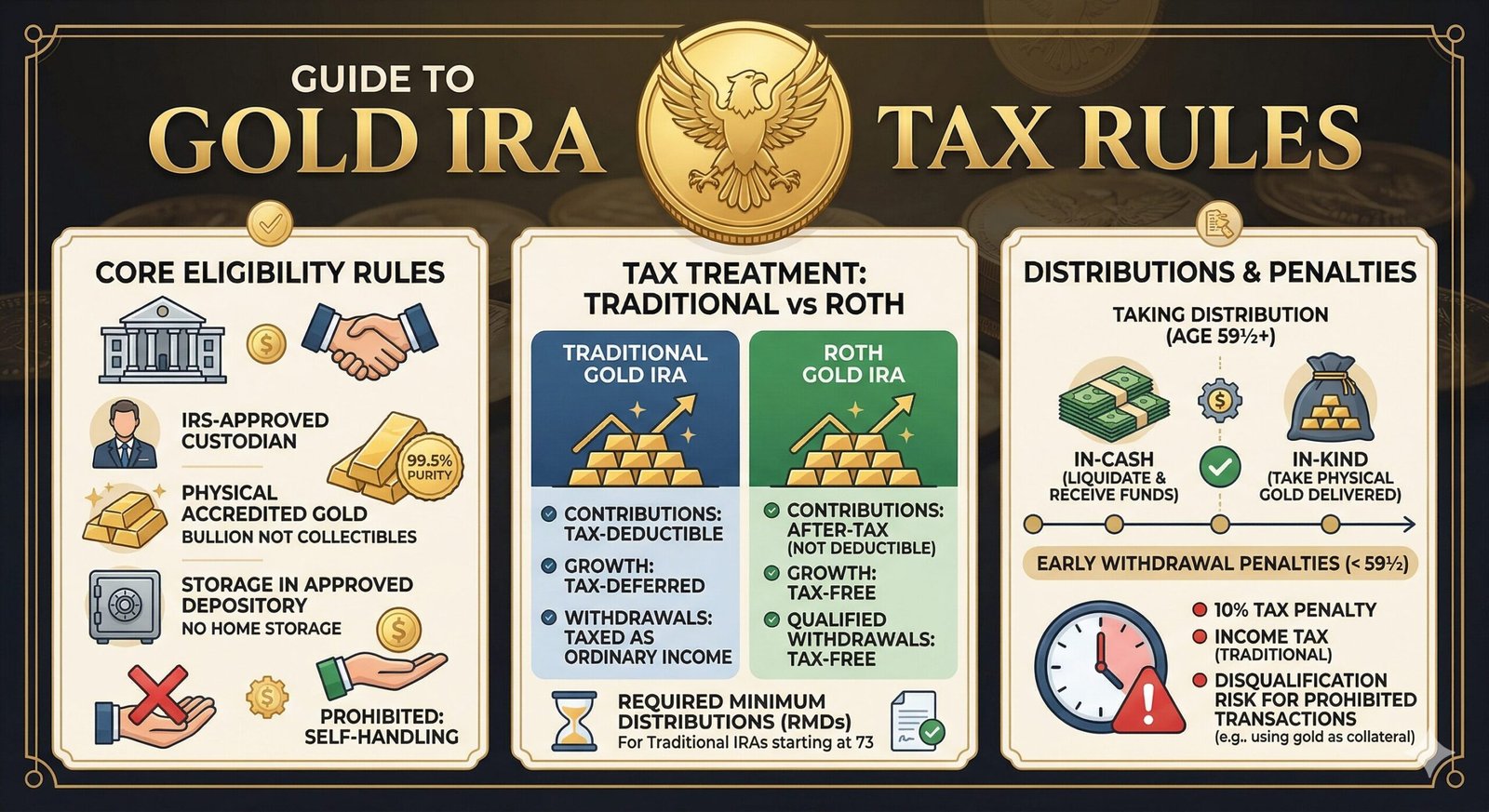
The absence of state income tax in Nevada means that required minimum distributions from Gold IRAs beginning at age 73 face only federal taxation. This can result in significant tax savings compared to residents of high-tax states who face both federal and state income taxes on retirement account distributions.
Nevada also does not impose inheritance taxes, which can benefit beneficiaries of Gold IRA accounts. When precious metals IRAs pass to heirs, the absence of state-level estate taxes can help preserve more value for beneficiaries, though federal estate tax rules still apply for larger estates.
Property taxes in Nevada remain relatively moderate compared to many other states, which can help retirees manage their overall tax burden while accessing their retirement accounts. Lower ongoing tax obligations can make it easier to maintain desired withdrawal rates from retirement accounts, including Gold IRAs.
The state’s tax-friendly environment extends beyond income taxes to business operations. Many Gold IRA custodians and precious metals dealers find Nevada’s business climate attractive, potentially leading to more competitive services and pricing for state residents.
Choosing Gold IRA Providers in Nevada
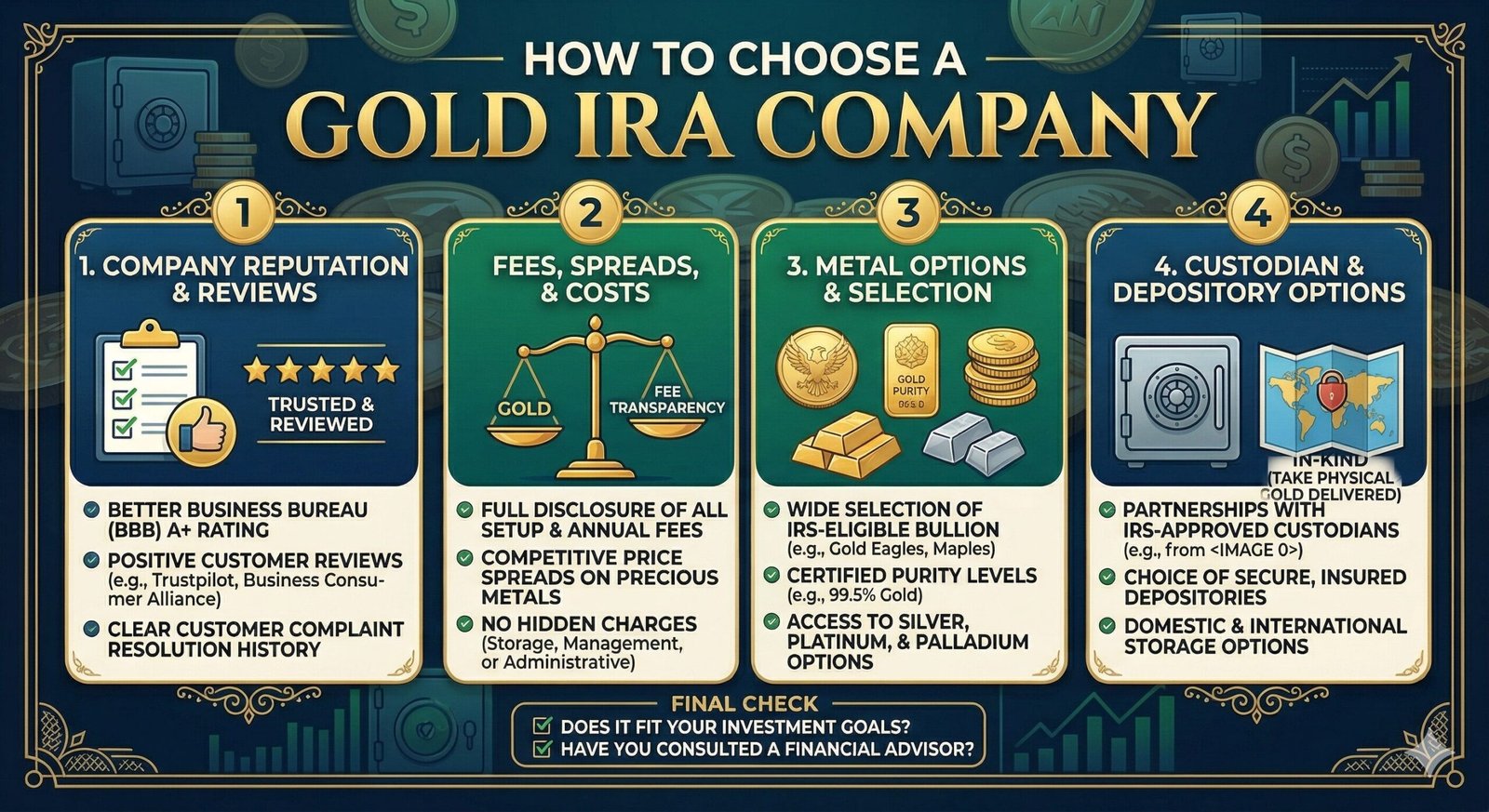
Nevada residents have access to the same national Gold IRA providers available to investors throughout the United States. The key factors in selecting a provider remain consistent regardless of state residence: custodian reputation, fee structure, storage options, and customer service quality.
Evaluating custodian credentials requires checking registrations with appropriate federal agencies and reviewing their track record in the precious metals IRA space. The FINRA BrokerCheck database provides valuable information about registered investment professionals and their disciplinary histories.
Storage considerations become particularly important for Nevada residents given the state’s proximity to several major precious metals depositories. Some investors prefer having their metals stored relatively nearby, while others prioritize the security and insurance offerings of established facilities regardless of location.
Fee structures vary significantly among Gold IRA providers, making comparison shopping essential. Annual custodial fees, storage fees, transaction costs, and setup fees should all factor into the decision-making process. Some providers offer scaled pricing based on account value, while others maintain flat-rate structures.
Customer service quality becomes crucial when dealing with the complexities of precious metals IRAs. Nevada residents should look for providers offering comprehensive support throughout the account opening process, ongoing account management, and distribution planning when retirement begins.
Gold IRA Fee Comparison for Nevada Residents
Storage and Security Considerations
Physical storage requirements for Gold IRA assets remain consistent across all states, with approved depositories maintaining the highest security standards regardless of location. Nevada residents can choose from depositories located within the state or in other regions based on their preferences for geographic distribution or specific facility features.
Security features at approved depositories include 24-hour monitoring, armed guards, advanced alarm systems, and comprehensive insurance coverage. These facilities must meet stringent federal requirements for storing retirement account assets, ensuring consistent security standards regardless of location.
Insurance coverage for stored precious metals typically includes protection against theft, natural disasters, and other covered events. Nevada residents should verify that their chosen depository maintains appropriate insurance levels and understand how coverage applies to their specific holdings.
Segregated versus commingled storage options affect both security and costs. Segregated storage keeps individual investors’ metals separate from others’ holdings, often at higher cost but with additional security benefits. Commingled storage pools metals from multiple investors while maintaining detailed records of individual ownership.
Geographic considerations for storage location might include natural disaster risks, political stability, and logistical factors. Some Nevada residents prefer keeping their metals within the state or nearby regions, while others prioritize the reputation and security features of established depositories regardless of location.
IRA Contribution and Distribution Rules in Nevada
Nevada residents follow the same federal contribution limits and rules that apply to all Gold IRA investors. For 2024, individuals under age 50 can contribute up to $7,000 annually to their IRAs, while those 50 and older can make catch-up contributions totaling $8,000. These limits apply across all IRA accounts an individual owns, including both traditional and precious metals IRAs.
Required minimum distributions begin at age 73 for Gold IRA owners, just as with traditional retirement accounts. The IRS RMD FAQ provides detailed guidance on calculating distribution amounts based on account values and life expectancy tables.
Distribution methods for Gold IRAs include taking physical possession of metals, having the custodian sell metals and distribute cash, or in-kind transfers to other qualified accounts. Nevada’s lack of state income tax makes cash distributions particularly attractive since they avoid state-level taxation entirely.
Early distribution penalties apply to Gold IRA withdrawals before age 59½, just as with other retirement accounts. The 10% federal penalty applies to early distributions, though certain exceptions exist for first-time home purchases, qualified education expenses, and other specific circumstances outlined in federal tax code.
Roth Gold IRA conversions follow the same federal rules in Nevada as elsewhere, but the absence of state income tax can make conversions more attractive. Converting traditional IRA assets to Roth status requires paying income tax on the converted amount, but Nevada residents avoid state-level taxes on these conversions.
Estate Planning Considerations for Nevada Gold IRA Owners
Nevada’s favorable estate planning environment extends to Gold IRA ownership and inheritance planning. The state’s lack of inheritance taxes can help preserve more value for beneficiaries inheriting precious metals IRAs, though federal estate tax rules still apply for estates exceeding federal exemption levels.
Beneficiary designations for Gold IRAs follow federal requirements, allowing for spouse rollovers, stretch distributions for eligible designated beneficiaries, and required distributions within ten years for most non-spouse beneficiaries. Nevada’s probate laws generally favor efficient estate administration, potentially reducing costs and delays in transferring IRA assets to beneficiaries.
Trust planning strategies for Gold IRA assets can provide additional benefits in Nevada’s trust-friendly legal environment. Properly structured trusts can offer asset management, tax planning, and distribution control benefits for IRA beneficiaries, particularly when dealing with substantial precious metals holdings.
Professional estate planning guidance becomes particularly valuable when incorporating Gold IRAs into comprehensive estate plans. Nevada residents should work with qualified estate planning attorneys familiar with both the state’s laws and federal retirement account regulations to optimize inheritance strategies.
Working with Nevada Financial Professionals
Nevada’s financial services industry includes professionals experienced in alternative retirement investments, including precious metals IRAs. Finding qualified advisors who understand both Gold IRA mechanics and Nevada’s unique tax environment can help investors make informed decisions about incorporating precious metals into their retirement planning.
Certified Financial Planners (CFPs) and other qualified professionals can provide valuable guidance on how Gold IRAs might fit within broader retirement strategies. Our Gold IRA hub offers detailed information about working with financial professionals on precious metals retirement planning.
Due diligence on financial professionals should include checking credentials, reviewing disciplinary histories, and understanding their experience with alternative investments. Nevada residents can verify professional licenses through state and federal regulatory databases to ensure they work with qualified advisors.
Fee transparency becomes crucial when working with financial professionals on Gold IRA planning. Understanding how advisors are compensated, whether through fees or commissions, helps investors make informed decisions about professional relationships and potential conflicts of interest.
For those considering a 401(k) to Gold IRA transition, our 401(k) to Gold IRA rollover guide provides comprehensive information about the process and requirements.
Common Mistakes Nevada Investors Should Avoid
Nevada residents exploring Gold IRAs should be aware of common pitfalls that can jeopardize their retirement planning goals. Understanding prohibited transactions, storage requirements, and distribution rules helps avoid costly mistakes that could result in taxes, penalties, or account disqualification.
Prohibited transactions represent one of the most serious risks in Gold IRA ownership. These include using IRA assets as security for loans, buying property for personal use, or engaging in transactions with disqualified persons. Violating these rules can result in immediate account disqualification and significant tax consequences.
Storage mistakes can also create problems for Gold IRA owners. Attempting to store IRA precious metals at home or in non-approved facilities violates federal requirements and can trigger immediate taxation and penalties. Our guide on how to avoid Gold IRA scams addresses these and other common pitfalls.
Inadequate due diligence on providers represents another common mistake. Nevada residents should thoroughly research custodians, dealers, and storage facilities before committing to relationships. Checking credentials, reading reviews, and understanding fee structures helps avoid problematic providers.
Documentation and record-keeping mistakes can create problems during audits or distribution planning. Maintaining detailed records of all transactions, valuations, and communications helps ensure smooth account management and compliance with federal requirements.
FAQ: Gold IRA in Nevada
Q: Does Nevada charge state taxes on Gold IRA distributions?
A: No, Nevada does not impose personal income tax, so Gold IRA distributions are not subject to state income tax. Distributions remain subject to federal income tax according to standard IRA distribution rules.
Q: Can Nevada residents store their Gold IRA metals in-state?
A: Nevada residents can use any IRS-approved depository for Gold IRA storage, whether located in Nevada or other states. The choice depends on personal preferences regarding location, security features, and costs rather than any state-specific requirements.
Q: Are there minimum investment amounts for Gold IRAs in Nevada?
A: Minimum investment amounts are set by individual custodians and providers rather than state regulations. Most providers require minimums ranging from $5,000 to $50,000, with some offering lower minimums for new investors. Our Gold IRA minimum investment guide provides detailed information about entry requirements.
Q: How do Nevada’s business-friendly laws affect Gold IRA providers?
A: Nevada’s favorable business environment attracts financial services companies, potentially providing residents with more provider options and competitive pricing. However, Gold IRA regulations remain primarily federal, so the main advantages relate to the broader financial services ecosystem rather than specific Gold IRA rules.
Q: Can Nevada residents convert existing retirement accounts to Gold IRAs?
A: Yes, Nevada residents can convert traditional IRAs, 401(k)s, and other eligible retirement accounts to Gold IRAs following standard federal rollover rules. Our Gold IRA rollover rules guide explains the process and requirements for different account types.
Nevada’s combination of tax advantages, business-friendly environment, and access to national Gold IRA providers creates favorable conditions for residents considering precious metals in their retirement planning. Understanding the state’s unique benefits while following federal regulations helps investors make informed decisions about incorporating Gold IRAs into their retirement strategies.
Ready to explore your Gold IRA options? Visit our comprehensive guide to the Best Gold IRA Companies of 2026 to compare top providers and find the right fit for your retirement planning needs.
This article is for informational purposes only and does not constitute financial or tax advice. Investing in precious metals involves risk including possible loss of principal.
Related guides
- Gold IRA Consumer Affairs Reviews: What to Look For
- Gold IRA Trustpilot Reviews: What Real Customers Say
- Gold IRA BBB Complaints: What Consumer Reports Reveal
- Is a Gold IRA Worth the Fees? A Cost-Benefit Analysis
- Are Gold IRA Fees Too High? Breaking Down the Real Costs
- Gold IRA Mistakes to Avoid: 10 Common Errors Investors Make