Gold IRA in New York: Rules and Top Providers
New York residents exploring retirement investment options often wonder about the specifics of establishing a Gold IRA within their state. Understanding the regulatory landscape, tax implications, and available providers becomes crucial when considering precious metals as part of your retirement strategy.
While federal IRA regulations remain consistent across all states, New York’s specific financial environment and regulatory framework create unique considerations for residents interested in precious metals retirement accounts. This comprehensive guide examines everything New York investors need to know about Gold IRAs, from compliance requirements to provider selection.
Understanding Gold IRAs for New York Residents
A Gold IRA operates under the same fundamental principles nationwide, but New York’s regulatory environment adds specific considerations for residents. These self-directed individual retirement accounts allow investors to hold physical precious metals, including gold, silver, platinum, and palladium, within their retirement portfolios.
The IRS Publication 590-A establishes the federal framework governing all IRAs, including those holding precious metals. New York residents must comply with these federal requirements while also considering state-specific regulations and tax implications.
Gold IRAs require a specialized custodian who can handle physical precious metals storage and administration. Unlike traditional IRAs that hold paper assets, these accounts involve actual physical metals stored in IRS-approved depositories. For comprehensive details about how these accounts function, review our Gold IRAs Explained in Detail guide.
New York State Tax Considerations
New York’s tax structure presents specific considerations for Gold IRA holders. The state imposes an income tax on retirement distributions, including those from Gold IRAs. When you reach retirement age and begin taking required minimum distributions, these withdrawals will be subject to both federal and New York state income tax.
Currently, New York state income tax rates range from 4% to 10.9%, depending on your income level and filing status. This means Gold IRA distributions will face this additional tax burden beyond federal obligations. However, the tax-deferred growth characteristic of IRAs remains intact, allowing your precious metals holdings to appreciate without annual tax consequences until distribution.
New York does not impose any special taxes or fees specifically on precious metals held within retirement accounts. The state treats Gold IRA distributions the same as traditional IRA distributions for tax purposes. Residents should consult with tax professionals familiar with both federal IRA regulations and New York state tax law to understand their complete tax situation.
Federal Regulations Governing Gold IRAs
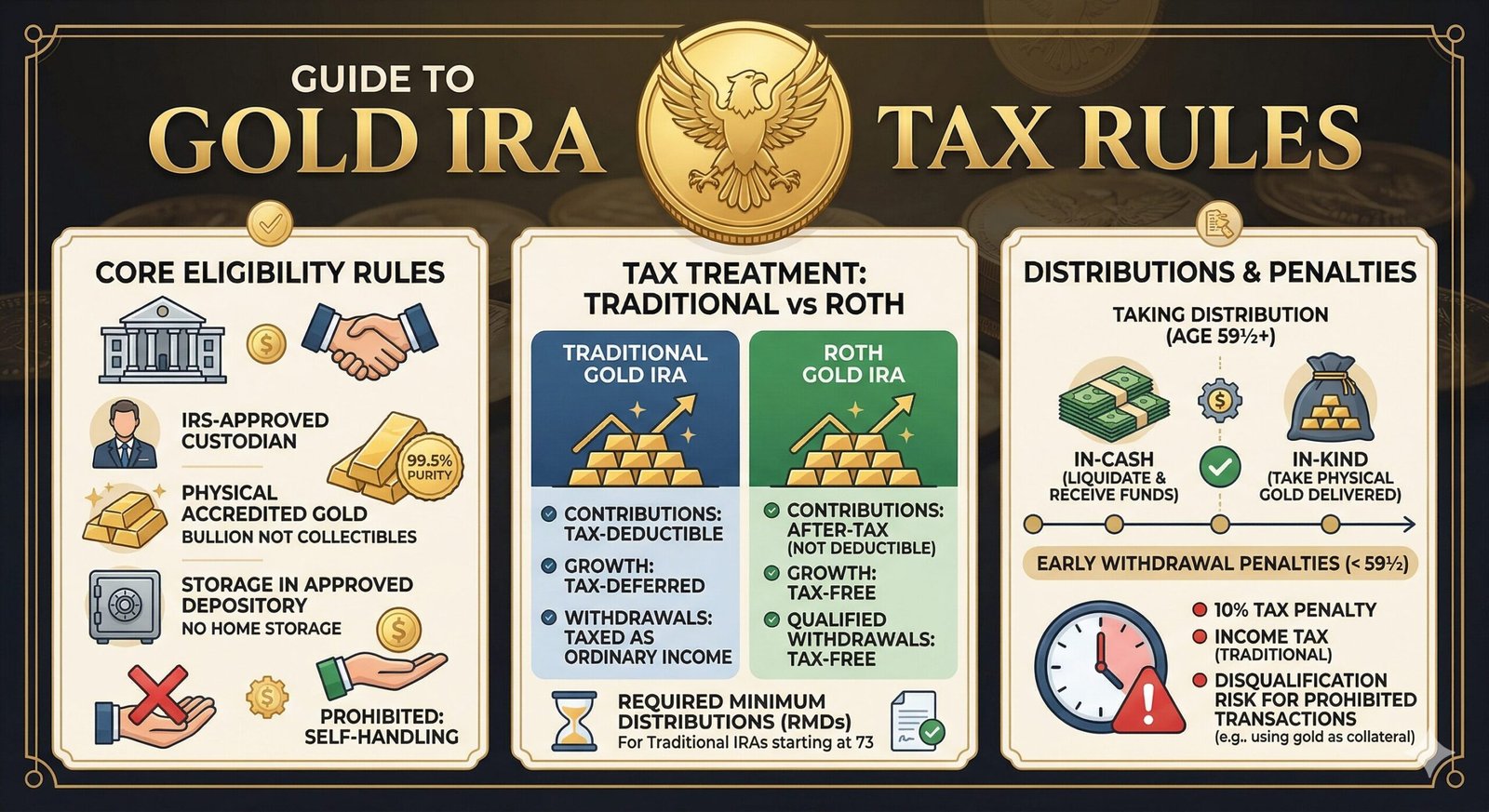
The IRS retirement plan investment FAQ outlines specific requirements for precious metals held in retirement accounts. Gold must meet minimum purity standards of 99.5%, while silver requires 99.9% purity. Platinum and palladium must achieve 99.95% purity to qualify for IRA inclusion.
Approved precious metals must be produced by accredited refiners and meet specific manufacturing standards. Popular options include American Gold Eagles, Canadian Gold Maple Leafs, and various bars from approved refiners. Our IRA-eligible gold coins guide provides detailed information about qualifying precious metals.
Storage requirements mandate that all precious metals remain in IRS-approved depositories. Account holders cannot take personal possession of their Gold IRA assets without triggering distribution penalties. These depositories must maintain specific security, insurance, and audit standards to qualify for IRA precious metals storage.
Selecting a Gold IRA Custodian in New York
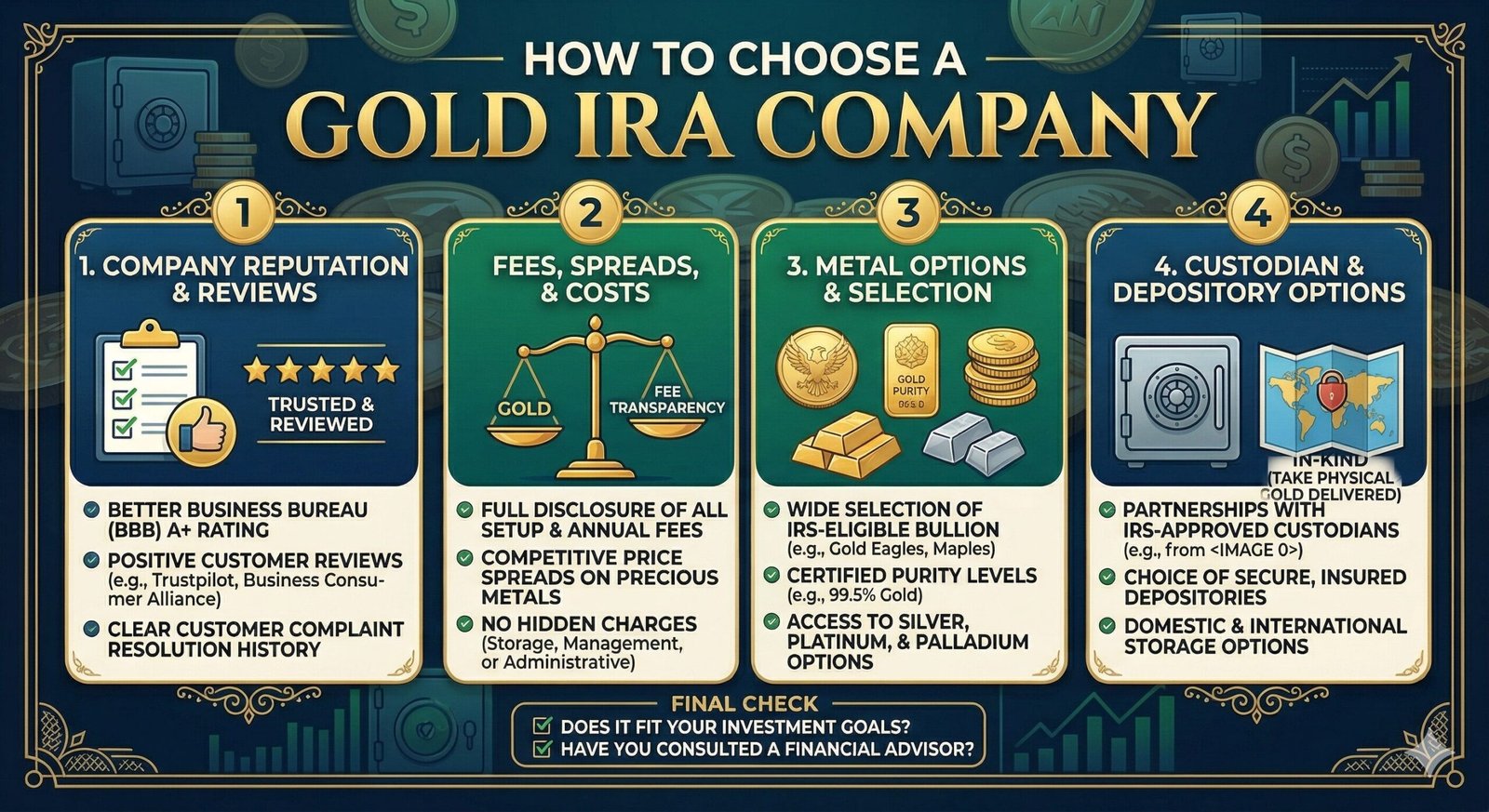
New York residents can work with any qualified Gold IRA custodian nationwide, as these services are not restricted by state boundaries. The key lies in selecting a custodian that offers transparent fee structures, reliable customer service, and established relationships with reputable precious metals dealers and storage facilities.
When evaluating custodians, consider their fee structures, which typically include annual maintenance fees, storage fees, and transaction costs. Some custodians charge flat annual fees, while others use scaled fee structures based on account value. Storage fees vary depending on the chosen depository and storage method, whether segregated or non-segregated storage.
Customer service quality becomes particularly important given the complexity of precious metals transactions and storage logistics. Look for custodians offering dedicated account representatives, clear communication protocols, and educational resources to help navigate the Gold IRA process.
Gold IRA Setup Process for New York Residents
Establishing a Gold IRA follows the same basic process regardless of your state of residence. The process typically begins with selecting a qualified custodian and completing their account application. This includes providing standard IRA documentation such as beneficiary information, investment objectives, and financial details.
Funding your Gold IRA can occur through several methods. Direct contributions follow standard IRS contribution limits, while rollovers from existing retirement accounts offer opportunities to move larger sums. Our 401(k) to Gold IRA rollover guide explains this process in detail.
Understanding Gold IRA rollover rules becomes essential to avoid unintended tax consequences or penalties. Direct custodian-to-custodian transfers generally provide the safest method to move funds from existing retirement accounts into a Gold IRA.
Once funded, you’ll work with your custodian to select specific precious metals for purchase. The custodian coordinates with approved dealers to acquire your chosen metals and arrange secure storage at an IRS-approved depository.
Fee Structures and Costs
Gold IRA fees typically include several components that New York residents should understand before establishing their accounts. Our comprehensive Gold IRA fees guide breaks down these costs in detail.
These fees can vary significantly between providers, making careful comparison essential. Some custodians offer promotional pricing for the first year, while others provide scaled fee structures for larger accounts. Be sure to understand the complete fee schedule before committing to a particular provider.
Storage costs may vary depending on whether you choose segregated or non-segregated storage. Segregated storage, where your metals are stored separately, typically costs more but provides additional security and easier identification of your specific holdings.
Storage and Security Considerations
IRS-approved depositories maintain strict security protocols to ensure the safety of precious metals holdings. These facilities typically feature advanced security systems, comprehensive insurance coverage, and regular auditing procedures. Most depositories are located in major financial centers with established precious metals markets.
New York residents can choose depositories located anywhere in the United States, though some prefer facilities in nearby states for logistical convenience. Delaware Depository, Brink’s, and other established facilities serve Gold IRA investors nationwide with consistent security standards and insurance coverage.
Storage options typically include segregated and non-segregated arrangements. Segregated storage keeps your metals physically separated from other investors’ holdings, while non-segregated storage pools metals of the same type together. Both methods provide equivalent security, though segregated storage offers additional peace of mind for some investors.
Common Mistakes to Avoid
New York residents establishing Gold IRAs should be aware of potential pitfalls that could result in penalties or account problems. One common mistake involves attempting to store Gold IRA metals personally, which triggers immediate distribution and potential penalties.
Another frequent error involves purchasing non-qualifying precious metals. Only specific types of gold, silver, platinum, and palladium meet IRS requirements for IRA inclusion. Working with experienced dealers helps ensure compliance with these standards.
Timing mistakes during rollovers can create significant tax consequences. Understanding the 60-day rollover rule and considering direct trustee-to-trustee transfers helps avoid unintended distributions and penalties. Our guide on how to avoid Gold IRA scams provides additional protection strategies.
Required Minimum Distributions
Like traditional IRAs, Gold IRAs are subject to required minimum distribution rules beginning at age 73. The IRS RMD FAQ provides detailed information about these requirements.
For Gold IRA holders, RMDs can be satisfied through in-kind distributions of precious metals or by selling metals and distributing cash. Many investors choose cash distributions to avoid the complexities of taking physical possession of metals, which would then fall outside the IRA structure.
RMD amounts are calculated based on account value and life expectancy tables provided by the IRS. Gold IRA custodians typically provide RMD calculations and facilitate the distribution process, though account holders remain responsible for ensuring compliance with timing requirements.
Comparing Gold IRAs to Other Retirement Options
When evaluating retirement investment options, New York residents often compare Gold IRAs to traditional retirement accounts. Our Gold IRA vs Traditional IRA analysis examines the key differences between these account types.
Gold IRAs typically involve higher fees than traditional IRAs due to storage costs and specialized custodian services. However, they provide exposure to physical precious metals, which traditional IRAs cannot directly hold. Understanding these trade-offs helps inform investment decisions.
For those wondering is a Gold IRA a good idea, the answer depends on individual circumstances, risk tolerance, and retirement objectives. Consider factors such as fee tolerance, storage preferences, and overall retirement strategy when making this decision.
Minimum Investment Requirements
Most Gold IRA providers establish minimum investment thresholds to ensure account viability given the associated costs. Our Gold IRA minimum investment guide examines typical requirements across different providers.
Minimum investments typically range from $10,000 to $50,000, though some providers accept smaller initial investments. These minimums help offset the fixed costs associated with account setup, storage, and administration. Higher minimums often correspond to lower percentage-based fees, making larger accounts more cost-effective.
New York residents should consider these minimums in context of their overall retirement savings and investment objectives. Starting with the minimum investment allows you to familiarize yourself with the Gold IRA process before potentially adding additional funds through future contributions or rollovers.
Working with Financial Advisors
Many New York residents benefit from professional guidance when establishing Gold IRAs. Financial advisors familiar with precious metals retirement accounts can help navigate the setup process and integrate Gold IRAs into comprehensive retirement strategies.
Look for advisors with specific experience in self-directed IRAs and precious metals investments. FINRA’s guidance on self-directed IRAs provides valuable information about working with these specialized accounts.
When selecting an advisor, verify their credentials through FINRA BrokerCheck and ensure they understand both federal IRA regulations and New York state tax implications. Professional guidance becomes particularly valuable for complex situations involving large rollovers or multiple retirement accounts.
Frequently Asked Questions
Can New York residents establish Gold IRAs with any custodian?
Yes, New York residents can work with qualified Gold IRA custodians located anywhere in the United States. State residency does not limit custodian selection, allowing access to the full range of available providers and fee structures.
How are Gold IRA distributions taxed in New York?
Gold IRA distributions are subject to both federal income tax and New York state income tax when withdrawn. The state treats these distributions the same as traditional IRA distributions, with tax rates ranging from 4% to 10.9% depending on income level.
What precious metals can New York residents hold in their Gold IRAs?
New York residents can hold the same IRS-approved precious metals as investors in any other state. This includes gold, silver, platinum, and palladium meeting specific purity requirements and produced by accredited refiners.
Are there special storage requirements for New York Gold IRA holders?
No, New York residents follow the same federal storage requirements as all Gold IRA holders. Precious metals must be stored in IRS-approved depositories and cannot be held personally without triggering distribution penalties.
How do I choose between segregated and non-segregated storage?
Both storage methods provide equivalent security and insurance coverage. Segregated storage typically costs more but keeps your metals physically separated from other investors’ holdings. Non-segregated storage pools metals of the same type together while maintaining precise record-keeping of individual ownership.
Making Informed Gold IRA Decisions
Establishing a Gold IRA as a New York resident involves understanding federal regulations, state tax implications, and provider selection criteria. The process requires careful evaluation of fees, storage options, and custodian capabilities to ensure your account meets your retirement objectives.
Success with Gold IRAs depends on working with qualified custodians, understanding fee structures, and maintaining compliance with IRA regulations. Take time to research providers, understand costs, and consider how a Gold IRA fits within your broader retirement strategy.
For comprehensive evaluations of Gold IRA providers, including fee comparisons and service quality assessments, review our Best Gold IRA Companies of 2026 guide. This resource provides detailed provider analysis to help inform your selection decision.
This article is for informational purposes only and does not constitute financial or tax advice. Investing in precious metals involves risk including possible loss of principal.
Related guides
- Gold IRA Consumer Affairs Reviews: What to Look For
- Gold IRA Trustpilot Reviews: What Real Customers Say
- Gold IRA BBB Complaints: What Consumer Reports Reveal
- Is a Gold IRA Worth the Fees? A Cost-Benefit Analysis
- Are Gold IRA Fees Too High? Breaking Down the Real Costs
- Gold IRA Mistakes to Avoid: 10 Common Errors Investors Make