Gold IRA Contribution Limits 2026
Understanding contribution limits for precious metals Individual Retirement Accounts (IRAs) is essential for retirement planning. Gold IRAs follow the same contribution rules as traditional IRAs, since they’re simply self-directed IRAs that hold precious metals instead of conventional assets. These limits are set annually by the Internal Revenue Service and affect how much you can contribute to your retirement account each year.
The contribution limits for 2026 remain consistent with the structured approach the IRS has maintained for retirement accounts. Whether you’re considering your first precious metals investment or you’re an experienced investor looking to add gold coins or bars to your retirement portfolio, knowing these limits helps you plan effectively for your financial future.
Annual Contribution Limits for 2026
For the 2026 tax year, the annual contribution limit for Gold IRAs is $7,000 for individuals under age 50. This amount represents the maximum you can contribute across all your traditional and Roth IRAs combined during the calendar year. If you have multiple IRAs, including both conventional and precious metals accounts, your total contributions cannot exceed this limit.
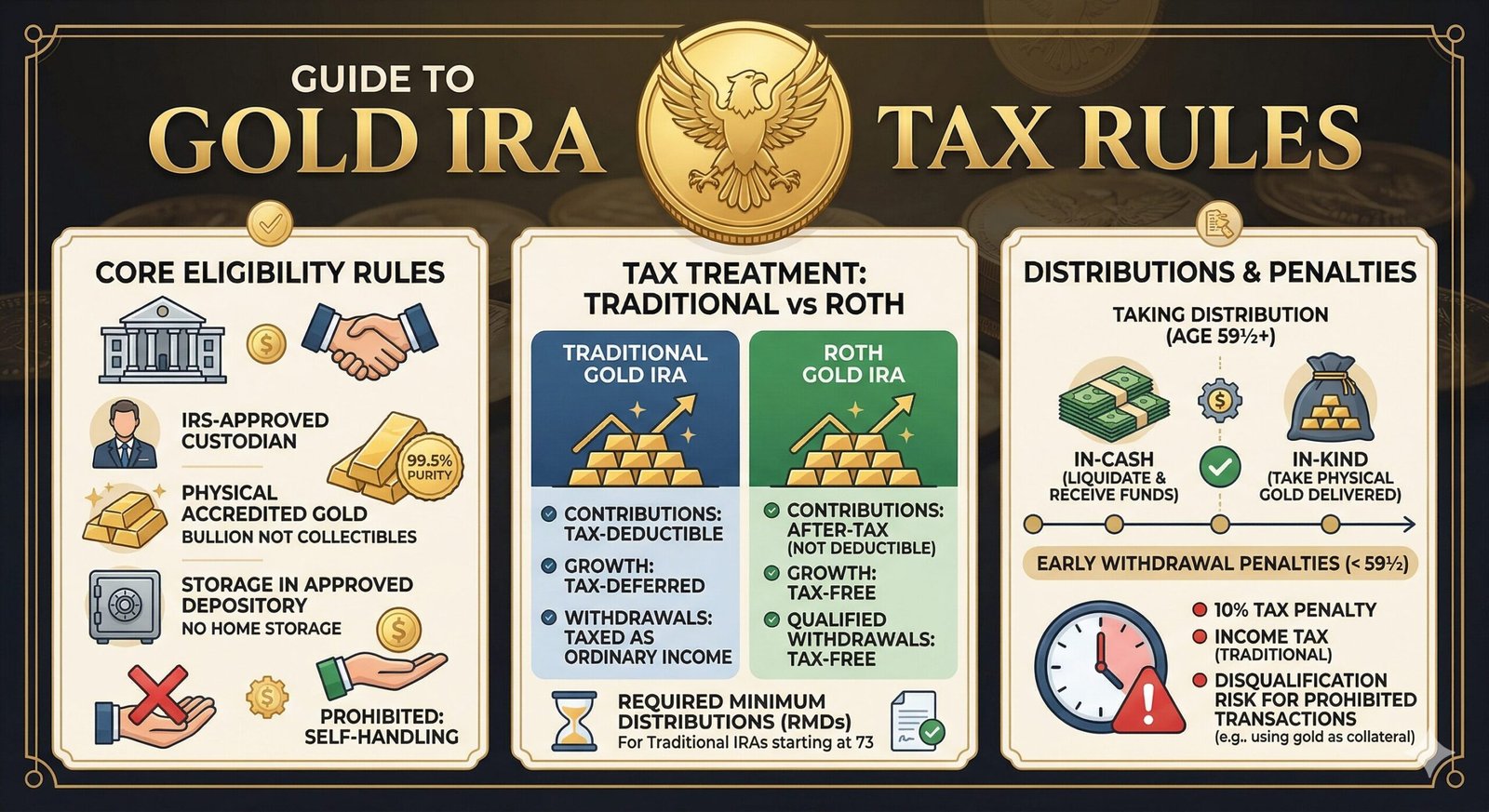
The contribution limit applies regardless of whether you choose to fund a traditional Gold IRA or a Roth Gold IRA. The key difference lies in when you pay taxes on the money, not in how much you can contribute. Traditional Gold IRA contributions may be tax-deductible depending on your income and whether you have workplace retirement coverage, while Roth contributions are made with after-tax dollars.
These limits are subject to annual adjustments based on cost-of-living changes, though the IRS doesn’t always increase limits every year. The $7,000 limit for 2026 reflects the agency’s assessment of appropriate retirement savings levels for individuals in this age bracket.
Catch-Up Contributions for Older Investors
Individuals who reach age 50 or older by December 31, 2026, can make additional catch-up contributions to their Gold IRAs. The catch-up contribution amount for 2026 is $1,000, bringing the total annual contribution limit to $8,000 for this age group.
This additional contribution opportunity recognizes that older workers typically have higher earnings and fewer years remaining until retirement. The catch-up provision allows them to accelerate their retirement savings during their peak earning years. If you turn 50 at any point during 2026, you’re eligible for the full catch-up contribution amount for that entire tax year.
The catch-up contribution must be made to the same type of account as your regular contribution. You cannot, for example, make your regular contribution to a traditional Gold IRA and your catch-up contribution to a Roth Gold IRA unless you’re within the overall limits for both account types.
Income Restrictions and Phase-Out Rules
While Gold IRAs don’t have income limits for contributions themselves, your ability to deduct traditional IRA contributions may be limited based on your modified adjusted gross income (MAGI) and workplace retirement plan coverage. For 2026, if you’re covered by a workplace retirement plan, the deduction phase-out ranges affect how much of your traditional Gold IRA contribution you can deduct.
For single filers covered by a workplace plan, the deduction begins to phase out at $77,000 of MAGI and is completely eliminated at $87,000. Married couples filing jointly face a phase-out range of $123,000 to $143,000 if the contributing spouse has workplace coverage. These ranges are adjusted annually for inflation.
If you’re married and your spouse has workplace retirement coverage but you don’t, your deduction phase-out range runs from $230,000 to $240,000 of combined MAGI. For Roth Gold IRA contributions, separate income limits apply that determine your eligibility to contribute at all, though these limits are considerably higher than the traditional IRA deduction phase-outs.
Timing and Deadline Requirements
Gold IRA contributions for the 2026 tax year can be made from January 1, 2026, through the tax filing deadline for 2026 returns, typically April 15, 2027. This extended deadline gives you more than 15 months to make your contribution, allowing flexibility in your financial planning and cash flow management.
You can spread your contributions throughout the year or make a lump sum contribution at any point during this period. Some investors prefer to contribute early in the year to maximize the time their investment can potentially grow, while others wait until they have a clearer picture of their annual income and tax situation.
When making contributions, you must specify which tax year the contribution applies to if you’re contributing between January 1 and the tax deadline for the previous year. Your Gold IRA custodian will require this designation to properly report the contribution to the IRS.
Excess Contribution Penalties
Contributing more than the annual limit to your Gold IRA results in a 6% excess contribution penalty that applies each year the excess remains in the account. This penalty continues until you either withdraw the excess contribution and any earnings attributable to it, or until you have unused contribution capacity in a future year to absorb the excess.
If you discover an excess contribution before filing your tax return for that year, you can withdraw the excess and any earnings without penalty, though you’ll owe ordinary income tax and potentially a 10% early withdrawal penalty on the earnings if you’re under age 59½. After the tax filing deadline, removing excess contributions becomes more complex and may require recharacterization or other corrective actions.
The IRS tracks contributions across all your IRAs, so exceeding the limit in your Gold IRA affects your ability to contribute to any other traditional or Roth IRA accounts. Careful record-keeping and coordination with your financial advisors help prevent these costly mistakes.
Contribution Types and Methods
You can contribute to a Gold IRA through several methods beyond regular cash contributions. Rollovers from employer-sponsored plans like 401(k)s don’t count against annual contribution limits, making them an attractive option for individuals changing jobs or retiring. Our 401(k) to Gold IRA rollover guide explains this process in detail.
Direct transfers between IRA accounts also don’t count against contribution limits. These transactions move money directly between custodians without you taking possession of the funds, avoiding any tax consequences or contribution limit impacts.
Special Considerations for Married Couples
Married couples can potentially contribute to separate Gold IRAs even if only one spouse has earned income. The spousal IRA contribution rules allow the working spouse to contribute up to the annual limit for each spouse, as long as their combined earned income equals or exceeds the total contributions.
This provision particularly benefits couples where one spouse stays home or works part-time. Both spouses must file a joint tax return to take advantage of spousal IRA contributions, and the same contribution limits apply to each spouse individually.
Each spouse can choose different types of IRAs, so one could contribute to a traditional Gold IRA while the other contributes to a Roth Gold IRA, as long as they meet the respective eligibility requirements. The income phase-out rules apply to the couple’s combined MAGI when determining deduction eligibility or Roth contribution eligibility.
Required Minimum Distributions
While not directly related to contribution limits, it’s important to understand that traditional Gold IRAs are subject to required minimum distributions (RMDs) beginning at age 73. These mandatory withdrawals don’t affect your ability to continue contributing if you have earned income, but they do create annual distribution requirements that must be satisfied.
Roth Gold IRAs don’t have RMDs during the original owner’s lifetime, making them potentially more attractive for estate planning purposes. However, beneficiaries of Roth accounts inherited after December 31, 2019, generally must withdraw the entire balance within 10 years under current rules.
The IRS RMD FAQ provides detailed information about these requirements and how they interact with different types of retirement accounts.
Working Past Traditional Retirement Age
If you continue working past age 73, you can still make contributions to a Gold IRA as long as you have earned income. There’s no age limit for IRA contributions, unlike the previous rules that prevented traditional IRA contributions after age 70½.
This change allows older workers to continue building their retirement savings while simultaneously taking required minimum distributions from traditional accounts. The ability to continue contributing can be particularly valuable for those who plan to work well into their 70s or who want to leave a larger legacy for their beneficiaries.
For individuals with both traditional and Roth Gold IRAs, you can continue contributing to both types as long as you meet the respective eligibility requirements and don’t exceed the overall annual contribution limits.
Planning Strategies Within Contribution Limits
Maximizing your Gold IRA contributions requires strategic planning throughout the year. Some investors prefer to contribute the maximum amount early in January to maximize potential growth time, while others spread contributions monthly to dollar-cost average their precious metals purchases.
Consider coordinating Gold IRA contributions with other retirement account funding to optimize your overall retirement savings strategy. If your employer offers matching contributions to a 401(k), prioritize capturing the full match before maximizing IRA contributions, as the employer match represents an immediate return on your investment.
For high earners who face income restrictions on traditional IRA deductions or Roth IRA contributions, understanding what a Gold IRA is and how it fits into your broader retirement planning becomes even more important. These investors might benefit from backdoor Roth strategies or focusing on workplace retirement plans with higher contribution limits.
Frequently Asked Questions
What happens if I contribute more than the annual limit to my Gold IRA?
Excess contributions are subject to a 6% penalty each year until corrected. You can withdraw the excess and any associated earnings before your tax filing deadline to avoid ongoing penalties, though earnings may be subject to tax and early withdrawal penalties.
Can I contribute to both a traditional and Roth Gold IRA in the same year?
Yes, but your combined contributions to all IRAs cannot exceed the annual limit of $7,000 (or $8,000 if you’re 50 or older). You can split this amount between different types of IRAs as long as you meet the eligibility requirements for each.
Do rollover contributions count toward my annual contribution limit?
No, rollovers from employer-sponsored retirement plans don’t count against annual contribution limits. However, you must complete the rollover within 60 days if you receive the funds directly, or arrange for a direct rollover between custodians to avoid tax consequences.
Can I make Gold IRA contributions if I’m already retired and not working?
You can only make IRA contributions if you have earned income from employment or self-employment. Investment income, pensions, and Social Security don’t qualify as earned income for contribution purposes. However, spousal contributions may allow a non-working spouse to contribute based on their working spouse’s income.
When do the 2026 contribution limits officially take effect?
The 2026 contribution limits apply to contributions made from January 1, 2026, through April 15, 2027. The IRS typically announces the following year’s limits in late October or November, allowing investors to plan their year-end contribution strategies accordingly.
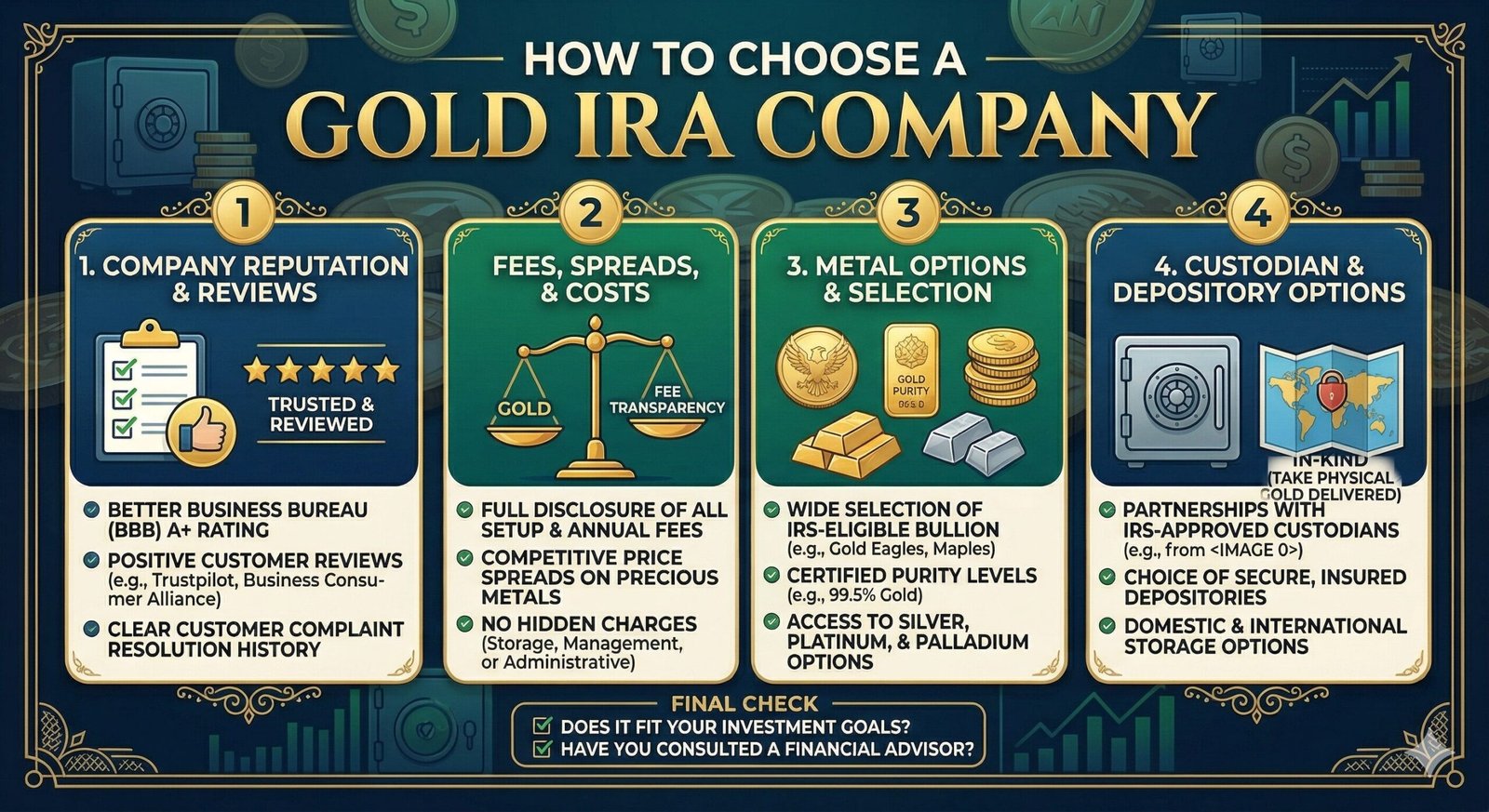
Understanding Gold IRA contribution limits helps you make informed decisions about your retirement planning strategy. These accounts offer unique opportunities to hold precious metals within a tax-advantaged retirement structure, subject to the same contribution rules as conventional IRAs. For comprehensive guidance on selecting a custodian for your precious metals retirement account, review our analysis of the Best Gold IRA Companies of 2026.
This article is for informational purposes only and does not constitute financial or tax advice. Investing in precious metals involves risk including possible loss of principal.
Related guides
- Gold IRA Consumer Affairs Reviews: What to Look For
- Gold IRA Trustpilot Reviews: What Real Customers Say
- Gold IRA BBB Complaints: What Consumer Reports Reveal
- Is a Gold IRA Worth the Fees? A Cost-Benefit Analysis
- Are Gold IRA Fees Too High? Breaking Down the Real Costs
- Gold IRA Mistakes to Avoid: 10 Common Errors Investors Make