
Gold IRA Beneficiary Rules: What Happens When You Die
Planning for the future means thinking beyond your own lifetime, especially when it comes to retirement accounts like Gold IRAs. Understanding how Gold IRA beneficiary rules work can help ensure your precious metals investments pass smoothly to your loved ones while minimizing tax complications and administrative headaches.
Gold IRA beneficiary rules follow the same basic framework as traditional retirement accounts, but the physical nature of precious metals adds unique considerations that account holders need to understand. From required minimum distributions to inherited account management, these rules determine how your gold and silver investments will be handled after your passing.
Understanding Gold IRA Inheritance Basics
When you establish a Gold IRA, you must designate primary and contingent beneficiaries just like any other retirement account. These designations determine who receives your precious metals investments and under what conditions. The IRS Publication 590-A provides the foundational rules that govern all IRA inheritances, including those holding physical gold and silver.
Your Gold IRA custodian maintains records of your beneficiary designations, and these forms supersede any conflicting instructions in your will. This makes it crucial to keep your beneficiary information current, especially after major life events like marriage, divorce, or the birth of children.
The type of beneficiary you name significantly impacts how the inherited Gold IRA must be managed. Spouse beneficiaries enjoy the most flexibility, while non-spouse beneficiaries face more restrictive rules. Understanding these distinctions helps you make informed decisions about your Gold IRA estate planning strategy.
Spousal Beneficiary Options and Rules
Surviving spouses have three primary options when inheriting a Gold IRA, providing flexibility that other beneficiaries don’t enjoy. First, they can treat the inherited Gold IRA as their own account, essentially rolling it over into their existing IRA or establishing a new one in their name. This option allows the surviving spouse to name new beneficiaries and follow their own required minimum distribution schedule.
The second option involves establishing an inherited Gold IRA, keeping the account in the deceased spouse’s name but managing it according to inherited IRA rules. This approach might be beneficial if the surviving spouse is under age 59½ and needs access to funds, as inherited IRA distributions avoid the 10% early withdrawal penalty.
The third option allows the surviving spouse to disclaim their inheritance, effectively passing the Gold IRA to contingent beneficiaries. This strategy might make sense in certain tax planning situations or when the surviving spouse has sufficient retirement assets and wants to preserve the inheritance for children or grandchildren.
Surviving spouses who choose to treat the inherited Gold IRA as their own must begin required minimum distributions by April 1 following the year they reach age 73, following standard IRA distribution rules. Those who maintain the account as an inherited IRA face different distribution requirements based on their age and the deceased spouse’s age at death.
Non-Spouse Beneficiary Distribution Requirements
Non-spouse beneficiaries face more restrictive rules when inheriting Gold IRAs. The SECURE Act of 2019 eliminated the “stretch IRA” option for most non-spouse beneficiaries, requiring them to withdraw the entire inherited balance within 10 years of the original account holder’s death.
This 10-year rule applies to adult children, grandchildren, and other non-spouse beneficiaries who are not considered “eligible designated beneficiaries.” The IRS retirement plans FAQ clarifies that distributions can occur at any time during the 10-year period, but the account must be completely distributed by December 31 of the tenth year following the account holder’s death.
Certain beneficiaries qualify as “eligible designated beneficiaries” and can stretch distributions over their lifetime expectancy. This category includes surviving spouses, minor children of the account holder, disabled individuals, chronically ill individuals, and beneficiaries who are not more than 10 years younger than the deceased account holder.
Minor children who inherit Gold IRAs can use the stretch provision until they reach the age of majority, at which point they must withdraw the remaining balance within 10 years. This hybrid approach provides some tax planning flexibility during the child’s minority years while still requiring complete distribution relatively quickly.
Gold IRA Distribution Methods and Tax Implications
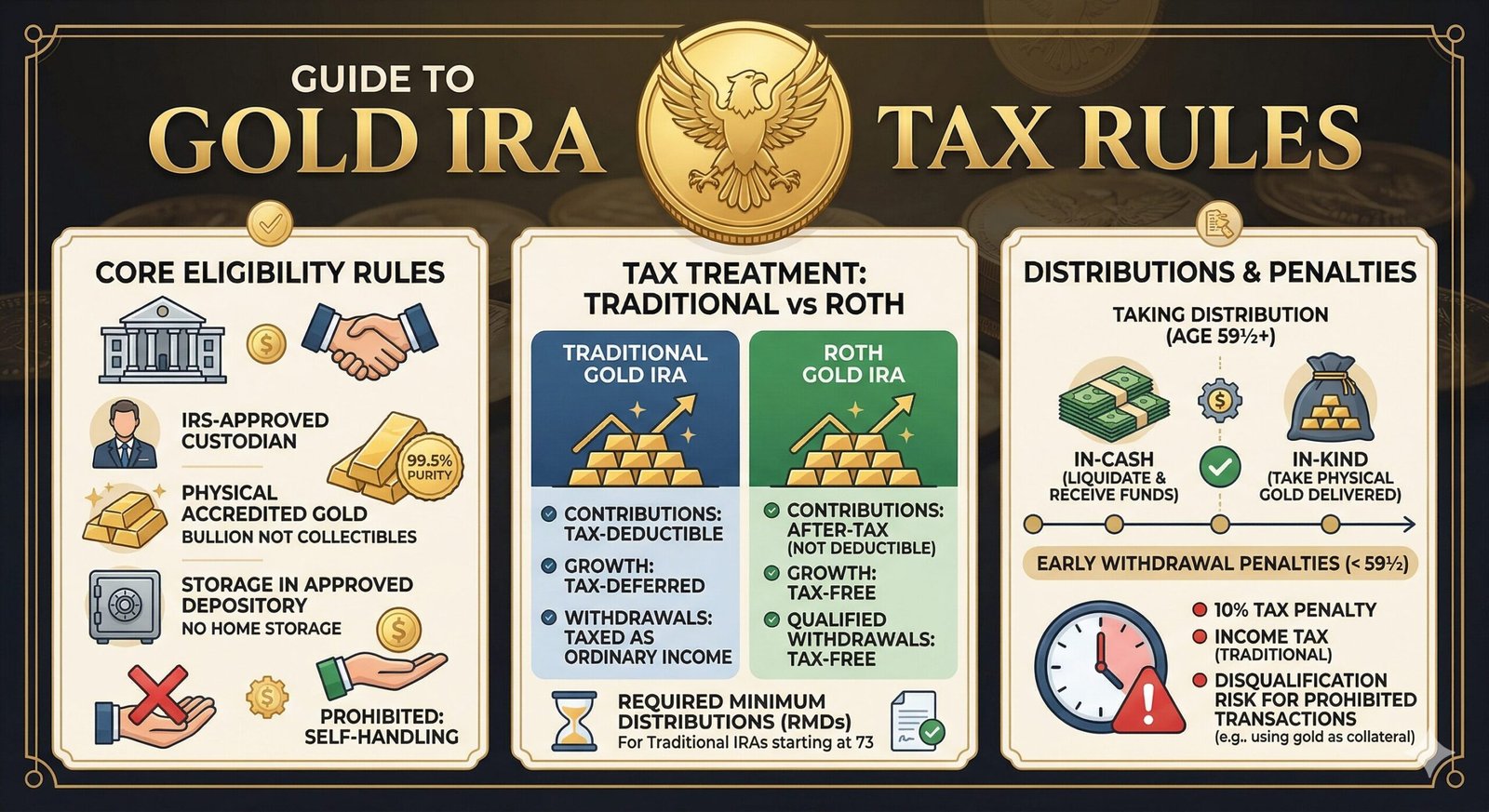
When beneficiaries need to take distributions from inherited Gold IRAs, they have two primary options: in-kind distributions of the physical precious metals or cash distributions from the sale of metals. In-kind distributions involve the custodian transferring actual gold or silver coins and bars to the beneficiary, who then owns the metals directly outside of any retirement account structure.
Cash distributions require the custodian to sell precious metals holdings and distribute the proceeds. This approach might be necessary when multiple beneficiaries inherit the account and physical division of metals would be impractical, or when beneficiaries prefer cash over physical possession of precious metals.
Both distribution methods trigger taxable events for traditional Gold IRA inheritances. The distributed amount counts as ordinary income to the beneficiary in the year received, potentially pushing them into higher tax brackets. Roth Gold IRA inheritances generally receive more favorable tax treatment, with qualified distributions being tax-free to beneficiaries.
The physical nature of precious metals can complicate valuation for tax purposes. Fair market value must be determined at the time of distribution, typically using current spot prices for the specific metals being distributed. Custodians usually provide the necessary tax documentation, but beneficiaries should work with tax professionals to ensure proper reporting.
Estate Planning Considerations for Gold IRA Owners
Effective estate planning for Gold IRA owners extends beyond simply naming beneficiaries. The physical storage requirements for precious metals mean that custodial arrangements must continue seamlessly after the account holder’s death, requiring careful coordination between the Gold IRA custodian and the deceased’s estate representatives.
Trust structures can add complexity but also provide additional control over Gold IRA inheritances. Naming a trust as the Gold IRA beneficiary allows the trust document to specify distribution terms and provide ongoing management for inherited assets. However, trust beneficiaries of Gold IRAs must meet specific requirements to qualify for favorable distribution treatment.
The substantial value that Gold IRAs can represent makes them significant components of overall estate planning strategies. Account holders should coordinate their Gold IRA beneficiary planning with their broader estate plan, considering factors like estate tax implications, state inheritance laws, and the overall distribution of assets among heirs.
Regular review of beneficiary designations becomes particularly important for Gold IRA owners, as precious metals values can fluctuate significantly over time. What might have been a modest retirement account supplement could grow into a substantial inheritance, potentially affecting the overall balance of an estate plan.
Managing Inherited Gold IRAs
Beneficiaries who inherit Gold IRAs must work with qualified custodians who can handle precious metals storage and administration. Not all IRA custodians offer Gold IRA services, so inherited account transfers might be necessary to ensure proper ongoing management. Understanding Gold IRA fees becomes important for beneficiaries who need to budget for ongoing storage and administrative costs.
The inherited Gold IRA must maintain its tax-advantaged status while meeting distribution requirements. This means beneficiaries cannot take possession of precious metals without triggering taxable distributions. The metals must remain in approved storage facilities under custodial control until formal distributions occur.
Beneficiaries should understand their options for managing inherited precious metals investments. They might choose to maintain the existing allocation of gold and silver, rebalance among different precious metals, or gradually liquidate holdings to meet distribution requirements. Each approach has different implications for ongoing fees and tax planning.
Communication with the Gold IRA custodian becomes crucial after inheriting an account. Beneficiaries need clear documentation of their inheritance rights, understanding of distribution options, and ongoing account statements to track precious metals holdings and market values. Establishing this relationship early helps ensure smooth account management during what can be an emotionally difficult time.
Common Mistakes to Avoid
One of the most costly mistakes beneficiaries make is missing distribution deadlines. The 10-year rule for non-spouse beneficiaries has a hard deadline that cannot be extended, and failure to withdraw the full balance by the required date can result in significant penalties. The IRS imposes a 50% excise tax on required distributions that aren’t taken, making deadline compliance crucial.
Another common error involves treating inherited Gold IRAs like regular investment accounts. Beneficiaries cannot make additional contributions to inherited IRAs, cannot roll them over to their own IRAs (except for surviving spouses), and must follow specific titling requirements to maintain the accounts’ inherited status.
Beneficiaries sometimes overlook the importance of proper account titling when transferring inherited Gold IRAs to new custodians. The account must be titled to reflect its inherited status, typically reading something like “John Smith, deceased, inherited IRA for the benefit of Jane Smith.” Incorrect titling can inadvertently trigger immediate taxation of the entire account balance.
Tax planning mistakes can prove expensive for Gold IRA beneficiaries. Large distributions in single tax years can push beneficiaries into higher tax brackets, while poor timing of distributions might coincide with other high-income years. Working with tax professionals who understand both precious metals investing and retirement account taxation helps avoid these pitfalls.
Professional Guidance and Resources
The complexity of Gold IRA beneficiary rules often requires professional guidance to navigate successfully. Tax professionals who understand precious metals investing can help beneficiaries develop distribution strategies that minimize tax impact while meeting legal requirements. Estate planning attorneys can ensure that Gold IRA beneficiary designations align with overall estate planning objectives.
FINRA’s guidance on self-directed IRAs provides valuable consumer protection information for those dealing with inherited Gold IRAs. The organization’s BrokerCheck database allows beneficiaries to research the backgrounds of financial professionals they might work with during the inheritance process.
The SEC investor resources offer additional educational materials about retirement account inheritances and the responsibilities that come with managing inherited assets. These resources can help beneficiaries understand their rights and obligations when inheriting Gold IRAs.
Regular consultation with the Gold IRA custodian provides ongoing support for beneficiaries managing inherited accounts. Custodians can explain distribution options, provide current account valuations, and help coordinate the logistics of precious metals distributions when required.
Frequently Asked Questions
Can I add money to an inherited Gold IRA?
No, beneficiaries cannot make contributions to inherited Gold IRAs. These accounts can only receive the original assets from the deceased account holder’s Gold IRA. The only additions come from investment growth within the existing precious metals holdings.
What happens if there are multiple beneficiaries for one Gold IRA?
Multiple beneficiaries can inherit a single Gold IRA, but the account must typically be divided into separate inherited IRAs by December 31 of the year following the account holder’s death. Each beneficiary then manages their portion according to their own beneficiary status and distribution requirements.
Do I have to take the gold and silver physically, or can I get cash?
Beneficiaries can choose either in-kind distributions (receiving the actual precious metals) or cash distributions (from the sale of metals). Both options count as taxable distributions for traditional Gold IRAs. The choice often depends on the beneficiary’s preference for holding physical precious metals versus cash.
Can I roll an inherited Gold IRA into my own retirement account?
Only surviving spouses can treat an inherited Gold IRA as their own and roll it into their existing retirement accounts. Non-spouse beneficiaries must maintain the inherited status and cannot combine inherited Gold IRAs with their own retirement accounts.
What happens if I miss the distribution deadline for my inherited Gold IRA?
Missing distribution deadlines can result in severe penalties. Non-spouse beneficiaries who fail to withdraw the full inherited balance within 10 years face a 50% excise tax on the amount that should have been distributed. There are limited options for penalty relief, making deadline compliance essential.
Understanding Gold IRA beneficiary rules helps ensure your precious metals investments can successfully transfer to your chosen heirs while minimizing tax complications and administrative challenges. For comprehensive information about Gold IRA providers and their inheritance support services, review our guide to the Best Gold IRA Companies of 2026.
This article is for informational purposes only and does not constitute financial or tax advice. Investing in precious metals involves risk including possible loss of principal.