
Gold IRA Inheritance Rules: Guide for Beneficiaries
When a loved one passes away and leaves behind a Gold IRA, understanding the inheritance process becomes crucial for beneficiaries. The rules governing inherited precious metals retirement accounts involve specific IRS requirements, distribution timelines, and tax considerations that differ significantly from traditional asset inheritance.
Gold IRA inheritance rules combine the complexity of precious metals custody with retirement account regulations, creating a unique set of requirements that beneficiaries must navigate carefully. Whether you’re a spouse, adult child, or other designated beneficiary, knowing these rules can help you make informed decisions about your inherited retirement assets.
The inheritance process for a Gold IRA involves multiple steps, from establishing your beneficiary status to understanding distribution options and tax implications. Each type of beneficiary faces different rules and timelines, making it essential to understand which category applies to your situation.
Understanding Gold IRA Beneficiary Categories
The IRS classifies Gold IRA beneficiaries into distinct categories, each with specific rules and distribution requirements. Your classification as a beneficiary determines the options available to you and the timeline you must follow for account distributions.
Spouse beneficiaries receive the most favorable treatment under current IRS regulations. A surviving spouse can treat the inherited Gold IRA as their own account, rolling the assets into their existing IRA or establishing a new one in their name. This option allows the spouse to delay required distributions until they reach age 73, potentially extending the tax-deferred growth period significantly.
Non-spouse beneficiaries, including adult children, grandchildren, and other individuals, face more restrictive rules. Under the SECURE Act of 2019, most non-spouse beneficiaries must fully distribute the inherited Gold IRA within 10 years of the original owner’s death. This rule applies regardless of whether the original owner had begun taking required minimum distributions.
Trust beneficiaries add another layer of complexity to the inheritance process. When a trust is named as the Gold IRA beneficiary, the distribution rules depend on whether the trust qualifies as a “see-through trust” under IRS guidelines. Qualifying trusts can use the 10-year distribution rule, while non-qualifying trusts must distribute the entire account within five years.
Charitable organizations named as beneficiaries face different considerations altogether. While charities don’t pay income taxes on distributions, the timing and method of distribution still matter for proper account closure and asset transfer.
Distribution Requirements and Timelines
The distribution timeline for inherited Gold IRAs depends heavily on your beneficiary status and the age of the original account owner at the time of death. These timelines are strictly enforced by the IRS, and failing to meet distribution requirements can result in substantial penalties.
For spouse beneficiaries who choose to treat the Gold IRA as their own, the distribution timeline follows standard IRA rules. Required minimum distributions begin at age 73, calculated based on the spouse’s life expectancy. This option provides maximum flexibility and potential for continued tax-deferred growth.
The 10-year rule for non-spouse beneficiaries requires complete distribution of all Gold IRA assets by December 31 of the 10th year following the original owner’s death. Importantly, this rule doesn’t require annual distributions within the 10-year period unless the original owner had already begun taking required minimum distributions before death.
When the original Gold IRA owner dies before their required beginning date for distributions (generally age 73), non-spouse beneficiaries can spread distributions over the full 10-year period without annual requirements. However, if the owner had already begun required distributions, beneficiaries must continue taking annual distributions based on their own life expectancy while still completing full distribution within 10 years.
The five-year rule applies to certain situations and beneficiary types. Non-designated beneficiaries, such as estates or non-qualifying trusts, typically must distribute the entire Gold IRA within five years. Some beneficiaries may also elect the five-year rule even when other options are available, though this choice is generally less favorable from a tax perspective.
Tax Implications for Inherited Gold IRAs
Understanding the tax consequences of inheriting a Gold IRA is crucial for proper financial planning and compliance with IRS requirements. The tax treatment of distributions depends on the type of Gold IRA inherited and your status as a beneficiary.
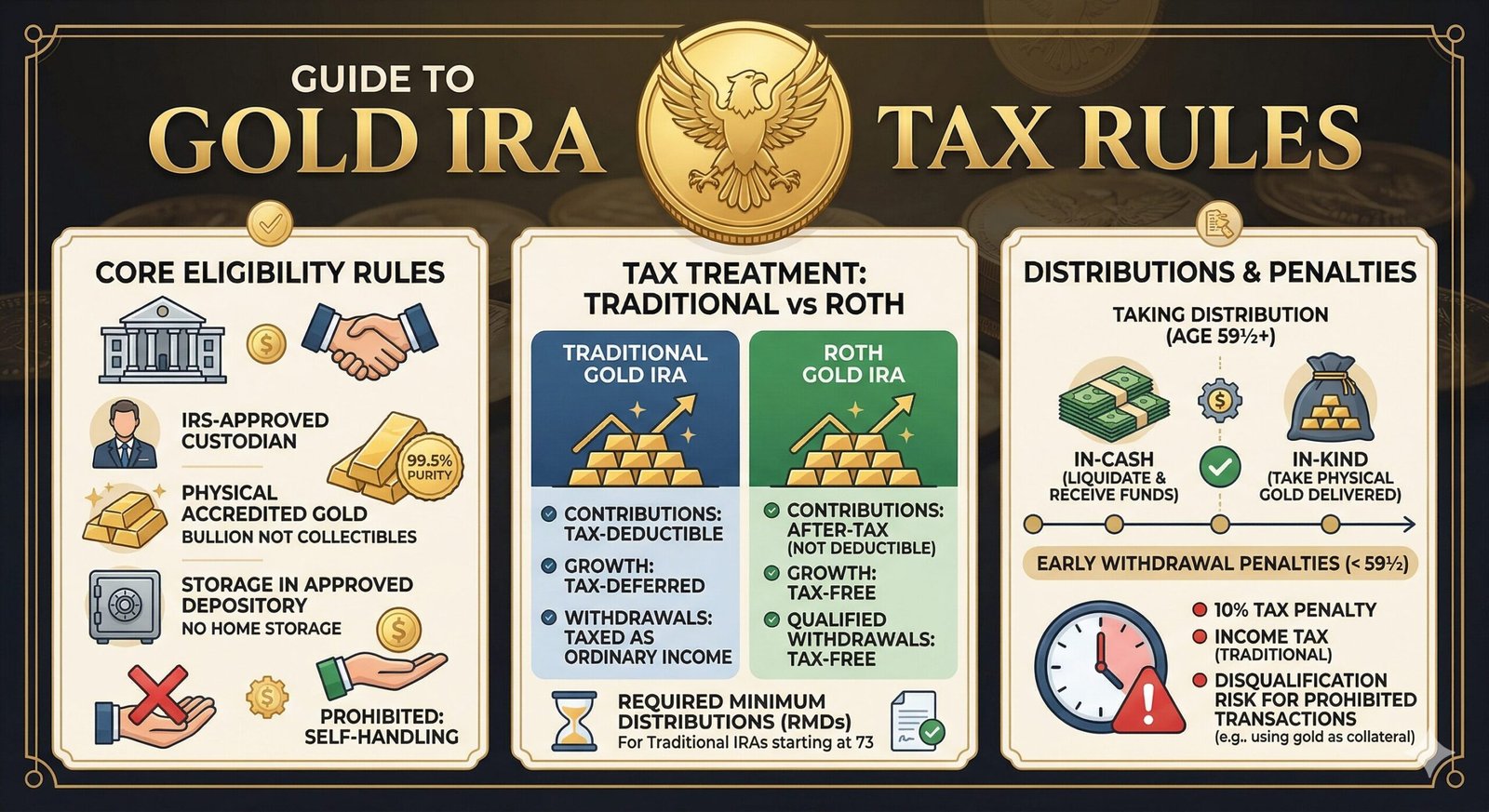
Traditional Gold IRA distributions are treated as ordinary income for tax purposes, just like distributions from any traditional retirement account. This means the full value of any distribution will be added to your taxable income for the year in which you receive it. The tax rate applied depends on your total income and tax bracket for that year.
Roth Gold IRA inheritance follows different tax rules. If the Roth Gold IRA was established at least five years before the original owner’s death, distributions to beneficiaries are generally tax-free. This five-year rule applies to the original establishment of the Roth IRA, not to individual contributions or conversions.
The timing of distributions can significantly impact your tax burden. Large distributions in a single year might push you into higher tax brackets, while spreading distributions over multiple years could help manage your overall tax liability. However, you must balance tax planning with the mandatory distribution timelines required by the IRS.
State taxes add another consideration to the inheritance process. Some states don’t tax retirement account distributions, while others apply their own tax rates. The state where you reside, not where the original owner lived or where the Gold IRA is custodied, typically determines your state tax obligations.
According to the IRS Publication 590-B, beneficiaries should carefully consider the timing and amount of distributions to optimize their tax situation while remaining compliant with federal requirements.
Steps to Inherit a Gold IRA
The process of inheriting a Gold IRA involves several critical steps that must be completed in the proper order and timeframe. Beginning this process promptly after the original owner’s death helps ensure compliance with IRS requirements and preserves your inheritance options.
Your first step involves establishing your status as a legitimate beneficiary through proper documentation. You’ll need to provide the Gold IRA custodian with a certified copy of the death certificate and documentation proving your beneficiary designation. This might include the original IRA beneficiary form or trust documents if a trust is involved.
Opening a beneficiary IRA account is typically required to receive the inherited assets. This account must be titled properly to indicate its inherited status, usually including both the deceased owner’s name and your name as beneficiary. The specific titling requirements vary by custodian, but proper titling is essential for maintaining the account’s tax-advantaged status.
The custodian will provide you with various distribution options based on your beneficiary status and the specific rules applicable to your situation. Review these options carefully, as some elections are irrevocable once made. Consider consulting with a tax professional or financial advisor to understand the implications of each choice.
Physical precious metals held in the Gold IRA require special handling during the inheritance process. The metals must remain in the custody of an approved depository until you decide how to take distributions. You can choose to receive physical delivery of the metals, sell them through the custodian and receive cash, or maintain them in the inherited account structure.
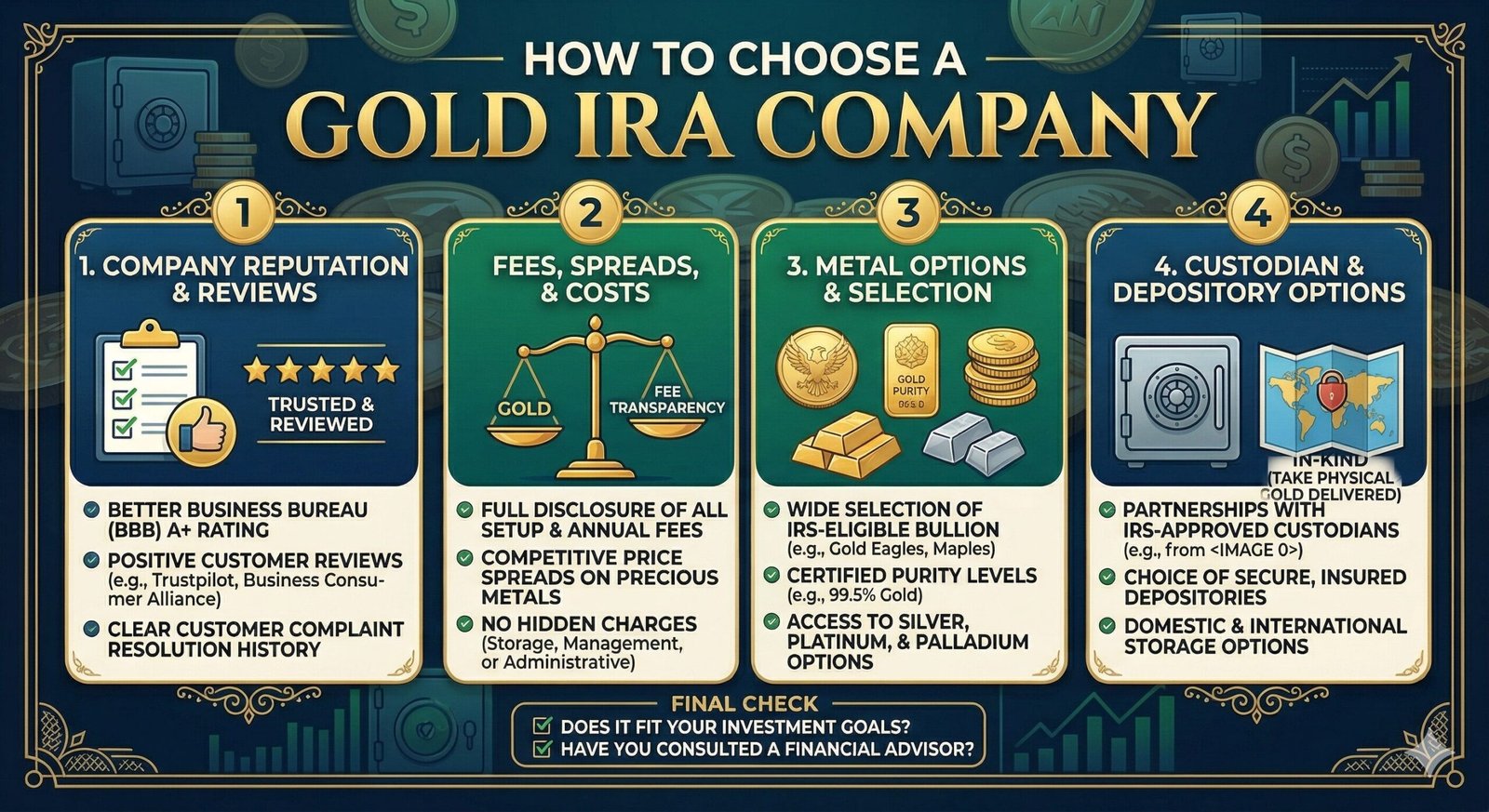
Understanding our Gold IRA rollover rules can help you navigate the inheritance process more effectively, as some of the same principles apply to inherited account transfers and distributions.
Inherited Gold IRA Distribution Options
Beneficiaries of Gold IRAs have several distribution options, each with distinct advantages and limitations. Your choice among these options depends on your financial situation, tax planning goals, and the specific rules that apply to your beneficiary status.
Taking immediate distribution of the entire Gold IRA provides complete access to the inherited assets but may result in significant tax consequences. For traditional Gold IRAs, the full distribution amount becomes taxable income in the year received, potentially pushing you into higher tax brackets. This option makes sense when you need immediate access to funds or when the account balance is relatively small.
Systematic distributions over the allowable timeframe can help manage tax liability while providing regular income. For example, non-spouse beneficiaries subject to the 10-year rule might choose to take equal annual distributions to spread the tax burden across multiple years. This approach requires careful planning to ensure compliance with mandatory distribution deadlines.
Some beneficiaries may choose to take distributions in kind, receiving the actual physical precious metals rather than cash. This option allows you to maintain ownership of the gold or silver assets outside the IRA structure, though the fair market value of the metals at distribution becomes taxable income for traditional IRAs.
Spouse beneficiaries have the unique option to disclaim their inheritance, allowing the assets to pass to contingent beneficiaries. This strategy might make sense when the surviving spouse has sufficient assets and wants to preserve the inheritance for children or grandchildren, potentially extending the tax-deferred growth period.
The choice between lump-sum and periodic distributions often depends on your current financial situation and long-term goals. Consider how the additional income might affect your tax bracket, Medicare premiums, Social Security taxation, and other income-sensitive benefits or obligations.
Common Inheritance Mistakes to Avoid
Several common mistakes can significantly impact the value of an inherited Gold IRA or create unnecessary complications for beneficiaries. Understanding these pitfalls helps ensure you make informed decisions throughout the inheritance process.
Missing critical deadlines represents one of the most costly mistakes beneficiaries make. The IRS imposes strict timelines for distribution decisions and account elections, and failing to act within these windows can eliminate favorable options. For example, spouse beneficiaries must decide whether to treat the IRA as their own within a reasonable timeframe, typically by the end of the year following the year of death.
Improper account titling can jeopardize the inherited IRA’s tax-advantaged status. The account must be titled to clearly indicate its inherited nature and identify both the original owner and the beneficiary. Generic titles or incorrect information can lead to tax complications or even disqualification of the account’s special status.
Taking distributions before understanding all available options is another frequent error. Some distribution elections are irrevocable, and acting hastily without considering the long-term implications can result in suboptimal outcomes. Take time to understand your options and consider professional guidance before making major distribution decisions.
Failing to update beneficiary designations after inheriting an IRA creates problems for the next generation. As the new account owner or beneficiary, you should promptly designate your own beneficiaries to ensure smooth transfer if something happens to you before the account is fully distributed.
Ignoring state tax implications can result in unexpected tax bills or missed opportunities. State tax treatment of retirement account distributions varies widely, and understanding your state’s specific rules helps in planning distribution timing and amounts.
For guidance on avoiding common pitfalls in Gold IRA management, review our comprehensive how to avoid Gold IRA scams guide, which covers important safeguards for retirement account management.
Special Circumstances and Considerations
Several special circumstances can complicate the Gold IRA inheritance process, requiring additional attention and potentially different strategies. Understanding these situations helps beneficiaries navigate complex inheritance scenarios effectively.
Multiple beneficiaries create additional complexity in the inheritance process. When several people inherit a single Gold IRA, they can either maintain the account together with each taking their proportional share of distributions, or they can split the account into separate inherited IRAs. Splitting accounts often provides more flexibility since each beneficiary can make independent distribution decisions based on their individual circumstances.
When the original Gold IRA owner dies intestate (without a will) or when beneficiary designations are unclear or outdated, the account typically passes according to the custodian’s default succession rules or state law. These situations often result in less favorable distribution requirements and may require legal intervention to resolve beneficiary disputes.
Disclaiming an inheritance represents a powerful but irreversible strategy that some beneficiaries might consider. A qualified disclaimer must be made within nine months of the original owner’s death and cannot be conditional. Once disclaimed, the inheritance passes to the next eligible beneficiary as if the disclaiming party had predeceased the original owner.
Trust beneficiaries face unique considerations regarding distribution requirements and tax implications. The trust document’s language, the timing of the original owner’s death, and whether the trust qualifies as a designated beneficiary all affect available options. Professional guidance is particularly important in these situations.
Minor beneficiaries add another layer of complexity to Gold IRA inheritance. Generally, distributions to minors must be managed through guardianship or trust arrangements, and the distribution timeline may be affected by the minor’s age and when they reach majority.
Comparison of Inheritance Rules by Beneficiary Type
This comparison illustrates how beneficiary classification significantly impacts the inheritance experience and available options.
Working with Professionals During Inheritance
The complexity of Gold IRA inheritance rules often warrants professional guidance to ensure compliance and optimize outcomes. Various professionals can provide valuable assistance throughout the inheritance process.
Tax professionals, including CPAs and enrolled agents, can help you understand the tax implications of different distribution strategies. They can model various scenarios to show how distribution timing might affect your overall tax situation and help you develop a strategy that minimizes unnecessary tax burdens while meeting IRS requirements.
Estate planning attorneys become particularly important when inheritance involves trusts, multiple beneficiaries, or disputed beneficiary designations. They can help navigate legal requirements, resolve beneficiary conflicts, and ensure proper documentation for complex inheritance situations.
Financial advisors can help you integrate inherited Gold IRA distributions into your overall financial plan. They can assist with investment decisions for distributed funds, help coordinate timing with other retirement account distributions, and provide guidance on how inherited assets fit into your long-term financial strategy.
The Gold IRA custodian plays a crucial role in the inheritance process and can provide specific guidance about their procedures and requirements. However, custodians cannot provide tax or legal advice, so their guidance should be supplemented with professional counsel when needed.
When selecting professionals to assist with Gold IRA inheritance, look for those with specific experience in retirement account distributions and precious metals IRAs. The unique aspects of Gold IRAs require specialized knowledge that not all professionals possess.
Understanding what a Gold IRA is and how it functions can help you work more effectively with professionals and ask better questions about your specific situation.
Frequently Asked Questions
How long do I have to take distributions from an inherited Gold IRA?
The distribution timeline depends on your relationship to the original owner. Surviving spouses can treat the account as their own and delay distributions until age 73. Non-spouse beneficiaries must generally complete distributions within 10 years of the original owner’s death. Some beneficiaries may be subject to a five-year distribution rule instead.
Can I roll an inherited Gold IRA into my own retirement account?
Only surviving spouses can roll inherited Gold IRA assets into their own retirement accounts. Non-spouse beneficiaries cannot perform rollovers but must maintain the assets in a properly titled inherited IRA account until distribution.
Are there taxes on inherited Gold IRA distributions?
Yes, distributions from inherited traditional Gold IRAs are taxed as ordinary income. Roth Gold IRA distributions may be tax-free if the account was established at least five years before the original owner’s death. The timing and amount of distributions can significantly impact your tax liability.
What happens if I miss the distribution deadline for an inherited Gold IRA?
Missing distribution deadlines can result in substantial IRS penalties, typically 25% of the amount that should have been distributed (reduced to 10% if corrected promptly). In severe cases, the entire account might be deemed distributed, creating immediate tax liability for the full balance.
Can I take physical delivery of the gold and silver from an inherited Gold IRA?
Yes, you can take distribution in the form of physical precious metals. However, the fair market value of the metals at the time of distribution becomes taxable income for traditional IRAs. The metals must be valued properly and you’ll receive the appropriate tax documentation for reporting purposes.
If you’re considering your options for retirement precious metals investing, explore our comprehensive guide to the Best Gold IRA Companies of 2026 to understand the landscape of custodians and dealers in this specialized market.
This article is for informational purposes only and does not constitute financial or tax advice. Investing in precious metals involves risk including possible loss of principal.