
Gold IRA in Divorce: How Precious Metals IRAs Are Divided
Divorce proceedings involve the complex division of marital assets, and retirement accounts often represent some of the most valuable holdings in a marriage. When a Gold IRA is part of the equation, the process becomes even more intricate due to the unique nature of precious metals holdings and specialized custody requirements.
Understanding how courts handle Gold IRAs during divorce can help ensure both parties receive their fair share while avoiding costly mistakes that could trigger tax penalties or account violations. The division of these accounts requires careful attention to federal regulations, proper legal documentation, and coordination between multiple parties.
Understanding Gold IRA Assets in Marital Property
Gold IRAs contain physical precious metals rather than traditional paper assets, which creates unique considerations during divorce proceedings. These accounts are generally subject to the same marital property laws as other retirement accounts, but the valuation and division process differs significantly.
Courts typically classify retirement assets accumulated during marriage as marital property, regardless of which spouse’s name appears on the account. This principle applies to Gold IRAs just as it does to traditional IRAs or 401(k) plans. However, the timing of contributions and the source of funds can affect how much of the account is considered marital versus separate property.
The physical nature of precious metals adds complexity to the valuation process. Unlike stocks or bonds that have clear daily pricing, precious metals values fluctuate constantly and may include premiums for specific coins or bars. Courts must establish a valuation date and method to ensure fair division of the assets.
Professional appraisals may be necessary to determine the current market value of the precious metals holdings, particularly if the Gold IRA contains rare or collectible coins. The appraisal should account for both the metal content value and any numismatic premiums that may apply to specific pieces.
Legal Framework and QDRO Requirements
Dividing a Gold IRA requires a Qualified Domestic Relations Order (QDRO), a legal document that instructs the plan administrator how to distribute retirement assets according to the divorce decree. The QDRO must meet specific federal requirements under ERISA to avoid triggering tax penalties or early withdrawal fees.
For Gold IRAs, the QDRO process involves additional complexities due to the specialized nature of precious metals custody. The order must specify whether the metals will be physically divided, sold and proceeds split, or transferred to establish separate accounts for each spouse. Each option carries different implications for taxes, fees, and ongoing account management.
The IRS Publication 590-A provides detailed guidance on IRA distributions, including those resulting from divorce proceedings. These rules apply equally to traditional IRAs and Gold IRAs, though the practical implementation differs due to the physical assets involved.
Courts may require the QDRO to address specific issues unique to precious metals IRAs, such as which party will be responsible for storage fees during the division process and how the metals will be valued if market prices change between the court order and actual distribution. Clear language in the QDRO can prevent disputes and delays in the division process.
Valuation Methods for Gold IRA Assets
Establishing the value of Gold IRA holdings requires careful consideration of multiple factors beyond the basic spot price of precious metals. The valuation method chosen can significantly impact the final division of assets between divorcing spouses.
Spot price valuation uses the current market price for the precious metals content without considering premiums or collectible value. This method works well for standard bullion coins and bars but may undervalue rare or numismatic pieces held in the account. Courts often use this approach when seeking a straightforward, objective valuation method.
Fair market value assessment includes premiums for specific products and considers the actual price a willing buyer would pay for the exact items in the Gold IRA. This method provides a more accurate reflection of the account’s true worth but requires professional appraisal services and may lead to disputes over valuation methodology.
The timing of valuation also affects the final outcome. Some courts value assets as of the separation date, while others use the divorce decree date or the actual division date. Given the volatility of precious metals prices, this timing decision can result in significantly different valuations for the same assets.
Multiple appraisals may be necessary if the Gold IRA contains diverse holdings with varying premiums and market characteristics. Professional numismatists or precious metals dealers can provide expertise in valuing rare coins or specialty items that standard appraisal methods might not address adequately.
Division Options and Their Implications
Courts have several options for dividing Gold IRA assets, each with distinct advantages and drawbacks for the divorcing parties. The chosen method affects not only the immediate distribution but also the long-term tax and investment implications for both spouses.
Physical division involves splitting the actual precious metals between the parties, with each receiving specific coins or bars from the original collection. This approach maintains the tax-advantaged status of the retirement assets but requires establishing separate Gold IRA accounts for each spouse. The metals must be transferred directly between qualified custodians to avoid tax consequences.
Asset liquidation converts the precious metals to cash, which is then divided according to the court order. This method simplifies the division process and eliminates ongoing storage concerns, but it may trigger taxable events depending on how the liquidation is structured. The timing and method of sale can also affect the final proceeds available for division.
Account splitting creates two separate Gold IRA accounts from the original, with each spouse receiving a predetermined percentage of the total holdings. This approach preserves the retirement account status for both parties but requires careful allocation of specific metals to ensure each account receives proportional value.
Tax Considerations During Division
Gold IRA divisions must navigate complex tax implications that differ from traditional retirement account splits. Proper structuring of the division can help both parties avoid unnecessary tax burdens while preserving the retirement benefits of their portions.
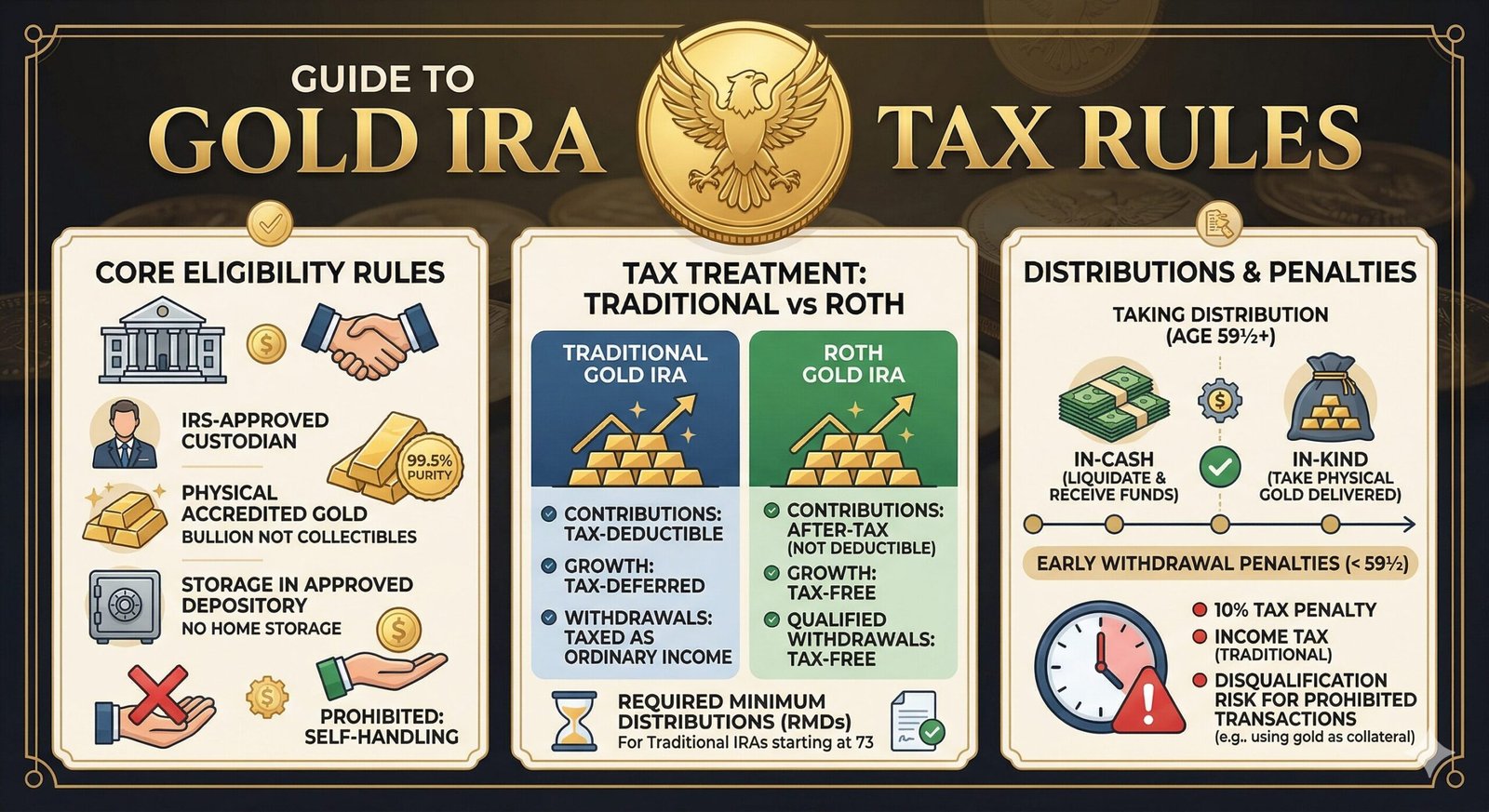
Direct trustee-to-trustee transfers represent the preferred method for maintaining tax-deferred status when dividing Gold IRA assets. These transfers move precious metals directly between qualified custodians without the assets ever coming under the control of either spouse, avoiding constructive receipt and potential tax consequences.
The IRS IRA investment FAQ clarifies that properly executed divorce-related distributions do not trigger the 10% early withdrawal penalty, even for individuals under age 59½. However, the transfer must comply with all QDRO requirements and IRA regulations to qualify for this exception.
If liquidation becomes necessary, the timing and method of sale can affect the tax treatment. Sales conducted within the IRA before distribution maintain the tax-deferred nature of the proceeds, while distributions of physical metals followed by individual sales may create immediate tax liability for the receiving spouse.
Future required minimum distributions (RMDs) must also be considered when dividing Gold IRA assets. The IRS RMD FAQ explains how these obligations transfer with divided accounts, potentially affecting long-term planning for both parties.
Working with Professional Advisors
Successfully navigating a Gold IRA division requires coordination between multiple professionals, each bringing specialized expertise to different aspects of the process. The complexity of precious metals regulations and retirement account rules makes professional guidance essential for most divorcing couples.
Family law attorneys familiar with retirement asset division can draft appropriate QDROs and ensure compliance with both state divorce laws and federal retirement regulations. Experience with Gold IRAs specifically is valuable, as these accounts present unique challenges not found in traditional retirement plan divisions.
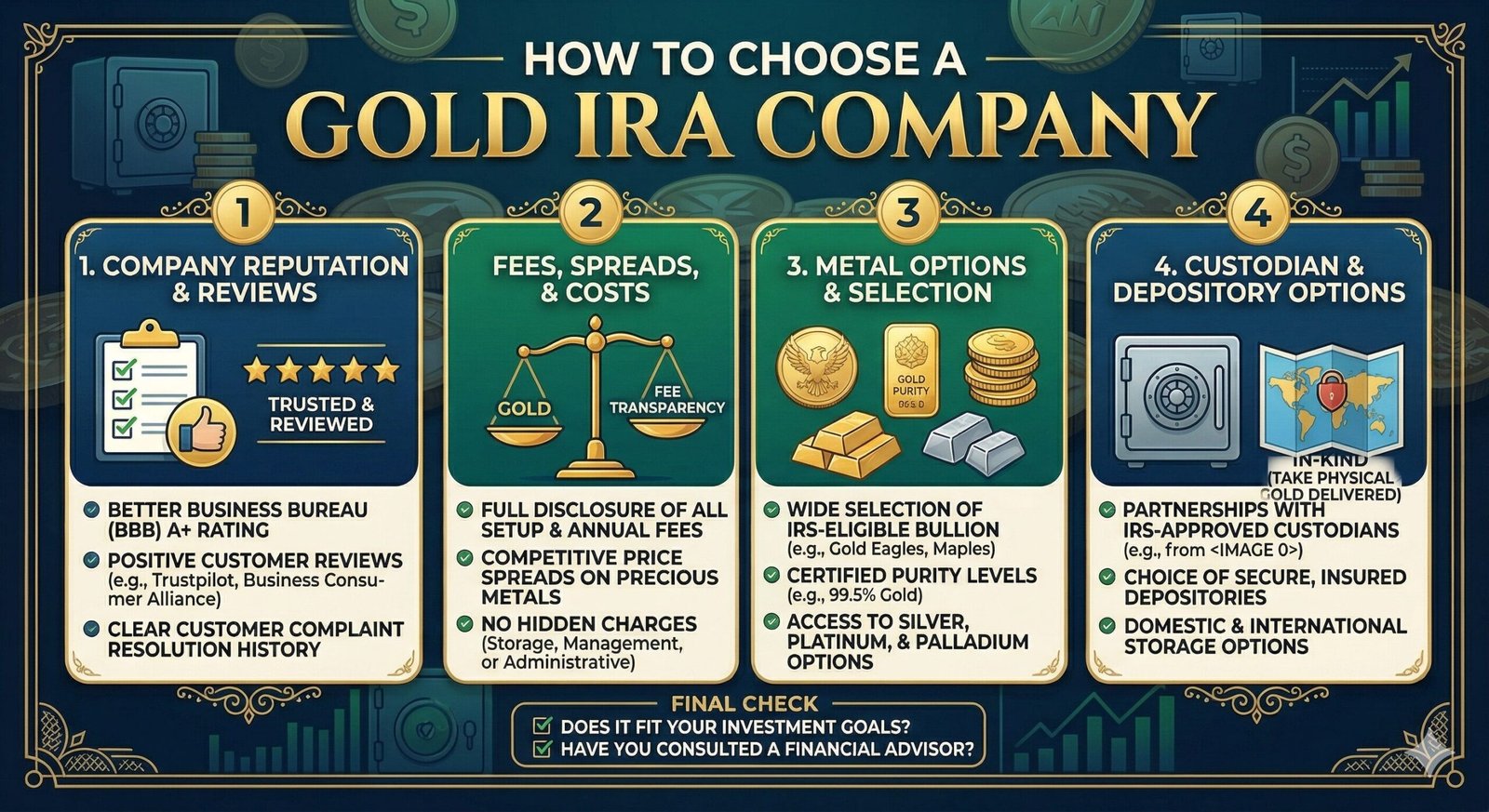
Gold IRA custodians play a crucial role in the actual division process, as they maintain custody of the precious metals and must execute the transfers according to the court order. Different custodians may have varying procedures and fees for division-related transfers, making early coordination important for smooth execution.
Financial advisors can help both parties understand the long-term implications of different division options and plan for their individual retirement needs after the divorce. Understanding what a Gold IRA is and how it fits into overall retirement planning becomes particularly important when each spouse will manage separate accounts going forward.
Tax professionals provide guidance on structuring the division to minimize tax consequences and ensure compliance with IRA regulations. The intersection of divorce law, retirement plan rules, and precious metals regulations creates numerous opportunities for costly mistakes without proper professional guidance.
Comparison of Division Methods
Common Challenges and Solutions
Gold IRA divisions often encounter obstacles that don’t arise with traditional retirement accounts. Understanding these potential issues and their solutions can help divorcing couples avoid delays and additional costs during an already stressful process.
Custodian limitations may prevent certain division methods, as not all Gold IRA custodians offer the same services or accept the same types of precious metals. Researching custodian capabilities early in the process can prevent last-minute complications and ensure the chosen division method is actually feasible.
Valuation disputes frequently arise when spouses disagree on the worth of precious metals holdings or the appropriate valuation method. Establishing clear valuation criteria in the divorce agreement and using qualified appraisers can minimize these conflicts and provide objective standards for division.
Timing constraints can complicate Gold IRA divisions, particularly if court deadlines conflict with the time required for proper precious metals transfers. Planning ahead and coordinating with all parties can help ensure adequate time for compliant execution of the division order.
Market volatility in precious metals prices can create fairness issues if significant time passes between the valuation date and actual division. Some agreements include provisions for price adjustments or updated valuations to address this concern, though these mechanisms add complexity to the process.
Long-term Planning After Division
Once a Gold IRA has been divided, each spouse must consider how their portion fits into their individual retirement strategy. The division itself is just the beginning of a new chapter in retirement planning that requires careful consideration of various factors.
Account management responsibilities transfer to each spouse for their portion of the divided assets. This includes understanding Gold IRA fees associated with storage, insurance, and account maintenance, as well as compliance requirements for precious metals IRAs.
Investment strategy decisions become individual responsibilities, including whether to maintain the current precious metals allocation, add to the account through additional contributions, or consider rebalancing with other retirement assets. Gold IRA vs Traditional IRA considerations may factor into these decisions.
Estate planning implications should also be reviewed, as the divided Gold IRA accounts will need designated beneficiaries and may affect overall estate planning strategies. The unique characteristics of precious metals IRAs require special attention in estate planning documents.
Future rollover opportunities may arise if either spouse changes employment or wants to consolidate retirement accounts. Understanding Gold IRA rollover rules helps ensure future transfers maintain tax-advantaged status and comply with all regulations.
Frequently Asked Questions
Can a Gold IRA be divided without selling the precious metals?
Yes, Gold IRAs can be divided through direct transfers of physical metals between qualified custodians, preserving the tax-deferred status of the retirement assets. This requires proper QDRO documentation and coordination between custodians but avoids the need to liquidate the precious metals holdings.
How long does it take to divide a Gold IRA in divorce?
The timeline typically ranges from 4-10 weeks depending on the division method chosen, custodian procedures, and complexity of the holdings. Physical divisions generally take longer than liquidation approaches due to the need for asset allocation and transfer procedures between custodians.
Are there penalties for dividing a Gold IRA before age 59½?
No, properly executed divorce-related divisions do not trigger the 10% early withdrawal penalty, regardless of age. However, the transfer must comply with QDRO requirements and be structured as a direct trustee-to-trustee transfer to maintain this penalty exemption.
What happens if the Gold IRA contains rare or collectible coins?
Rare or collectible coins require professional appraisal to determine their full value beyond precious metals content. The division must account for numismatic premiums and may require specialized handling to preserve the coins’ condition and value during the transfer process.
Can one spouse keep the entire Gold IRA by offsetting other assets?
Yes, spouses can agree to offset the Gold IRA value against other marital assets rather than dividing the account itself. This approach requires accurate valuation of all assets involved and may simplify the process while allowing one spouse to maintain the existing Gold IRA structure.
Dividing retirement assets in divorce requires careful planning and professional guidance to ensure both parties receive fair treatment while preserving the tax advantages of retirement savings. For those considering precious metals as part of their post-divorce retirement strategy, reviewing our comprehensive guide to the Best Gold IRA Companies of 2026 can help identify qualified custodians and service providers for future planning needs.
This article is for informational purposes only and does not constitute financial or tax advice. Investing in precious metals involves risk including possible loss of principal.