
Gold IRA vs 403(b): Key Differences for Educators
Educators and non-profit employees often have access to 403(b) retirement plans, but many wonder how these compare to alternative retirement savings vehicles like Gold IRAs. Understanding the fundamental differences between these two retirement options can help you make more informed decisions about your long-term financial planning.
Both 403(b) plans and Gold IRAs serve as retirement savings vehicles with tax advantages, yet they operate under distinctly different structures and offer varying investment opportunities. While 403(b) plans are employer-sponsored retirement accounts primarily available to teachers, professors, and certain non-profit workers, Gold IRAs are self-directed individual retirement accounts that allow investment in precious metals alongside or instead of traditional paper assets.
The choice between these retirement vehicles isn’t necessarily an either-or decision. Many educators maintain their 403(b) accounts while also exploring additional retirement savings options. However, understanding how each works, their respective limitations, and their potential benefits can guide your overall retirement strategy.
Understanding 403(b) Plans for Educators
403(b) plans, also known as tax-sheltered annuities (TSAs), are employer-sponsored retirement plans available to employees of public schools, certain tax-exempt organizations, and ministers. These plans share many similarities with 401(k) plans but are specifically designed for the education and non-profit sectors.
Most 403(b) plans offer a limited selection of investment options, typically including mutual funds, annuities, and sometimes target-date funds. The investment menu is chosen by your employer, which means you’re restricted to whatever options your school district or organization has negotiated. This can be both an advantage and a limitation, depending on the quality of options available and your investment preferences.
Contribution limits for 403(b) plans follow the same structure as 401(k) plans. For 2024, employees can contribute up to $23,000 annually, with an additional $7,500 catch-up contribution allowed for those aged 50 and older. Some 403(b) participants may also qualify for a special 15-year rule that allows additional catch-up contributions under specific circumstances.
Many employers offer matching contributions to 403(b) plans, though this varies significantly by institution. Public school districts often provide modest matching, while some non-profit organizations may offer more generous employer contributions. These matching funds represent free money toward your retirement, making 403(b) participation attractive when available.
According to the IRS contribution limits guidelines, 403(b) plans must follow strict distribution rules, including required minimum distributions (RMDs) beginning at age 73. Early withdrawals before age 59½ typically incur a 10% penalty plus ordinary income taxes, though certain exceptions may apply for educational expenses or financial hardship.
How Gold IRAs Work for Individual Investors
A Gold IRA represents a self-directed individual retirement account that permits investment in physical precious metals, including gold, silver, platinum, and palladium. Unlike employer-sponsored plans, Gold IRAs are established and managed by individual investors working with specialized custodians and dealers.
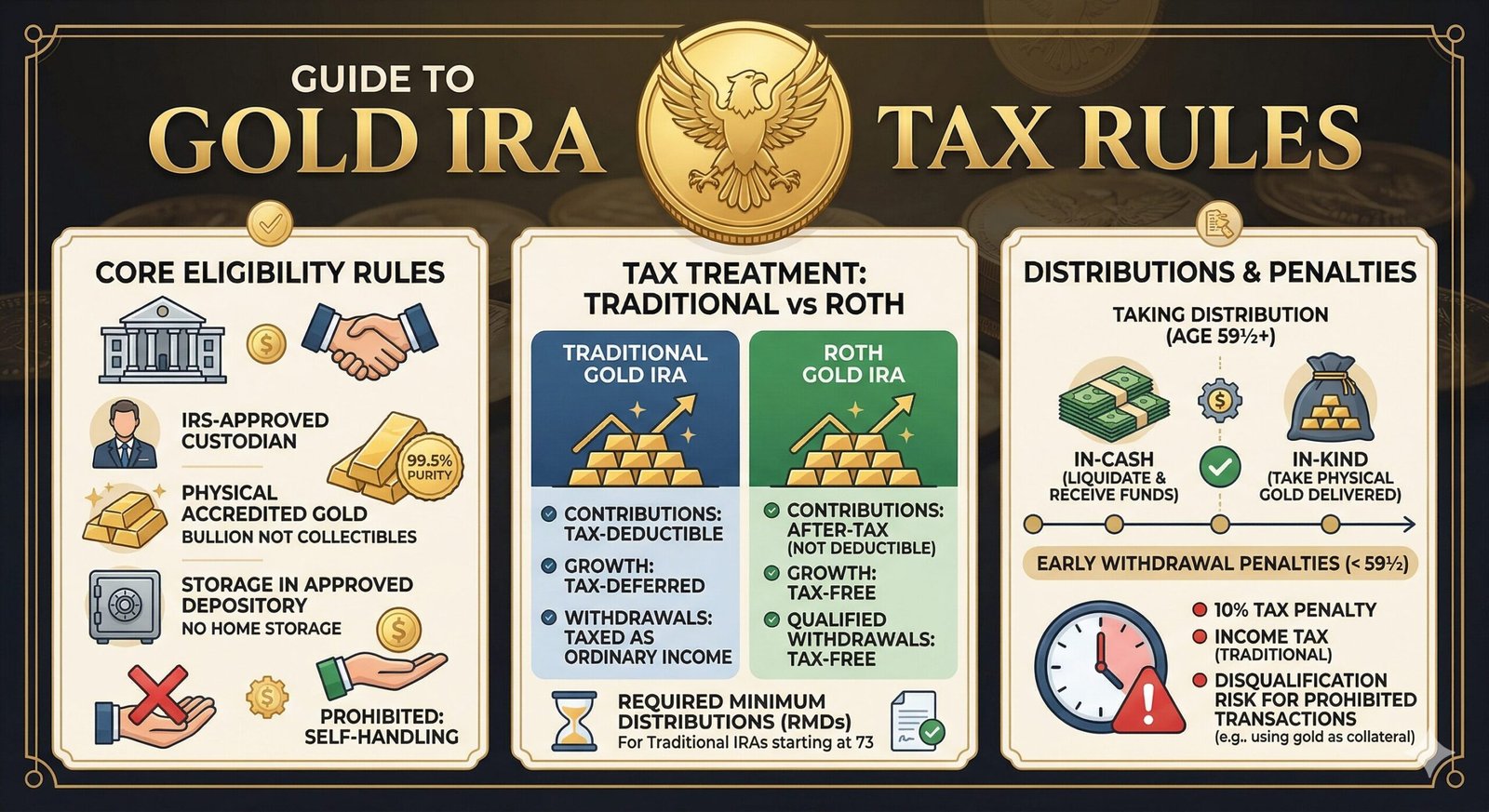
What a Gold IRA is involves setting up a self-directed IRA structure that meets IRS IRA investment FAQ requirements for precious metals investments. The account must be held by an IRS-approved custodian, and the physical metals must be stored in an approved depository facility, not in your personal possession.
The metals eligible for Gold IRA investment must meet specific purity standards. Gold must be 99.5% pure, silver must be 99.9% pure, and platinum and palladium must be 99.95% pure. IRA-eligible gold coins include American Gold Eagles, Canadian Gold Maple Leafs, and certain gold bars from approved refiners.
Gold IRA minimum investment amounts vary by company, typically ranging from $10,000 to $50,000 for initial accounts. This represents a higher entry barrier than most 403(b) plans, which often allow contributions starting with small payroll deductions.
Gold IRAs follow the same contribution limits as traditional IRAs: $7,000 annually for 2024, with an additional $1,000 catch-up contribution for those 50 and older. These limits are significantly lower than 403(b) contribution limits, but Gold IRAs can be funded through rollovers from existing retirement accounts without counting toward annual contribution limits.
Investment Options and Flexibility Comparison
The investment landscape differs dramatically between 403(b) plans and Gold IRAs. Most 403(b) plans offer 10 to 25 investment options, typically consisting of mutual funds spanning various asset classes, target-date funds, and sometimes guaranteed investment contracts (GICs) or annuity products.
403(b) plan investment menus are pre-selected by plan administrators, often with input from investment committees. This curated approach can simplify decision-making for participants but may limit access to specific investment strategies or asset classes that individual investors might prefer.
Gold IRAs focus specifically on precious metals investments, offering a more specialized but narrower investment universe. Within this framework, investors can choose from various forms of physical metals, including coins and bars from different mints and refiners. Some self-directed IRA structures may also permit other alternative investments beyond precious metals, though this depends on the specific custodian and account setup.
The administrative complexity varies significantly between these options. 403(b) plans typically require minimal ongoing management from participants beyond selecting initial investments and potentially rebalancing periodically. Payroll deductions automatically fund the account, and employers handle much of the administrative burden.
Gold IRAs require more active involvement from account holders. Investors must research and select custodians, choose storage facilities, and manage the logistics of precious metals purchases and storage. This additional complexity comes with greater control over specific investments and storage arrangements.
Contribution Limits and Tax Treatment
Both 403(b) plans and Gold IRAs offer tax-advantaged retirement savings, but their structures create different opportunities and limitations. Traditional 403(b) contributions reduce your current taxable income, with taxes deferred until you withdraw funds in retirement. Roth 403(b) options, where available, allow after-tax contributions with tax-free qualified withdrawals.
The significantly higher contribution limits for 403(b) plans represent a major advantage for high earners seeking to maximize tax-deferred retirement savings. An educator earning $80,000 annually could potentially contribute nearly 29% of their gross income to a 403(b) plan, while Gold IRA contributions would represent less than 9% of the same income.
Gold IRAs can be established as either traditional or Roth accounts, following the same tax treatment rules as conventional IRAs. Traditional Gold IRA contributions may be tax-deductible depending on your income level and whether you participate in an employer-sponsored retirement plan. Roth Gold IRAs accept after-tax contributions but offer tax-free qualified distributions.
IRS Publication 590-A provides detailed guidance on IRA contribution eligibility and deductibility limits. High-income earners may face reduced or eliminated deductibility for traditional IRA contributions if they also participate in employer-sponsored plans like 403(b)s.
The timing of tax benefits differs between these accounts. 403(b) participants typically receive immediate tax deductions for traditional contributions, reducing current-year tax liability. Gold IRA tax benefits depend on the account type and individual tax situation, with some contributors receiving immediate deductions while others building tax-free future income through Roth structures.
Rollover and Transfer Considerations
Many educators explore Gold IRAs through rollover strategies, transferring funds from existing 403(b) accounts or other retirement plans. 401(k) to Gold IRA rollover guide principles apply similarly to 403(b) rollovers, though specific plan rules may vary.
Gold IRA rollover rules permit tax-free transfers from 403(b) plans to Gold IRAs under certain circumstances. Direct rollovers, where funds transfer directly between custodians, avoid tax consequences and the 60-day rollover deadline that applies to indirect rollovers.
Current 403(b) participants may face restrictions on in-service withdrawals, limiting their ability to roll funds to Gold IRAs while still employed. Many plans only permit rollovers after separation from service, reaching age 59½, or meeting specific hardship criteria. However, some plans allow partial rollovers of employer matching contributions or funds from previous employers.
Former educators often have more flexibility with 403(b) rollover options. Upon leaving their employer, they can typically roll their entire 403(b) balance to various IRA types, including Gold IRAs, without tax penalties. This transition period often represents the optimal time to explore alternative retirement investment strategies.
FINRA’s guidance on self-directed IRAs emphasizes the importance of understanding fees and risks associated with alternative investments. Gold IRA rollovers involve additional costs beyond typical IRA management fees, including storage fees, insurance costs, and dealer markups on precious metals purchases.
Fees and Ongoing Costs
Cost structures represent a significant differentiating factor between 403(b) plans and Gold IRAs. Most 403(b) plans charge annual administrative fees ranging from 0.25% to 1.5% of account value, often deducted automatically from account balances. Investment expenses vary based on the specific funds selected, typically ranging from 0.1% for index funds to 1.5% or higher for actively managed options.
Some 403(b) providers charge additional fees for services like loan processing, early withdrawal processing, or account transfers. However, the economies of scale in employer-sponsored plans often result in lower overall costs compared to individual retirement accounts.
Gold IRA fees guide details the more complex fee structure associated with precious metals IRAs. These typically include annual custodial fees ($100-300), storage fees ($100-300 annually), insurance costs, and dealer markups on precious metals purchases and sales.
Gold IRA setup costs often include one-time account establishment fees ranging from $50 to $100. Some companies waive these fees for larger initial investments or rollovers. The ongoing nature of storage and insurance costs means that Gold IRAs typically carry higher annual expenses than traditional retirement accounts.
Transaction costs for Gold IRAs can be substantial, particularly for smaller accounts. Dealer spreads between buy and sell prices for precious metals typically range from 2% to 8%, depending on the specific products and market conditions. These costs can significantly impact returns, particularly for investors who buy and sell frequently.
Accessibility and Distribution Rules
Both 403(b) plans and Gold IRAs follow similar distribution rules established by the IRS RMD FAQ, but practical access to funds can differ significantly. 403(b) plans typically offer loan provisions, allowing participants to borrow up to $50,000 or 50% of their vested balance, whichever is less.
Gold IRA distributions require liquidating physical metals, which can take several days to weeks depending on market conditions and custodian procedures. This contrasts with 403(b) plans, where electronic transfers can often be completed within one to three business days for most withdrawal types.
Emergency access considerations favor 403(b) plans for active employees. Many plans allow hardship withdrawals for immediate financial needs, though these come with tax consequences and penalties. Gold IRAs offer similar hardship exceptions under IRS rules, but the liquidation process may delay access to funds.
Required minimum distributions begin at age 73 for both account types, but the mechanics differ significantly. 403(b) RMDs can typically be satisfied through automatic distributions in cash. Gold IRA RMDs may require selling precious metals to generate the required cash distribution, potentially forcing sales during unfavorable market conditions.
The 10-year rule for inherited retirement accounts affects both 403(b) plans and Gold IRAs similarly, requiring non-spouse beneficiaries to fully distribute inherited accounts within 10 years. However, the administrative complexity of inherited Gold IRAs often exceeds that of traditional retirement accounts due to the physical nature of the underlying assets.
Making the Choice: Factors to Consider
The decision between focusing on 403(b) plans versus exploring Gold IRAs depends on multiple personal and financial factors. Current 403(b) participants should typically maximize any available employer matching before considering alternative retirement vehicles, as employer contributions represent immediate 100% returns on invested capital.
Your overall retirement savings capacity plays a crucial role in this decision. Educators with limited disposable income may benefit more from maximizing 403(b) contributions, taking advantage of higher contribution limits and potential employer matching. Those who have already maximized employer-sponsored plan benefits might consider Gold IRAs as additional retirement savings vehicles.
Investment philosophy and comfort with alternative assets influence this choice significantly. Is a Gold IRA a good idea depends partly on your views regarding precious metals as long-term investments and your tolerance for the additional complexity involved in self-directed accounts.
Time horizon considerations matter for both options. Younger educators with decades until retirement may prioritize maximum contribution capacity through 403(b) plans, while those closer to retirement might value the different characteristics offered by precious metals investments.
Administrative preferences should factor into your decision-making process. Educators who prefer simple, hands-off retirement planning may find 403(b) plans more suitable, while those interested in more direct control over their investments might appreciate the self-directed nature of Gold IRAs.
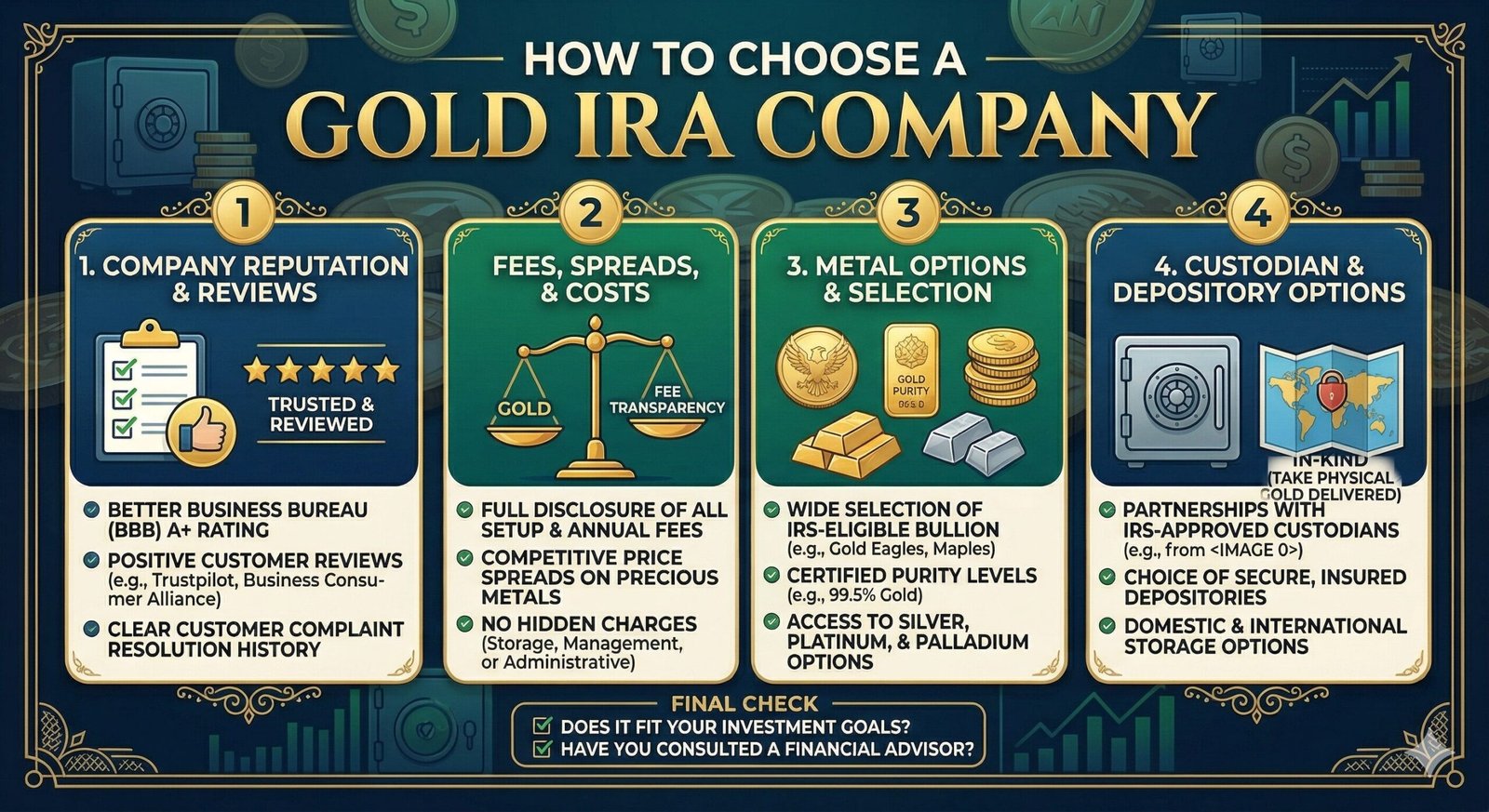
When evaluating Gold IRA companies, how to avoid Gold IRA scams becomes essential due diligence. Research potential custodians through bbb.org and verify their credentials through FINRA BrokerCheck where applicable.
Professional Guidance and Due Diligence
Both 403(b) plans and Gold IRAs benefit from professional guidance, though the type of expertise needed differs. 403(b) participants often receive support through employer-sponsored financial wellness programs or plan representatives who can explain investment options and plan features.
Gold IRA investors typically need to research and select their own professional advisors, including custodians, storage facilities, and potentially precious metals dealers. SEC investor resources provide general guidance on retirement account selection and management.
Due diligence requirements are generally more extensive for Gold IRAs due to their specialized nature and the variety of service providers involved. This includes researching custodian track records, storage facility security measures, and dealer reputation and pricing practices.
Gold IRAs Explained in Detail provides comprehensive information about the mechanics and considerations involved in precious metals retirement investing. However, individual circumstances vary significantly, making personalized professional guidance valuable for most investors.
Tax planning implications may require consultation with qualified tax professionals, particularly when considering rollovers between account types or managing multiple retirement accounts with different tax treatments. The complexity increases when coordinating 403(b) plans with Gold IRAs and other retirement savings vehicles.
Frequently Asked Questions
Can I have both a 403(b) and a Gold IRA?
Yes, you can maintain both a 403(b) plan and a Gold IRA simultaneously. The accounts are separate and have different contribution limits, so participating in a 403(b) doesn’t prevent you from also contributing to a Gold IRA, subject to IRA eligibility and contribution limit rules.
Can I roll my 403(b) directly into a Gold IRA?
You can roll funds from a 403(b) into a Gold IRA through a direct rollover process, but this may only be possible after separation from service or meeting other plan-specific criteria. Current employees should check their plan