
Gold IRA for Beginners: Getting Started Guide (2026)
Starting a Gold Individual Retirement Account (IRA) can feel overwhelming for first-time investors in precious metals. This comprehensive guide walks you through everything you need to know about Gold IRAs, from basic concepts to practical setup steps, helping you make informed decisions about incorporating physical precious metals into your retirement planning.
Understanding What a Gold IRA Is
A Gold IRA is a self-directed Individual Retirement Account that allows you to hold physical precious metals as retirement assets. Unlike traditional IRAs that typically hold stocks, bonds, and mutual funds, a Gold IRA contains actual gold, silver, platinum, or palladium coins and bars that meet specific IRS purity standards.
These accounts follow the same contribution limits and tax rules as traditional IRAs, but the assets themselves are stored in an IRS-approved depository rather than with a conventional financial institution. Understanding what a Gold IRA is forms the foundation for all other decisions in this process.
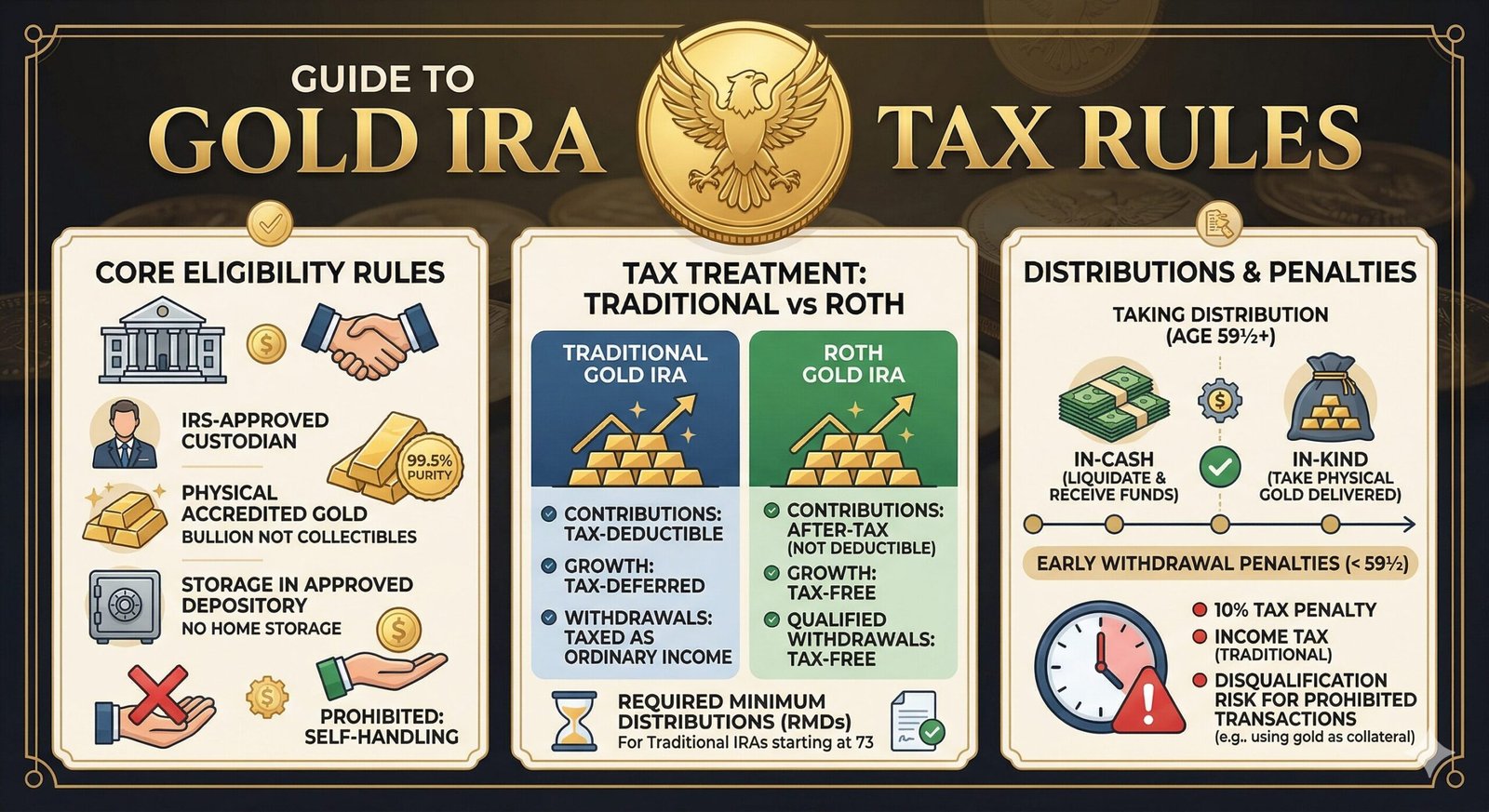
The IRS requires Gold IRA assets to meet strict purity requirements: gold must be 99.5% pure, silver 99.9% pure, platinum and palladium both 99.95% pure. This eliminates many collectible coins and ensures the metals in your account maintain investment-grade quality.
Key Components of a Gold IRA Setup
Setting up a Gold IRA involves several essential participants working together to ensure compliance with federal regulations. Each plays a specific role in the process and ongoing management of your account.
The Custodian’s Role
Every Gold IRA must have an IRS-approved custodian, typically a bank, trust company, or specialized precious metals custodian. The custodian handles all administrative duties, maintains records, processes transactions, and files required tax documents. They cannot provide investment advice but ensure your account follows IRS regulations.
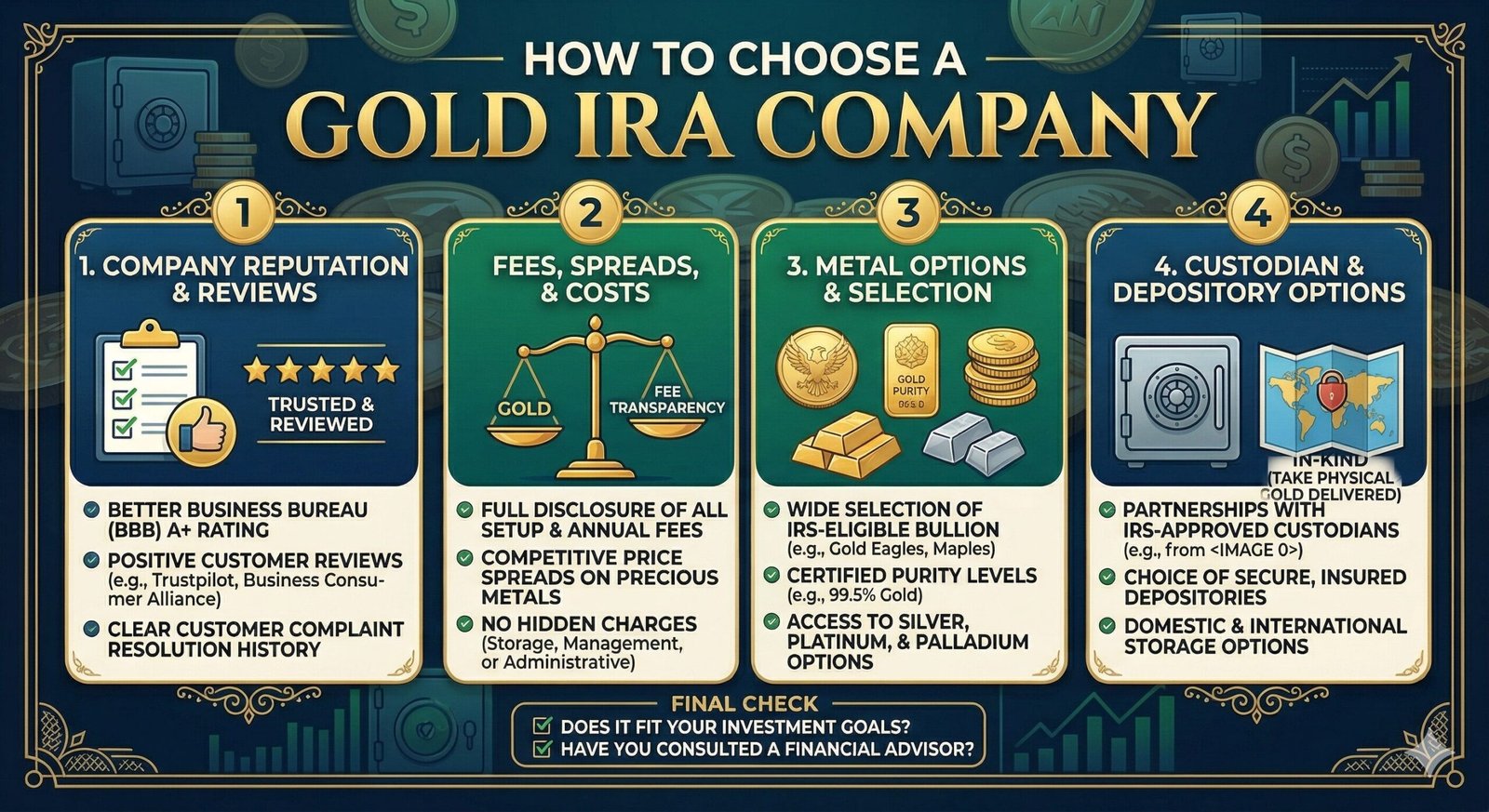
When evaluating custodians, consider their experience with precious metals IRAs, fee structure, customer service reputation, and partnerships with reputable dealers and depositories. The custodian you choose will significantly impact your overall experience and costs.
Approved Depositories
IRS rules require Gold IRA assets to be stored in approved depositories that meet specific security and insurance standards. You cannot store Gold IRA metals at home or in a personal safe deposit box. These depositories provide segregated storage (your metals kept separate from others) or allocated storage (your specific items identified and tracked).
Most depositories offer insurance coverage well above FDIC limits, typically ranging from $100 million to $1 billion in coverage. They also provide detailed reporting and allow periodic audits to verify your holdings.
Precious Metals Dealers
Licensed precious metals dealers facilitate the actual purchase of gold, silver, platinum, or palladium for your IRA. Reputable dealers work directly with custodians to ensure smooth transactions and proper documentation. They should be transparent about pricing, premiums over spot price, and buyback policies.
Eligible Precious Metals for Your Gold IRA
The IRS maintains strict standards for precious metals that can be held in retirement accounts. Not all gold and silver products qualify, so understanding these requirements prevents costly mistakes.
Gold Products
Eligible gold coins include American Gold Eagles, Canadian Gold Maple Leafs, Austrian Gold Philharmonics, and several others produced by government mints. Gold bars and rounds must meet the 99.5% purity standard and come from approved refiners or mints.
Popular IRA-eligible gold coins often carry lower premiums over spot price compared to collectible or numismatic coins, making them more cost-effective for retirement accounts.
Silver, Platinum, and Palladium Options
Silver options include American Silver Eagles, Canadian Silver Maple Leafs, and various bars meeting purity standards. Platinum and palladium choices are more limited but include American Platinum Eagles and Canadian Platinum Maple Leafs, along with qualifying bars from approved sources.
Each metal type has different market characteristics, industrial applications, and price volatility patterns, which beginners should research before making allocation decisions.
Step-by-Step Gold IRA Setup Process
Opening a Gold IRA follows a systematic process that typically takes two to three weeks from start to finish. Understanding each step helps ensure smooth account establishment.
Choose Your Account Type
Decide between a traditional Gold IRA (contributions may be tax-deductible, withdrawals taxed in retirement) or a Roth Gold IRA (contributions made with after-tax dollars, qualified withdrawals tax-free). This choice depends on your current tax situation and retirement planning strategy.
Consider consulting with a tax professional about which option best fits your circumstances, as this decision affects your tax obligations both now and in retirement.
Select Service Providers
Research and choose your custodian, then work with them to identify reputable precious metals dealers and depositories. Many custodians have preferred partnerships that can streamline the process, but you’re not required to use their recommended vendors.
Compare fee structures across providers, as costs can vary significantly. Some charge flat annual fees while others use percentage-based pricing or sliding scales based on account value.
Fund Your Account
You can fund a new Gold IRA through direct contributions (subject to annual limits), transfers from existing IRAs, or rollovers from employer retirement plans. The 401(k) to Gold IRA rollover guide provides detailed information about moving funds from workplace retirement plans.
Understanding Gold IRA rollover rules helps ensure you complete transfers within required timeframes and avoid potential tax penalties.
Purchase Your Metals
Once funded, work with your chosen dealer to select specific precious metals products. Consider factors like premiums over spot price, liquidity for future sales, and storage efficiency when making selections.
Your custodian will coordinate payment and delivery directly to the approved depository, ensuring you never physically handle the metals (which would trigger IRS violations).
Understanding Gold IRA Costs and Fees
Gold IRA fees typically exceed those of traditional IRAs due to the specialized services required for physical asset storage and management. Being aware of all potential costs helps you budget appropriately and choose cost-effective service providers.
Our comprehensive Gold IRA fees guide breaks down all potential costs and strategies for minimizing expenses over time.
Some providers offer scaled pricing based on account value, while others use flat fee structures. Calculate total annual costs under different scenarios to determine which pricing model works better for your situation and expected account balance.
Common Beginner Mistakes to Avoid
New Gold IRA investors often make preventable errors that can result in unnecessary costs, tax complications, or regulatory violations. Learning about these pitfalls helps you avoid them from the start.
Prohibited Transactions
IRS rules strictly prohibit certain transactions with your Gold IRA, including personal use of the metals, using IRA metals as collateral, or conducting business with disqualified persons. Violations can result in account disqualification and immediate tax consequences on the entire balance.
Never attempt to take physical possession of Gold IRA assets or use them for personal purposes, even temporarily. All metals must remain in approved depository storage throughout the time they’re held in your IRA.
Inadequate Due Diligence
Failing to research service providers thoroughly can lead to poor experiences, excessive fees, or even fraudulent schemes. Always verify custodian approval with the IRS, check dealer licenses with relevant state agencies, and research company reputations through sources like bbb.org and customer reviews.
Our Gold IRA scams guide provides detailed information about red flags and protective strategies for new investors.
Minimum Investment Misunderstanding
Many providers require minimum initial investments ranging from $10,000 to $50,000 or more. Understanding these requirements upfront prevents disappointment and helps you choose providers that match your available funds. Our Gold IRA minimum investment guide covers typical requirements across different companies.
Tax Implications and Reporting Requirements
Gold IRAs follow the same basic tax rules as traditional and Roth IRAs, but the physical nature of the assets creates some unique considerations for reporting and distributions.
Required Minimum Distributions
Traditional Gold IRAs require minimum distributions starting at age 73, just like other traditional retirement accounts. However, taking distributions from a Gold IRA typically requires selling metals first, as in-kind distributions (receiving actual metals) are complex and may not be offered by all custodians.
The IRS RMD FAQ provides official guidance on distribution requirements and timing.
Valuation and Reporting
Annual account statements must reflect current market values of your precious metals holdings. Custodians typically use established precious metals pricing services to determine these values, which can fluctuate significantly based on market conditions.
Understanding that precious metals prices can be volatile helps set appropriate expectations for account value changes from year to year. Past performance is not a guarantee of future results.
Making Your First Purchase Decision
Your initial precious metals purchase sets the foundation for your Gold IRA portfolio. Consider several factors when making this important decision as a beginner.
Focus on widely recognized, highly liquid products for your first purchase. American Gold Eagles and Canadian Gold Maple Leafs are excellent starting points due to their government backing, wide recognition, and strong resale markets.
Consider starting with a mix of coin sizes rather than putting all funds into large denomination pieces. This provides more flexibility for future partial liquidations if needed.
Work with your dealer to understand current market premiums and timing considerations. While no one can predict price movements, understanding market dynamics helps you make more informed purchasing decisions.
Comparing Gold IRAs to Other Retirement Options
As a beginner, you might wonder how Gold IRAs fit into the broader retirement planning landscape. While we cannot make specific recommendations about asset allocation, understanding the basic differences helps inform your research.
Our comparison of Gold IRA vs Traditional IRA explores the key distinctions between conventional retirement accounts and precious metals IRAs. Similarly, understanding Gold IRA vs 401(k) differences can help if you’re considering rollovers from employer plans.
These comparisons focus on structural differences, rules, and features rather than performance expectations or recommendations about which option might be better for your situation.
Working with Professional Guidance
While this guide provides comprehensive information for beginners, working with qualified professionals can help ensure you make decisions appropriate for your specific situation.
Tax professionals can help you understand the implications of traditional versus Roth Gold IRA choices and how they fit into your overall tax planning strategy. Financial advisors familiar with self-directed IRAs can help you understand how precious metals accounts fit within broader retirement planning.
Always verify professional credentials through appropriate regulatory bodies like FINRA BrokerCheck for investment professionals or state licensing boards for tax professionals.
Next Steps for Gold IRA Beginners
Starting your Gold IRA journey begins with thorough research and careful selection of service providers. Take time to understand all aspects of the process before committing funds, and don’t hesitate to ask detailed questions of potential custodians and dealers.
Consider starting with a modest initial investment to gain experience with the process and service providers before committing larger amounts. This approach allows you to learn while limiting initial exposure.
Remember that retirement planning is a long-term endeavor, and decisions about Gold IRAs should fit within your broader financial goals and circumstances. Take time to understand whether is a Gold IRA a good idea for your specific situation.
For additional detailed information about Gold IRAs, visit our comprehensive Gold IRAs Explained in Detail guide.
Frequently Asked Questions
How much money do I need to start a Gold IRA?
Minimum investment requirements vary by provider, typically ranging from $10,000 to $50,000. Some companies offer lower minimums for certain account types or promotional periods. Consider both the minimum requirement and whether you have sufficient funds to make the account cost-effective given annual fees.
Can I transfer existing IRA funds into a Gold IRA?
Yes, you can transfer funds from existing traditional or Roth IRAs into a Gold IRA through direct trustee-to-trustee transfers. You can also roll over funds from employer retirement plans like 401(k)s, though this process has specific timing requirements to avoid tax consequences.
What happens to my Gold IRA when I retire?
At retirement, you can take distributions from your Gold IRA just like other retirement accounts. This typically involves selling some metals and receiving cash distributions, though some custodians may allow in-kind distributions where you receive actual metals. Required minimum distributions apply to traditional Gold IRAs starting at age 73.
How do I know if a precious metals dealer is reputable?
Research dealers through multiple sources including Better Business Bureau ratings, state licensing verification, industry association memberships, and customer reviews. Reputable dealers should be transparent about pricing, offer clear buyback policies, and work directly with IRS-approved custodians.
What are the tax advantages of a Gold IRA compared to owning gold directly?
Gold IRAs offer the same tax advantages as traditional retirement accounts: potential tax-deductible contributions (traditional) or tax-free qualified withdrawals (Roth), plus tax-deferred growth. Direct gold ownership outside retirement accounts may be subject to collectibles tax rates on gains, which can be higher than standard capital gains rates.
Ready to explore your options for precious metals retirement investing? Check out our comprehensive reviews of the Best Gold IRA Companies of 2026 to find providers that match your needs and budget.
This article is for informational purposes only and does not constitute financial or tax advice. Investing in precious metals involves risk including possible loss of principal.