
How Does a Gold IRA Work? Everything You Need to Know
A Gold Individual Retirement Account (IRA) represents a specialized retirement savings vehicle that allows investors to hold physical precious metals within their retirement portfolio. Unlike traditional IRAs that typically hold stocks, bonds, and mutual funds, a Gold IRA contains actual gold, silver, platinum, or palladium that meets specific purity requirements established by the Internal Revenue Service.
Understanding how a Gold IRA functions requires grasping several interconnected components: the custodian relationship, storage requirements, funding mechanisms, and ongoing management responsibilities. Each element plays a crucial role in maintaining compliance with federal regulations while providing retirement savers with access to precious metals ownership.
The fundamental structure differs significantly from conventional retirement accounts. Rather than owning paper assets or digital holdings, Gold IRA investors hold title to physical metals stored in approved depositories. This tangible ownership creates unique considerations around storage, insurance, and accessibility that don’t exist with traditional retirement investments.
The Role of a Self-Directed IRA Custodian
Every Gold IRA must be administered by an IRS-approved custodian who specializes in alternative investments. These custodians differ from traditional IRA providers because they’re equipped to handle the complexities of physical asset storage and precious metals transactions. The custodian serves as the legal owner of the metals on behalf of the IRA, ensuring compliance with all applicable regulations.
Custodians handle the administrative aspects of account management, including record-keeping, tax reporting, and facilitating transactions. When you decide to purchase metals for your IRA, the custodian coordinates with approved dealers to execute the transaction using your account funds. They also arrange for secure storage and maintain detailed records of all holdings.
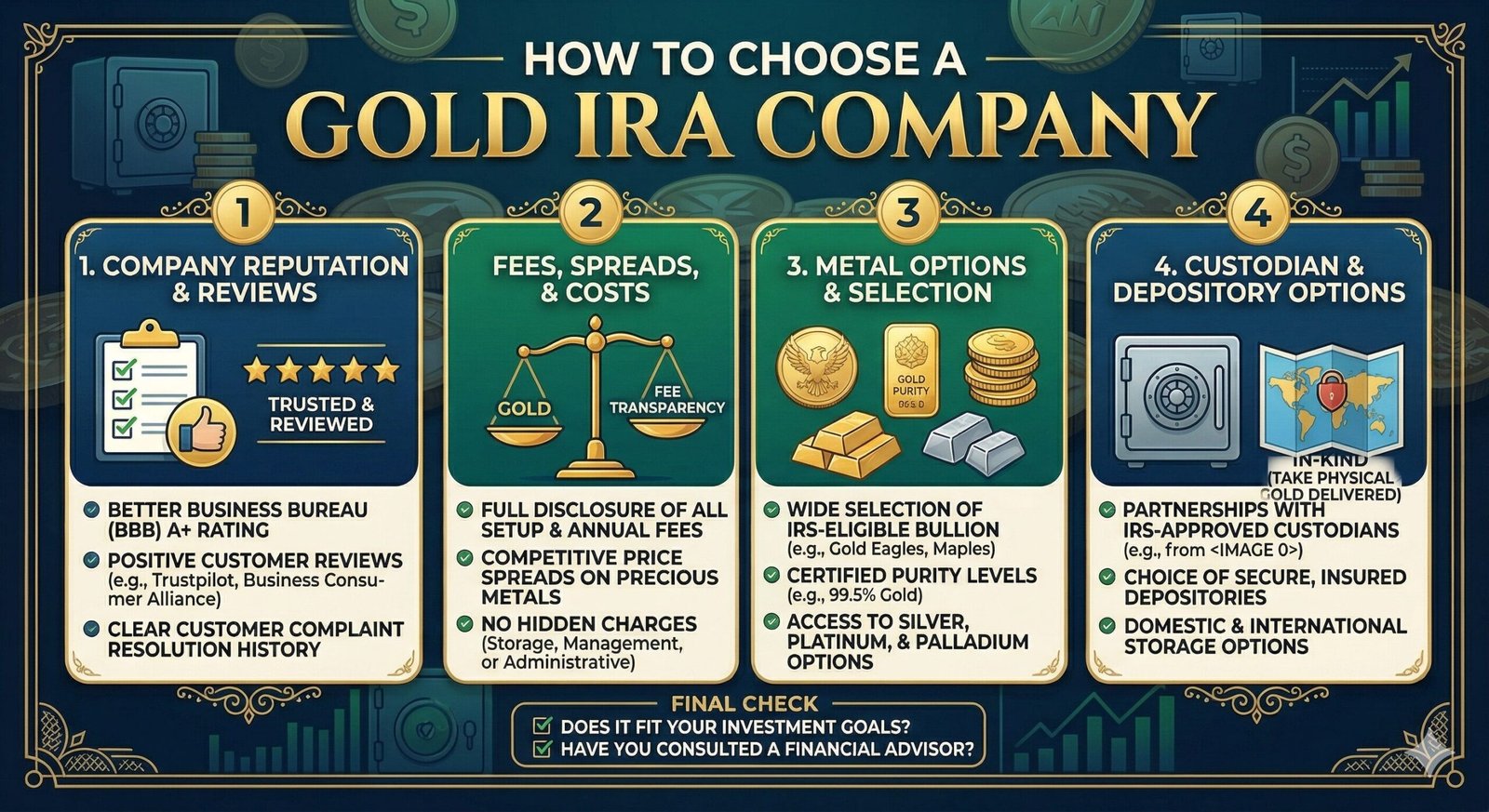
The selection of a qualified custodian represents one of the most important decisions in establishing a Gold IRA. Not all financial institutions offer precious metals custody services, and those that do vary significantly in their fee structures, service levels, and available storage options. Our Gold IRA hub provides comprehensive information about custodian selection criteria and what to look for in a qualified provider.
Approved Storage Facilities and Security
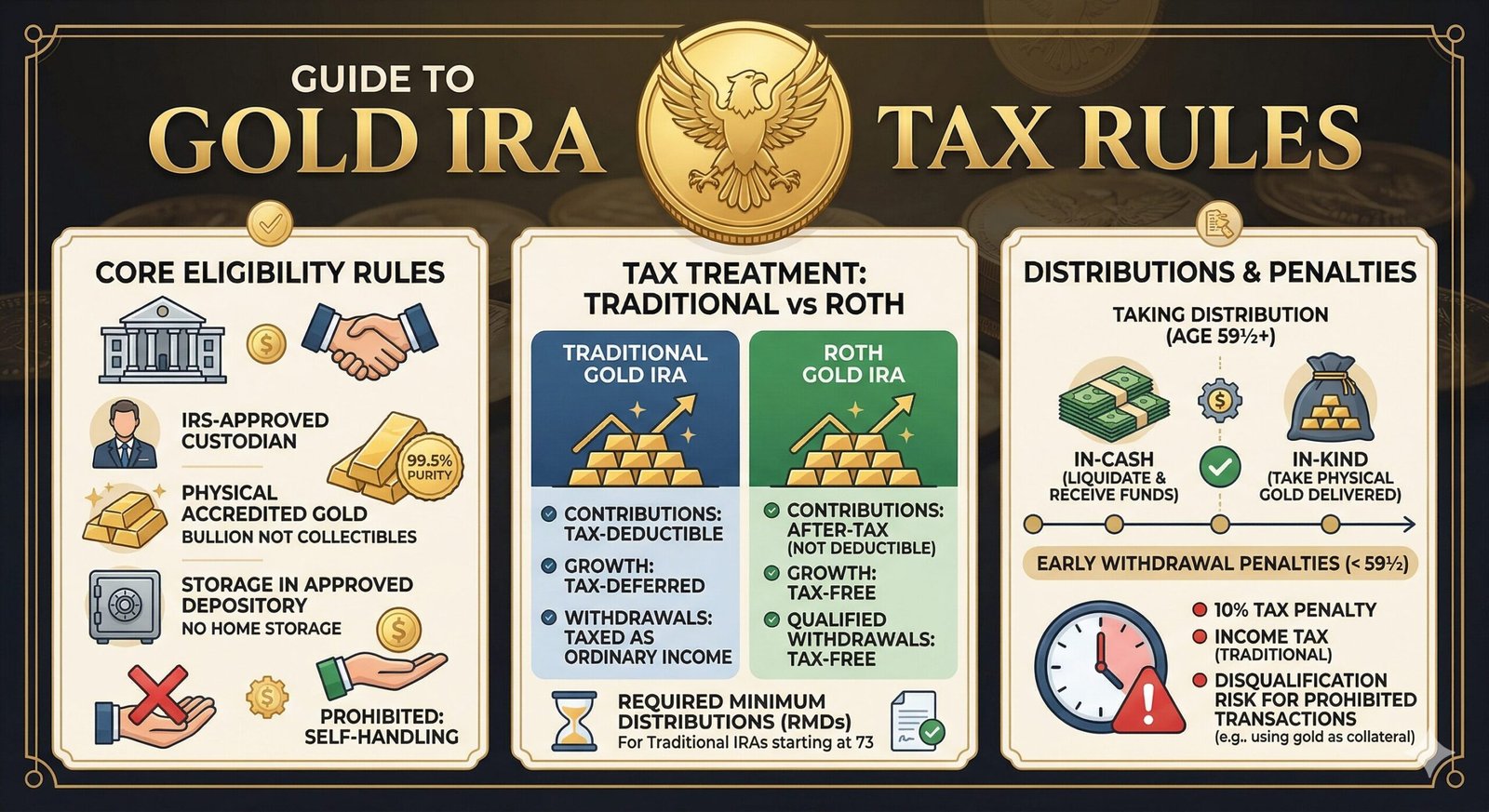
Physical precious metals held in a Gold IRA cannot be stored at home, in a safe deposit box, or any location under the account holder’s direct control. The IRS requires all metals to be stored in approved depositories that meet stringent security and insurance requirements.
These depositories are highly secure facilities equipped with advanced surveillance systems, armed guards, and comprehensive insurance coverage. Most operate 24/7 monitoring systems and maintain strict access controls to ensure the metals remain secure. The storage arrangement typically falls into two categories: segregated storage, where your specific metals are identified and stored separately, or non-segregated storage, where your metals are commingled with others but tracked through detailed record-keeping systems.
Storage costs vary among facilities and storage types, with segregated storage generally commanding higher fees than non-segregated options. The choice between storage methods often depends on personal preferences regarding asset identification and the willingness to pay additional fees for enhanced separation.
Funding Your Gold IRA
Gold IRAs can be funded through several mechanisms, each with distinct timelines and tax implications. The most common approach involves rolling over funds from an existing retirement account, such as a 401(k), 403(b), or traditional IRA. This process allows investors to transfer retirement funds without triggering immediate tax consequences, provided the rollover is completed within the required timeframe.
Direct rollovers represent the most straightforward funding method. In this arrangement, funds transfer directly from the previous custodian to the new Gold IRA custodian without passing through the account holder’s hands. This eliminates the risk of missing the 60-day rollover deadline and helps ensure the transaction maintains its tax-deferred status.
Indirect rollovers require more careful timing and documentation. The account holder receives a distribution from their existing retirement account and has 60 days to deposit those funds into the Gold IRA. Missing this deadline can result in the distribution being treated as taxable income, potentially triggering penalties for early withdrawal if the account holder is under age 59½.
Our comprehensive 401(k) to Gold IRA rollover guide details the specific steps and considerations involved in transferring funds from employer-sponsored plans, while our Gold IRA rollover rules article explains the regulatory framework governing these transactions.
Eligible Precious Metals and Purity Requirements
The IRS maintains strict standards for precious metals that qualify for IRA inclusion. These requirements ensure that only investment-grade metals of sufficient purity are held in retirement accounts. Gold must meet a minimum fineness of 0.995 (99.5% pure), while silver requires 0.999 fineness. Platinum and palladium must both achieve 0.9995 purity levels.
Approved gold products include certain coins issued by the U.S. Mint, such as American Gold Eagles and American Gold Buffalos, as well as coins from other qualifying government mints. Gold bars and rounds from approved refiners and mints also qualify, provided they meet the purity requirements and bear the appropriate hallmarks or certificates of authenticity.
Silver options encompass American Silver Eagles, along with various government-issued coins and qualifying bars and rounds. The approval process for silver products follows similar guidelines to gold, emphasizing purity standards and recognized mintage sources.
It’s worth noting that certain popular gold coins, including South African Krugerrands and British Sovereigns, do not meet IRA purity requirements despite their investment value in other contexts. For detailed information about specific qualifying products, our guide to IRA-eligible gold coins provides comprehensive coverage of approved options.
Transaction Process and Timeline
Purchasing metals for a Gold IRA involves a multi-step process that requires coordination between several parties. Once you’ve identified the metals you wish to purchase, you’ll direct your custodian to execute the transaction using available account funds. The custodian then coordinates with an approved dealer to complete the purchase and arrange for delivery to the designated storage facility.
The timeline for completing a precious metals purchase typically ranges from several days to a few weeks, depending on product availability, market conditions, and logistical factors. Custom orders or less common products may require extended timeframes, while readily available items can often be processed more quickly.
Price fluctuations during the transaction period can affect the final purchase amount, as metals prices change continuously during market hours. Most custodians and dealers use pricing mechanisms that lock in rates for specific periods or execute transactions at prevailing market rates when the order is processed.
Fee Structure and Ongoing Costs
Gold IRAs involve several types of fees that differ from traditional retirement accounts. Setup fees cover the initial account establishment and typically range from $50 to several hundred dollars. Annual custodial fees compensate the custodian for ongoing account administration and usually fall between $75 and $300 per year, though some charge higher amounts based on account value.
Storage fees represent a significant ongoing expense, as the depository charges for secure housing of the physical metals. These fees may be structured as flat annual rates or calculated based on the value or volume of stored metals. Segregated storage generally costs more than non-segregated options, with annual fees potentially ranging from $100 to $300 or more.
Transaction fees apply to purchases and sales of metals within the account. These may include dealer markups, shipping costs, and processing fees that vary among providers. Insurance costs, while typically included in storage fees, ensure that the metals are covered against theft, damage, or other potential losses.
Our detailed Gold IRA fees guide breaks down these various cost components and provides guidance on evaluating the total expense impact of different custodian and storage arrangements.
Taking Distributions
Gold IRA distributions can occur in two forms: physical delivery of metals or cash proceeds from selling metals within the account. Account holders who choose physical distribution receive the actual gold, silver, platinum, or palladium they own, though this option may involve shipping and insurance costs. Cash distributions require the custodian to arrange for the sale of metals and then distribute the proceeds.
Required Minimum Distributions (RMDs) begin at age 73 for traditional Gold IRAs, following the same schedule as other traditional retirement accounts. The custodian typically handles RMD calculations based on account values and facilitates the necessary distributions. These distributions are generally treated as ordinary income for tax purposes, regardless of whether they consist of cash or physical metals.
Early distributions before age 59½ may trigger a 10% penalty in addition to regular income taxes, similar to other traditional IRA accounts. However, certain exceptions may apply, and the IRS RMD FAQ provides detailed information about distribution requirements and timing.
Comparison of Gold IRA vs Traditional IRA Features
Tax Considerations and Reporting
Gold IRAs follow the same tax treatment as traditional IRAs regarding contributions, growth, and distributions. Contributions may be tax-deductible depending on income levels and participation in employer-sponsored plans, while account growth remains tax-deferred until distribution. Distributions in retirement are taxed as ordinary income at the account holder’s current tax rate.
The custodian handles most tax reporting responsibilities, including providing annual statements and Form 1099-R for distributions. Account holders receive regular statements showing the value and composition of their holdings, though valuing physical precious metals can involve more complexity than traditional paper assets.
Estate planning considerations may differ slightly from traditional IRAs due to the physical nature of the assets. Beneficiaries can inherit Gold IRAs and may choose to continue holding the metals, take physical delivery, or liquidate the holdings, subject to applicable distribution rules and tax consequences.
Getting Started with a Gold IRA
Beginning the Gold IRA process starts with researching qualified custodians and understanding the costs and requirements involved. Prospective investors should evaluate multiple custodians, compare fee structures, and consider storage options before making commitments. Our Gold IRA minimum investment article provides insights into typical account minimums and initial funding requirements.
Once you’ve selected a custodian, the account setup process involves completing application paperwork, funding the account through rollover or contribution, and selecting the precious metals for purchase. The custodian guides you through each step and coordinates with storage facilities and dealers to complete your transactions.
Education remains crucial throughout the process. Understanding the differences between Gold IRAs and other retirement vehicles helps investors make informed decisions. Our comparison of Gold IRA vs Traditional IRA explores these differences in detail, while our analysis of is a Gold IRA a good idea examines various considerations that may influence your decision.
Taking time to research and understand the Gold IRA process helps ensure that your retirement planning decisions align with your long-term financial goals. The complexity of precious metals investing within retirement accounts requires careful attention to regulatory compliance and ongoing management responsibilities.
Frequently Asked Questions
Can I store Gold IRA metals at home?
No, IRS regulations require all Gold IRA metals to be stored in approved depositories. Storing metals at home or in a personal safe deposit box violates IRA rules and can result in the entire account being treated as a taxable distribution.
How often can I buy or sell metals in my Gold IRA?
There are no specific IRS restrictions on the frequency of transactions within a Gold IRA, but excessive trading may trigger additional fees from your custodian and dealer. Most investors make periodic purchases rather than frequent trades due to the transaction costs involved.
What happens if the storage facility goes out of business?
Approved depositories maintain comprehensive insurance coverage and operate under strict regulatory oversight. In the unlikely event of facility closure, your metals would be transferred to another approved facility. The metals remain your property and are segregated from the depository’s business assets.
Can I take physical delivery of metals from my Gold IRA?
Yes, you can request physical delivery as a distribution from your Gold IRA. However, this is treated as a taxable distribution and may trigger penalties if you’re under age 59½. The metals become your personal property once distributed from the IRA.
Do Gold IRAs have the same contribution limits as traditional IRAs?
Yes, Gold IRAs follow the same annual contribution limits as traditional IRAs. For 2024, the limit is $7,000 for individuals under 50 and $8,000 for those 50 and older. These limits apply to the total contributions across all IRA accounts you may own.
Exploring Gold IRAs requires careful consideration of your retirement planning objectives and understanding of the unique characteristics these accounts offer. For comprehensive guidance on selecting the right custodian and understanding your options, review our guide to the Best Gold IRA Companies of 2026 to make informed decisions about your precious metals retirement investing.
This article is for informational purposes only and does not constitute financial or tax advice. Investing in precious metals involves risk including possible loss of principal.