
Gold IRA vs Physical Gold: Which Is Right for You?
When considering precious metals for retirement planning, investors often face a fundamental choice: should they hold gold within a tax-advantaged retirement account or own physical gold directly? Both approaches offer distinct advantages and considerations that can significantly impact your financial planning strategy.
Understanding the differences between a Gold IRA and direct physical gold ownership requires examining multiple factors including tax implications, storage requirements, liquidity considerations, and overall investment management complexity. Each approach serves different investor needs and circumstances, making it essential to evaluate your specific situation before making a decision.
Understanding Gold IRAs
A Gold IRA represents a specialized type of self-directed Individual Retirement Account that allows investors to hold IRS-approved precious metals within their retirement portfolio. Unlike traditional IRAs that typically hold stocks, bonds, or mutual funds, a Gold IRA provides the framework for including physical gold, silver, platinum, and palladium coins or bars in your retirement savings strategy.
The structure of what a Gold IRA is follows the same fundamental rules as traditional IRAs regarding contributions, distributions, and required minimum distributions (RMDs). However, the underlying assets consist of approved precious metals stored in specialized depositories rather than traditional financial securities.
To establish a Gold IRA, investors must work with a qualified custodian who specializes in alternative assets. These custodians handle the administrative requirements, coordinate with approved dealers for metal purchases, and arrange for secure storage in IRS-compliant depositories. This structure ensures compliance with federal regulations while providing access to precious metals within a retirement account framework.
The IRS IRA investment FAQ outlines the specific requirements for precious metals held in retirement accounts, including purity standards and approved product types.
Physical Gold Ownership Explained
Direct physical gold ownership involves purchasing gold coins, bars, or rounds and taking personal possession or arranging private storage. This approach gives investors complete control over their precious metals without the regulatory constraints and administrative requirements associated with retirement account structures.
Physical gold ownership can take several forms. Investors might purchase gold coins from reputable dealers, acquire gold bars of various sizes, or buy gold rounds from private mints. The choice often depends on factors such as premium costs, storage considerations, and liquidity preferences.
Storage options for physical gold range from home safes and safety deposit boxes to private vault services and specialized precious metals storage facilities. Each storage method carries different cost structures, security considerations, and accessibility implications that investors must carefully evaluate.
Unlike Gold IRAs, physical gold ownership provides immediate access to your metals without distribution rules, penalties, or custodian involvement. This flexibility appeals to investors who prefer direct control over their precious metals holdings.
Key Differences in Storage and Security
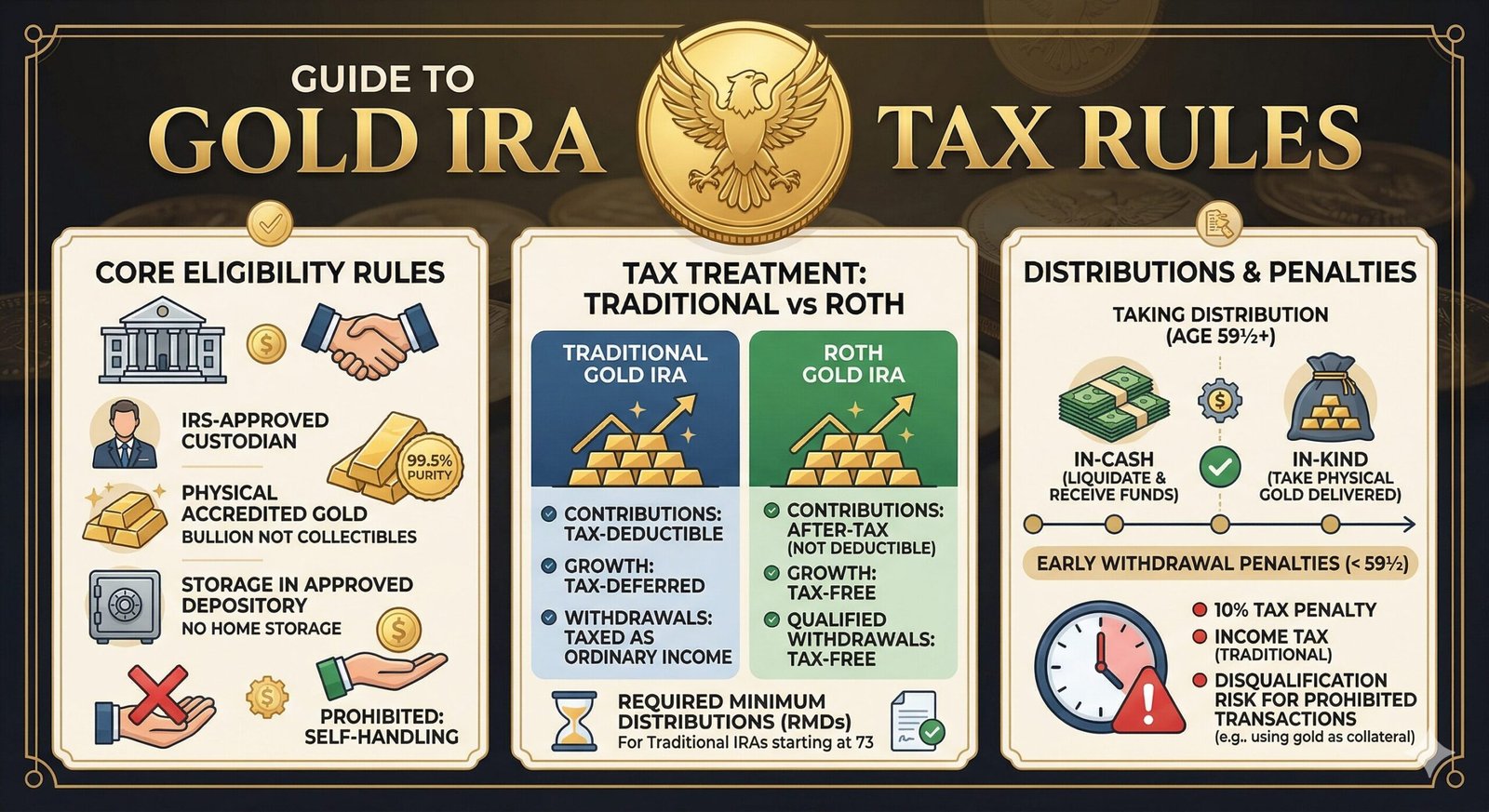
The storage requirements between Gold IRAs and physical gold ownership represent one of the most significant operational differences. Gold IRA regulations mandate that precious metals be stored in IRS-approved depositories, which are specialized facilities that meet strict security and insurance standards.
These approved depositories provide segregated or allocated storage options, meaning your specific metals are either stored separately or clearly identified and allocated to your account. The depositories handle security, insurance, and regular auditing to ensure compliance with federal requirements.
For physical gold ownership, storage responsibilities fall entirely on the investor. Home storage requires appropriate security measures such as safes, alarm systems, and potentially additional insurance coverage. Many investors opt for bank safety deposit boxes, though these come with access limitations and may not provide insurance coverage for precious metals.
Private vault services offer another option for physical gold storage, providing professional security and insurance while maintaining easier access than depository storage. However, these services typically cost more than safety deposit boxes and may not be available in all geographic areas.
The security implications differ significantly between approaches. Depository storage provides institutional-grade security with professional oversight, while personal storage requires individual security planning and risk management.
Tax Implications and Considerations
Tax treatment represents a crucial difference between Gold IRAs and physical gold ownership. Gold IRAs follow the same tax rules as traditional or Roth IRAs, depending on the type of account established. Traditional Gold IRAs offer potential current-year tax deductions for contributions, with taxes paid upon distribution during retirement. Roth Gold IRAs use after-tax contributions but provide tax-free growth and distributions in retirement.
According to IRS Publication 590-A, Gold IRA distributions are subject to the same rules as other IRA distributions, including required minimum distributions beginning at age 73 and potential early withdrawal penalties for distributions before age 59½.
Physical gold ownership carries different tax implications. Gold held outside retirement accounts is considered a collectible for tax purposes, subjecting any gains to a maximum capital gains rate of 28% rather than the lower rates applied to most other investments. This higher tax rate applies regardless of how long the gold is held.
The timing of tax obligations also differs. Gold IRA taxes are deferred until distribution (for traditional accounts) or potentially eliminated entirely (for Roth accounts). Physical gold generates taxable events only when sold, allowing investors to control the timing of tax implications through their selling decisions.
Estate planning considerations also vary between approaches. Gold IRAs pass to beneficiaries with inherited IRA rules, while physical gold transfers as part of the general estate with stepped-up cost basis treatment for heirs.
Liquidity and Access Differences
Liquidity characteristics differ substantially between Gold IRAs and physical gold ownership. Gold IRA liquidity depends on the custodian’s processes and distribution rules. Selling gold within an IRA typically requires contacting the custodian, requesting a sale, and following established procedures that may take several days to complete.
Gold IRA distributions must comply with IRA rules, potentially including penalties for early withdrawals and mandatory distribution requirements after age 73. The IRS RMD FAQ provides detailed information about required distribution rules.
Physical gold ownership generally offers superior liquidity and access. Investors can sell their gold to local coin shops, online dealers, or other buyers without custodian involvement or distribution restrictions. This flexibility allows for quick access to funds when needed, though actual settlement times depend on the buyer and payment method.
However, physical gold liquidity can vary based on the specific products owned. Common gold coins typically offer better liquidity than unusual bars or rounds due to wider market recognition and standardized pricing. Location also affects liquidity, as urban areas generally provide more buying options than rural locations.
The ability to use physical gold for other purposes, such as bartering or emergency situations, represents another liquidity advantage that Gold IRAs cannot provide due to distribution restrictions and custodian requirements.
Cost Structure Comparison
Understanding the ongoing costs associated with each approach is essential for making an informed decision. Our Gold IRA fees guide provides comprehensive information about the various costs involved in Gold IRA ownership.
Gold IRAs typically involve annual custodian fees, storage fees, and potential transaction fees for buying or selling metals. These ongoing costs continue for the life of the account and can impact overall returns over time.
Physical gold ownership involves different cost structures. Initial purchase premiums over spot price, shipping costs, and insurance represent upfront expenses. Ongoing costs might include storage fees for professional vault services, insurance premiums, or security system maintenance for home storage.
The total cost comparison depends on factors such as the amount invested, storage method chosen, and frequency of transactions. Larger holdings may benefit from the economies of scale offered by institutional depository storage, while smaller amounts might be more cost-effective to store personally.
Regulatory and Compliance Considerations
Gold IRAs operate within a comprehensive regulatory framework that governs everything from eligible metals to storage requirements. The IRS maintains strict rules about precious metals purity, approved products, and custodian qualifications. These regulations provide investor framework but also create complexity and limitations.
Compliance requirements include working with qualified custodians, using approved depositories, and maintaining proper documentation for all transactions. Violations of these rules can result in account disqualification and immediate tax consequences on the entire account value.
Physical gold ownership operates with minimal regulatory oversight. Investors can purchase any gold products they choose, store them wherever they prefer, and sell them at their discretion without regulatory compliance requirements. This freedom comes with the responsibility for personal due diligence and risk management.
However, certain reporting requirements may apply to physical gold ownership. Large cash transactions must be reported under Bank Secrecy Act provisions, and significant sales might trigger IRS Form 1099-B reporting requirements from dealers.
The regulatory environment can change over time, potentially affecting both approaches differently. Gold IRA regulations might become more restrictive or permissive based on IRS policy changes, while physical ownership typically faces fewer regulatory risks.
Making the Right Choice for Your Situation
Determining whether a Gold IRA or physical gold ownership better suits your needs requires careful evaluation of your specific circumstances, goals, and preferences. Neither approach is universally superior; the right choice depends on individual factors and priorities.
Gold IRAs may be more appropriate for investors who prioritize tax advantages, prefer professional storage and security, and want to include precious metals within their overall retirement planning strategy. The structured approach and regulatory oversight can provide peace of mind for investors who prefer institutional frameworks.
Physical gold ownership might better serve investors who value direct control, want immediate access to their metals, and prefer to manage their own storage and security arrangements. This approach offers maximum flexibility and eliminates ongoing custodian relationships and fees.
Consider your current retirement savings situation when making this decision. If you’re already maximizing other retirement account contributions, a Gold IRA might provide additional tax-advantaged space for precious metals. If your retirement accounts are already well-funded, physical gold ownership might offer greater flexibility for non-retirement savings.
Your comfort level with storage and security responsibilities also plays a crucial role. Some investors prefer the simplicity of professional depository storage, while others want direct possession and control of their precious metals.
Geographic considerations matter as well. Investors in areas with limited precious metals dealers or storage options might find Gold IRAs more practical, while those with good local resources might prefer physical ownership.
For those interested in learning more about Gold IRA rollover rules or exploring how to transition existing retirement funds, our detailed guides provide step-by-step information about the process.
Frequently Asked Questions
Can I hold both a Gold IRA and physical gold?
Yes, there are no restrictions preventing you from owning both a Gold IRA and physical gold outside of retirement accounts. Many investors use this combined approach to gain the tax advantages of retirement account precious metals while maintaining direct access to physical metals for other purposes. This strategy provides both tax-deferred growth potential and immediate liquidity options.
What happens to my Gold IRA when I reach age 73?
Like all traditional IRAs, Gold IRAs are subject to required minimum distribution (RMD) rules beginning at age 73. You must begin taking distributions based on IRS life expectancy tables, which can be satisfied by taking cash distributions from metal sales or by taking in-kind distributions of the actual metals. Your custodian will calculate the required distribution amount annually.
Is it difficult to sell physical gold compared to Gold IRA holdings?
Physical gold often provides faster liquidity since you can sell directly to local dealers or online buyers without custodian involvement. However, Gold IRA sales might offer better pricing through institutional relationships and bulk transactions. The ease of sale depends on your local market for physical gold versus your custodian’s efficiency and dealer network for Gold IRA transactions.
Can I store my Gold IRA metals at home?
No, IRS regulations require Gold IRA metals to be stored in approved depositories. Taking personal possession of Gold IRA metals constitutes a distribution, triggering immediate tax consequences and potential penalties. If you want to store precious metals at home, you must purchase them outside of retirement account structures.
Which option provides better long-term value?
The long-term value comparison depends on factors including tax situation, storage costs, transaction frequency, and individual circumstances. Gold IRAs may provide better after-tax returns for investors in higher tax brackets due to tax deferral benefits, while physical gold ownership eliminates ongoing custodian and storage fees. Past performance is not a guarantee of future results, and both approaches involve ongoing costs that affect overall returns.
When weighing these options, consider consulting with financial and tax professionals who can evaluate your specific situation. Our comprehensive guide to the Best Gold IRA Companies of 2026 provides additional resources for investors exploring retirement account precious metals options.
This article is for informational purposes only and does not constitute financial or tax advice. Investing in precious metals involves risk including possible loss of principal.