
Gold IRA Rollover Without Penalty: How to Do It Right
Moving retirement funds from a traditional IRA or 401(k) into a Gold IRA can be accomplished without triggering taxes or penalties when done correctly. Understanding the specific rules and procedures involved in a Gold IRA rollover is essential for retirement investors who want to add precious metals to their retirement portfolio while maintaining their tax-advantaged status.
The process involves strict timing requirements, proper documentation, and careful coordination between your current retirement plan administrator and your chosen Gold IRA custodian. Making even minor mistakes can result in unwanted tax consequences that could significantly impact your retirement savings.
Understanding Gold IRA Rollover Rules
A Gold IRA rollover allows you to transfer funds from an existing retirement account into a self-directed IRA that holds physical precious metals. The IRS Publication 590-A outlines the specific requirements that must be met to avoid penalties and maintain the tax-advantaged status of your retirement funds.
The fundamental principle behind penalty-free rollovers is that the money never touches your personal bank account and remains within the retirement account ecosystem. When executed properly, this transfer maintains the original tax treatment of your funds while allowing you to hold physical gold and silver instead of traditional paper assets.
Our Gold IRA rollover rules guide provides comprehensive coverage of all IRS requirements, but the most critical elements involve timing, eligible account types, and proper custodian coordination.
Direct vs. Indirect Rollover Methods
There are two primary methods for completing a Gold IRA rollover, each with distinct advantages and risk profiles. The direct rollover method, also called a trustee-to-trustee transfer, involves your current retirement plan administrator sending funds directly to your new Gold IRA custodian. This method eliminates most penalty risks because you never personally handle the funds.
The indirect rollover method requires you to receive a distribution check from your current retirement account, then deposit those funds into your Gold IRA within 60 days. While this approach offers more control over timing, it carries significantly higher penalty risks if not executed perfectly.
Most financial professionals recommend the direct rollover method for Gold IRA transfers because it virtually eliminates the possibility of missing critical deadlines or triggering unwanted tax consequences.
The 60-Day Rule and Its Implications
When using the indirect rollover method, the IRS requires you to deposit the distributed funds into your new Gold IRA within 60 calendar days of receiving them. This rule is strictly enforced, and missing the deadline converts your rollover into a taxable distribution subject to income taxes and potential early withdrawal penalties.
The 60-day clock starts ticking the moment you receive your distribution check, not when you deposit it into your personal account. Weekends and holidays count toward this deadline, making careful planning essential for anyone choosing this rollover method.
Additionally, the IRS limits indirect rollovers to once per 12-month period across all your IRA accounts. This restriction applies regardless of how many different IRA accounts you maintain, making the direct rollover method even more attractive for investors who might need flexibility for future account movements.
Eligible Account Types for Gold IRA Rollovers
Most employer-sponsored retirement plans and individual retirement accounts are eligible for rollover into a Gold IRA. Traditional 401(k) plans, 403(b) accounts, 457 plans, and existing traditional IRAs can typically be rolled over without penalty when proper procedures are followed.
Roth IRA funds can also be moved to a Gold IRA, but they must remain in a Roth structure to maintain their tax-free growth characteristics. Converting traditional pre-tax retirement funds to a Roth Gold IRA is possible but would trigger immediate tax liability on the converted amount.
The IRS IRA investment FAQ provides detailed information about which specific account types qualify for rollovers and any unique restrictions that might apply to your situation.
Current Employment Considerations
If you’re still employed by the company sponsoring your 401(k) plan, you may not be eligible to roll over funds while actively working. Many employer plans only allow in-service withdrawals under specific circumstances, such as reaching age 59½ or experiencing financial hardship.
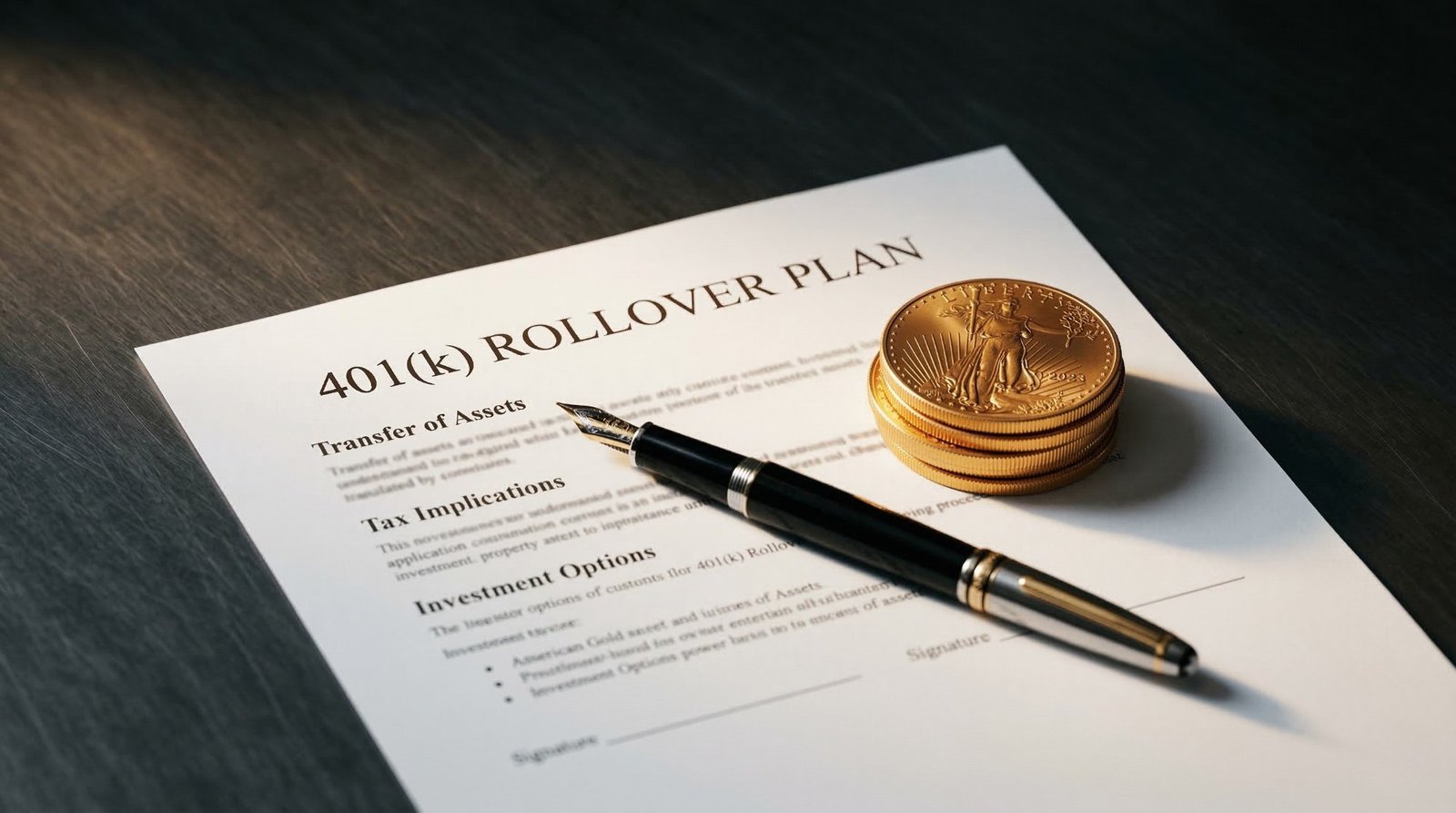
However, if you’ve left your job or retired, you generally have full control over your former employer’s retirement plan funds and can initiate a rollover at any time. Our 401(k) to Gold IRA rollover guide covers the specific steps involved in moving employer plan funds to a Gold IRA.
Step-by-Step Rollover Process
Executing a penalty-free Gold IRA rollover requires careful coordination and attention to detail. The process typically begins with selecting a reputable Gold IRA custodian who specializes in precious metals retirement accounts and understands the complex regulations governing these investments.
Your chosen custodian will provide rollover paperwork that authorizes them to receive funds from your current retirement account administrator. This documentation must be completed accurately and submitted to both your current plan administrator and your new Gold IRA custodian.
Once the paperwork is processed, your current retirement plan administrator will either send a check directly to your new custodian or initiate an electronic transfer. The timing of this transfer depends on your current administrator’s processing procedures, which can vary significantly between different companies.
Required Documentation and Timing
Most Gold IRA custodians require several weeks to establish your new account and process rollover paperwork. Starting this process early helps ensure smooth coordination and reduces the risk of timing-related complications that could jeopardize your penalty-free status.
Your current retirement plan administrator may also require advance notice before processing rollover distributions. Some employer plans have mandatory waiting periods or require additional documentation before releasing funds, making early communication essential for avoiding delays.
The FINRA’s guidance on self-directed IRAs emphasizes the importance of working with qualified professionals throughout this process to ensure compliance with all applicable regulations.
Common Mistakes That Trigger Penalties
One of the most costly mistakes in Gold IRA rollovers occurs when investors fail to complete the process within required timeframes. Missing the 60-day deadline for indirect rollovers automatically converts your transaction into a taxable distribution, potentially subjecting you to both income taxes and early withdrawal penalties.
Another frequent error involves mixing up direct and indirect rollover procedures. Some investors mistakenly request personal distribution checks when they intended to complete direct trustee-to-trustee transfers, creating unnecessary tax complications and penalty risks.
Failing to properly coordinate between your current retirement plan administrator and your new Gold IRA custodian can also create problems. Incomplete paperwork or communication gaps between these parties often result in processing delays that can compromise your penalty-free status.
Age-Related Penalty Considerations
If you’re under age 59½, early withdrawal penalties add an additional 10% tax on any funds that don’t qualify for proper rollover treatment. This penalty applies on top of regular income taxes, making compliance with rollover rules particularly important for younger investors.
The early withdrawal penalty has several exceptions, but failing to complete a proper rollover is not among them. Even if your distribution was intended as a rollover, missing deadlines or failing to follow proper procedures can trigger these penalties regardless of your original intent.
Tax Withholding Issues
When funds are distributed from employer-sponsored retirement plans like 401(k)s, administrators are required to withhold 20% for federal taxes unless the distribution goes directly to another qualified retirement account. This withholding requirement makes direct rollovers particularly important for these account types.
If you choose an indirect rollover from an employer plan, you’ll receive only 80% of your account balance, but you must deposit the full 100% into your Gold IRA to avoid taxes and penalties on the withheld amount. Most investors must come up with the additional 20% from personal funds to complete the rollover, then wait to recover the withheld taxes when they file their tax return.
IRA-to-IRA rollovers typically don’t involve mandatory withholding, making the indirect method slightly more manageable for these account types. However, the direct rollover method still offers superior certainty and reduced complexity regardless of your current account type.
Choosing the Right Gold IRA Custodian
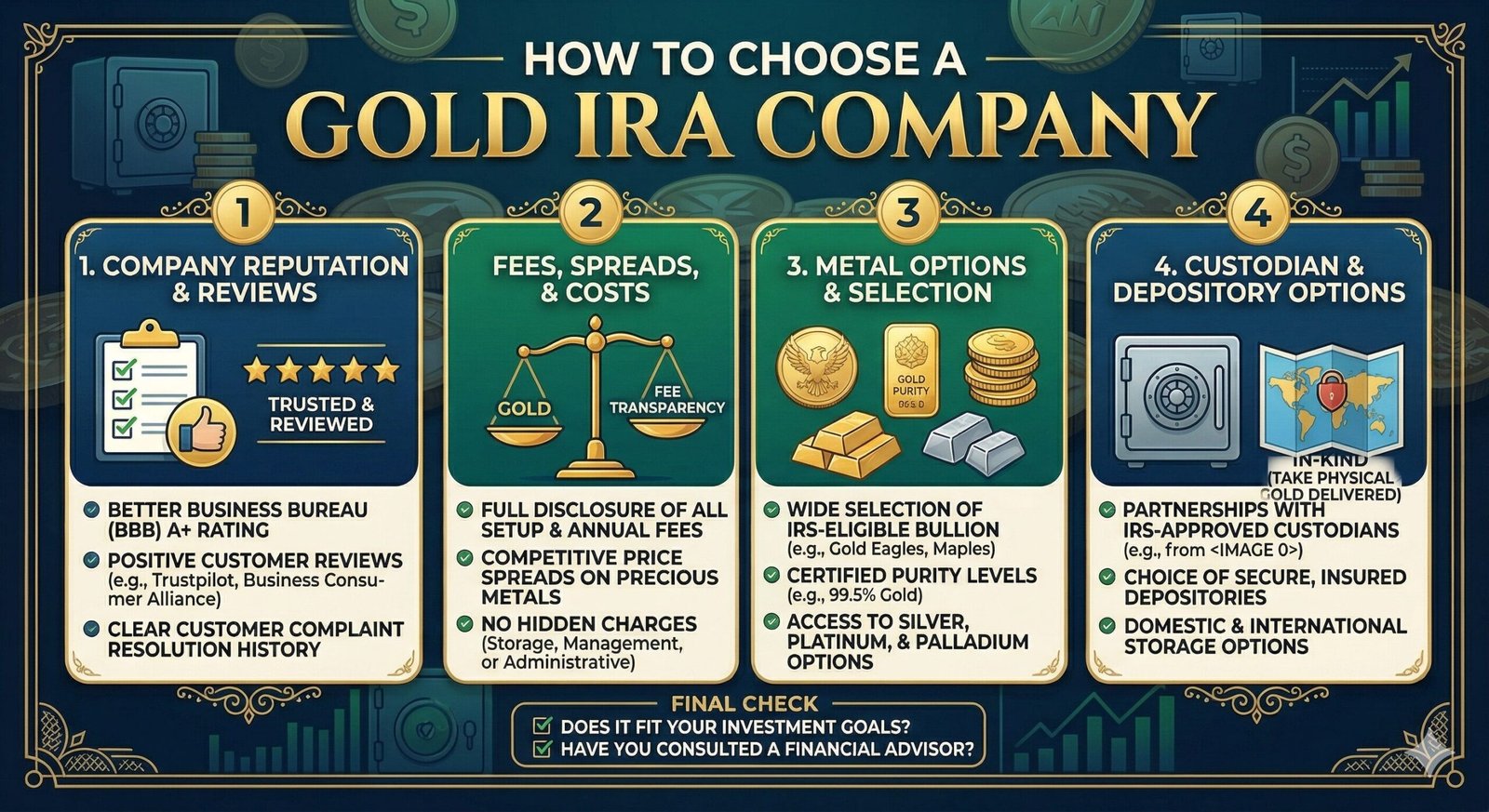
The success of your penalty-free rollover depends heavily on working with an experienced and reputable Gold IRA custodian. These specialized companies understand the complex regulations governing precious metals retirement accounts and can guide you through the rollover process while ensuring compliance with all IRS requirements.
Look for custodians who maintain proper licensing and registration with relevant regulatory authorities. The SEC investor resources website provides tools for verifying the credentials of financial service providers and understanding your rights as an investor.
Established custodians typically offer streamlined rollover procedures, experienced customer service teams, and established relationships with retirement plan administrators that can facilitate smooth fund transfers.
Custodian Fees and Rollover Costs
Gold IRA custodians typically charge setup fees, annual maintenance fees, and storage costs for precious metals holdings. Some custodians also impose rollover-specific fees that can add to your total cost of moving funds into a Gold IRA.
Understanding these costs upfront helps you make informed decisions about whether a Gold IRA rollover makes financial sense for your situation. Our Gold IRA fees guide provides comprehensive information about typical cost structures and what to expect from different custodian fee arrangements.
While fees are an important consideration, the lowest-cost option isn’t always the best choice for rollover transactions. The complexity of these transfers makes experience and reliability particularly valuable qualities in a custodian relationship.
After Your Rollover is Complete
Once your funds have successfully transferred to your Gold IRA, you’ll need to select specific precious metals investments that comply with IRS purity and production requirements. Not all gold and silver products are eligible for IRA ownership, making proper selection crucial for maintaining your account’s qualified status.
The IRS requires precious metals held in retirement accounts to meet minimum fineness standards and be produced by approved refiners or mints. Our guide to IRA-eligible gold coins covers the specific products that qualify for retirement account ownership.
Your Gold IRA custodian will typically provide a list of approved precious metals dealers and storage facilities. These approved vendors understand IRA compliance requirements and can help ensure your precious metals purchases maintain your account’s tax-advantaged status.
Ongoing Compliance Requirements
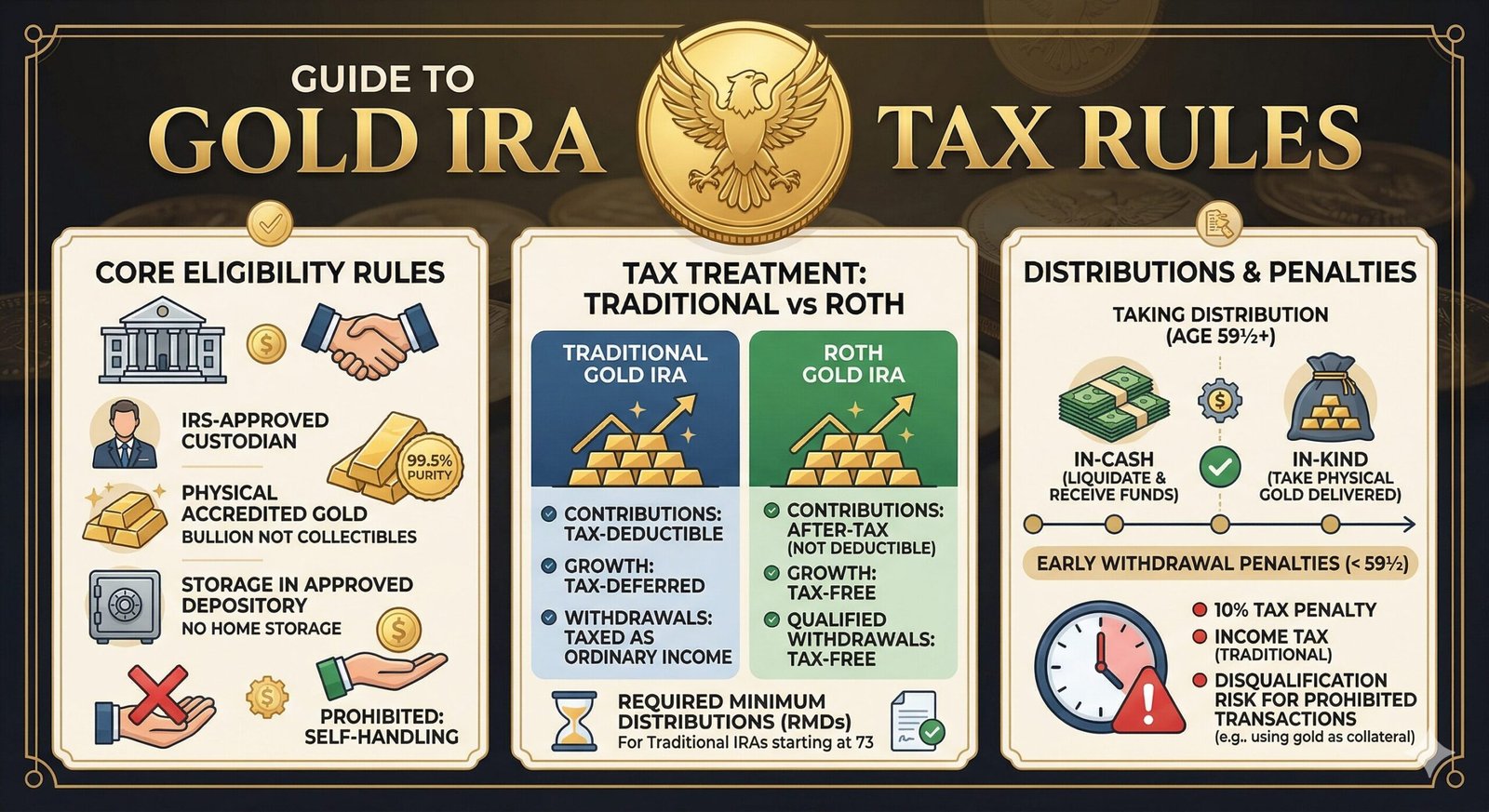
Maintaining a Gold IRA involves ongoing compliance with IRS regulations governing retirement account investments. Your precious metals must remain in approved storage facilities, and you cannot take personal possession of the metals without triggering a taxable distribution.
Annual reporting requirements ensure the IRS receives proper documentation about your account value and holdings. Your custodian handles most of these reporting responsibilities, but understanding your obligations helps you maintain compliance and avoid potential penalties.
Required minimum distributions begin at age 73 for traditional Gold IRAs, just like other retirement accounts. The IRS RMD FAQ provides detailed information about these requirements and how they apply to precious metals IRAs.
Frequently Asked Questions
How long does a Gold IRA rollover typically take to complete?
Direct rollovers usually take 2-4 weeks from start to finish, depending on processing times at both your current plan administrator and your new Gold IRA custodian. Indirect rollovers can be completed more quickly since you control the timing of the deposit, but they carry higher penalty risks and must be completed within 60 days.
Can I roll over part of my 401(k) into a Gold IRA and leave the rest in my current plan?
Yes, partial rollovers are generally permitted, allowing you to move only a portion of your retirement funds to a Gold IRA while maintaining your existing accounts. However, some employer plans have minimum balance requirements or restrictions on partial withdrawals, so check with your plan administrator about available options.
What happens if my rollover check gets lost in the mail?
If you’re using the indirect rollover method and your distribution check is lost or stolen, contact your original plan administrator immediately. They can typically issue a replacement check, but the 60-day deadline for completing your rollover continues from the original distribution date, not when you receive the replacement check.
Are there any restrictions on how often I can do a Gold IRA rollover?
Direct trustee-to-trustee transfers can be done as often as needed without IRS limitations. However, indirect rollovers are limited to once per 12-month period across all your IRA accounts. This restriction makes the direct rollover method preferable for investors who might need flexibility for future account movements.
Do I have to convert my entire retirement account balance, or can I start with a smaller amount?
Most Gold IRA custodians have minimum investment requirements, but you’re not required to move your entire retirement account balance at once. Our Gold IRA minimum investment guide provides information about typical minimums and strategies for getting started with precious metals retirement investing.
Understanding whether is a Gold IRA a good idea for your specific situation requires careful consideration of your overall retirement strategy, risk tolerance, and investment timeline. A penalty-free rollover preserves your options while allowing you to explore precious metals as part of your retirement planning approach.
If you’re ready to explore your Gold IRA options, our comprehensive review of the Best Gold IRA Companies of 2026 can help you identify qualified custodians who specialize in penalty-free rollover transactions and ongoing precious metals retirement account management.
This article is for informational purposes only and does not constitute financial or tax advice. Investing in precious metals involves risk including possible loss of principal.
Related guides
- Gold IRA Consumer Affairs Reviews: What to Look For
- Gold IRA Trustpilot Reviews: What Real Customers Say
- Gold IRA BBB Complaints: What Consumer Reports Reveal
- Is a Gold IRA Worth the Fees? A Cost-Benefit Analysis
- Are Gold IRA Fees Too High? Breaking Down the Real Costs
- Gold IRA Mistakes to Avoid: 10 Common Errors Investors Make