
Gold IRA for Federal Employees: TSP Rollover Guide
Federal employees enjoy unique retirement benefits through the Thrift Savings Plan (TSP), but many government workers wonder if they can expand their investment options by moving funds into a Gold IRA. Understanding how precious metals IRAs work with federal employment requires navigating specific rules and regulations that apply to government workers and their retirement accounts.
The TSP serves as the cornerstone of federal retirement planning, offering low-cost investment options within the Federal Employees Retirement System (FERS). However, current federal employees have limited ability to move TSP funds while still employed. The rules change significantly once employment ends, opening new possibilities for retirement account management.
Understanding TSP Rollover Eligibility for Federal Employees
Current federal employees face strict limitations on moving TSP funds to external accounts. The TSP generally requires participants to maintain their accounts while actively employed, with few exceptions for hardship withdrawals or specific qualifying events.
Active federal employees cannot typically roll over TSP funds to a Gold IRA or any external IRA while still working for the government. This restriction applies regardless of age or years of service. The TSP operates under different rules than traditional employer 401(k) plans, which sometimes allow in-service distributions after age 59½.
Former federal employees, however, have much greater flexibility. Once employment ends, whether through retirement, resignation, or other separation, federal workers can roll over their TSP balances to various IRA types, including precious metals IRAs. This opens the door for those interested in adding physical gold and silver to their retirement holdings.
The timing of separation from federal service becomes crucial for those considering a TSP to Gold IRA rollover. Upon leaving government employment, former federal employees have several options for their TSP funds, including leaving the money in the TSP, rolling it to a new employer’s plan, or moving it to an IRA.
TSP Withdrawal Rules and Gold IRA Rollovers
The Thrift Savings Plan operates under specific withdrawal rules that affect rollover timing and options. Understanding these rules helps federal employees plan their retirement account strategy effectively.
Former federal employees can choose full or partial TSP withdrawals once employment ends. A direct rollover to a Gold IRA counts as a trustee-to-trustee transfer, avoiding immediate tax consequences and the 20% mandatory withholding that applies to indirect rollovers.
The IRS requires specific procedures for rollover transactions to maintain tax-deferred status. Federal employees must ensure their chosen Gold IRA custodian can properly receive TSP transfers and that all documentation meets government requirements.
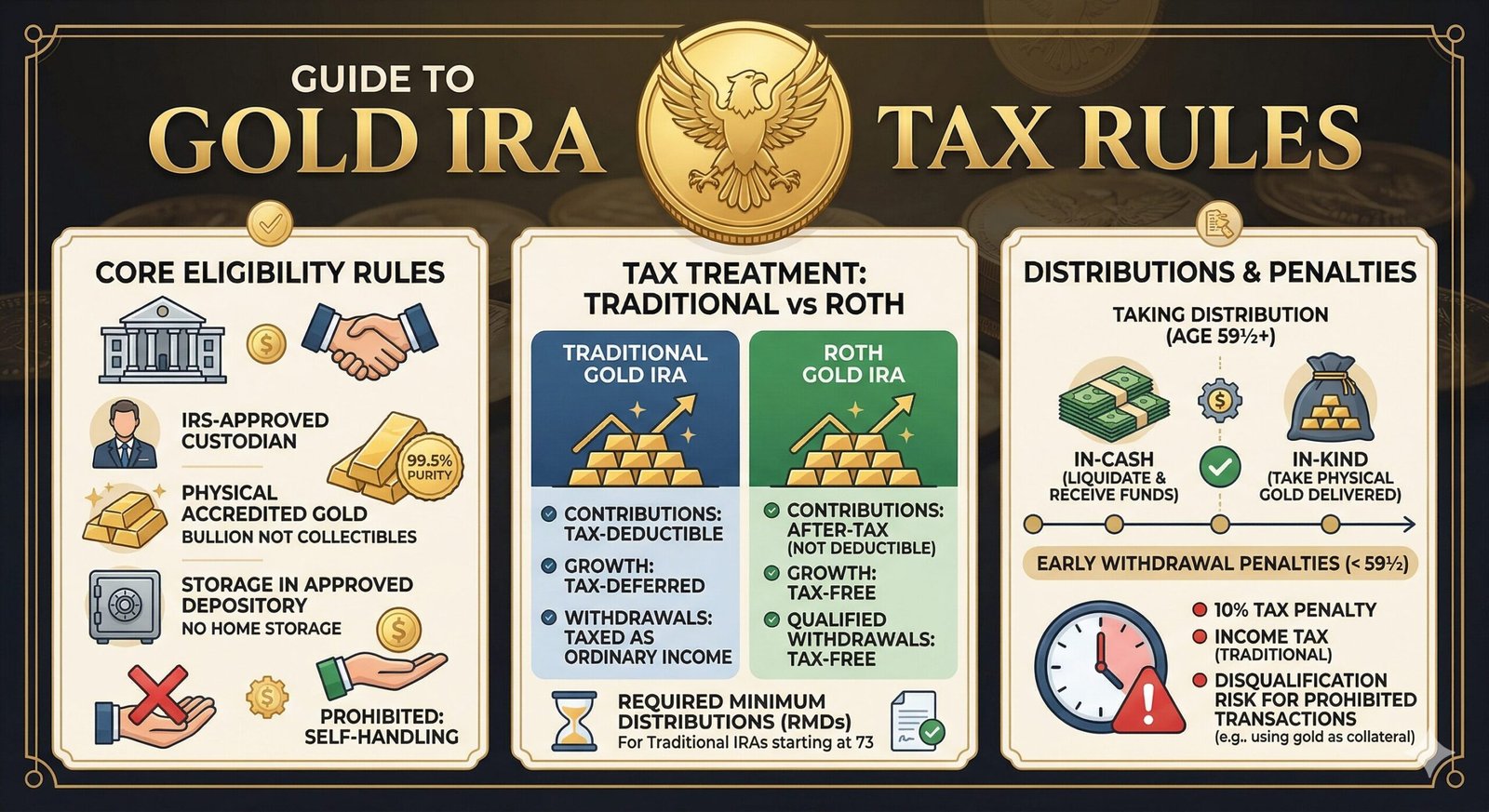
TSP funds rolled to a Gold IRA maintain their tax-deferred status, but the account becomes subject to traditional IRA rules rather than TSP regulations. This includes different Required Minimum Distribution (RMD) calculations and withdrawal options compared to leaving funds in the TSP.
Comparing TSP and Gold IRA Investment Options
The TSP offers five core investment funds plus lifecycle funds, providing broad market exposure at extremely low costs. These funds include the Government Securities Investment Fund (G Fund), Fixed Income Index Investment Fund (F Fund), Common Stock Index Investment Fund (C Fund), Small Capitalization Stock Index Investment Fund (S Fund), and International Stock Index Investment Fund (I Fund).
Gold IRAs expand investment options beyond traditional TSP offerings to include physical precious metals. IRA-eligible gold and silver products must meet specific purity requirements and be held by an approved custodian. Our guide on IRA-eligible gold coins details the specific products available for retirement accounts.
The cost structure differs significantly between TSP and Gold IRA accounts. The TSP maintains remarkably low expense ratios, often below 0.05% annually. Gold IRAs typically involve higher fees, including storage costs, custodian fees, and dealer markups on precious metals purchases. Understanding these costs helps federal employees make informed decisions about account management.
Gold IRA Setup Process for Former Federal Employees
Establishing a Gold IRA after federal employment involves several key steps. Former federal employees must first select a qualified precious metals IRA custodian who can handle both the TSP rollover and ongoing account administration.
The rollover process begins with opening the Gold IRA account and providing rollover instructions to both the TSP and the new custodian. Direct rollovers prevent tax withholding and ensure smooth transfers between accounts. The TSP provides specific forms and procedures for outgoing rollovers that must be completed accurately.
Once funds arrive in the Gold IRA, account holders can begin purchasing approved precious metals. The custodian coordinates with approved dealers and storage facilities to complete transactions and ensure proper custody of physical metals. All precious metals must be stored in approved depositories rather than at home.
Timing considerations become important during the rollover process. The TSP may take several weeks to process rollover requests, and precious metals purchases require additional coordination time. Former federal employees should plan accordingly and maintain other retirement income sources during the transition period.
Tax Considerations for TSP to Gold IRA Rollovers
TSP contributions made with pre-tax dollars maintain their tax-deferred status when rolled to a Gold IRA. These funds continue growing tax-deferred until withdrawal, at which point they become subject to ordinary income tax rates.
Roth TSP contributions present additional considerations. These after-tax contributions can be rolled to a Roth IRA, maintaining their tax-free growth potential. However, not all Gold IRA custodians offer Roth IRA options for precious metals, so former federal employees must verify availability when selecting providers.
The IRS provides comprehensive guidance on rollover tax treatment and reporting requirements. Former federal employees should maintain detailed records of rollover transactions and ensure proper tax reporting in the year of transfer.
Required Minimum Distributions apply to traditional Gold IRAs beginning at age 73, following standard IRA rules rather than TSP requirements. The calculation methods and timing may differ from what federal employees experienced with their TSP accounts.
Federal Employee Retirement System Integration
Federal employees participate in the three-pillar FERS system: Social Security, TSP, and the FERS basic annuity. Understanding how Gold IRA rollovers fit within this broader retirement framework helps with comprehensive planning.
The FERS basic annuity and Social Security benefits remain unaffected by TSP rollover decisions. These income sources continue according to federal employment history and contribute to overall retirement security regardless of TSP management choices.
Some federal employees may have additional retirement accounts from previous private sector employment. Coordinating multiple account types, including potential Gold IRAs, requires careful planning to optimize tax efficiency and withdrawal strategies across all retirement assets.
Comparing Gold IRA Custodians for Federal Employees
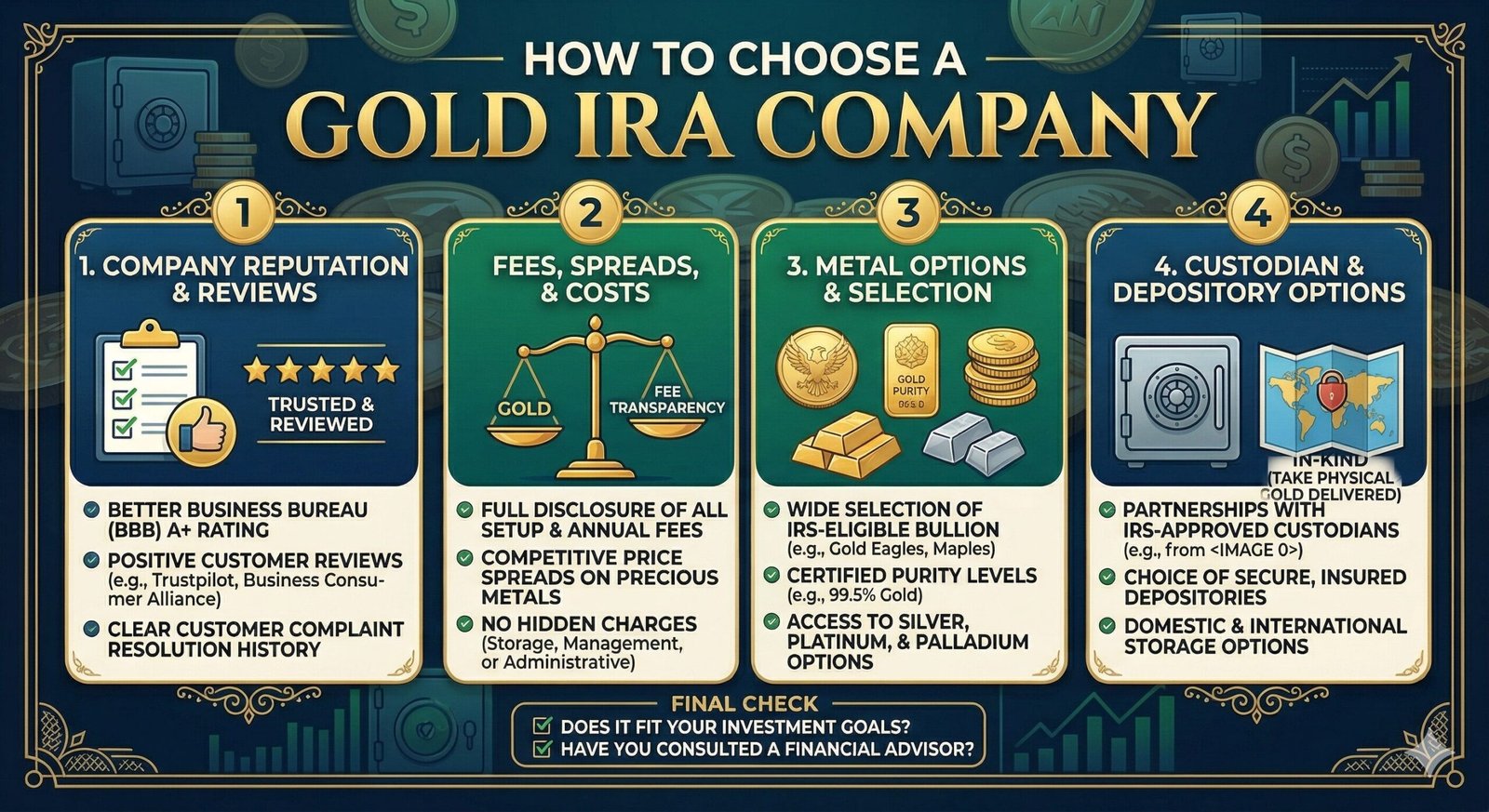
Selecting the right Gold IRA custodian requires evaluating several factors specific to former federal employee needs. Experience with TSP rollovers, fee structures, precious metals selection, and customer service quality all influence the overall experience.
The SEC provides valuable resources for evaluating retirement account custodians and understanding investor rights. Former federal employees should verify custodian credentials and review any regulatory actions or complaints.
Common Challenges and Solutions
Former federal employees often encounter specific challenges when considering TSP to Gold IRA rollovers. Understanding these potential issues and their solutions helps ensure smooth transitions.
Timing coordination between TSP withdrawal and Gold IRA funding requires careful planning. The TSP may take several weeks to process rollover requests, and precious metals purchases require additional time for completion. Former federal employees should maintain adequate cash reserves or other retirement income during transition periods.
Documentation requirements for TSP rollovers can be complex. The TSP requires specific forms and procedures that differ from typical employer plan rollovers. Working with experienced Gold IRA custodians familiar with TSP procedures helps ensure proper completion of all required paperwork.
Storage and insurance questions often arise with physical precious metals ownership. IRA precious metals must be stored in approved depositories with appropriate insurance coverage. Understanding these requirements and associated costs helps former federal employees make informed decisions about precious metals ownership within retirement accounts.
Long-term Considerations for Federal Retirees
Federal retirees considering Gold IRA rollovers should evaluate their long-term retirement income needs and overall asset allocation strategy. Precious metals represent just one component of a comprehensive retirement plan that should address income, growth, and liquidity needs.
The FERS annuity provides steady income throughout retirement, potentially reducing the need for immediate liquidity from rolled-over TSP funds. This income stability may allow for longer-term investment approaches within Gold IRA accounts.
Estate planning considerations become important with Gold IRA ownership. Physical precious metals held in IRAs pass to beneficiaries according to IRA beneficiary designations and rules. Understanding these provisions helps ensure proper estate planning integration.
Market conditions and precious metals performance can vary significantly over time. Past performance is not a guarantee of future results, and federal retirees should consider their risk tolerance and investment timeline when evaluating precious metals investments within retirement accounts.
Our comprehensive Gold IRA hub provides additional information about precious metals IRAs and their role in retirement planning. Federal employees and retirees can find detailed guidance on account setup, management, and long-term considerations.
Frequently Asked Questions
Can current federal employees roll TSP funds to a Gold IRA while still employed?
No, current federal employees generally cannot roll over TSP funds to external IRAs while actively employed. The TSP requires participants to maintain their accounts during federal employment, with limited exceptions for specific hardship situations.
What happens to my TSP account when I leave federal employment?
Upon leaving federal employment, you can choose to leave funds in the TSP, roll them to a new employer’s plan, or transfer them to an IRA. You have broad flexibility to move TSP funds once employment ends, including rollovers to Gold IRAs.
Are there tax consequences for rolling TSP funds to a Gold IRA?
Direct rollovers from TSP to Gold IRA maintain tax-deferred status for pre-tax contributions. Proper direct rollover procedures avoid immediate tax consequences and the 20% withholding that applies to indirect distributions.
How long does a TSP to Gold IRA rollover take?
TSP rollover processing typically takes 2-4 weeks, with additional time required for Gold IRA setup and precious metals purchases. The entire process often takes 4-8 weeks from initiation to completion, depending on custodian efficiency and metal selection.
Can I roll over just part of my TSP to a Gold IRA?
Yes, partial rollovers are generally permitted. You can roll over a portion of your TSP balance to a Gold IRA while leaving remaining funds in the TSP or moving them to other retirement accounts. This flexibility allows for strategic asset allocation across multiple account types.
Federal employees interested in exploring precious metals for retirement should review our guide to the Best Gold IRA Companies of 2026 for comprehensive custodian comparisons and selection guidance.
This article is for informational purposes only and does not constitute financial or tax advice. Investing in precious metals involves risk including possible loss of principal.