Gold Price in 2023: Year in Review
Gold had a notable year in 2023. From a relatively quiet start, prices moved through a series of peaks and pullbacks before finishing the year near all-time highs. For retirement investors who hold or are considering physical gold through a tax-advantaged account, understanding what shaped the gold market in 2023 can offer useful context — even if past performance is not a guarantee of future results.
This review covers the major price movements of the year, the economic and geopolitical forces that influenced them, and what long-term investors may take away from the way the gold market behaved throughout those twelve months.
How Gold Opened 2023
Gold entered 2023 carrying momentum from a volatile 2022. The metal began the year trading in the range of $1,820–$1,850 per troy ounce, a level that reflected a market still processing the effects of aggressive interest rate increases by the Federal Reserve throughout the prior year.
In the early weeks of the year, gold moved higher. A softer-than-expected U.S. dollar and growing market speculation that the Federal Reserve might slow the pace of rate hikes gave buyers renewed confidence. By early February, gold had pushed above $1,900 per ounce — a level that held psychological significance for many market participants.
The Spring Surge: March and April 2023
One of the most significant price movements of the year came in March and April 2023, when gold pushed sharply higher following the collapse of Silicon Valley Bank and several other regional U.S. lenders. The sudden stress in the banking sector prompted significant demand for physical gold, and prices climbed rapidly, briefly touching $2,050 per ounce in early May — approaching the all-time high set in August 2020.
This episode illustrated how quickly market conditions can shift and how gold markets tend to react to events in the broader financial system. Importantly, that reaction was not guaranteed, and investors should not assume the same dynamic will repeat under similar circumstances in the future.
It is also worth noting that during this period, the Federal Reserve continued its rate hiking cycle, which under many conventional assumptions would be expected to weigh on gold prices — yet prices rose. This is a reminder that gold markets can behave in ways that defy simple models, and no single variable reliably predicts the direction of gold prices.
The Summer Pullback: June Through August 2023
After the spring surge, gold entered a period of consolidation and decline. Through the summer months, prices pulled back from the May highs, falling to the low-to-mid $1,900 range by late June and dipping further in August — at points trading near $1,890 to $1,910 per ounce.
The primary force behind the pullback was renewed strength in the U.S. dollar, combined with stubbornly elevated Treasury yields. Higher yields increase the opportunity cost of holding assets that do not pay interest, and gold — which generates no income — typically faces selling pressure in that environment. Again, this is not a mechanical relationship, and future outcomes may differ.
For retirement investors, this kind of short-term volatility is a useful illustration of why gold is generally considered a long-term holding rather than a short-term trade. Those interested in the broader context of how gold fits within a retirement account structure may want to read our Gold IRA vs Traditional IRA comparison for perspective on the structural differences between account types.
The Fourth Quarter Rally: October Through December 2023
Gold’s most compelling move of the year came in the final quarter. Beginning in October 2023, prices recovered decisively and pushed to new all-time highs. By December, gold was trading above $2,000 per ounce, and in the final weeks of the year it pushed through $2,070 — surpassing the previous record highs set in 2020.
Several factors appeared to contribute to this late-year rally. Markets increasingly expected the Federal Reserve to begin cutting interest rates in 2024, which reduced the relative appeal of yield-bearing assets and directed attention toward gold. Geopolitical tensions, including the outbreak of conflict in the Middle East in October 2023, also contributed to increased demand. Central bank buying — which had been a notable feature of global gold demand since 2022 — remained elevated throughout the year.
Again, past performance is not a guarantee of future results. The forces that drove gold higher in late 2023 may or may not persist, and the gold price can move sharply in either direction in response to conditions that are difficult to anticipate.
Key Price Levels at a Glance
The table below summarises the approximate gold price range during each quarter of 2023. These figures are approximate and reflect general market levels rather than specific daily closes.
Note: Past performance is not a guarantee of future results. Price ranges are approximate.
What Drove the Gold Market in 2023?
Several broad forces shaped the gold price in 2023, and understanding them provides useful background for any investor evaluating gold as part of their long-term financial picture.
Federal Reserve Policy and Interest Rates
The Federal Reserve continued raising interest rates through the first half of 2023, completing what became one of the most aggressive tightening cycles in modern history. By mid-year, the Fed funds rate was at its highest level in over two decades. Conventional analysis often suggests that higher rates are negative for gold — and there were periods in 2023 where that relationship appeared to hold. But gold’s overall resilience through the year showed that the relationship between rates and gold prices is complex and not always predictable.
Central Bank Gold Buying
According to data from the World Gold Council, central banks around the world continued purchasing gold at historically elevated levels in 2023. This institutional demand provided a supportive backdrop for prices throughout the year. Investors interested in understanding how this relates to the mechanics of gold ownership through a retirement account may find our Gold IRAs Explained in Detail page a useful reference.
Geopolitical Uncertainty
The outbreak of conflict in the Middle East in October 2023 served as a reminder that geopolitical events can create sudden surges in gold demand. Whether that demand persists depends on circumstances that are inherently unpredictable. Investors should not assume that geopolitical events will reliably push gold prices higher — markets are complex, and many variables interact simultaneously.
U.S. Dollar Movements
Gold is priced in U.S. dollars on global markets, and movements in the dollar tend to influence gold prices — sometimes significantly. In 2023, dollar strength weighed on gold during the summer, while dollar softness contributed to gains in early spring and late in the year.
What 2023 Means for Retirement Investors Considering Gold
For investors aged 45 to 70 who are thinking carefully about how to structure their retirement assets, the gold market in 2023 offers several useful observations — though none of them constitute investment advice.
First, gold prices can move sharply and quickly, in both directions. The move from below $1,850 in January to above $2,050 in May, followed by a retreat and then a new high in December, is a reminder that short-term price action is difficult to predict.
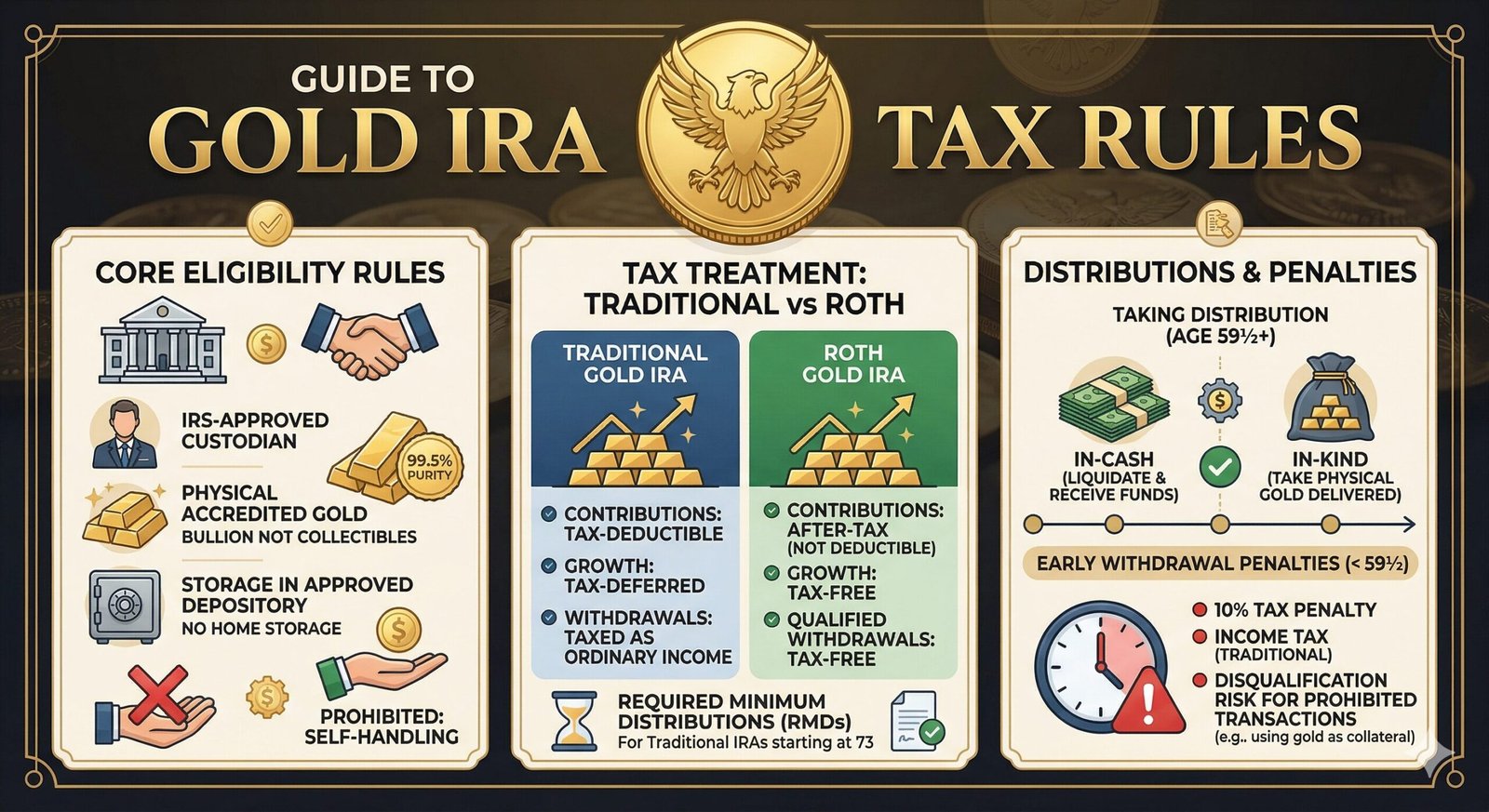
Second, gold held through a self-directed IRA follows specific IRS rules regarding eligibility, storage, and distribution. The IRS does not allow IRA holders to take personal possession of the physical metal while it remains inside the account — a rule outlined in IRS Publication 590-A. FINRA’s guidance on self-directed IRAs also provides a helpful overview of the regulatory framework — you can find it through FINRA’s guidance on self-directed IRAs.
Third, Gold IRA accounts carry fees that differ meaningfully from traditional brokerage accounts — including custodian fees, storage fees, and sometimes account setup costs. Our Gold IRA fees guide covers what investors should expect to pay and what questions to ask.
Fourth, any investor considering a rollover from an existing retirement account into a Gold IRA should understand the specific rules that apply to that process. Our Gold IRA rollover rules page and 401(k) to Gold IRA rollover guide cover both the mechanics and the compliance requirements in plain terms.
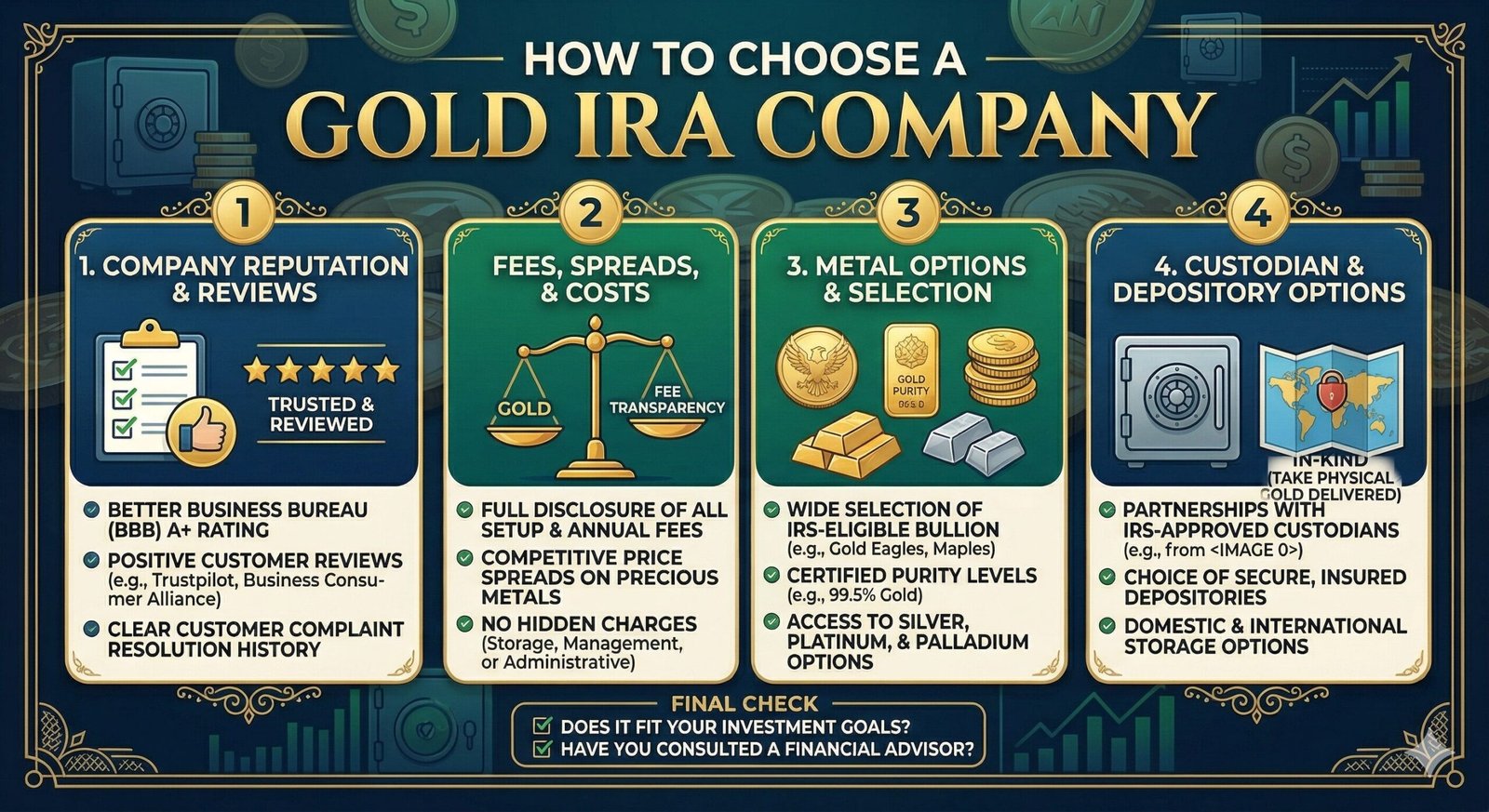
Finally, it is always worth doing careful due diligence on any company you consider working with. The IRS IRA investment FAQ covers what types of assets are permissible inside an IRA, while our Gold IRA scams guide provides practical guidance on what warning signs to watch for when evaluating providers. You can also check company reputations directly at bbb.org and verify any broker credentials through FINRA BrokerCheck.
Frequently Asked Questions
What was the gold price at the start of 2023?
Gold began 2023 trading in approximately the $1,820–$1,850 per troy ounce range. It had carried some momentum from 2022 and moved higher through the first quarter as dollar strength moderated and speculation grew about the pace of Federal Reserve rate increases. Past performance is not a guarantee of future results.
Did gold reach a new all-time high in 2023?
Yes. In December 2023, gold briefly traded above $2,070 per ounce, surpassing previous record levels set in August 2020. The metal ended the year near those record highs. Past performance is not a guarantee of future results.
What caused gold prices to rise in the spring of 2023?
The failure of several U.S. regional banks in March 2023, including Silicon Valley Bank, contributed to a sharp increase in gold demand. Prices surged toward $2,050 per ounce during that period. This occurred despite ongoing Federal Reserve rate increases, illustrating that multiple variables influence gold markets simultaneously.
Can I hold physical gold in my IRA?
Yes, under IRS rules it is possible to hold physical gold in a self-directed IRA, provided the gold meets specific purity standards and is stored with an approved custodian. The IRS requires the metal to be held by a qualifying trustee — not personally by the account holder. You can learn more through our what a Gold IRA is overview or by consulting IRS Publication 590-A directly.
Where can I find out which gold products are eligible for an IRA?
IRS rules require gold held in an IRA to meet a minimum purity of 99.5%. Our guide to IRA-eligible gold coins covers which specific coins and bars are generally permitted, along with considerations to keep in mind when selecting products.
Ready to Learn More?
If 2023’s gold market has prompted you to take a closer look at how physical gold might fit within your retirement planning, a good first step is understanding your options clearly before making any decisions. To compare leading providers, visit our regularly updated page covering the Best Gold IRA Companies of 2026, where we profile companies based on transparency, reputation, fee structures, and customer service standards.
This article is for informational purposes only and does not constitute financial or tax advice. Investing in precious metals involves risk including possible loss of principal.
Related guides
- Gold Price in 2022: How War and Inflation Moved Markets
- Gold Price in 2021: Year in Review and Key Drivers
- Gold Price in 2020: How COVID Drove Gold to Record Highs
- Gold Price Prediction 2028: Long-Term Outlook
- Gold Price Prediction 2026: What Analysts Are Forecasting
- Gold Price Today: Live Spot Price and Market Context