Gold Price in 2020: How COVID Drove Gold to Record Highs
Few years in modern financial history generated as much uncertainty as 2020. The COVID-19 pandemic reshaped economies, labor markets, and investment behavior almost overnight. Against that backdrop, gold experienced one of its most dramatic single-year runs in decades — climbing from around $1,520 per ounce at the start of January to an all-time record above $2,060 per ounce in August, before pulling back and closing the year near $1,890.
Understanding what happened to the gold price in 2020 isn’t just a history lesson. For retirement investors thinking carefully about what belongs in a long-term account, studying how and why gold moved the way it did offers meaningful context — even if past performance is not a guarantee of future results.
Setting the Scene: Where Gold Began in 2020
Gold had already been trending upward through much of 2019, driven by softening global growth expectations and a more accommodative stance from the U.S. Federal Reserve. By early January 2020, gold was trading in the low-to-mid $1,500s — elevated by historical standards, but far from the levels it would reach before the year was out.
At that point, COVID-19 was still largely being reported as a regional health concern in China. Markets were relatively calm. That calm wouldn’t last long.
The COVID Shock and Gold’s Response
March 2020: The Initial Selloff
When COVID-19 was declared a global pandemic in March 2020, financial markets went into freefall. Equity markets dropped sharply, and in a counter-intuitive twist, gold initially fell alongside them — dropping from around $1,680 in late February to roughly $1,470 in mid-March.
This short-term dip is worth understanding. In severe liquidity crises, investors often sell whatever they can to raise cash quickly, and gold is no exception. The phenomenon is well-documented and it’s one reason financial educators caution against simplistic assumptions about how gold behaves in any given environment.
If you want a deeper grounding in how gold functions as an asset class, our Gold IRA hub walks through the fundamentals clearly.
April Through July: The Recovery and Climb
Once central banks — led by the U.S. Federal Reserve — signaled that monetary stimulus would be aggressive and sustained, gold’s trajectory changed. The Fed cut rates to near zero, launched large-scale bond-buying programs, and Congress passed trillions of dollars in fiscal stimulus. Real interest rates — that is, rates after accounting for inflation expectations — turned sharply negative.
Historically, periods of very low or negative real interest rates have coincided with rising gold prices, because the opportunity cost of holding a non-yielding asset like gold diminishes. Whether that relationship holds in the future is uncertain, and past performance is not a guarantee of future results — but the dynamic is worth understanding.
By late May, gold had recovered all of its March losses. Through June and July it continued climbing steadily, breaking through $1,800 for the first time since 2011.
The August Record: Above $2,000
On August 4, 2020, gold crossed $2,000 per ounce for the first time in history, and hit an intraday peak of approximately $2,075 on August 7. The record reflected a confluence of conditions: negative real yields, an enormous expansion of the money supply, ongoing pandemic uncertainty, and a weaker U.S. dollar.
The U.S. Dollar Index (DXY) fell significantly through this period. Because gold is priced globally in U.S. dollars, a weaker dollar generally makes gold more affordable in other currencies — supporting demand and prices.
The August peak also coincided with elevated demand from exchange-traded gold funds. Global gold-backed ETFs saw record inflows during 2020, according to the World Gold Council, reflecting broad interest in gold across institutional and retail investor segments.
The Pullback: September Through December
After its August peak, gold pulled back to around $1,850–$1,900 through September, partly as investors reassessed risk appetite following positive vaccine trial news. Markets began pricing in a potential return to normalcy, reducing some of the urgency that had driven gold’s climb.
Gold did not, however, collapse. It stabilized and traded in a relatively tight range through the final quarter, closing 2020 around $1,887. For the full calendar year, gold gained approximately 25% — though again, this historical performance figure is presented for educational context only, and past performance is not a guarantee of future results.
Key Drivers of the 2020 Gold Price: A Summary
To understand 2020 properly, it helps to look at the major forces at work. These weren’t random — they reflected structural monetary and economic conditions that are worth examining in any discussion of gold.
As the IRS IRA investment FAQ makes clear, retirement accounts have specific rules about what assets they may hold — and understanding those rules matters before acting on any broader market observations.
What 2020 Tells Us About Gold’s Role
The 2020 experience illustrated several features of gold that are worth understanding, particularly for retirement-stage investors thinking about long-term account construction.
First, gold’s behavior during the initial March selloff was a reminder that no asset moves in a straight line. Short-term volatility exists even in asset classes that are often associated with stability. FINRA’s guidance on self-directed IRAs at FINRA’s guidance on self-directed IRAs emphasizes that all investments in self-directed accounts carry risk — and gold is no different.
Second, 2020 highlighted gold’s sensitivity to monetary conditions — particularly real interest rates and currency movements. These are macroeconomic variables, not short-term noise.
Third, and perhaps most relevant for retirement investors, 2020 showed that gold can behave quite differently from traditional financial assets during periods of major macroeconomic stress. Whether that behavior will repeat in future periods of stress is something no one can know with certainty.
For a broader look at how gold fits within a retirement account structure, Gold IRAs Explained in Detail is a useful starting point.
Gold in IRAs: What Retirement Investors Should Know
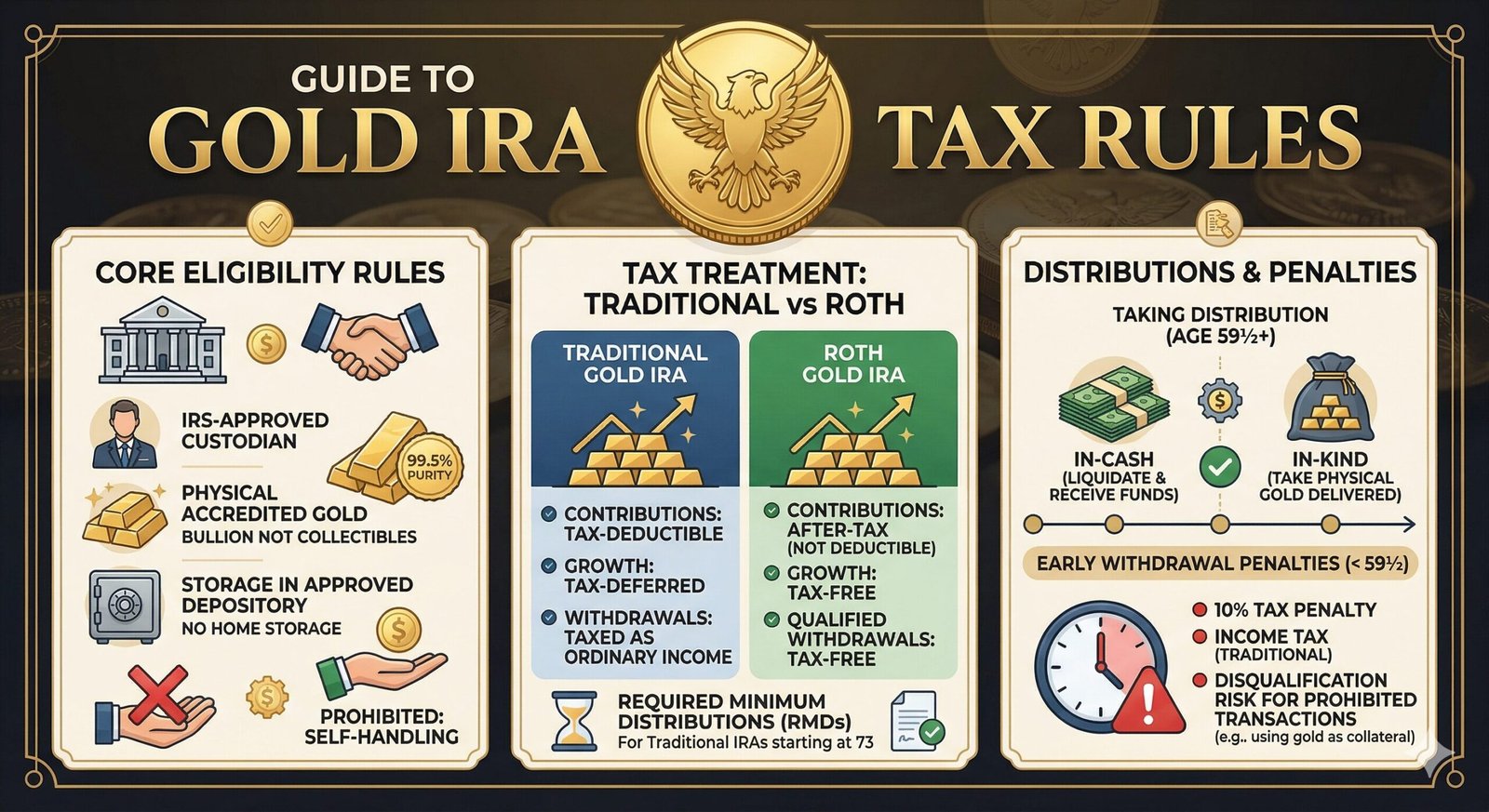
For investors who have considered holding gold not just as a market position but within a tax-advantaged retirement account, 2020 also highlighted the growing interest in Gold IRAs. A Gold IRA is a self-directed individual retirement account that holds IRS-approved physical gold (and other precious metals) rather than conventional financial instruments.
The IRS has specific requirements for gold held in an IRA — including purity standards (at least 99.5% pure for gold) and the requirement that metals be stored with an IRS-approved custodian and depository. You can review those standards in IRS Publication 590-A.
If you’re considering this route, understanding what you’re getting into before you start is essential. Our Gold IRA rollover rules page covers the regulatory framework in straightforward terms. And if you have a 401(k) from a former employer that you’re thinking of moving, our 401(k) to Gold IRA rollover guide explains the mechanics step by step.
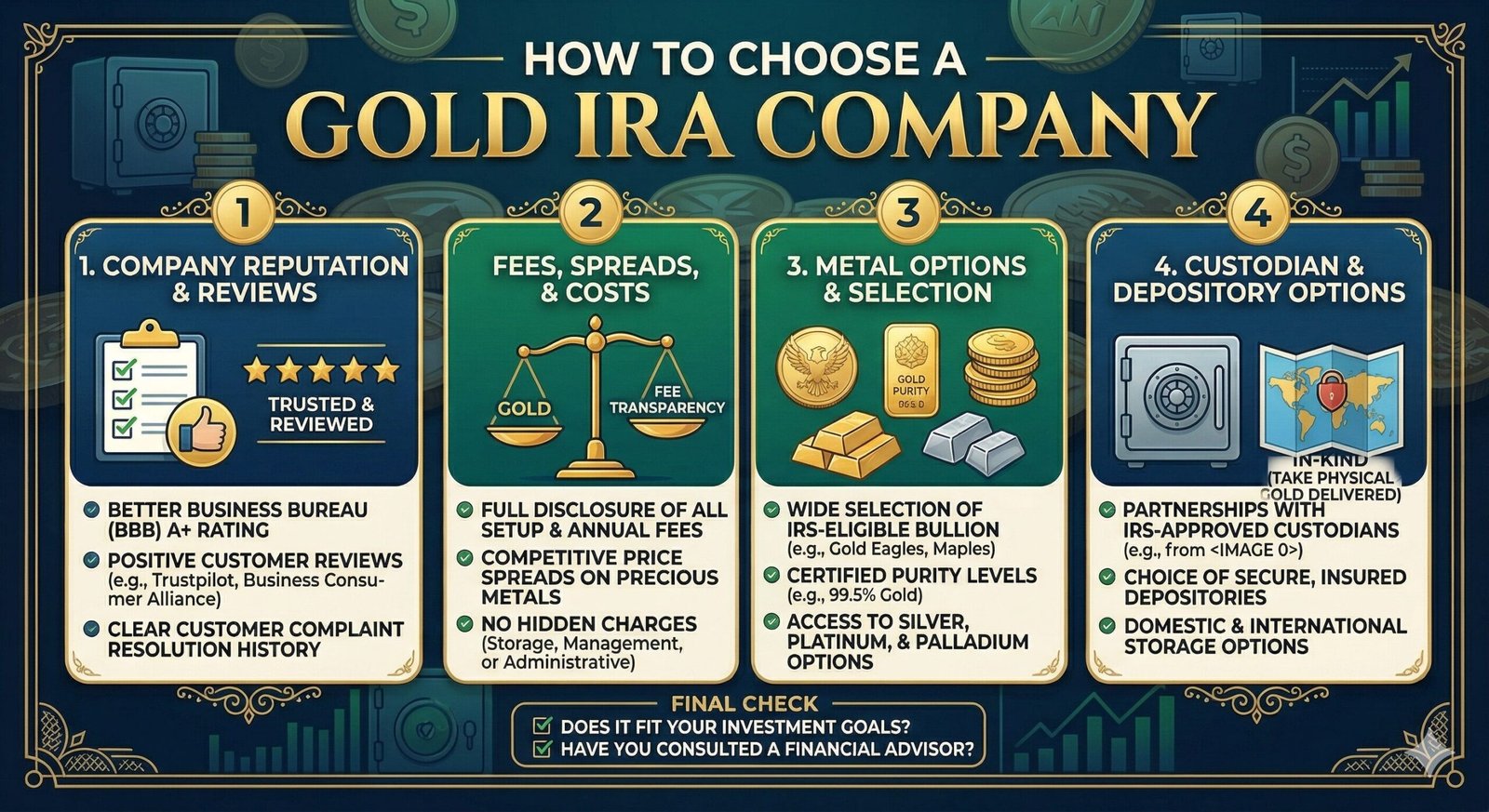
Costs matter too. Gold IRAs involve custodian fees, storage fees, and sometimes setup charges that don’t apply to conventional IRAs. Our Gold IRA fees guide lays out what to expect. And before you work with any provider, take time to read our Gold IRA scams guide — the sector does attract bad actors, and knowing the warning signs is worthwhile.
For reputable company verification, checking bbb.org and FINRA BrokerCheck are sensible starting points for any provider you’re evaluating.
Frequently Asked Questions
What was the highest gold price in 2020?
Gold reached an intraday record of approximately $2,075 per ounce on August 7, 2020 — the first time in history it had surpassed $2,000. This record stood until late 2023. Past performance is not a guarantee of future results.
Why did gold fall in March 2020 if it was a period of uncertainty?
During the acute phase of the March 2020 market selloff, investors across asset classes liquidated positions quickly to raise cash. Gold fell alongside equities briefly before recovering strongly as central bank stimulus measures took hold. This pattern is not unusual in liquidity-driven market dislocations.
How did Federal Reserve policy affect the gold price in 2020?
The Fed’s decision to cut rates to near zero and expand its balance sheet substantially pushed real interest rates into negative territory. This environment reduces the relative cost of holding a non-yielding asset like gold, which is one factor analysts point to when explaining gold’s 2020 performance — though no single factor fully determines gold prices.
Can I hold physical gold in my retirement account?
Yes, under IRS rules, you can hold IRS-approved physical gold in a self-directed IRA. The gold must meet purity standards and be held through an approved custodian and storage facility. For a full explanation, visit what a Gold IRA is or consult IRS Publication 590-A.
Is 2020’s gold performance likely to repeat?
There is no way to predict future gold prices. The conditions of 2020 — a global pandemic, unprecedented monetary stimulus, and sharply negative real rates — were unique to that moment. Past performance is not a guarantee of future results, and anyone who claims to know where gold is heading should be viewed with caution.
Ready to Learn More?
If reviewing the gold market story of 2020 has raised questions about how gold might fit into your own retirement planning, the next step is education — not a sales call. Explore our full guide to the Best Gold IRA Companies of 2026 to see how leading providers compare across fees, minimums, storage options, and customer service standards. Take your time, ask questions, and make sure any decision you reach is based on a clear understanding of both the opportunity and the risks involved.
This article is for informational purposes only and does not constitute financial or tax advice. Investing in precious metals involves risk including possible loss of principal.